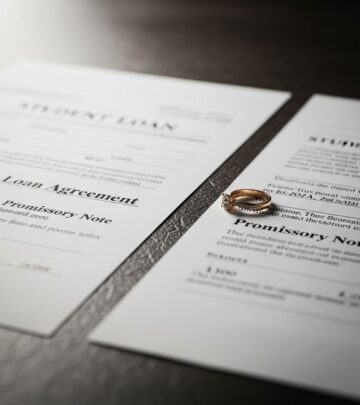
Spouses and Debt: Who’s Really on the Hook?
Uncover the truth about marital debt responsibility: premarital, joint, and state laws that determine who pays what in marriage.

When you tie the knot, your finances often become intertwined, but debt liability isn’t always straightforward. Understanding whether you’re responsible for your spouse’s debts—before or during marriage—can prevent nasty surprises, especially in divorce or death. This article breaks down the rules by state laws, debt types, and real-world scenarios to clarify who’s truly on the hook.
Premarital Debt: Yours Alone or Shared Burden?
Debts incurred before marriage generally remain the responsibility of the individual who took them on. For example, if your partner had $20,000 in credit card debt from student loans or a car loan pre-wedding, creditors can’t come after you directly for payment. This holds true in most U.S. states under common law principles.
However, complications arise if you co-sign or use joint accounts post-marriage. Courts may consider marital assets (like a shared home) vulnerable if one spouse defaults, even on old debt. In community property states—such as California, Texas, and Arizona—post-marital income used to pay premarital debt could create reimbursement claims during divorce.
Joint Debts: Both Names, Both Liable
Debts taken out during marriage with both spouses’ names, like a joint mortgage or credit card, make both fully responsible. Creditors can pursue either party for the full amount, regardless of who racked it up. This is universal across all states.
- Credit Cards: Joint accounts mean shared liability; even authorized users can trigger responsibility if misused.
- Loans and Mortgages: Co-signing binds both to repayment.
- Medical Bills: In some states, spousal support laws make one liable for the other’s healthcare debts.
A key risk: One spouse’s bankruptcy doesn’t erase joint debt; the other remains liable.
Community Property vs. Common Law States: The Big Divide
U.S. states split into two systems for marital debt division:
| Type | States (Examples) | Debt Rule |
|---|---|---|
| Community Property (9 states) | AZ, CA, ID, LA, NV, NM, TX, WA, WI | Debts during marriage are shared 50/50, even if only one spouse signed. Premarital debts stay separate unless commingled. |
| Common Law (41 states) | AL, FL, NY, etc. | Each spouse liable only for their own debts unless joint. Marital property equitably divided in divorce. |
In community property states, ‘community debt’ from marital funds affects both spouses equally. Common law offers more protection for separate debts but still risks joint assets.
Debts During Marriage: When One Spouse Goes Solo
If your spouse opens a solo credit card or loan during marriage, liability depends on state law and purpose:
- Community Property: Presumed community debt if for household needs (groceries, family vacations). Solo signer pays first, but both assets at risk.
- Common Law: Creditor pursues only the signer, but divorce courts may divide based on equity.
- Exceptions: Debts for illegal activities or gambling often remain separate.
Real example: A spouse’s secret $10,000 shopping spree on a solo card. In Texas (community property), half could come from joint savings; in New York (common law), you’re off the hook unless you benefited.
Divorce and Debt: Division Nightmares
Divorce courts divide debts equitably, not always 50/50. Factors include who incurred it, for what purpose, and ability to pay.
- Joint Debts: Often split or refinanced into solo names.
- Separate Debts: Stay with original owner unless proven marital benefit (e.g., student loans funding family home).
- Tip: Get everything in writing via settlement agreement to avoid post-divorce collection harassment.
One couple shared how they tackled $147k debt post-unemployment by prioritizing joint obligations first. In messy divorces, ex-spouses comment on states where all marital debt landed on one party regardless of name.
Death and Spousal Debt: Survivor Beware
Upon death, debts follow the estate—not the surviving spouse automatically. If the estate lacks funds, debts die unpaid.
- Joint Debts: Survivor liable for remainder.
- Federal Student Loans: Forgiven on death; private ones via estate.
- Medical Debt: Some states have spousal liability doctrines.
Estate planning is crucial: Without a will, state laws dictate asset/debt division, potentially burdening heirs.
Protecting Yourself: Prenups, Postnups, and Smart Habits
Minimize risks with proactive steps:
- Prenuptial Agreements: Define debt separation clearly, valid in all states if fair.
- Postnuptial Agreements: Same as prenups, post-marriage.
- Keep Finances Separate: Solo accounts for personal debts.
- Monitor Credit: Regular checks reveal joint risks.
- Communicate: Discuss debts openly; one couple learned harsh money lessons post-marriage.
Avoid new debt traps by living within means, as shared in debt recovery stories.
State-Specific Nuances and Medical Debt
Medical bills add complexity: 10 states (e.g., NY, PA) hold spouses liable under ‘doctrine of necessaries.’ Even common law states may enforce if family-supported. Check your state’s laws via official resources.
Frequently Asked Questions (FAQs)
Q: Am I responsible for my spouse’s student loans?
Generally no, if premarital and not co-signed. Divorce may require contribution if used for marital benefit.
Q: Can creditors go after joint assets for one spouse’s debt?
Yes, especially in community property states or if assets commingled.
Q: Does bankruptcy protect my spouse from my debts?
No for joint debts; it only discharges your portion.
Q: How do I handle debt in a common law marriage?
Similar to formal marriage in recognizing 8 states; debts treated as joint if during relationship.
Q: Is a prenup ironclad for debt protection?
Mostly yes, if properly executed and not unconscionable.
References
- 8 Things I Learned About Money After Getting Married — Wise Bread. 2010-approx. https://www.wisebread.com/8-things-i-learned-about-money-after-getting-married
- How One Couple Paid Off $147k of Debt (Even While Unemployed) — Wise Bread. 2010-approx. https://www.wisebread.com/how-one-couple-paid-off-147k-of-debt-even-while-unemployed
- 7 Tough Questions About Debt, Answered — Wise Bread. 2010-approx. https://www.wisebread.com/7-tough-questions-about-debt-answered
- Recent Comments on Debt Discussions — Wise Bread. Various dates. https://www.wisebread.com/comments?page=2785
- Important Things to Consider When Combining Finances — Experian. 2023-approx. https://www.experian.com/blogs/news/important-things-consider-combining-finances-relationship/
- Estate Planning: Why Me? — Wise Bread. 2010-approx. https://www.wisebread.com/estate-planning-why-me
Similar Articles








Read full bio of Sneha Tete