Zoning Ordinance: Definition, Purpose & Impact
Understanding zoning ordinances: Local laws that regulate land use and shape community development.
What Is a Zoning Ordinance?
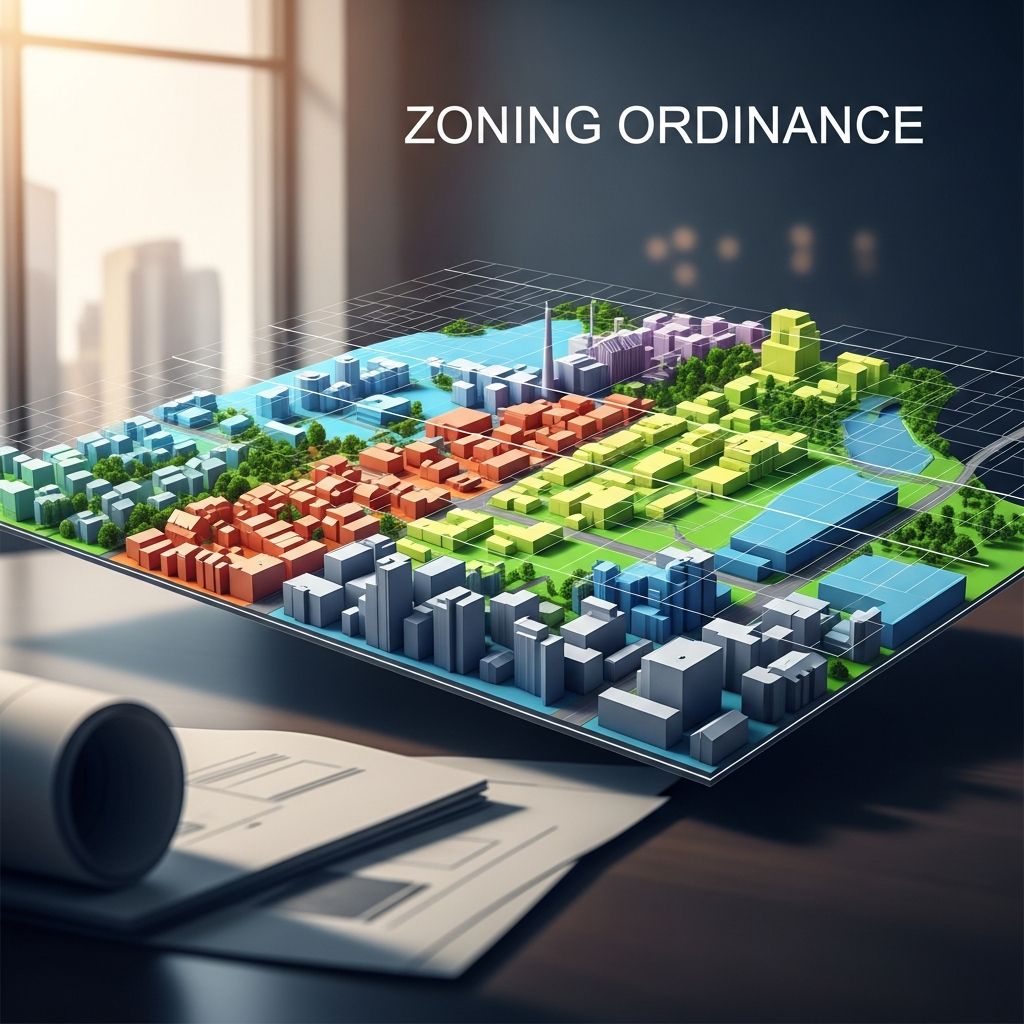
A zoning ordinance is a local law or regulation enacted by a municipal government that dictates how property within a certain geographic area can be used. These legally binding regulations are established by local authorities such as city councils, planning commissions, or county governments to control development, promote orderly growth, and protect public health and safety. Zoning ordinances divide municipalities into different zones, each designated for specific types of development—residential, commercial, industrial, agricultural, or mixed-use—with unique rules governing what structures can be built, what activities can take place, and the density of development allowed in each area.
The primary purpose of zoning ordinances is to separate incompatible land uses, prevent conflicts between different types of development, and maintain the character of communities. By establishing clear rules for land use, zoning ordinances help ensure that residential neighborhoods remain quiet and safe, that commercial districts function efficiently, and that industrial operations do not negatively impact surrounding areas. These regulations have become fundamental to modern urban planning and are essential considerations for real estate professionals, developers, and property owners.
Historical Background of Zoning
The concept of zoning emerged in the early twentieth century in response to rapid urbanization, overcrowding, and sanitation concerns. The first comprehensive zoning ordinance in the United States was adopted by New York City in 1916, created in response to a 42-story skyscraper that significantly lowered the property values of nearby buildings. This pioneering ordinance was designed to control nuisance structures, excessive noise levels, and traffic congestion. Baltimore’s 1917 ordinance is also considered a foundational example of early zoning regulation.
A landmark Supreme Court decision, Village of Euclid v. Ambler Realty Co. (1926), established the constitutionality of zoning ordinances and endorsed single-use zoning principles. This case, which arose from a dispute in Euclid, Ohio, became the legal foundation for what is now called Euclidean zoning in the United States. The ruling confirmed that municipalities have the authority to regulate land use through zoning, establishing a legal framework that has persisted for nearly a century.
Key Components of Zoning Ordinances
Understanding the essential elements of a zoning ordinance is critical for real estate professionals, developers, and property owners. These components work together to create a comprehensive regulatory framework:
Zoning Districts
Zoning districts are specific geographic areas within a municipality designated for particular types of development. Common zoning districts include residential, commercial, industrial, mixed-use, and agricultural zones. Each district has its own set of rules that dictate what can be built and how land can be used. The boundaries of these districts are typically shown on a municipal zoning map, which is an essential tool for determining what uses are permitted in any given location.
Permitted Uses
Permitted uses refer to the types of activities or structures explicitly allowed within a specific zoning district without requiring special approval. For example, a residential district might permit single-family homes, townhouses, and small apartment buildings, while a commercial district might allow retail stores, offices, and restaurants. Permitted uses are considered as-of-right uses, meaning property owners can develop their land for these purposes as long as they comply with all other zoning requirements and obtain standard building permits.
Conditional and Special Uses
In many cases, zoning ordinances allow certain uses in a district if specific conditions are met, known as conditional uses or special exceptions. These uses are not automatically permitted but may be approved by the local planning commission or board of zoning appeals after a detailed review process. For example, a church, school, or community center might be a conditional use in a residential district. The approval process for conditional uses typically involves consideration of the proposed development’s impact on surrounding properties and infrastructure.
Setback Requirements
Setback requirements establish minimum distances that buildings must be positioned from property lines, streets, adjacent structures, or other features. These regulations ensure adequate space between buildings for safety, privacy, fire protection, and aesthetic reasons. Typical setback requirements might specify that a house must be set back 25 feet from the front property line, 10 feet from side property lines, and 30 feet from the rear property line. Setback requirements vary significantly between zoning districts, with commercial areas often requiring smaller setbacks than residential areas.
Height and Density Limits
Height regulations control the maximum number of stories or absolute height in feet that buildings can reach within a zoning district. These limitations are typically used to preserve views, maintain sunlight access, prevent wind tunnel effects, and preserve neighborhood character. Density limits regulate the number of dwelling units or floor area that can be built on a property, controlling population concentration and impact on infrastructure and services.
Lot Size and Subdivision Requirements
Zoning ordinances often specify minimum lot sizes for different uses and may include rules about how land can be subdivided. These requirements help maintain neighborhood character and ensure adequate space for parking, landscaping, and building placement.
Types of Zoning Systems
Different zoning approaches have emerged to address diverse community needs and planning objectives:
Single-Use Zoning (Euclidean Zoning)
Single-use zoning, also called exclusionary or Euclidean zoning, allows only one type of use within a zone. This approach has been the dominant zoning system in North America, particularly in the United States, since its first implementation. Single-use zoning strictly separates residential, commercial, and industrial uses, which can help prevent nuisance and compatibility issues but may reduce walkability and increase automobile dependence.
Mixed-Use Zoning
Mixed-use zoning permits multiple compatible uses within a single zone, such as residential units above retail stores or offices integrated with residential areas. This approach is increasingly popular in urban planning as it can reduce transportation needs, increase property tax revenue, and create more vibrant, walkable communities.
Form-Based Zoning
Form-based zoning codes regulate the physical form and character of development rather than focusing solely on land use. These codes typically include a regulating plan, public standards, building standards, and precise technical definitions. Form-based zoning recognizes the interrelated nature of zoning, subdivision, and public works, integrating them to define districts based on desired community character and development intensity.
Conditional Zoning
Conditional zoning is a legislative process in which site-specific standards and conditions become part of the zoning ordinance at the property owner’s request. The conditions may be more or less restrictive than standard zoning requirements. While conditional zoning offers flexibility, it can be challenged as spot zoning if not carefully structured.
Purpose and Benefits of Zoning Ordinances
Zoning ordinances serve multiple important purposes in community development and land management:
- Orderly Growth: Zoning guides and limits development to ensure organized, planned growth rather than haphazard expansion.
- Public Health and Safety: By separating incompatible uses, zoning reduces health hazards and safety risks associated with industrial operations adjacent to residential areas.
- Property Protection: Zoning helps protect property values by ensuring that neighboring properties maintain compatible uses and character.
- Resource Preservation: Zoning can protect natural resources, historical sites, and environmentally sensitive areas from inappropriate development.
- Infrastructure Management: Density limits and development controls help ensure that infrastructure, schools, and public services can adequately serve the population.
- Community Character: Zoning helps preserve neighborhood aesthetics and the established character of communities through height limits, setback requirements, and design standards.
Impact on Real Estate Development and Property Values
Zoning ordinances significantly influence real estate development decisions and property values. For investors and developers, understanding how a property is zoned and what development potential it has is critical to making informed investment decisions. Zoning determines whether a property can be developed as planned, affects construction costs, and influences the types of tenants or buyers attracted to an area.
Changes in zoning regulations can substantially impact property values and investment returns, requiring ongoing monitoring and strategic adaptation by real estate professionals and business owners. Spot zoning or rezoning of neighboring properties can either enhance or diminish a property’s value depending on the new permitted uses. In rapidly evolving markets driven by e-commerce and flexible workspace solutions, businesses must carefully consider how zoning changes might affect their operations and property investments.
Zoning Compliance and Non-Compliance
Developers and property owners must meticulously review zoning regulations before acquiring land or commencing construction to ensure their intended use is permitted. Non-compliance with zoning ordinances can result in costly consequences including substantial fines, legal battles, property liens, and even forced shutdowns of operations. Municipalities enforce zoning ordinances through building permit reviews and zoning compliance inspections. Before beginning any construction or use change, property owners should verify compliance with all applicable setback requirements, height limits, density restrictions, and permitted uses.
Variances and Special Exceptions
When strict compliance with zoning ordinances creates undue hardship or when unusual circumstances apply, property owners may request a variance from zoning requirements. A variance is an exception to zoning rules granted by a local board of appeals based on a showing of hardship, practical difficulty, or that the variance is necessary to achieve fairness. Variances typically require a public hearing and approval by a zoning board or appeals board.
Special exceptions, also called conditional uses, are uses specifically identified in the zoning ordinance as permissible in a zone if certain conditions are met. Unlike variances, special exceptions are contemplated in the zoning ordinance and are more straightforward to obtain if the applicant meets specified criteria.
Zoning in Commercial and Industrial Real Estate
In commercial and industrial real estate contexts, zoning ordinances are absolutely critical for site selection, development feasibility, and operational compliance. A developer planning a large distribution center faces different zoning requirements in residential areas compared to industrial parks, directly impacting site selection and project costs. A coworking space seeking location in a traditional office district might encounter limitations on permitted uses and parking requirements, necessitating creative solutions such as shared parking agreements or transportation incentives.
The rise of emerging business models such as pop-up retail and short-term rentals has challenged conventional zoning frameworks, prompting municipalities to consider amendments and temporary use permits to accommodate these evolving uses.
Frequently Asked Questions
Q: What is the difference between a variance and a special exception?
A: A variance is an exception to zoning rules granted based on hardship or unusual circumstances, while a special exception is a use specifically identified in the zoning ordinance as permissible if certain conditions are met. Special exceptions are preauthorized in the zoning code, whereas variances must be justified based on individual circumstances.
Q: Can zoning ordinances be changed?
A: Yes, zoning ordinances can be amended through a formal rezoning process initiated by the municipal government or property owners. Rezoning typically requires review by the planning commission, public hearings, and approval by the city council or county commissioners.
Q: How do I find out what zoning applies to a specific property?
A: You can typically find zoning information by consulting the municipal zoning map available at the planning or zoning department, contacting your local city hall or county offices, or searching online zoning databases maintained by many municipalities. The property address and zoning district will be clearly indicated on official zoning maps.
Q: What happens if I violate zoning ordinances?
A: Violations of zoning ordinances can result in cease-and-desist orders, substantial fines, liens on the property, required removal of non-conforming structures, and even criminal penalties in severe cases. The municipality may also seek injunctive relief through the courts to compel compliance.
Q: Are non-conforming uses allowed under zoning ordinances?
A: Non-conforming uses are uses that existed before zoning was adopted and that do not comply with current zoning requirements. Most zoning ordinances allow non-conforming uses to continue but may restrict their expansion, modification, or resumption if discontinued for a specified period.
References
- What is a Zoning Ordinance? Definition and Key Components — Real Estate Learning Network. Retrieved from https://www.relny.com/blog/what-is-a-zoning-ordinance-definition
- Zoning Ordinance — CubeWork Freight & Logistics Glossary. Retrieved from https://www.cubework.com/glossary/zoning-ordinance
- Zoning — Wikipedia. Retrieved from https://en.wikipedia.org/wiki/Zoning
- What Are Zoning Laws and How Do They Work? — Rocket Mortgage. Retrieved from https://www.rocketmortgage.com/learn/zoning-laws
- Zoning — National Association of REALTORS®. Retrieved from https://www.nar.realtor/zoning
Similar Articles








Read full bio of Sneha Tete