Zoning Laws For Homeowners: Guide To Rules And Permits
Master the essentials of property zoning to protect your home investment and enable smart renovations or expansions.
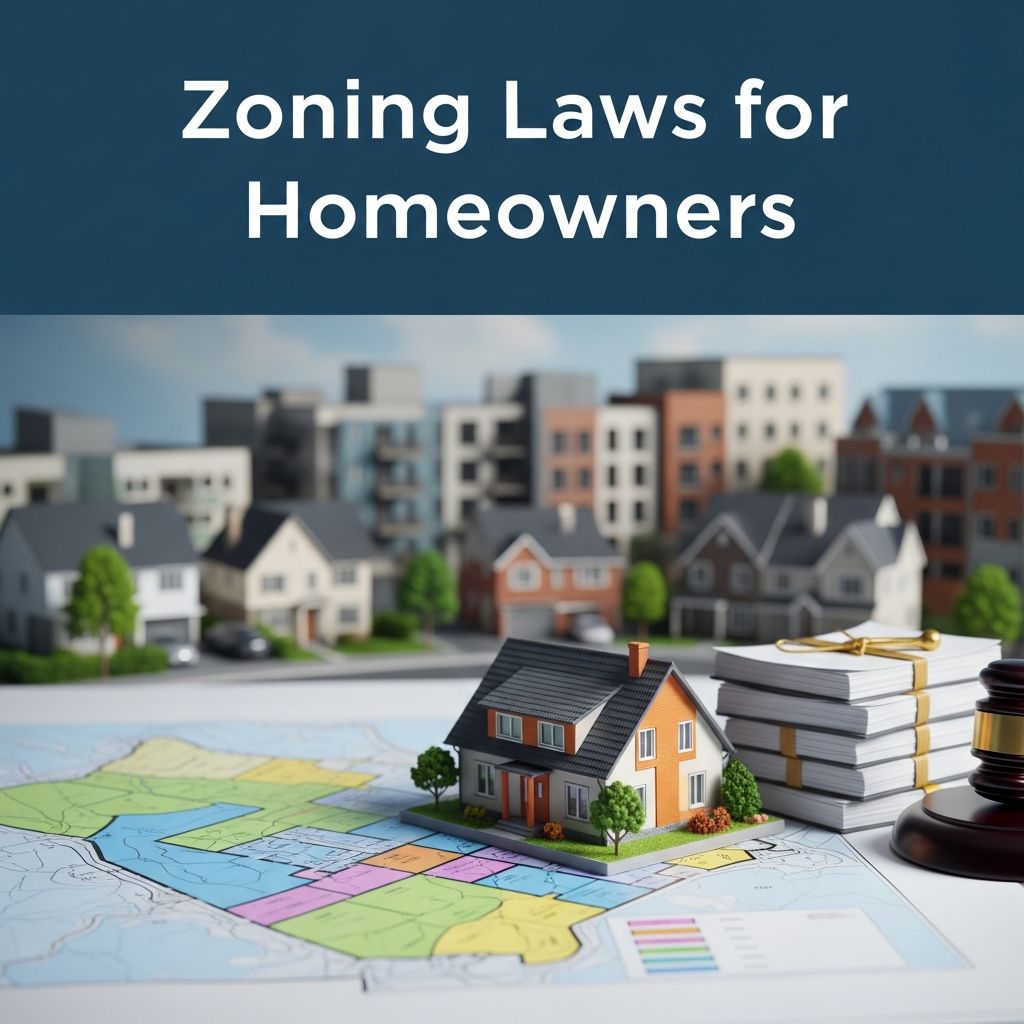
Property zoning forms the backbone of community planning by dictating how land can be developed and utilized. These regulations ensure orderly growth, protect neighborhood character, and safeguard public welfare through defined land use categories.
Understanding the Basics of Zoning Regulations
Zoning laws consist of municipal rules that divide land into specific districts, each with unique guidelines on permitted structures, densities, and activities. Local governments establish these to prevent conflicts, such as placing factories near homes, fostering safe and harmonious environments.
Distinct from private covenants like those in homeowners associations, zoning applies universally within a jurisdiction. It controls not just building types but also dimensions, placements, and even minor features like fences.
Key Categories of Zoning Districts
Zoning districts fall into broad types tailored to community needs. Residential zones prioritize housing, commercial areas support businesses, industrial spaces accommodate manufacturing, and agricultural zones preserve farmland.
- Residential Zones: Focus on homes, subdivided into single-family, multi-family, or high-density options to match suburban or urban settings.
- Commercial Zones: Allow retail, offices, and services, often with height and signage limits to blend with surroundings.
- Industrial Zones: Designated for factories and warehouses, kept away from homes to minimize noise and pollution impacts.
- Mixed-Use Zones: Combine residences with shops or offices, promoting walkable communities in growing areas.
How to Determine Your Property’s Zoning
Finding your property’s zoning classification is straightforward and essential before any changes. Start with your local planning department, city hall, or county offices, where staff can provide details.
Most municipalities offer online tools like interactive zoning maps. Enter your address to reveal the district, along with summaries of rules on setbacks, lot coverage, and allowed uses.
| Step | Action | Resource |
|---|---|---|
| 1 | Visit local government website | Zoning map portal |
| 2 | Search by address or parcel number | Interactive GIS tools |
| 3 | Contact planning office for confirmation | Phone or in-person inquiry |
| 4 | Review ordinance documents | PDF zoning codes |
This process empowers homeowners to align plans with legal boundaries early.
Common Rules in Residential Zoning Areas
Within residential zones, especially single-family designations like R1, rules maintain low density and aesthetic uniformity. Minimum lot sizes often range from 7,500 to 12,000 square feet, ensuring ample space for yards and privacy.
Setbacks—required distances from property lines—typically mandate 20-30 feet from the front street, 5-10 feet from sides, and 15-25 feet from the rear. These prevent overcrowding and allow light access.
Height limits cap homes at 2-3 stories or 35 feet, while lot coverage restricts buildings to 30-50% of the land to preserve green space. Accessory structures like garages or sheds follow similar scaled-down rules.
Navigating Renovations Under Zoning Constraints
Renovations demand zoning compliance to avoid fines or demolition orders. Additions, pools, or deck expansions must respect setbacks, heights, and densities. Always secure permits, which trigger reviews against zoning codes.
Home-based businesses face limits, such as no external traffic increase or signage. Converting garages to living space might require density approvals in strict zones.
- Submit site plans showing proposed changes.
- Consult planners pre-application to flag issues.
- Expect inspections post-construction for certificate of occupancy.
Special Permissions: Variances and Rezoning
When standard rules don’t fit unique lots—like odd shapes or hardships—homeowners pursue variances. These exceptions demand proving undue burden without relief, presented to zoning boards via public hearings.
Rezoning shifts a property’s category, a lengthier process involving applications, neighbor notifications, and council votes. Success hinges on community benefit arguments.
Steps for variances include:
- Gather evidence of hardship.
- File with detailed plans.
- Attend hearings and respond to concerns.
- Appeal denials if needed.
Impacts of Zoning on Property Value and Sales
Desirable zoning boosts values by guaranteeing stable neighborhoods. Strict residential rules deter commercial intrusions, appealing to families. However, overly rigid codes can limit expansions, deterring buyers seeking flexibility.
Sellers disclose zoning; mismatches with buyer plans cause deal failures. Buyers should verify during due diligence, factoring in future potential like ADUs (accessory dwelling units) where allowed.
Regional Variations: Focus on Tennessee Examples
Zoning varies by locality, with Tennessee exemplifying county-level differences. No statewide code exists; counties like Greene set unique resolutions on lot sizes and uses.
In R1 zones across Tennessee counties, single-family homes dominate, with setbacks and sizes tailored to local character. Agricultural greenbelt incentives offer tax breaks but trigger penalties on rezoning.
Enforcement relies on local authorities issuing permits, inspecting sites, and penalizing violations through fines or stop-work orders.
Enforcement Mechanisms and Penalties
Local zoning offices enforce via routine checks, complaint responses, and permit processes. Violations—like unpermitted additions—incur daily fines, rework mandates, or liens.
Certificates of occupancy, verified by as-built surveys from engineers, confirm final compliance before legal use.
Frequently Asked Questions
What distinguishes zoning from HOA rules?
Zoning is governmental and broad; HOAs are private community-specific.
Can I run a business from my zoned home?
Often yes, if low-impact and no exterior changes, per local codes.
How do mixed-use zones function?
They permit residences alongside commercial, unlike single-use.
What if I need a zoning change?
Apply for variance or rezoning through public processes.
Are fences regulated by zoning?
Yes, height and placement often require approval.
Pro Tips for Zoning-Savvy Homeownership
- Engage real estate agents familiar with local codes.
- Review ordinances before buying land.
- Plan renovations with buffer time for approvals.
- Document everything for disputes.
Mastering zoning equips homeowners for confident decisions, from routine updates to major projects, preserving property rights and value.
References
- Navigating Zoning Laws: A Homeowner’s Guide to Selling and Renovating — ProSource Home Buyers. 2023. https://prosourcehomebuyers.com/blog/navigating-zoning-laws-a-homeowners-guide-to-selling-and-renovating
- What are zoning laws and how do they work? — Rocket Mortgage. 2024-01-15. https://www.rocketmortgage.com/learn/zoning-laws
- R1 Zoning Rules In Tennessee: Complete Guide (2025) — The Land Geek. 2025. https://www.thelandgeek.com/blog-r1-zoning-rules-in-tennessee/
- Zoning Laws and Real Estate Development in Tennessee — Jay Johnson Law Firm. 2023-06-10. https://jayjohnsonlawfirm.com/zoning-laws-and-real-estate-development-in-tennessee/
- MAWT Zoning Regulations — Tennessee Government (tn.gov). 2022-12-13. https://www.tn.gov/content/dam/tn/megasite/documents/MAWT_Zoning%20Regulations_2022-11-17_Rev.%202022-12-13.pdf
- Real Estate Tip: Understanding Tennessee’s Land and Zoning Regulations Before Buying — Tennessee Real Properties. 2024. https://www.tennesseerealproperties.com/articles/land-for-sale/real-estate-tip–understanding-tennessee-s-land-and-zoning-regulations-before-buying
- Greene County Zoning Resolution — Greene County TN Government. 2015-12. https://www.greenecountytngov.com/wp-content/uploads/2017/09/Greene%20County,%20TN.Zoning%20Res.Dec%202015.pdf
Similar Articles








Read full bio of Sneha Tete