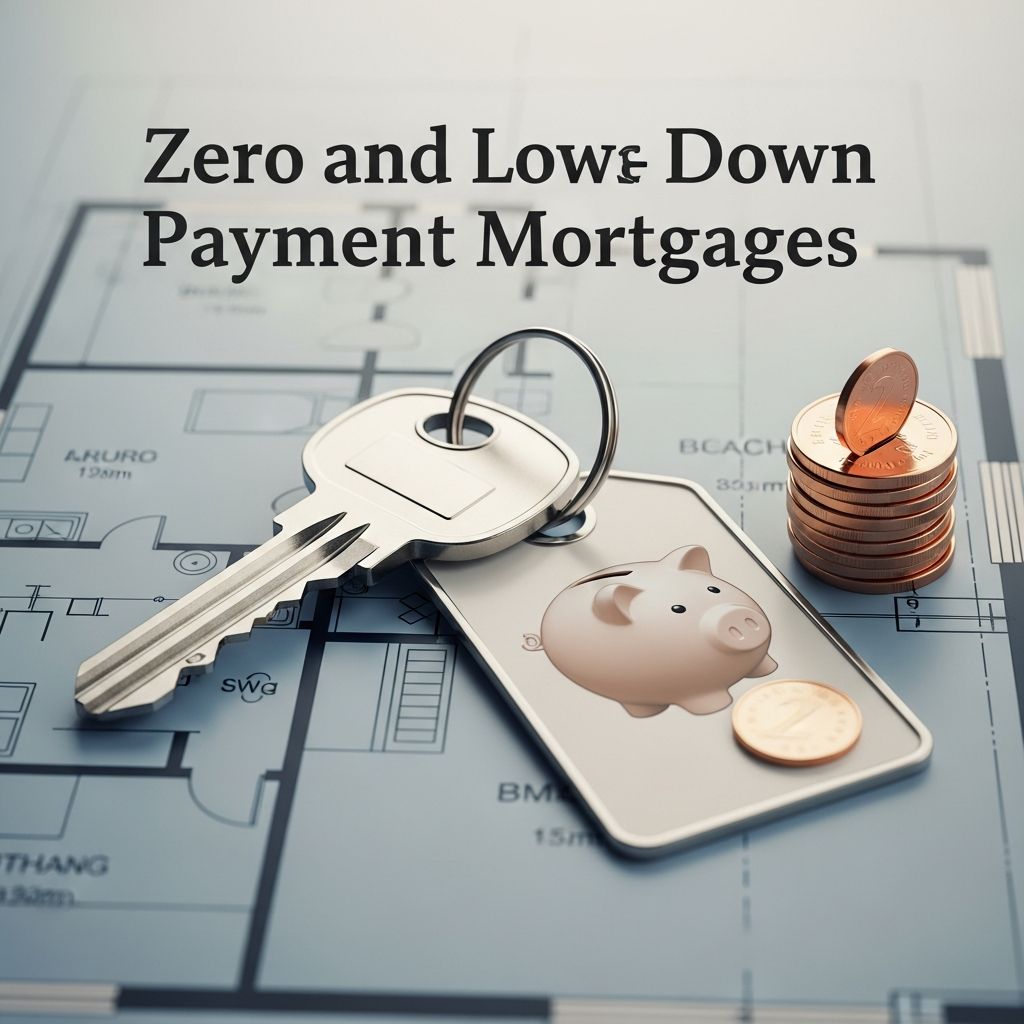
Zero and Low Down Payment Mortgages
Explore government-backed loans and assistance programs that let you buy a home with little to no money down in 2026.
Buying a home often feels out of reach due to the need for a substantial down payment, but various mortgage programs now make it possible with minimal or no upfront cash. In 2026, options like VA loans, USDA loans, FHA loans, and low-down conventional mortgages have surged in popularity, with demand up 40% year-over-year as rates stabilize. These programs cater to veterans, rural buyers, first-timers, and more, often combining with grants to eliminate out-of-pocket costs.
Understanding Down Payment Basics
A down payment is the initial cash payment toward a home’s purchase price, typically 3-20% depending on the loan type. Traditional wisdom suggested 20% to avoid private mortgage insurance (PMI), but government-backed and specialized loans have lowered this barrier. For a $350,000 home, a 3% down payment equals $10,500, while zero-down options require nothing upfront.
Benefits of low or no down payments include faster entry into homeownership and preserved savings for repairs or emergencies. Drawbacks involve higher monthly payments due to larger loan amounts and potential fees like funding fees or mortgage insurance.
Top Zero-Down Mortgage Programs
Government programs lead the way for true zero-down financing, targeting specific groups to boost affordability.
VA Loans: Ideal for Military Families
Backed by the Department of Veterans Affairs, VA loans offer 0% down for eligible veterans, active-duty service members, and surviving spouses. No PMI is required, and credit minimums start at 580-620. In 2026, 1 in 4 first-time buyers used VA loans, with estimated monthly payments around $2,195 on a $350k home.
- Eligibility: Service history, Certificate of Eligibility (COE).
- Pros: No down payment, competitive rates, no PMI.
- Cons: Funding fee (1.25-3.3%, waivable for some), property standards.
USDA Loans: Boosting Rural Homeownership
The U.S. Department of Agriculture guarantees these 0% down loans for homes in designated rural and suburban areas, with income limits and credit scores from 620. Perfect for families outside major cities, monthly payments average $2,010 on $350k.
- Eligibility: Location (USDA map), income <115% area median.
- Pros: Zero down, low rates, subsidized guarantee fees.
- Cons: Geographic restrictions, upfront fee (1%).
Low Down Payment Alternatives
If zero-down isn’t feasible, these options require just 3-3.5% down, often reducible with assistance.
| Program | Down Payment | Min Credit | Est. Monthly on $350k | Best For |
|---|---|---|---|---|
| FHA Loan | 3.5% (gifts OK) | 580 | $2,430 | First-timers, lower credit |
| Conventional 97 | 3% | 620 | $2,300 | Strong credit buyers |
| Down Payment Assistance (DPA) | 0-1% | 600+ | Varies | State residents |
FHA Loans: Flexible for New Buyers
Federal Housing Administration-insured FHA loans need 3.5% down but allow gift funds to cover it entirely, with credit as low as 580. Mortgage insurance is required but reduced in 2026.
Conventional Low-Down Loans
Fannie Mae’s Conventional 97 permits 3% down for qualified buyers, avoiding FHA insurance costs if PMI drops off.
Down Payment Assistance Programs
State and local DPA grants or forgivable loans cover down payments and closing costs. Examples include Florida’s $10,000 deferred loan and DC’s Open Doors no-interest option up to full down payment. Average grants: $5,000-$12,000, stackable with FHA/VA.
- Check state housing agencies for 2026 programs.
- Often income-based, first-time buyer priority.
Creative Financing Strategies
Combine programs: Use DPA with FHA for effective 0% down, or seller credits. Gift letters from family can fund FHA requirements fully. Avoid pitfalls like occupancy rules.
Eligibility and Qualification Tips
Key factors: Credit score (boost via disputes), debt-to-income <43-50%, stable income. Pre-approval from lenders like those offering VA/USDA specialties speeds the process.
- Improve chances: Pay down debt, save for closing (2-5% of price).
- 2026 updates: Higher USDA limits, VA fee tweaks.
Pros and Cons Comparison
| Aspect | Zero-Down (VA/USDA) | Low-Down (FHA/Conv) |
|---|---|---|
| Upfront Cost | $0 down | $10k+ on $350k |
| Monthly Payment | Higher loan amt | Similar + MI/PMI |
| Equity Build | Slower initially | Faster with low down |
| Flexibility | Eligibility limits | Broader access |
Frequently Asked Questions
Can I buy a home with no money down in 2026?
Yes, via VA or USDA if eligible; otherwise, low-down with DPA or gifts.
What’s the minimum credit for these loans?
VA: 580-620, USDA: 620, FHA: 580, Conventional: 620.
Do I need perfect credit?
No, these programs accommodate scores in the 580s with compensating factors.
Are closing costs covered?
Often via DPA, seller concessions, or lender credits; budget 2-5%.
How do I check USDA eligibility?
Use the USDA property eligibility map online.
Steps to Get Started
- Check eligibility for VA/USDA.
- Pull credit report, improve score.
- Find pre-approved lender specializing in low-down.
- Explore state DPA programs.
- Get pre-approved and shop homes.
These options democratize home buying, but weigh long-term costs like interest. Consult a lender for personalized advice.
References
- Zero-Down Mortgage Programs 2026 (VA & USDA Guide) — reAlpha. 2026. https://www.realpha.com/blog/zero-down-mortgage
- How To Buy A Home With No Money Down in 2026 — AmeriSave Mortgage. 2026. https://www.amerisave.com/learn/how-to-buy-a-home-with-no-money-down
- Down Payment Assistance Programs & Grants by State 2026 — The Mortgage Reports. 2026. https://themortgagereports.com/33553/complete-guide-to-down-payment-assistance-in-the-usa
- 14 Best Lenders for a Low- or No-Down-Payment Mortgage in 2026 — NerdWallet. 2026. https://www.nerdwallet.com/mortgages/best/no-and-low-down-payment-lenders
- FHA Down Payment Grants for 2026 — FHA.com. 2026. https://www.fha.com/fha-downpayment-grants
Similar Articles








Read full bio of Sneha Tete