Zero Down Car Loans: Essential Guide For 2025
Explore how to secure car financing without upfront payments, weighing benefits, risks, and strategies for approval.
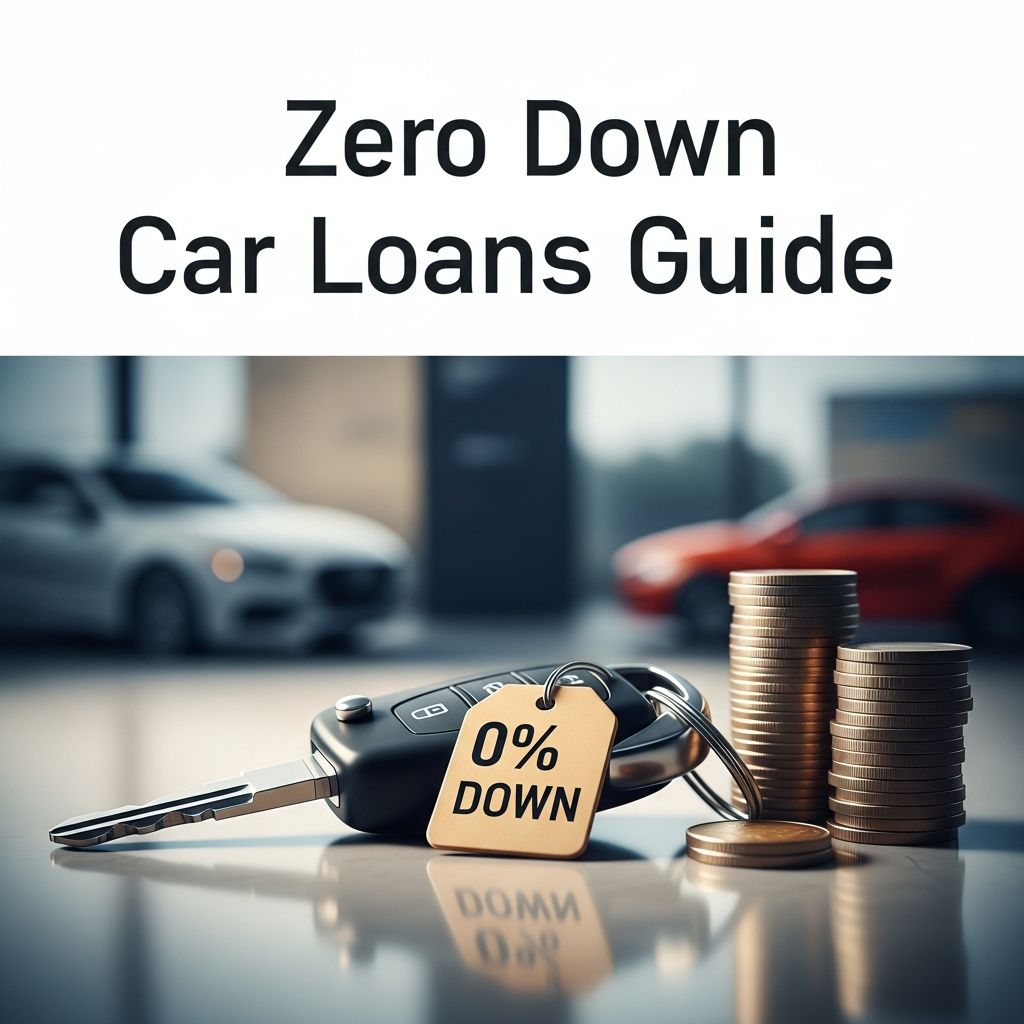
Securing a car loan without any initial payment is feasible for many buyers, allowing immediate access to a vehicle by financing the full purchase price plus associated fees. This approach suits those lacking saved funds but requires careful evaluation of long-term costs and risks.
Understanding Zero Down Financing Mechanics
Zero down car loans enable borrowers to cover 100% of the vehicle’s cost, including sales tax, registration, title fees, and dealer add-ons, without upfront cash. Lenders assess the loan-to-value (LTV) ratio, sometimes extending beyond 100% or up to 150% to accommodate extras, effectively rolling everything into monthly payments. This structure means higher principal borrowed, often resulting in elevated monthly installments and total interest over the loan term.
Borrowers typically qualify based on creditworthiness, income stability, and debt levels. Lenders prioritize applicants with strong profiles to offset the increased risk of full financing. For instance, selecting affordable new or used vehicles can enhance approval odds, as pricier models heighten lender exposure.
Key Advantages of Skipping the Down Payment
- Swift Vehicle Acquisition: Ideal for urgent needs like commuting or family transport, bypassing savings delays.
- Cash Flow Preservation: Retain liquidity for emergencies, bills, or other investments instead of depleting reserves.
- Credit Improvement Potential: Timely repayments on a larger loan can boost credit history if managed well.
Potential Drawbacks and Financial Risks
While convenient, zero down options carry notable downsides. Expect steeper monthly payments due to the full amount financed, alongside possibly higher interest rates reflecting lender risk. A primary concern is negative equity: cars depreciate rapidly—often 20-30% in the first year—potentially leaving borrowers owing more than the vehicle’s worth if totaled or traded early.
| Pros | Cons |
|---|---|
| Quick access without savings | Higher monthly payments |
| Keeps cash for other uses | Risk of higher interest |
| Builds credit with payments | Underwater loan exposure |
Data from credit bureaus indicates that no-down loans amplify upside-down risk, especially without gap insurance, which covers depreciation gaps in total loss scenarios—but refinancing may require repurchasing coverage.
Boosting Your Approval Chances
Strengthen Credit Profile
A robust credit score, ideally 720+, significantly improves prospects for zero down approval and better rates. Lenders view high scores as risk mitigators, reducing the need for upfront equity. Start by reviewing your free credit report annually via AnnualCreditReport.com (official U.S. government site), addressing errors, reducing credit utilization below 30%, and paying debts promptly. Scores above 680 often secure favorable terms without rate hikes tied to no down payment.
Explore Lender Variations
Down payment policies differ across institutions. Credit unions, banks, and online lenders set unique LTV caps and preapproval processes. Some offer prequalification without hard inquiries, revealing potential terms early. Compare via tools from the Consumer Financial Protection Bureau (CFPB.gov), focusing on APR, LTV flexibility, and fees. Promotions on specific models may waive down payments temporarily.
Leverage Trade-Ins or Cosigners
Trading an existing vehicle with equity can offset the down payment equivalent, applying value directly to the new purchase. For weaker credit (e.g., subprime 580-669), a cosigner with solid credit and income assumes joint liability, often unlocking zero down terms. Ensure the cosigner understands default risks.
Master Negotiation Tactics
Armed with multiple preapprovals, negotiate by pitting offers against each other—perhaps accepting a shorter term or slightly higher rate for no upfront cost. Dealers may bundle zero down with promotions, but always calculate total loan expense.
Protecting Yourself with Essential Add-Ons
Gap insurance is crucial for zero down buyers, bridging the gap between loan balance and depreciated value in accidents or thefts. Official guidelines from the Federal Trade Bureau (FTC.gov) recommend it for full-finance deals, as standard auto policies rarely cover owed amounts fully. Mechanical breakdown coverage can further safeguard against repair costs eroding equity.
Real-World Qualification Factors
Beyond credit, lenders scrutinize debt-to-income (DTI) ratios—aim for under 36% including the new payment—and stable employment. Income proof via pay stubs strengthens applications. For used cars, in-house financing from reputable dealers may bypass traditional checks but verify legitimacy via Better Business Bureau (BBB.org).
| Factor | Impact on Zero Down Approval |
|---|---|
| Credit Score >720 | High likelihood, low rates |
| DTI <36% | Strong repayment signal |
| Trade-In Equity | Reduces financed amount |
| Cosigner | Boosts for subprime |
Strategic Alternatives to Pure Zero Down
Consider low-down options like $500-1000 deferred payments from select financiers, easing entry while building equity faster. Leasing sidesteps ownership depreciation but incurs mileage limits. Refinancing post-purchase, once equity builds, can lower rates—track via Experian’s auto loan tools.
Frequently Asked Questions
Is a 720 credit score required for zero down?
No strict minimum exists, but 720+ maximizes options and rates; subprime applicants succeed with cosigners or trade-ins.
Does zero down always mean higher interest?
Often yes, due to risk, but competitive shopping and strong credit can minimize hikes.
What if my car depreciates quickly?
Opt for gap insurance and avoid long terms; pay extra principal early to build equity.
Can I get zero down on used cars?
Yes, especially cheaper models; in-house dealer financing aids bad/no credit cases.
How does a trade-in help?
It credits equity toward purchase, mimicking a down payment without cash outlay.
Final Financial Planning Tips
Budget holistically: factor insurance hikes, maintenance, and fuel. Use CFPB’s auto loan calculator for scenarios. Prioritize loans under 60 months to curb interest. Monitor credit monthly post-approval. Zero down accelerates ownership but demands disciplined repayment to avert debt cycles.
References
- How to Get a Car Loan With No Down Payment — Experian. 2023-10-15. https://www.experian.com/blogs/ask-experian/how-to-get-car-loan-with-no-down-payment/
- Can You Buy a Car with No Down Payment? — Credit Acceptance. 2024-05-20. https://www.creditacceptance.com/car-buyers/express-lane/buying-car-no-down-payment
- Can I Buy a Car with No Down Payment? Here’s What You Need to Know — MCCU. 2023-11-08. https://mmccu.com/can-i-buy-a-car-with-no-down-payment-heres-what-you-need-to-know/
- Car Loan with Zero Down Payment: What You Need to Know — Capital One Auto Navigator. 2024-02-12. https://www.capitalone.com/cars/learn/managing-your-money-wisely/car-loan-with-zero-down-payment-what-you-need-to-know/1511
- Used Cars with No Credit Check and Low Down Payment — D1 Auto Credit. 2023-07-01. https://www.d1autocredit.com/500-down-cars
Similar Articles








Read full bio of Sneha Tete