Zero-Based Budgeting: Definition, Process & Benefits
Master zero-based budgeting: justify every expense, optimize costs, and align spending with strategic goals.
What Is Zero-Based Budgeting?
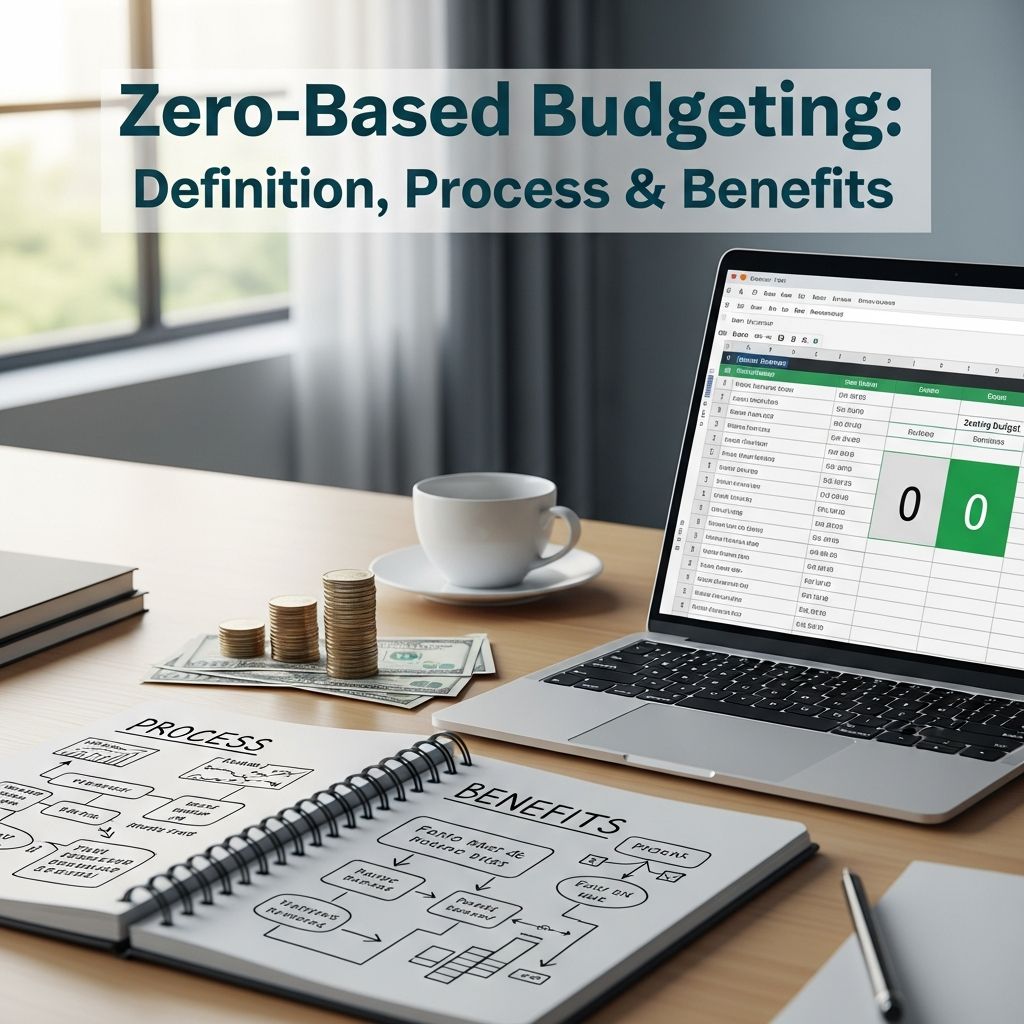
Zero-based budgeting (ZBB) is a comprehensive budgeting methodology in which all expenses must be justified for each new budget period, starting from a baseline of zero. Unlike traditional budgeting approaches that rely on incremental adjustments to previous budgets, ZBB requires organizations and individuals to evaluate every expense from scratch and justify its necessity based on current business needs and strategic objectives.
The fundamental premise of zero-based budgeting is that no expense is automatically carried forward from one budget cycle to the next. Instead, every dollar must be assigned to a specific purpose, ensuring that once all expenses are allocated, there is theoretically zero dollars remaining unaccounted for. This approach represents a paradigm shift in how organizations approach financial planning and resource allocation.
Understanding the Basics of Zero-Based Budgeting
Zero-based budgeting operates by tying top-level strategic goals directly into the budgeting process through specific functional areas of the organization. This integration allows costs to be grouped by department or function and then measured against both previous results and current expectations.
The methodology enables organizations to avoid blanket percentage increases or decreases to budgets. Rather than automatically allocating a 2% budget increase across all departments, managers must defend each expense category and demonstrate its value to the organization. This detail-oriented approach requires breaking down organizational activities into decision units, with each unit’s contribution to overall objectives carefully evaluated.
Because of its comprehensive nature, zero-based budgeting is often implemented as a rolling process conducted over several years, with different functional areas reviewed periodically by managers and group leaders. This phased approach makes the process more manageable while still maintaining its core principle of expense justification.
Zero-Based Budgeting vs. Traditional Budgeting
The distinction between zero-based budgeting and traditional budgeting approaches is significant and affects how organizations manage their finances.
| Aspect | Traditional Budgeting | Zero-Based Budgeting |
|---|---|---|
| Starting Point | Begins with previous year’s budget | Starts from zero baseline |
| Expense Justification | Only new expenditures analyzed | All expenses require justification |
| Budget Adjustments | Incremental increases (e.g., 2%) | Justified allocation of resources |
| Focus | Optimization of revenue | Cost optimization and value creation |
| Time Investment | Relatively quick process | Time-consuming and detailed |
| Cost Driver Identification | Limited granular analysis | Detailed identification of cost drivers |
Traditional budgeting often assumes that past spending patterns represent suitable baselines for future expenditures, which can perpetuate inefficiencies. In contrast, ZBB encourages a dynamic and responsive approach to financial planning. Organizations using ZBB might discover that resources previously allocated to less critical functions can be redirected toward innovation, market expansion, or strategic priorities.
Key Characteristics and Principles of ZBB
Zero-based budgeting is built on several core principles that distinguish it from other budgeting methodologies.
Cost Efficiency and Value-Driven Decisions
At its foundation, ZBB encourages organizations to evaluate expenditures critically, ensuring that every dollar spent contributes to achieving strategic goals. This principle requires a fundamental shift in perspective where past budgets are not automatically carried forward but instead questioned and re-evaluated.
Questioning and Scrutiny
ZBB operates on the principle of questioning every aspect of organizational activities. This granular approach enables businesses to identify inefficiencies and uncover potential cost savings. For example, a manufacturing company might use ZBB to analyze production processes, identifying areas where automation could reduce labor costs while increasing efficiency.
Alignment of Resources with Priorities
By focusing on cost efficiency, organizations can allocate funds to areas offering the highest return on investment, whether in product development, marketing, employee training, or research and development. This ensures resources are directed toward initiatives that drive growth and competitive advantage.
How Zero-Based Budgeting Works
Implementing zero-based budgeting involves a systematic process designed to evaluate every expense category comprehensively.
Step 1: Identify Strategic Objectives — Begin by clarifying organizational goals and strategic priorities. These objectives serve as the foundation for all budgeting decisions and expense justifications.
Step 2: Create Decision Units — Break down the organization into functional areas or decision units. Each unit should represent a logical grouping of activities or departments.
Step 3: Analyze Expenses — Examine all expenses within each decision unit, including both recurring costs and new expenditures. For each expense, require managers to justify its necessity and demonstrate its contribution to strategic objectives.
Step 4: Evaluate and Compare — Compare the performance and costs of different approaches to achieving the same objective. This step identifies the most efficient and cost-effective methods.
Step 5: Prioritize Expenses — Rank expenses based on their importance to strategic goals and their return on investment. This prioritization guides resource allocation decisions.
Step 6: Monitor and Adjust — Continuously review budget performance and make adjustments as needed to ensure alignment with strategic objectives and financial targets.
Real-World Example of Zero-Based Budgeting
Consider a construction equipment manufacturing company that implements zero-based budgeting to scrutinize manufacturing department expenses. During the analysis, the company discovers that the cost of certain parts used in its final products, outsourced to another manufacturer, increases by 5% annually.
Upon investigation, the company determines it possesses the in-house capability to manufacture these parts using its own workforce. After weighing the advantages and disadvantages of in-house production against outsourcing, the company concludes it can produce the parts more economically than the external supplier.
Under traditional budgeting, the company might have simply accepted the 5% annual increase and adjusted its budget accordingly, masking the cost increase without addressing its root cause. However, through zero-based budgeting, the company identified an opportunity to reduce costs significantly by bringing production in-house, improving profitability without sacrificing quality.
Advantages of Zero-Based Budgeting
Zero-based budgeting offers several significant benefits for organizations committed to implementing this approach:
Cost Reduction — By eliminating unnecessary expenses and identifying inefficiencies, ZBB often results in substantial cost savings. Organizations can reduce waste and redirect resources to high-value activities.
Strategic Alignment — ZBB ensures that spending decisions directly support organizational objectives, creating better alignment between financial resources and strategic priorities.
Improved Accountability — Requiring managers to justify every expense fosters greater accountability and responsibility for resource utilization throughout the organization.
Enhanced Decision-Making — The detailed analysis required by ZBB provides management with comprehensive insights into cost drivers and operational efficiency, supporting better strategic decisions.
Flexibility and Responsiveness — Because ZBB is conducted from scratch each period, organizations can quickly adapt to changing market conditions and business priorities.
Identification of Cost Drivers — Unlike traditional budgeting, ZBB uncovers specific factors driving costs within departments, enabling targeted cost management strategies.
Challenges and Limitations of ZBB
While zero-based budgeting offers substantial benefits, it also presents several challenges that organizations should understand before implementation.
Time-Consuming Process — ZBB requires considerably more time and effort than traditional budgeting. The comprehensive evaluation of every expense and the detailed justifications required can extend the budgeting cycle significantly.
Resource Intensive — The process demands significant involvement from managers and financial professionals, consuming organizational resources that could be directed elsewhere.
Implementation Complexity — Organizations must overcome organizational resistance to change and ensure consistent application across all departments and decision units.
Bias Toward Revenue-Generating Activities — ZBB often favors areas that generate direct revenues or tangible production outputs, potentially disadvantaging departments such as client service, research and development, and human resources, where contributions are less easily quantifiable.
Cost of the Process Itself — The administrative overhead of implementing and maintaining ZBB must be weighed against the savings it identifies to ensure the methodology delivers genuine financial benefits.
Industry Applications and Case Studies
Zero-based budgeting has demonstrated effectiveness across various industries and organizational types.
Consumer Goods Sector — A global consumer goods company implemented ZBB to address rising operational costs and improve profitability. By rigorously evaluating every expense, the company identified significant savings opportunities, particularly in marketing and supply chain management, achieving cost savings exceeding 20% while redirecting resources to core business activities and strategic growth initiatives.
Financial Services — A financial services firm adopted ZBB to enhance its budgeting process and improve cost transparency. By involving cross-functional teams in the budgeting process and leveraging advanced analytics, the firm optimized its cost structure and increased profitability by 15%.
Small Business Applications — A family-owned bakery struggling with declining profits implemented ZBB, conducting thorough analysis of all expenses from ingredient purchases to marketing efforts. The analysis revealed that a significant portion of the budget was spent on high-end packaging that did not contribute to sales. By switching to cost-effective packaging alternatives and realigning marketing strategies toward local community events and social media promotions, the bakery reduced expenses while increasing customer engagement and sales.
Zero-Based Budgeting for Personal Finance
Zero-based budgeting principles extend beyond corporate environments to personal financial management. Individuals using ZBB assign a specific role to every dollar earned, ensuring that after allocating income to various expense categories—whether bills, transportation, savings, or other categories—there remains zero dollars unaccounted for.
For personal application, the ZBB process involves documenting all income sources, listing all expenses across numerous categories, and assigning each dollar to a specific purpose. Regular review and adjustment of the personal ZBB budget ensures it remains aligned with changing income levels and financial priorities.
Implementing Zero-Based Budgeting: Best Practices
Organizations seeking to implement zero-based budgeting should consider these best practices:
Start with Clear Objectives — Establish specific, measurable financial and strategic objectives that will guide the ZBB process.
Secure Leadership Support — Executive commitment is essential for successful ZBB implementation, as the process requires significant organizational change.
Provide Training — Ensure managers and financial professionals understand ZBB principles and their role in the process through comprehensive training programs.
Use Technology — Leverage budgeting software and analytics tools to streamline data collection, analysis, and reporting.
Phase Implementation — Consider implementing ZBB gradually, rolling out the methodology across different departments or functions over time rather than organization-wide simultaneously.
Monitor and Communicate — Continuously track results, communicate findings to stakeholders, and celebrate successes to maintain momentum and organizational support.
Frequently Asked Questions
What is the primary difference between zero-based budgeting and incremental budgeting?
The primary difference lies in the starting point. Zero-based budgeting begins from zero and requires justification for all expenses, while incremental budgeting starts with the previous year’s budget and adjusts it incrementally, typically assuming past spending patterns are appropriate baselines.
How long does it typically take to implement zero-based budgeting?
Implementation timelines vary depending on organizational size and complexity. Due to ZBB’s detail-oriented nature, it typically requires significantly longer than traditional budgeting processes. Many organizations implement ZBB as a rolling process over multiple years, reviewing different functional areas sequentially rather than simultaneously.
What types of organizations benefit most from zero-based budgeting?
Organizations with multiple departments or functions, varying cost structures, and a need for strategic resource alignment typically benefit most from ZBB. This includes manufacturing companies, financial services firms, consumer goods organizations, and large corporations seeking to optimize operational efficiency.
Can zero-based budgeting be combined with other budgeting methods?
Yes, zero-based budgeting can be used as an adjunct to or in combination with other budgeting approaches. Some organizations use ZBB for specific departments or cost categories while maintaining traditional budgeting methods elsewhere.
How does zero-based budgeting support strategic goal achievement?
ZBB ensures every expense is aligned with organizational objectives by requiring justification based on strategic contributions. This alignment of resources with strategic priorities enables organizations to focus on initiatives delivering the highest value and driving long-term success.
References
- Zero-Based Budgeting (ZBB) Methodology — Budget Counsel. 2024. https://budgetcounsel.com/
- Zero-Based Budgeting: Strategic Implementation and Financial Optimization — Meegle Financial Resources. 2024. https://www.meegle.com/
- Zero-Based Budgeting Explained: Maximizing Financial Resources — InCharge Education Foundation. 2024. https://www.incharge.org/
Similar Articles








Read full bio of Sneha Tete