Zero-Based Budgeting: 4 Key Advantages For Strategic Finance
Master the budgeting method that accounts for every dollar and eliminates wasteful spending.
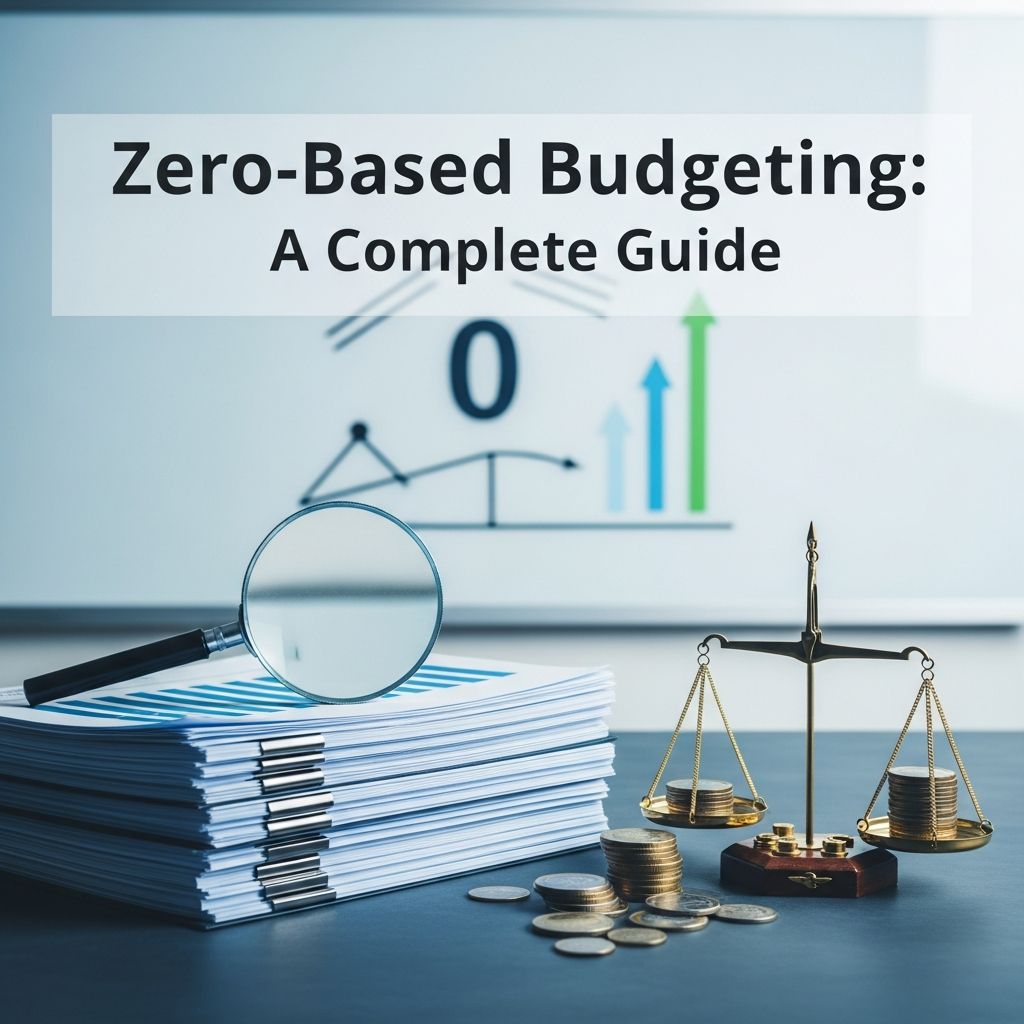
Financial management requires intentional decision-making about where money goes and why. One approach that has gained significant traction among both individuals and organizations is zero-based budgeting, a methodology that fundamentally changes how people think about allocating their resources. Rather than building on previous spending patterns, this approach demands that every expense be justified from the ground up, creating a more deliberate and strategic financial framework.
Understanding the Fundamentals of Zero-Based Budgeting
Zero-based budgeting represents a departure from conventional budgeting practices that typically rely on historical spending as the foundation for future financial planning. Instead of incrementally adjusting previous year budgets, zero-based budgeting requires organizations and individuals to construct their budgets entirely from scratch at the beginning of each period. This methodology was developed in the 1970s by Pete Pyhrr, an accounting manager at Texas Instruments, who sought to help organizations reduce costs and promote greater fiscal responsibility.
The core principle underlying this approach is straightforward: every expenditure must earn its place in the budget through rigorous justification and analysis. Rather than assuming that last year’s spending levels should continue, decision-makers must evaluate each expense against current organizational priorities, operational needs, and strategic objectives. This fresh perspective eliminates the default tendency to perpetuate spending that may no longer serve an organization’s evolving goals.
For individuals implementing zero-based budgeting at the household level, the concept translates into a practical formula: income minus all expenses and savings allocations should equal zero. This means that every dollar received is intentionally assigned to a specific purpose, whether that purpose involves paying bills, investing, or saving for future goals. The result is a comprehensive accounting system where no money remains unallocated or unexamined.
How Zero-Based Budgeting Differs from Traditional Methods
Traditional budgeting approaches typically operate on an incremental model, where the previous year’s budget serves as the baseline and adjustments are made based on anticipated changes. This method, while simpler to implement, can perpetuate inefficient spending patterns and fail to account for changing organizational realities.
| Aspect | Zero-Based Budgeting | Traditional Budgeting |
|---|---|---|
| Starting Point | Zero each period | Previous period’s budget |
| Flexibility | Highly flexible and dynamic | Less flexible, follows established patterns |
| Spending Control | Eliminates unnecessary expenses through justification | May perpetuate unchecked spending increases |
| Focus | Value-driven investments aligned with current priorities | Historical spending patterns and assumptions |
| Resource Allocation | Based on current needs and strategic goals | Based on incremental adjustments |
The zero-based approach compels stakeholders to question assumptions embedded in traditional budgets. When every line item requires justification, organizations naturally identify redundancies, outdated programs, and inefficient processes that might otherwise continue indefinitely under traditional budgeting systems.
Key Advantages of Implementing Zero-Based Budgeting
Enhanced Cost Efficiency and Elimination of Waste
One of the most compelling benefits of zero-based budgeting is its capacity to reduce unnecessary spending. By requiring detailed justification for every cost, organizations are compelled to scrutinize expenses and eliminate those that do not align with current operational needs or strategic priorities. This radical evaluation ensures that only essential expenditures receive funding, resulting in more efficient utilization of available financial resources.
Unlike traditional methods where historical spending often goes unchallenged, zero-based budgeting surfaces redundancies and wasteful practices. The methodology naturally highlights which expenses truly contribute value and which represent legacy obligations that may no longer serve organizational interests.
Strategic Alignment and Goal-Oriented Resource Distribution
Zero-based budgeting begins with an organization’s strategic objectives, ensuring that financial resources flow toward initiatives that matter most. Whether the goal involves improving customer experience, pursuing digital transformation, or entering new markets, every revenue and expense item can be tied directly back to these strategic priorities and key performance indicators.
This alignment means that resources are no longer distributed based on historical accident or departmental politics, but rather according to deliberate strategic choices. High-impact initiatives receive funding because they directly serve organizational goals, while lower-priority programs receive proportionally fewer resources or are eliminated entirely.
Improved Accountability and Transparency
When every expense requires justification, accountability naturally increases throughout an organization. Managers must articulate why their departments need specific resources and how those resources contribute to organizational success. This transparency creates a culture where financial stewardship becomes a shared responsibility rather than an administrative function divorced from operational decision-making.
Additionally, the detailed nature of zero-based budgeting ensures that single-year expenses do not accidentally perpetuate into subsequent budgets. Unsupported expenditures from prior years are called into question, preventing the slow accumulation of legacy costs.
Enhanced Adaptability to Market Changes
In rapidly changing business environments, zero-based budgeting provides superior flexibility compared to traditional approaches. Because budgets are constructed from scratch each period, organizations can quickly reallocate resources in response to shifting priorities and emerging opportunities. This dynamic approach is particularly valuable for startup companies operating in constant testing and validation mode, where expenses and revenues remain fluid.
Implementing Zero-Based Budgeting: A Practical Approach
Step-by-Step Implementation Process
The first critical step involves resetting all departmental or personal budgets to zero, eliminating the automatic assumption that previous spending levels should continue. This clean slate approach prevents budget creep and forces genuine evaluation of resource needs.
Next, decision-makers should align budget construction with organizational strategic goals and key priorities. This ensures that resource allocation reflects what the organization actually values, rather than what historical patterns suggest.
Every expense must then be thoroughly analyzed for its necessity and cost-effectiveness. This evaluation extends beyond simple number-crunching to include assessment of how each expenditure contributes to organizational objectives and delivers value.
Finally, resources should be allocated based on this rigorous justification process, with funding flowing to high-priority initiatives and value-creating activities while lower-priority items receive reduced or eliminated funding.
Agile Zero-Based Budgeting Approach
For large, complex organizations, an agile variation of zero-based budgeting provides practical advantages. Rather than applying the methodology comprehensively across the entire organization simultaneously, agile zero-based budgeting focuses on areas of highest priority first, enabling budget teams to capture cost-saving opportunities quickly while maintaining alignment with long-term business strategy.
This rolling application allows the budgeting process to be less disruptive while still delivering meaningful cost improvements and enhanced strategic alignment. By focusing initial efforts on business units with greater cost variability, organizations can achieve faster results without overwhelming their budgeting resources.
Industry-Specific Applications
Manufacturing Sector Implementation
Manufacturing organizations can leverage zero-based budgeting to significantly reduce production costs and enhance operational efficiency. By meticulously justifying every resource and process, manufacturers gain granular visibility into where money flows throughout production operations.
A manufacturer might use zero-based budgeting to analyze the cost-effectiveness of each production line. Through scrutinizing every aspect of production—from raw material procurement to labor allocation—the company can identify inefficiencies and areas for improvement. This level of analysis often reveals opportunities to streamline operations and focus investments on the most value-generating production activities.
Suitability for Mature and Emerging Industries
Zero-based budgeting proves particularly valuable for companies in mature industries where growth has plateaued and cost efficiency becomes essential for competitiveness. Healthcare organizations, for example, operate in a mature industry where zero-based budgeting helps identify unnecessary spending and ensure resources support core patient care objectives.
Conversely, startup companies and early-stage ventures benefit from zero-based budgeting’s flexibility and emphasis on strategic alignment. In these environments, where business models and priorities shift frequently, the ability to rapidly reallocate resources based on changing needs provides significant competitive advantage.
Challenges and Considerations
While zero-based budgeting offers substantial benefits, implementation demands significant time and resources. The detailed analysis required to justify every expense consumes considerable management attention compared to simpler incremental budgeting approaches. Organizations must invest in training and systems that enable thorough expense evaluation and justification.
Additionally, zero-based budgeting can face cultural resistance within organizations accustomed to historical spending patterns. Departments that benefited from incremental budget growth may resist having their funding subjected to rigorous justification. Successful implementation requires strong leadership commitment and clear communication about why the organization is adopting this more demanding approach.
Frequently Asked Questions
What fundamental principle defines zero-based budgeting?
Zero-based budgeting operates on the principle that all expenses for each budgeting period must be justified and analyzed for their necessity and costs. Unlike incremental budgeting, expenses do not automatically carry over from period to period but are continuously reevaluated for the value they provide.
How does zero-based budgeting reduce organizational costs?
Zero-based budgeting reduces costs by avoiding across-the-board budget increases inherited from prior periods. Decision-makers are forced to constantly evaluate the need for and value of each expense, preventing them from being tied to limitations of previous assumptions and budget targets.
Is zero-based budgeting suitable for all organization types?
Zero-based budgeting works best for companies in mature industries pursuing cost efficiencies and startup companies operating in testing and validation modes. However, the intensive resource requirements mean organizations should carefully consider whether the benefits justify the implementation effort for their specific circumstances.
What are the primary differences between zero-based and traditional budgeting?
Traditional budgeting uses the previous year’s budget as a baseline and makes incremental adjustments, while zero-based budgeting starts from scratch each period with every expense requiring justification. Zero-based budgeting provides greater flexibility and cost control but demands more time and analytical resources.
How can individuals apply zero-based budgeting principles?
Individuals can implement zero-based budgeting by designating every dollar of income to specific expenses, spending categories, or savings goals. The goal is for income minus all expenses and savings to equal zero, ensuring each dollar receives intentional allocation with clear purpose.
Conclusion: Strategic Financial Management Through Zero-Based Budgeting
Zero-based budgeting represents a fundamental shift in how organizations and individuals approach financial planning and resource allocation. By requiring rigorous justification for every expense and aligning spending with strategic priorities, this methodology enables organizations to eliminate wasteful spending, improve cost control, and ensure resources flow toward high-impact initiatives. While the approach demands more time and attention than traditional budgeting, the benefits—including enhanced strategic alignment, improved accountability, and superior adaptability—justify the investment for organizations serious about optimizing their financial performance. Whether implemented comprehensively or through an agile rolling approach, zero-based budgeting provides a powerful framework for making intentional, value-driven financial decisions in an increasingly complex economic environment.
References
- What Is Zero-Based Budgeting? — Workday US. Accessed February 2026. https://www.workday.com/en-us/topics/fpa/what-is-zero-based-budgeting.html
- Zero-based budgeting: pros and cons — Prophix. Accessed February 2026. https://www.prophix.com/blog/zero-based-budgeting-pros-and-cons/
- Zero-Based Budgeting — The Hackett Group®. Accessed February 2026. https://www.thehackettgroup.com/zero-based-budgeting-hackett/
- 10 Advantages and Disadvantages of Zero-Based Budgeting — Paro. Accessed February 2026. https://paro.ai/blog/advantages-disadvantages-zero-based-budgeting/
- What is Zero-Based Budgeting? — Citizens Bank. Accessed February 2026. https://www.citizensbank.com/learning/what-is-zero-based-budgeting.aspx
- What is Zero-Based Budgeting (ZBB)? — Oracle. Accessed February 2026. https://www.oracle.com/performance-management/planning/zero-based-budgeting/
Similar Articles








Read full bio of medha deb