Your First Credit Score: Where It Begins
Discover how credit scores are generated from scratch, typical ranges for beginners, and proven strategies to build a strong foundation early on.

Many newcomers to the world of finance assume their credit score begins at a specific baseline like zero or 500, but the reality is far more nuanced. In truth, you start with no score at all—a state known as being “credit invisible”—until you take actionable steps to establish a history with lenders and bureaus. This article breaks down the process of generating your initial score, common entry points, influencing elements, and practical methods to launch your credit journey on solid footing.
The Moment Your Credit Profile Emerges
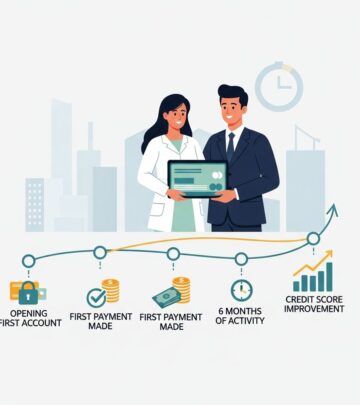
Your credit score materializes only after financial institutions report activity to major bureaus such as Equifax, Experian, and TransUnion. Without any accounts in your name—be it a credit card, auto loan, or student debt—there’s simply no data to analyze. This absence typically persists for the first few months of credit use, often around six months for a full score under models like FICO, which powers 90% of lending decisions.
Once reporting begins, algorithms evaluate your file. FICO and VantageScore, the dominant models, scale from 300 (minimum) to 850 (maximum). New profiles rarely hit extremes; instead, they cluster in lower tiers due to limited data. Expect your debut score to reflect early behaviors rather than a predetermined value.
Common Entry Ranges for Newcomers
First-time scores generally fall between 300 and 669, with most landing in the 500-600 zone if habits are sound from the outset. Here’s a breakdown of FICO categories relevant to beginners:
| Range | Category | Implications for New Users |
|---|---|---|
| 300-579 | Poor | Common for zero-history starters; limits options but improvable quickly. |
| 580-669 | Fair | Achievable with on-time payments; unlocks basic cards and loans. |
| 670-739 | Good | Rare initially; requires 6+ months of excellent management. |
This table draws from FICO’s standard ranges, where poor scores signal high risk but aren’t permanent for diligent builders. VantageScore mirrors this but may generate scores sooner with thinner files.
Core Components Driving Your Initial Score
Credit models weigh five pillars, with weights fixed yet varying in impact by profile stage. For novices, certain factors dominate due to sparse data.
- Payment History (35%): Tracks on-time payments, delinquencies, or worse. As your heaviest influencer, perfect punctuality from account one sets a positive tone.
- Amounts Owed/Utilization (30%): Measures debt relative to limits, ideally under 30%. High usage on a starter card can plummet scores despite clean payments.
- Length of History (15%): Averages account ages. New files suffer here, but time heals this gap.
- New Credit (10%): Counts recent inquiries and openings. Avoid multiple applications early to prevent dings.
- Credit Mix (10%): Balances revolving (cards) and installment (loans) debt. Starters often lack mix, tempering scores.
These derive directly from myFICO’s breakdown, emphasizing proactive management for optimal starts.
Strategies to Secure a Strong Debut Score
Achieving fair credit (580+) out of the gate demands intentional moves. Opt for secured cards or credit-builder loans that report positively without high risk. Maintain utilization below 10% initially—charge small, pay fully monthly. Authorize payments to autopay, safeguarding your 35% payment factor.
Monitor progress via free weekly reports from AnnualCreditReport.com, a government-backed hub ensuring accuracy. After three months, scores often emerge; by six, they’re robust enough for assessments.
Overcoming the ‘No Score’ Hurdle
Credit invisibility blocks rentals, jobs, and loans. Bridge it via authorized user status on a trusted family member’s seasoned account—positive history transfers without liability. Alternatives include rent-reporting services or small utility inclusions, though not all bureaus accept them universally.
For immigrants or rebuilders, ITIN-based products from community lenders provide entry. Patience pays: consistent activity generates scores within months, per Equifax guidelines.
Score Variations Across Models and Bureaus
Discrepancies arise from dual models and three bureaus. FICO prioritizes payment rigor; VantageScore forgives thinner files. Bureau differences stem from varying reporter participation—one might show 550, another 620. Lenders pull specific combos (e.g., FICO 8 from Experian), so check all for holistic views.
Long-Term Growth from Humble Beginnings
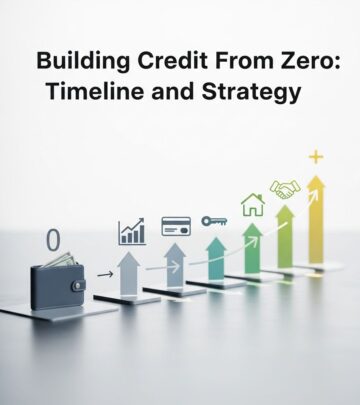
Poor starters aren’t doomed. Metrics show fair scores within a year for 70% of responsible users, per aggregated bureau data. Layer accounts gradually: add installment debt post-six months for mix boost. Shun payday loans or unchecked utilization spikes.
Tools like Experian’s free monitoring flag issues early, while apps simulate utilization impacts. Aim for 700+ by year two through diversification and low inquiries.
Frequently Asked Questions
Can I get a credit score without a credit card?
Yes, loans, leases, or reported utilities suffice, though cards accelerate building due to frequent reporting.
How long until my first score appears?
Typically 3-6 months post-first account, varying by model—FICO needs more data.
Does closing a starter account hurt?
Yes, it shortens history and raises utilization; keep paid-off cards open.
Are student loans factored in immediately?
Yes, they contribute to mix and history once reported, often boosting early scores.
What’s the fastest way to 700?
Low utilization (<10%), perfect payments, and one additional account after six months.
Real-World Impacts of Your Starting Score
A 600 opener secures basic secured cards at 20%+ APR; 650 unlocks unsecured options under 15%. Deposits average $200-500 for secured products, refundable upon upgrade. Jobs increasingly check scores—fair tiers pass most entry-level screens.
Table of sample products by range:
| Score Range | Product Examples | Typical APR |
|---|---|---|
| 300-579 | Secured cards, credit-builder loans | 25-30% |
| 580-669 | Unsecured starter cards, subprime auto | 18-25% |
| 670+ | Rewards cards, prime loans | 12-18% |
Navigating Common Pitfalls
Avoid maxing limits (utilization killer), ignoring statements, or co-signing prematurely. Multiple inquiries signal desperation, dropping scores 5-10 points each. Balance transfers on new cards inflate utilization temporarily—time them wisely.
For joint accounts, both parties’ habits intertwine; choose partners carefully.
Advanced Tips for Accelerated Progress
Leverage manufacturer cards (e.g., gas stations) for easy approval and limits. Request increases after six on-time payments to dilute utilization. Dispute bureau errors promptly—10% of files contain inaccuracies per FTC stats.
Track via VantageScore 4.0 for predictive insights, increasingly adopted by fintechs.
References
- What Credit Score Do You Start With? — Experian. 2023. https://www.experian.com/blogs/ask-experian/what-does-your-credit-score-start-at/
- What’s in my FICO Scores? — myFICO. 2024. https://www.myfico.com/credit-education/whats-in-your-credit-score
- What Credit Score Do You Start With? — Discover. 2024. https://www.discover.com/credit-cards/card-smarts/starting-credit-score/
- What Credit Score Do You Start With? — Capital One. 2024. https://www.capitalone.com/learn-grow/money-management/starting-credit-score/
- Understanding Your Credit — FTC Consumer Advice. 2023-10-01. https://consumer.ftc.gov/articles/understanding-your-credit
- What Is a Credit Score & Why Is It Important? — Equifax. 2024. https://www.equifax.com/personal/education/credit/score/articles/-/learn/what-is-a-credit-score/
Similar Articles








Read full bio of Sneha Tete