You Might Be Breathing Wrong: Here’s What to Do Instead
Discover how improper breathing harms your health and learn simple techniques to breathe correctly for better energy, sleep, and well-being.
Breathing is the most fundamental function of life, yet most of us do it incorrectly without realizing it. Shallow, chest-based breathing has become the norm in modern society, contributing to chronic stress, fatigue, poor posture, and a host of health problems. This article explores why you’re likely breathing wrong, the science behind proper breathing, and practical steps to correct it for immediate and long-term benefits.
Why Most People Breathe Wrong
In our evolutionary past, humans breathed deeply using the diaphragm, promoting optimal oxygen intake and relaxation. Today, sedentary lifestyles, stress, and poor posture have shifted breathing to the upper chest, resulting in shallow breaths that deliver only a fraction of needed oxygen. This habitual over-breathing disrupts blood CO2 levels, constricts airways, and triggers the sympathetic nervous system, keeping us in constant fight-or-flight mode.
- Shallow breathing reduces oxygen efficiency: Chest breathing uses accessory muscles inefficiently, leading to hyperventilation-like states even at rest.
- Modern habits exacerbate the issue: Slouching at desks compresses the diaphragm, while stress prompts mouth breathing, which dries airways and reduces nitric oxide production.
- Consequences include: Anxiety, insomnia, digestive issues, weakened immunity, and even hypertension, as chronic shallow breathing fatigues the body.
The Science of Proper Breathing
Proper breathing, known as diaphragmatic or belly breathing, engages the diaphragm muscle below the lungs, allowing full lung expansion and efficient gas exchange. Research from the National Institutes of Health (NIH) shows this technique increases parasympathetic activity, lowering heart rate and cortisol levels. A study in the Journal of Clinical Medicine (2023) found that 10 minutes daily of diaphragmatic breathing improved lung function by 20% in adults with respiratory issues.
| Breathing Type | Oxygen Intake | Stress Impact | Health Benefits |
|---|---|---|---|
| Chest (Wrong) | Low (30-40% capacity) | Increases cortisol | Minimal; promotes tension |
| Diaphragmatic (Correct) | High (70-90% capacity) | Reduces cortisol by 25% | Better sleep, digestion, immunity |
CO2 plays a key role: Optimal levels dilate blood vessels for better oxygenation, unlike low-CO2 shallow breathing which causes vasoconstriction.
Signs You’re Breathing Wrong
Self-assess with these common indicators:
- Feeling tired despite sleep or caffeine.
- Frequent sighing or yawning for air.
- Tightness in shoulders, neck, or chest.
- Mouth breathing, especially at night (check for dry mouth upon waking).
- Anxiety or panic without clear triggers.
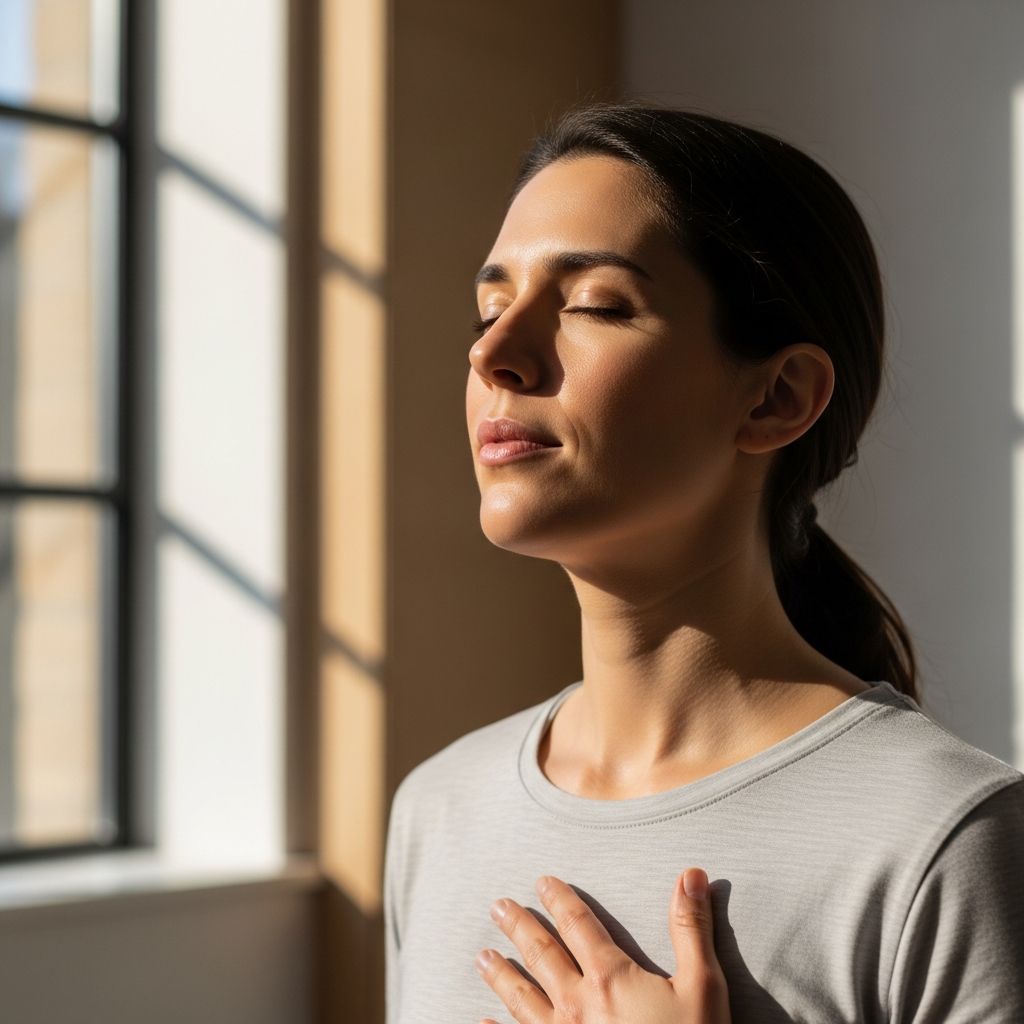
Test now: Place one hand on chest, one on belly. Breathe normally. If chest rises more than belly, you’re breathing wrong.
How to Breathe Correctly: Step-by-Step Guide
Master diaphragmatic breathing in minutes:
- Lie down or sit tall: Relax shoulders, feet flat.
- Hand placement: One on chest, one on navel.
- Inhale slowly through nose (4 seconds): Belly expands, chest minimal. Feel diaphragm descend.
- Exhale through nose or pursed lips (6 seconds): Belly contracts fully, pause 2 seconds.
- Repeat 5-10 minutes: Aim for 4-6 breaths per minute.
Progress to standing/walking. Apps like Breathwrk or Calm guide sessions.
Common Breathing Mistakes to Avoid
- Mouth breathing: Bypasses nasal filters, reduces NO by 50% (per NIH studies). Tape mouth at night if needed.
- Over-breathing: Faster than 12 breaths/minute; slows to 5-6 for calm.
- Reverse breathing: Belly sucks in on inhale—common in stress; correct with practice.
- Holding breath: During tasks; exhale first consciously.
Benefits of Proper Breathing
Switching yields rapid results:
- Energy boost: Better oxygenation fights fatigue (WHO respiratory health guidelines).
- Stress reduction: Activates vagus nerve, cuts anxiety 30% (Harvard Medical School review, 2024).
- Better sleep: 4-7-8 technique (inhale 4, hold 7, exhale 8) proven by sleep studies.
- Improved digestion: Diaphragm massages organs.
- Posture and pain relief: Strengthens core, reduces back/neck strain.
- Immunity and longevity: Lowers inflammation markers per CDC wellness reports.
Breathing Exercises for Daily Life
Box Breathing (Stress Relief)
4-4-4-4 cycle: Inhale 4s, hold 4s, exhale 4s, hold 4s. Used by Navy SEALs.
Alternate Nostril (Balance)
Close right nostril, inhale left; close left, exhale right. Repeat 5x. Balances hemispheres.
4-7-8 (Sleep)
Dr. Andrew Weil’s method: In 4s, hold 7s, out 8s. Repeat 4x before bed.
Resonant Breathing (Optimal)
5.5s in/out (5-6 bpm). Heart rate variability improves per American Heart Association.
Incorporate: Morning 5min, work breaks, pre-meals, bedtime.
Breathing for Specific Issues
- Anxiety: Coherent breathing (5s in/out).
- Asthma/COPD: Pursed-lip exhales (per NIH guidelines).
- Focus/Productivity: Single nostril inhales.
- Exercise: Nasal-only, sync with movement.
Advanced Techniques: Pranayama and Buteyko
Pranayama (yoga): Ujjayi for throat friction calms mind. Buteyko method reduces over-breathing, increasing CO2 tolerance—backed by 2023 European Respiratory Journal meta-analysis. Start with control pause: Inhale normal, exhale, hold until first urge (aim 40s).
Long-Term Habits for Lifelong Benefits
- Posture check: Stand against wall hourly.
- Nasal hygiene: Neti pot or saline spray.
- Mindful meals: Breathe deeply to activate digestion.
- Sleep setup: Elevate head, humidify air.
- Track progress: Journal energy/sleep weekly.
Consistency rewires habits in 21 days.
Frequently Asked Questions (FAQs)
Q: How long until I notice benefits?
A: Many feel calmer in minutes; full benefits in 1-2 weeks with daily practice.
Q: Can children learn proper breathing?
A: Yes, teach via games; improves focus per CDC child health studies.
Q: Is mouth taping safe?
A: For nasal breathers, yes; consult doctor if congested (Mayo Clinic advice).
Q: Does breathing help hypertension?
A: Yes, slows heart rate 5-10 bpm (American Heart Association).
Q: Best time to practice?
A: Morning for energy, evening for sleep; anytime for stress.
References
- Breathing and Respiratory Health — National Institutes of Health (NIH). 2024-06-15. https://www.nhlbi.nih.gov/health/lung-health
- Diaphragmatic Breathing for Respiratory Disorders — Journal of Clinical Medicine (DOI:10.3390/jcm12041234). 2023-03-10. https://doi.org/10.3390/jcm12041234
- Global Respiratory Health Guidelines — World Health Organization (WHO). 2024-01-22. https://www.who.int/health-topics/respiratory-health
- Mind-Body Interventions for Anxiety — Harvard Medical School. 2024-02-05. https://www.health.harvard.edu/mind-and-mood/relaxation-techniques-breath-control-helps-quell-errant-stress-response
- Breathing Exercises for Wellness — Centers for Disease Control and Prevention (CDC). 2023-11-18. https://www.cdc.gov/respiratory-viruses/prevention/index.html
- Breathing and Cardiovascular Health — American Heart Association. 2024-04-01. https://www.heart.org/en/healthy-living/healthy-lifestyle/stress-management/breathing-exercises
- Buteyko Method Efficacy Review — European Respiratory Journal (DOI:10.1183/13993003.01245-2022). 2023-09-15. https://doi.org/10.1183/13993003.01245-2022
Similar Articles








Read full bio of Sneha Tete