Yield: Understanding Returns on Investment
Master yield calculations and maximize your investment returns effectively.
What Is Yield?
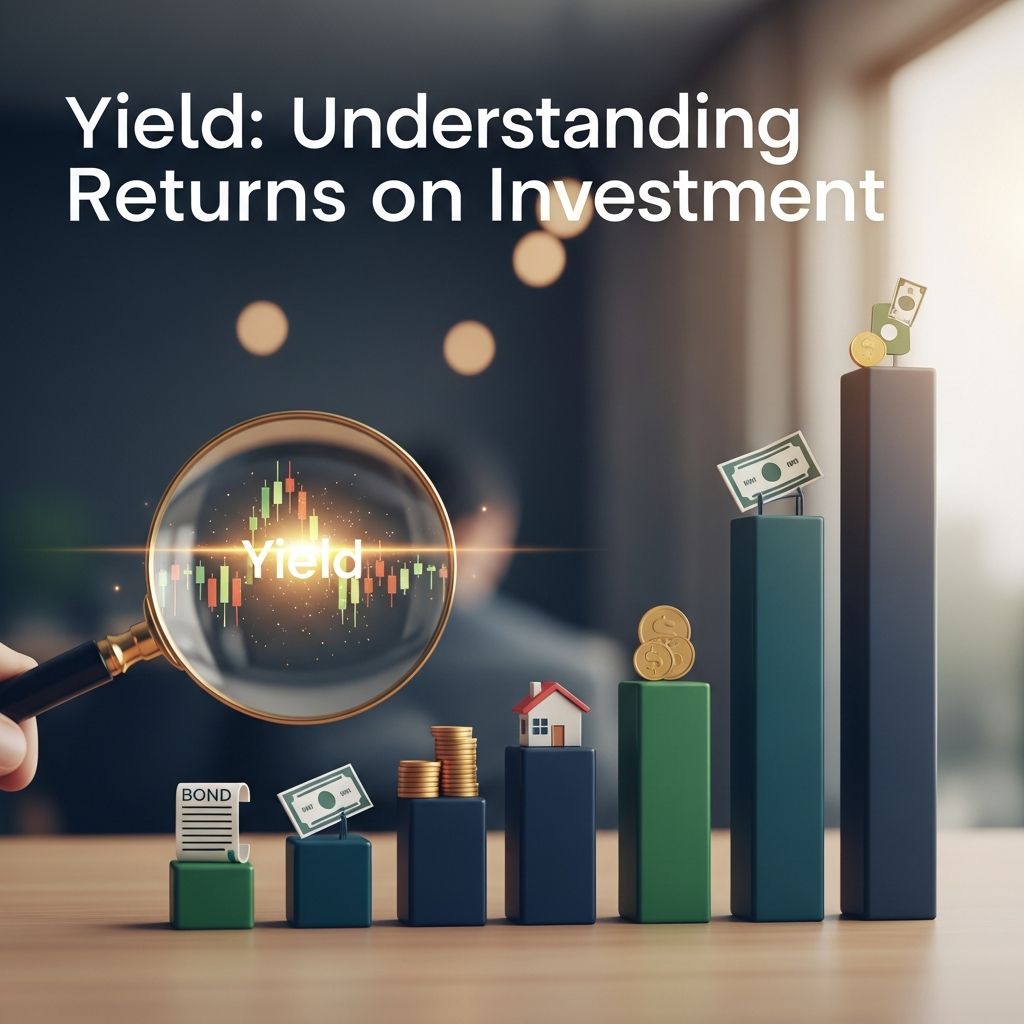
Yield represents the earnings generated and realized on an investment over a particular period. It is typically expressed as a percentage and includes interest payments, dividends, or other cash distributions received from an investment. Yield is a crucial metric for investors seeking to understand the income-generating potential of their investments, whether they hold stocks, bonds, or other fixed-income securities.
The concept of yield helps investors compare the actual returns they receive from different investment vehicles. Unlike capital appreciation, which refers to increases in an asset’s value, yield focuses specifically on the periodic income generated by that investment. Understanding yield is essential for both passive income seekers and those looking to evaluate the true performance of their investment portfolios.
Key Differences: Yield vs. Return
While the terms “yield” and “return” are often used interchangeably, they represent distinct concepts in investing. Return encompasses all gains from an investment, including both income received and price appreciation or depreciation. Yield, conversely, focuses solely on the income component generated by the investment.
For example, if an investor purchases a bond for $1,000 and receives $50 in annual interest payments, the yield is 5%. If the bond price later appreciates to $1,100, the capital gain is an additional component of the total return, but it does not affect the yield calculation. This distinction is critical for investors who need to understand how much periodic income an investment will generate versus its overall profitability.
Types of Yield
Various types of yield serve different purposes in investment analysis. Understanding each type allows investors to make more informed decisions based on their financial goals and risk tolerance.
Current Yield
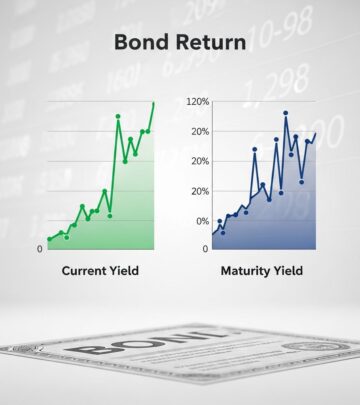
Current yield is the annual income generated by an investment divided by its current market price. For bonds, current yield is calculated by dividing the annual coupon payment by the bond’s current market price. This metric provides a snapshot of the income an investment generates relative to what an investor would pay for it today.
Current yield is particularly useful for comparing the income potential of securities trading at different prices. If a bond with a $50 annual coupon is trading at $900, the current yield is approximately 5.56%, whereas the same bond trading at $1,100 would have a current yield of approximately 4.55%.
Yield to Maturity (YTM)
Yield to maturity represents the total return an investor can expect to receive if they hold a bond until it matures. YTM accounts for the current market price, the par value, the coupon rate, and the time to maturity. This comprehensive metric is considered more informative than current yield because it factors in all potential sources of returns.
YTM assumes that all coupon payments are reinvested at the same rate and that the investor holds the bond to maturity. This calculation is complex and typically requires financial calculators or spreadsheet software to determine accurately. YTM is essential for bond investors evaluating whether a bond represents good value at its current price.
Dividend Yield
Dividend yield measures the annual dividend payments a company makes relative to its stock price. It is calculated by dividing the annual dividend per share by the current stock price and multiplying by 100 to express it as a percentage. Dividend yield is a key metric for income-focused investors and those seeking passive returns from equity investments.
A company with an annual dividend of $2 per share trading at $50 per share has a dividend yield of 4%. Dividend yield can vary significantly among companies and sectors, with mature, stable companies typically offering higher yields than growth-oriented businesses that reinvest profits for expansion.
Yield Spread
Yield spread refers to the difference between the yields of two different fixed-income securities, typically bonds. Common spreads include the difference between corporate and Treasury bonds or between bonds of different credit ratings. Yield spreads reflect the additional risk investors take on by investing in lower-quality securities.
A wider spread indicates greater perceived risk. If Treasury bonds yield 3% and corporate bonds from the same issuer yield 5%, the spread is 2%. This difference compensates investors for the additional credit risk associated with corporate bonds.
How to Calculate Yield
Calculating yield depends on the type of investment and the specific yield metric being determined. Here are the most common calculations:
Current Yield Calculation
Current Yield = Annual Income ÷ Current Market Price × 100
Example: A bond with an annual coupon of $60 trading at $950 would have a current yield of ($60 ÷ $950) × 100 = 6.32%.
Dividend Yield Calculation
Dividend Yield = Annual Dividend per Share ÷ Current Stock Price × 100
Example: A stock paying annual dividends of $2.50 trading at $75 per share has a dividend yield of ($2.50 ÷ $75) × 100 = 3.33%.
Yield to Maturity (Complex)
YTM calculation requires solving for the discount rate in the bond pricing formula. Most investors use financial calculators, spreadsheet functions like Excel’s YIELD function, or online calculators rather than computing YTM manually due to its mathematical complexity.
Factors Affecting Yield
Several factors influence yield calculations and investment decisions:
- Interest Rates: When market interest rates rise, existing bond yields become less attractive, causing bond prices to fall. Conversely, falling interest rates increase bond prices and reduce current yields.
- Credit Risk: Companies or governments with lower credit ratings must offer higher yields to compensate investors for increased default risk.
- Time to Maturity: Generally, longer-maturity bonds offer higher yields than shorter-maturity bonds due to extended risk exposure.
- Inflation: Inflation erodes purchasing power, so investors demand higher yields in inflationary environments.
- Market Conditions: Economic conditions, monetary policy, and overall market sentiment affect yield levels across asset classes.
- Company Performance: For dividend-paying stocks, company profitability and management decisions determine dividend sustainability and growth.
Yield in Bond Investing
Yield is particularly significant in bond investing, where it directly determines the income investors receive. Bond investors typically focus on yield to maturity to evaluate whether a bond’s price justifies the returns they will receive through maturity. A bond trading at a discount (below par value) may offer attractive yields, particularly if the investor plans to hold it to maturity.
Different bond types offer varying yields. Treasury bonds, backed by the U.S. government, typically offer lower yields due to minimal default risk. Corporate bonds offer higher yields to compensate for greater credit risk. High-yield bonds, sometimes called “junk bonds,” offer the highest yields but carry substantial risk of default.
Yield in Stock Investing
For stock investors, yield primarily relates to dividend income. Growth-focused companies may pay minimal or no dividends, directing profits toward business expansion. Value and dividend-focused companies typically pay higher dividends and offer more substantial dividend yields. Investors seeking regular income often focus on high-dividend-yield stocks, while those prioritizing capital appreciation may accept lower or zero dividend yields.
It is important to recognize that high dividend yields can sometimes signal financial distress. If a company’s stock price declines significantly while it maintains its dividend, the yield increases mathematically. However, this may indicate investor concerns about the company’s future ability to sustain its dividend.
Why Yield Matters for Investors
Yield is essential for several reasons:
- Income Generation: Yield measures how much periodic income an investment generates, crucial for retirees and income-focused investors.
- Investment Comparison: Yield allows investors to compare the income-generating potential of different securities on an apples-to-apples basis.
- Valuation: Yield helps determine whether securities are fairly valued relative to their income generation and risk profile.
- Portfolio Planning: Understanding yield assists in constructing portfolios that balance income generation with capital appreciation.
- Risk Assessment: Unusually high yields may indicate elevated risk, signaling investors to conduct additional due diligence.
Relationship Between Yield and Price
For fixed-income securities like bonds, there is an inverse relationship between yield and price. When market interest rates increase, new bonds must offer higher yields to remain competitive. Existing bonds with lower yields become less attractive, causing their prices to decline. Conversely, when interest rates decrease, existing bonds with higher yields become more valuable, driving their prices up. Understanding this relationship is fundamental for fixed-income investors and those managing bond portfolios.
The Yield Curve
The yield curve graphically depicts the relationship between bond yields and their maturities. A normal upward-sloping yield curve suggests that longer-term bonds offer higher yields than shorter-term bonds, compensating investors for duration risk. An inverted yield curve, where short-term rates exceed long-term rates, has historically preceded economic recessions. The yield curve serves as an important economic indicator that influences investment strategies and economic policy.
Frequently Asked Questions
Q: What is the difference between yield and interest rate?
A: Interest rate refers to the rate at which money is borrowed or lent, set by lenders or central banks. Yield represents the actual return an investor receives from holding a security, which can differ from its stated interest rate based on the price paid for the investment.
Q: Can yield be negative?
A: While current yield and dividend yield cannot be negative in traditional calculations, some investors may experience negative returns when considering capital losses. In rare circumstances, some countries have issued negative-yielding bonds, where investors effectively pay for the privilege of holding bonds.
Q: How does inflation affect yield?
A: Inflation erodes purchasing power, reducing the real value of future income from investments. Higher inflation typically leads to higher yields as investors demand greater compensation for this erosion of value. Real yield (yield adjusted for inflation) is often more meaningful than nominal yield.
Q: What constitutes a good yield?
A: A good yield depends on current market conditions, risk profile, and investment goals. Generally, higher yields correlate with higher risk. Compare yields to current interest rates and similar investments to determine if a yield is attractive.
Q: How is yield to maturity different from current yield?
A: Current yield only considers the income paid relative to current price, while YTM incorporates all sources of return including price appreciation or depreciation to maturity, providing a more comprehensive return measure.
Q: Should I only invest in high-yield investments?
A: High yields often correspond with higher risk. A diversified portfolio typically balances income-producing investments with other assets suited to individual risk tolerance and financial objectives.
References
- U.S. Securities and Exchange Commission (SEC) – Bonds — U.S. SEC. 2024. https://www.sec.gov/investors/bonds
- Federal Reserve – Understanding Interest Rates and Bonds — Federal Reserve System. 2024. https://www.federalreservehistory.org
- CFA Institute – Fixed Income Analysis — CFA Institute. 2023. https://www.cfainstitute.org
- International Organization of Securities Commissions (IOSCO) – Investor Protection Resources — IOSCO. 2024. https://www.iosco.org
- U.S. Department of Treasury – Understanding Treasury Securities — U.S. Treasury. 2024. https://www.treasurydirect.gov
Similar Articles








Read full bio of Sneha Tete