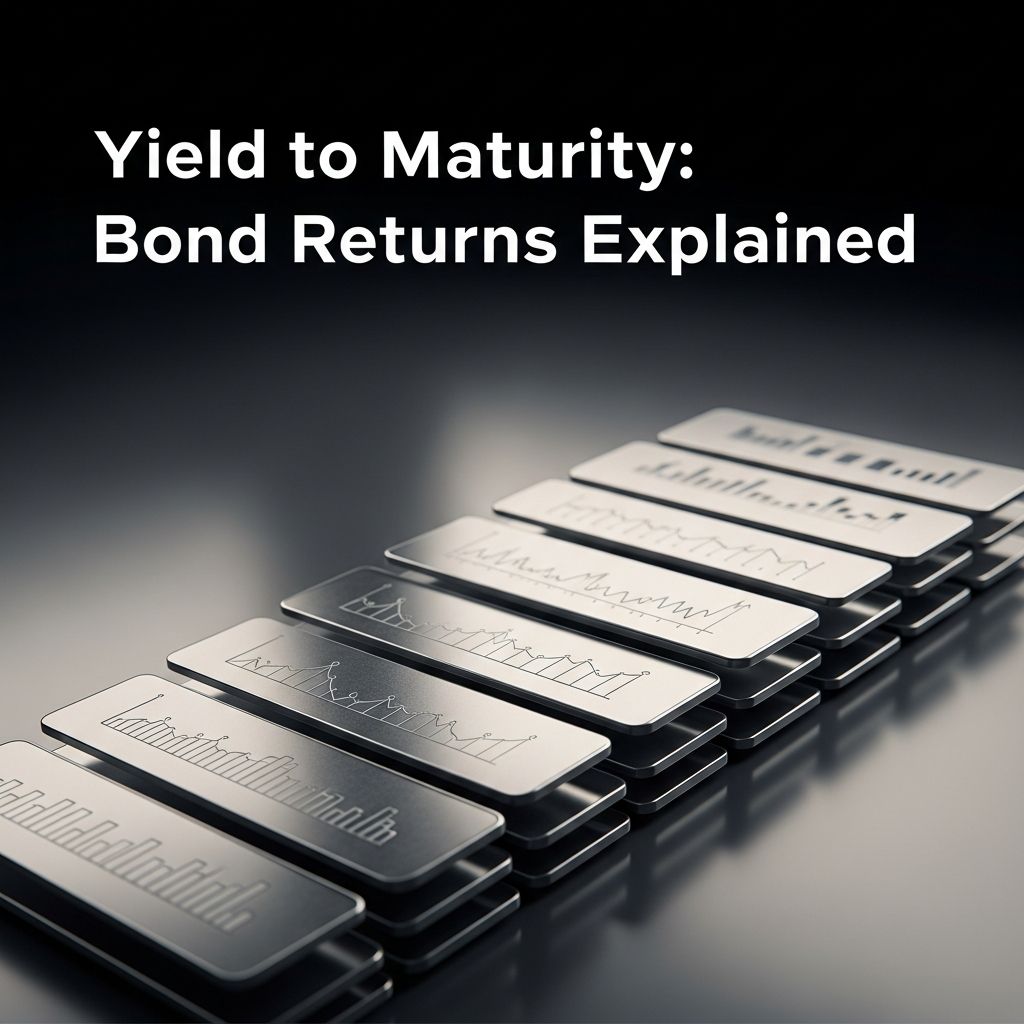
Yield to Maturity: Bond Returns Explained
Understand yield to maturity and how it measures your bond's total return potential.
Understanding Yield to Maturity
Yield to maturity (YTM), also known as book yield or redemption yield, represents the total rate of return an investor anticipates earning by purchasing a bond at its current market price, holding it until maturity, and receiving all scheduled interest payments and principal repayment on time. In essence, YTM is the theoretical internal rate of return—the discount rate at which the present value of all future cash flows from the bond equals its current price.
This comprehensive measure accounts for not only the coupon payments received throughout the bond’s life but also any gain or loss realized when the bond matures. By understanding YTM, investors can better evaluate whether a bond investment aligns with their return expectations and compare investment opportunities across different bonds with varying maturities and coupon rates.
Key Assumptions in YTM Calculations
The yield to maturity calculation is based on several fundamental assumptions that must be met for the investor to achieve the calculated YTM. Understanding these assumptions is crucial because they significantly impact whether the theoretical return becomes a realized return.
First, the calculation assumes that the bond owner will hold the security until its maturity date. This means the investor commits to keeping the bond regardless of market price fluctuations or changing economic conditions. Second, the issuer is assumed to make all interest and principal payments exactly as scheduled, with no defaults or missed payments. Third, the investor is presumed to reinvest all interest payments received during the bond’s life at the same rate as the bond’s current yield, allowing for the benefit of compounded returns.
Finally, the calculation assumes consistent market reinvestment opportunities at the YTM rate throughout the bond’s remaining life with no transaction costs. These assumptions create an idealized scenario. In reality, actual returns may differ significantly from the calculated YTM because real-world factors such as default risk, reinvestment risk, changing market conditions, and opportunity costs can all influence actual outcomes.
The Difference Between YTM and Current Yield
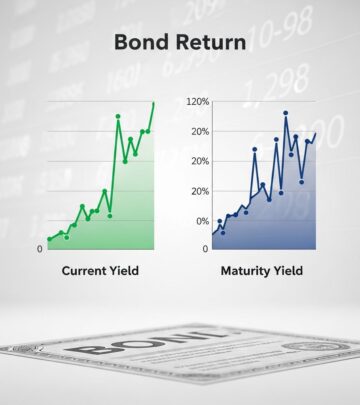
Many investors confuse yield to maturity with current yield, but these are two distinct measures that tell different stories about a bond’s return potential. Current yield represents the annual interest payment divided by the bond’s current market price. This simple calculation tells investors what they will earn from the coupon payments alone over a one-year holding period.
For example, if an investor purchases a bond for $100 with a $10 annual coupon payment, the current yield is 10%. However, current yield provides only a snapshot of annual returns and doesn’t account for capital gains or losses when the bond matures or is sold before maturity. If the bond price changes significantly or the investor sells before maturity, the actual return will differ substantially from the current yield.
Yield to maturity, by contrast, accounts for all of these factors by calculating the anticipated return if the bond is held until maturity. YTM incorporates the present value of all future coupon payments and the principal repayment, providing a more comprehensive view of total return potential. This makes YTM significantly more useful for long-term bond investors evaluating whether a bond fits their investment objectives.
How YTM Is Calculated
Calculating yield to maturity requires knowing four essential pieces of information: the bond’s current market price, its par value (face value), the coupon interest rate, and the time to maturity. To determine YTM, investors plug these values into specialized financial calculators or software that performs iterative calculations.
For zero-coupon bonds, which pay no periodic interest, the YTM formula is straightforward:
YTM = (Face Value / Present Value)^(1/Time Period) – 1
For coupon-paying bonds, the calculation is more complex because it requires finding the discount rate that equates the present value of all future cash flows (coupon payments plus principal repayment) to the current bond price. This typically involves trial-and-error methods or computer algorithms to reach the precise YTM figure.
Practical YTM Examples
Zero-Coupon Bond Example: Consider a 30-year zero-coupon bond with a $100 face value priced at an annual YTM of 10%. The present cost of this bond would be approximately $5.73 (calculated as $100 ÷ 1.10^30). Over the coming 30 years, the bond’s price will advance from $5.73 to $100, delivering the annualized 10% return.
However, YTM calculations become more complex when market conditions change. Suppose that after 10 years, interest rates decline and the YTM on the remaining 20 years falls to 7%. The bond’s price would then be approximately $25.84 ($100 ÷ 1.07^20). Despite the lower remaining YTM of 7%, the investor’s actual annualized return over those first 10 years would be approximately 16.25% due to the price appreciation from $5.73 to $25.84.
This example demonstrates a critical insight: if an investor holds the bond until maturity, the original investment of $5.73 will grow to exactly $100, achieving the initially promised 10% annual return, regardless of interim interest rate changes. However, if the investor sells before maturity, actual returns can differ significantly from the original YTM calculation.
Variants of Yield to Maturity
While standard YTM applies to straight bonds, many bonds have additional features that create alternative yield calculations:
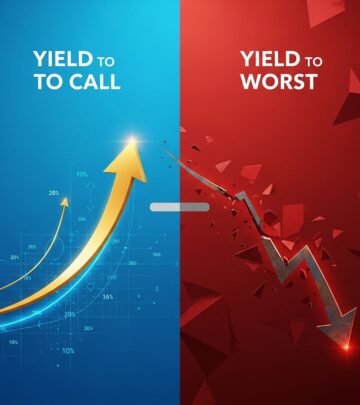
Yield to Call (YTC): For callable bonds, where the issuer has the right to redeem the bond before maturity at a specified price, investors may need to calculate yield to call. This measures the return if the bond is called away at the earliest call date rather than held to maturity.
Yield to Put (YTP): When the bondholder has the option to sell the bond back to the issuer at a fixed price on a specified date, yield to put calculates the return based on exercising this put option.
Yield to Worst (YTW): For bonds with multiple embedded options (callable, puttable, exchangeable features), yield to worst represents the lowest possible yield among yield to maturity, yield to call, yield to put, and other relevant scenarios. Conservative investors often use YTW as the baseline return expectation since it reflects the worst-case outcome.
Why YTM Matters for Bond Investors
Yield to maturity serves as a powerful tool for comparing different bond investments. By calculating YTM for various bonds, investors can compare returns on an apples-to-apples basis, regardless of differences in coupon rates, prices, or maturities. This comparison helps identify which bonds offer better value and which align with specific return objectives.
YTM also helps investors understand the true cost of borrowing when they issue bonds, making it relevant for corporate finance decisions. For bond portfolio managers, YTM calculations inform duration and convexity analysis, essential concepts in managing interest rate risk.
Additionally, YTM can indicate market sentiment about credit quality and economic conditions. Rising YTM across similar bonds often signals increasing risk perception or changing interest rate expectations, while falling YTM may indicate improving credit conditions or flight-to-quality behavior.
Limitations and Important Caveats
Despite its usefulness, YTM has important limitations that investors must recognize. First, YTM assumes reinvestment of all coupon payments at the current YTM rate. In reality, reinvestment rates fluctuate with market conditions, and achieving the exact reinvestment rate assumed in the calculation is unlikely.
Second, YTM does not account for default risk or credit quality changes. A bond rated as investment grade when purchased might experience a credit downgrade, affecting both its price and the investor’s ability to receive all promised payments. Third, YTM is not an expected or risk-adjusted rate of return; it’s purely a mathematical calculation based on current prices and scheduled cash flows.
Finally, market prices change constantly due to economic conditions, interest rate movements, and investor sentiment. A YTM calculated today may become outdated within hours as the bond’s price adjusts to new information and market conditions. The actual total return realized at maturity could differ considerably from the YTM calculated at the time of purchase.
YTM in Practice: Investment Decision-Making
When evaluating bond investments, sophisticated investors use YTM as part of a comprehensive analysis framework. They compare YTM to their required rate of return to determine if a bond offers sufficient compensation for its risk. They also compare the bond’s YTM to alternative investments, including stocks, real estate, and other fixed-income securities.
In rising interest rate environments, existing bond prices fall, pushing YTMs higher and potentially creating attractive entry points for investors. Conversely, in falling rate environments, bond prices rise and YTMs decline, potentially signaling reduced attractiveness for new investors but gains for existing bondholders.
Portfolio managers use YTM calculations to construct bond ladders, matching bond maturities to anticipated cash needs. They also use YTM to calculate the weighted average yield of bond portfolios and to assess portfolio duration and interest rate sensitivity.
Current Yield Versus YTM: A Practical Comparison
Understanding the distinction between current yield and YTM helps investors avoid common mistakes. Current yield answers the question “What will I earn annually from this bond’s coupon payments?” while YTM answers “What is my total annualized return if I hold this bond until maturity?”
Consider a bond purchased at $95 with a $10 annual coupon and 5 years to maturity. The current yield is 10.53% ($10 ÷ $95), indicating annual coupon income. However, the investor will also receive a $5 capital gain at maturity ($100 – $95), making the total return over 5 years higher than current yield alone suggests. The YTM calculation incorporates both the coupon income and this capital gain, providing a more accurate return expectation.
Frequently Asked Questions
What is the relationship between bond prices and yield to maturity?
Bond prices and YTM have an inverse relationship. When interest rates rise, existing bond prices fall, causing YTM to increase. Conversely, when interest rates fall, bond prices rise and YTM decreases. This inverse relationship exists because YTM adjusts to reflect the current market conditions and pricing.
Can an investor achieve the calculated yield to maturity?
The calculated YTM will be achieved only if all assumptions are met: the bond is held to maturity, all payments are made on schedule, and reinvestment occurs at the YTM rate. In practice, actual returns often differ from calculated YTM due to reinvestment risk, potential defaults, and changing market conditions.
How does YTM help compare bonds?
YTM provides a standardized metric for comparing bonds with different coupon rates, prices, and maturities. By calculating YTM for multiple bonds, investors can identify which offers the best return potential relative to its risk profile and maturity date.
Is YTM the same for all bondholders?
No. Each bondholder’s YTM depends on the price they paid for the bond. If two investors purchase the same bond at different prices, they will have different YTMs because the calculation is based on current market price.
Why is reinvestment risk important in YTM calculations?
YTM assumes all coupon payments are reinvested at the YTM rate. However, actual reinvestment rates vary with market conditions. If interest rates fall, coupon payments must be reinvested at lower rates, reducing actual returns below the calculated YTM. This discrepancy is called reinvestment risk.
References
- Yield to Maturity — Wikipedia. Retrieved November 29, 2025. https://en.wikipedia.org/wiki/Yield_to_maturity
- Bond Yields – Current Yield and YTM — Investopedia. December 11, 2013. https://www.youtube.com/watch?v=WQhowJQoIag
Similar Articles








Read full bio of Sneha Tete