Yield Curve: Definition, Types, and Significance
Understanding the yield curve: A key economic indicator for investors and policymakers.

What Is the Yield Curve?
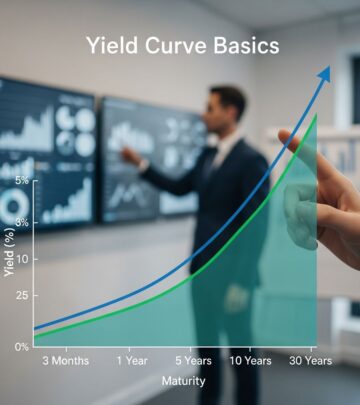
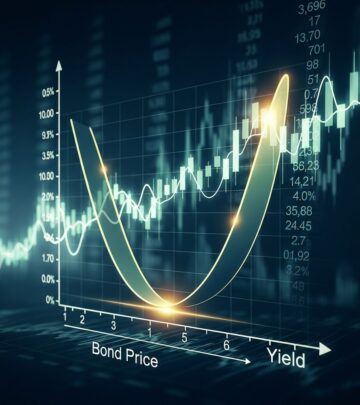
The yield curve is a graphical representation that shows the relationship between bond yields and their maturity dates. It plots the interest rates of bonds with equal credit quality but different maturity periods on a two-dimensional chart, with the x-axis representing time to maturity and the y-axis representing yield or interest rate. This fundamental financial tool helps investors, economists, and policymakers understand market expectations about future interest rates, inflation, and economic growth.
In essence, the yield curve illustrates how much compensation investors demand for lending money over different time horizons. A bond maturing in one year may offer a different yield than a bond maturing in ten years, and these differences are captured by the shape and position of the yield curve. The most commonly referenced yield curve in the United States is the Treasury yield curve, which uses U.S. government bonds of various maturities.
Understanding the Yield Curve Basics
To fully comprehend the yield curve, it’s important to understand its underlying components and how it functions as an economic indicator. The yield curve emerges from market forces where thousands of investors make daily decisions about which bonds to buy and sell, creating a visible picture of market sentiment regarding future economic conditions.
- Maturity: The time remaining until a bond’s principal is repaid to the investor
- Yield: The annual return an investor receives from holding a bond, expressed as a percentage
- Credit Quality: The issuer’s ability to repay its debt obligations; government bonds typically have the highest quality
- Market Expectations: Collective investor beliefs about future interest rates, inflation, and economic conditions
The yield curve changes daily as new economic data is released and market participants adjust their expectations. During periods of economic uncertainty, the curve may steepen or flatten depending on how investors reassess risk and future economic prospects.
Types of Yield Curves
The yield curve can take different shapes, each conveying distinct information about market expectations and economic conditions. Understanding these different configurations is crucial for interpreting what the market believes about the future economy.
Normal (Positive) Yield Curve
A normal yield curve slopes upward, meaning longer-maturity bonds offer higher yields than shorter-maturity bonds. This is the most frequently observed curve shape and reflects the general principle that investors require additional compensation for taking on the risk of lending money for extended periods. In a normal yield curve environment, short-term bonds might yield 2%, while 10-year bonds yield 3.5% or higher.
The normal curve typically appears during periods of moderate economic growth and stable inflation expectations. It suggests that investors are confident about the economy’s future but demand extra yield as compensation for long-term uncertainty. This is considered the “natural” state of the yield curve and is generally associated with healthy economic conditions.
Flat Yield Curve
A flat yield curve occurs when yields across different maturities are approximately equal. Short-term and long-term bonds offer similar interest rates, with minimal difference between yields. A flat curve often appears during economic transitions when market participants are uncertain about future direction.
This configuration suggests that investors see little additional risk in lending long-term versus short-term, or that the market is confused about economic prospects. A flat yield curve can precede either economic expansion or contraction, making it an ambiguous economic signal.
Inverted Yield Curve
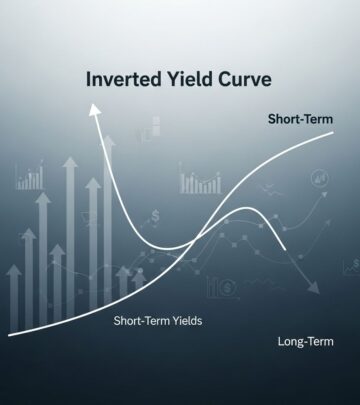
An inverted yield curve occurs when shorter-maturity bonds offer higher yields than longer-maturity bonds. This counterintuitive situation represents a significant departure from normal market behavior. In an inverted curve, a 2-year Treasury might yield 4%, while a 10-year Treasury yields only 3.5%.
The inverted yield curve has historically been one of the most reliable predictors of economic recession. When the curve inverts, it suggests that investors are so pessimistic about future economic growth that they’re willing to accept lower long-term returns, essentially betting on a future where interest rates fall sharply. This configuration is relatively rare and has preceded most recent U.S. recessions.
Steep Yield Curve
A steep yield curve features a significant difference between short-term and long-term yields. For example, short-term yields might be 1% while long-term yields are 3.5% or higher. A steep curve generally indicates strong investor risk appetite and expectations of robust economic growth.
This configuration often appears in the early stages of economic recovery when the Federal Reserve has maintained low short-term rates but investors expect improved future growth. A steep curve can support strong corporate profitability as companies can borrow short-term at low rates.
How the Yield Curve Works
The yield curve emerges from the interaction of supply and demand in the bond market. When many investors want to buy longer-term bonds, prices rise and yields fall, potentially creating a steeper or flatter curve. Conversely, when investors sell long-term bonds and buy short-term securities, yields on long-term bonds rise relative to short-term bonds.
Central banks also influence the yield curve significantly, particularly at the short end. The Federal Reserve sets the federal funds rate, which heavily influences short-term interest rates. However, longer-term rates are determined more by market expectations about future inflation, growth, and Federal Reserve policy, rather than by direct Fed action.
Several factors drive yield curve movements:
- Inflation Expectations: Rising inflation expectations typically steepen the curve as investors demand higher long-term yields
- Economic Growth Prospects: Strong growth expectations support higher long-term yields, while recession fears flatten or invert the curve
- Federal Reserve Policy: Changes in Fed rates directly impact short-term yields and influence longer-term expectations
- Flight to Safety: During crises, investors buy safe long-term Treasuries, driving yields down and potentially inverting the curve
- Global Economic Factors: International economic developments and capital flows influence long-term U.S. Treasury yields
Economic Significance and Forecasting
The yield curve serves as a powerful economic forecasting tool because it reflects the collective wisdom of millions of market participants making investment decisions based on their expectations of future economic conditions. Economists and policymakers monitor the curve closely because it often signals upcoming changes in economic activity.
The Treasury yield curve inversion has been particularly notable as a recession predictor. When short-term interest rates exceed long-term rates, it suggests that bond market participants expect deteriorating economic conditions ahead. This has preceded every major U.S. recession since 1970, though there have been occasional false signals.
Beyond recession prediction, the yield curve shape influences:
- Bank Profitability: Steeper curves benefit banks by allowing them to earn wider spreads between borrowing and lending rates
- Investment Strategy: Portfolio managers adjust allocations based on yield curve expectations and positioning
- Corporate Borrowing Decisions: Companies evaluate whether to borrow at short or long-term rates based on curve positioning
- Mortgage Rates: Long-term mortgage rates generally follow the 10-year Treasury yield
- Pension Funding: The curve influences returns and funding status for pension plans
Practical Applications for Investors
Individual and institutional investors use yield curve analysis to make better investment decisions. When the curve is steep, some investors favor stocks over bonds, anticipating strong economic growth. When the curve flattens or inverts, investors may become more defensive, increasing bond allocations and reducing equity exposure.
Bond investors specifically use the yield curve to identify opportunities. When the curve is steep, some employ a strategy called “rolling down the curve,” buying longer-term bonds and benefiting from price appreciation as the bonds move closer to maturity and occupy different positions on the yield curve.
For fixed-income portfolio construction, the yield curve helps determine optimal bond duration and maturity allocation. A steep curve might support longer duration positions, while a flat or inverted curve suggests shorter duration exposure.
Limitations and Criticisms
While the yield curve is a valuable tool, it has limitations. Not all inversions lead to recessions, and the strength and timing of economic impacts can vary significantly. Additionally, modern monetary policy, globalization, and financial market structural changes may have altered the historical relationship between the curve and economic outcomes.
Different yield curve segments may tell different economic stories, and focusing solely on one portion of the curve may provide incomplete information. Furthermore, in unusual monetary policy environments, such as near-zero interest rates or quantitative easing programs, traditional yield curve relationships may not apply.
Frequently Asked Questions
Q: Why does the yield curve matter to individual investors?
A: The yield curve affects interest rates on mortgages, savings accounts, and investment returns. It also signals economic conditions that influence stock and bond market performance, helping investors make better allocation decisions.
Q: What does an inverted yield curve indicate?
A: An inverted yield curve, where short-term rates exceed long-term rates, historically indicates investor pessimism about future economic growth and has preceded most recent U.S. recessions.
Q: How do Federal Reserve actions affect the yield curve?
A: The Fed directly controls short-term interest rates through the federal funds rate, heavily influencing the short end of the curve. Long-term rates respond more to market expectations about future inflation and growth.
Q: Can the yield curve predict recessions?
A: While the yield curve has historically been a reliable recession predictor, particularly when inverted, it is not infallible. Market structure changes and unusual monetary policy environments can affect its predictive power.
Q: What is a normal yield curve?
A: A normal yield curve slopes upward, with longer-maturity bonds offering higher yields than shorter-maturity bonds. This reflects standard risk compensation and typically appears during stable economic growth.
Q: How frequently does the yield curve change?
A: The yield curve changes daily as new economic data is released and market participants adjust their expectations about future rates, inflation, and economic conditions.
References
- Yield Curve — U.S. Department of the Treasury, Bureau of the Fiscal Service. 2025. https://www.treasury.gov/resource-center/data-chart-center/interest-rates/pages/default.aspx
- Explaining the Yield Curve — Federal Reserve Board of Governors. 2024. https://www.federalreserve.gov/
- Bond Yields and Economic Growth — International Monetary Fund (IMF) Research Department. 2024. https://www.imf.org/external/research/
- Understanding the Treasury Yield Curve — CFA Institute. 2024. https://www.cfainstitute.org/
- Recession Forecasting with Inverted Yield Curves — National Bureau of Economic Research (NBER). 2024. https://www.nber.org/
Similar Articles








Read full bio of Sneha Tete