Yield Curve Basics: 5 Key Shapes And Economic Signals
Discover how the yield curve shapes economic forecasts and guides investment choices in dynamic markets.
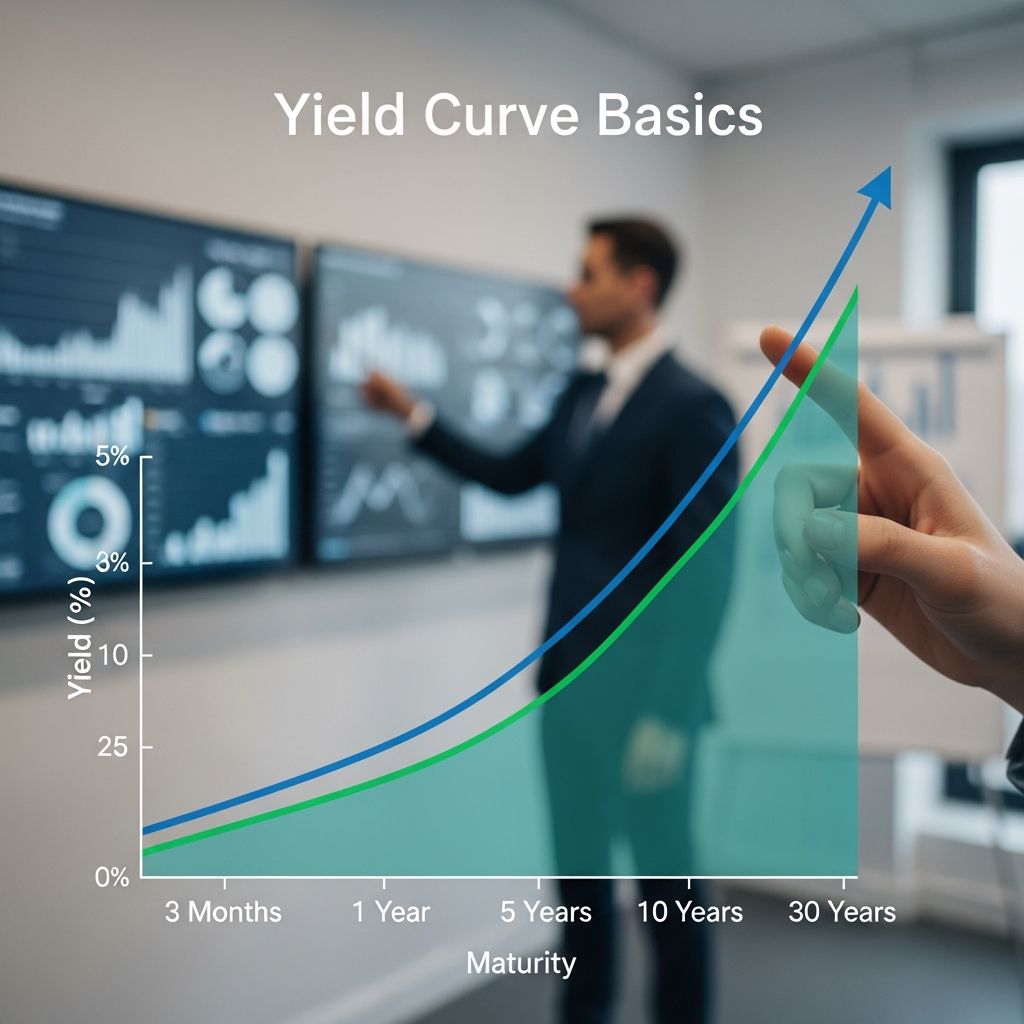
The yield curve serves as a fundamental chart in finance, plotting interest rates of bonds against their maturities to reveal market expectations for growth, inflation, and policy shifts. It acts as a barometer for economic conditions, influencing decisions from central banks to individual investors.
Defining the Yield Curve
A yield curve illustrates the relationship between bond yields—essentially the return investors demand—and the time until those bonds mature. Typically constructed using government bonds like U.S. Treasuries of similar credit quality, it places maturity periods on the horizontal axis and yields on the vertical axis. This visualization captures the term structure of interest rates, highlighting how compensation for time and risk varies.
Investors use it to gauge future interest rate paths. An upward tilt suggests expectations of rising rates tied to economic strength, while other shapes signal caution or transition. Central banks monitor it closely, as shifts can prompt adjustments in monetary policy.
Common Shapes of the Yield Curve
The yield curve manifests in distinct forms, each tied to economic phases. Understanding these helps predict downturns or recoveries.
- Normal (Upward-Sloping) Curve: Short-term yields sit below long-term ones, reflecting higher risk premiums for extended commitments. This prevails in expanding economies where investors anticipate inflation and rate hikes.
- Steep Curve: A pronounced upward slope indicates accelerating long-term yields over short-term, often marking early recovery stages post-stagnation. It signals robust growth ahead, with capital demand pushing inflation fears.
- Flat Curve: Yields across maturities align closely, hinting at uncertainty or transition. It may precede shifts, as markets weigh growth prospects against policy tightening.
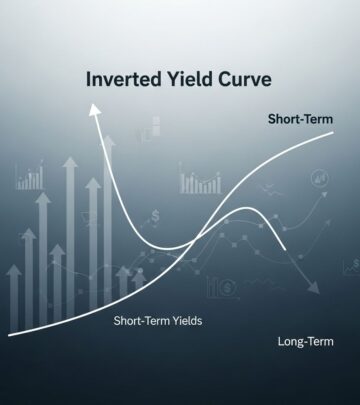
- Inverted (Downward-Sloping) Curve: Short-term yields exceed long-term, a rare but potent recession harbinger. Investors flock to longer bonds expecting rate cuts amid slowdowns.
- Humped Curve: Medium-term yields peak above short- and long-term, uncommon and linked to decelerating growth or specific inflation dynamics.
These configurations arise from factors like inflation outlook, Fed actions, and growth trajectories. For instance, strong demand competition elevates yields, steepening the curve.
Economic Implications of Yield Curve Movements
The curve’s contour offers prescient insights. A normal slope fosters confidence, spurring borrowing and investment. Banks thrive on wider spreads between short-term borrowing and long-term lending costs.
Inversions have historically preceded U.S. recessions. Since 1976, every instance where 10-year Treasury yields fell below 2-year yields foreshadowed contraction, as lower long-term rates reflect anticipated Fed easing.
Steepening post-downturn signals revival: low short rates from stimulus give way to higher long rates amid recovery optimism. Central banks like the ECB track euro area curves for similar cues on remuneration and maturity risks.
| Curve Shape | Economic Phase | Key Driver | Investor Action |
|---|---|---|---|
| Normal | Expansion | Inflation expectations | Lock in long-term yields |
| Steep | Early recovery | Capital demand surge | Favor longer maturities |
| Flat | Transition | Policy uncertainty | Diversify durations |
| Inverted | Pre-recession | Rate cut anticipation | Shift to defensives |
| Humped | Slowing growth | Medium-term inflation | Monitor closely |
Factors Shaping the Yield Curve
Several forces mold the curve. Central bank policies dominate: rate hikes flatten or invert it by lifting short ends, while cuts steepen via long-end demand.
Inflation plays pivotal roles—rising pressures demand higher short-term yields, potentially humping the curve. Economic strength boosts aggregate demand, competing for funds and elevating long yields.
Investor sentiment matters too. Risk aversion drives long-bond buying, compressing yields. Conversely, optimism widens spreads. Global events, like ECB policy, influence cross-border curves.
Yield Curve as an Investment Tool
Beyond macro signals, the curve aids portfolio construction. It reveals relative value: securities yielding above the curve appear cheap, below it pricey.
Financial firms profit from steepness, as deposit-lending gaps expand. Investors might extend duration in normal curves for yield pickup, shortening in inversions to mitigate losses.
Strategies include riding the curve—buying short and rolling—or barbell portfolios blending short and long to capture spreads while hedging risks.
Historical Performance and Reliability
Empirical data underscores its predictive power. Brookings analysis shows consistent recession leads from inversions, with lags of 6-24 months. PIMCO notes normal curves align with expansions, demanding inflation premiums.
Yet it’s not infallible—false positives occur amid unique shocks. Still, its track record merits attention, especially alongside indicators like unemployment.
Current Context and Monitoring
As of recent data, curves reflect post-pandemic dynamics: stimulus-fueled steepening gave way to tightening-induced flattening. Investors watch Fed signals for inversion risks.
Tools like daily Treasury plots or ECB dashboards enable real-time tracking. Pairing with GDP forecasts enhances accuracy.
Frequently Asked Questions
What causes an inverted yield curve?
Investors expect economic slowdowns, prompting Fed rate cuts. Demand for long bonds lowers their yields below short-term highs.
Does a steep yield curve always mean growth?
Often yes, signaling recovery, but confirm with inflation and policy data.
How do banks use the yield curve?
To maximize net interest margins via short borrowing and long lending.
Is the yield curve perfect for recessions?
Highly reliable historically, but not guaranteed—use in tandem with other metrics.
Can individuals track yield curves?
Yes, via free sites like Treasury.gov or financial platforms.
Advanced Applications for Professionals
Fixed-income analysts dissect slope (short-long spread) and curvature (yield bends). Steep slopes forecast inflation; pronounced curves signal sectoral shifts.
Quantitative models derive forward rates from spot curves, pricing derivatives. Risk managers stress-test portfolios against inversions.
In global contexts, compare U.S. and euro curves for carry trades, mindful of FX risks.
References
- Yield Curve – Definition, Diagrams, Types of Yield Curves — Corporate Finance Institute. 2023. https://corporatefinanceinstitute.com/resources/fixed-income/yield-curve/
- Understanding the Yield Curve: A Comprehensive Guide — StoneX. 2024. https://www.stonex.com/en/financial-glossary/yield-curve/
- Bonds 102: Understanding the Yield Curve — PIMCO. 2023. https://www.pimco.com/us/en/resources/education/bonds-102-understanding-the-yield-curve
- Understanding the Yield Curve — YouTube (Fidelity). 2022-10-15. https://www.youtube.com/watch?v=MS0tY72K6-E
- The Hutchins Center Explains: The yield curve – what it is, and why it matters — Brookings Institution. 2023-06-20. https://www.brookings.edu/articles/the-hutchins-center-explains-the-yield-curve-what-it-is-and-why-it-matters/
- What is a Yield Curve? — Fidelity Investments. 2024. https://www.fidelity.com/learning-center/investment-products/fixed-income-bonds/bond-yield-curve
- Yield Curves Explained | Unpacked Video — J.P. Morgan. 2023. https://www.jpmorgan.com/videos/unpacked-explainer-videos/what-are-yield-curves
- Euro area yield curves — European Central Bank. 2026-02-01. https://www.ecb.europa.eu/stats/financial_markets_and_interest_rates/euro_area_yield_curves/html/index.en.html
Similar Articles








Read full bio of medha deb