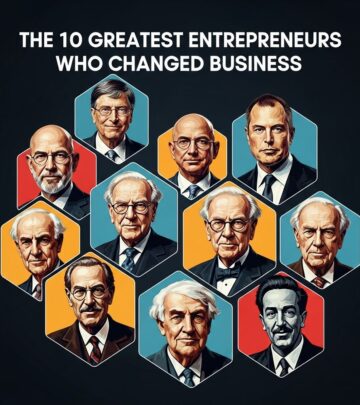
World’s Top 10 Serial Entrepreneurs: Building Empires
Discover the visionaries who built multiple successful companies and revolutionized industries.

World’s Top 10 Serial Entrepreneurs: Building Multiple Empires
Serial entrepreneurship represents one of the most dynamic and influential forces in modern business. Unlike traditional entrepreneurs who build a single company over their lifetime, serial entrepreneurs demonstrate an exceptional ability to identify opportunities, create ventures, and scale them to success—repeatedly. These visionary leaders have not only accumulated significant wealth but have also created thousands of jobs, driven innovation across industries, and shaped the global economic landscape.
A serial entrepreneur is defined as someone who has successfully founded, developed, and exited multiple companies throughout their career. This distinction sets them apart from typical business owners, as serial entrepreneurs possess a unique combination of skills, resilience, and business acumen that allows them to repeatedly succeed in different ventures and sometimes different industries.
What Defines Serial Entrepreneurs?
Serial entrepreneurs share several defining characteristics that contribute to their repeated success. First, they possess an innate ability to identify market gaps and emerging opportunities before they become obvious to the mainstream market. Second, they are not discouraged by failure; instead, they view setbacks as learning experiences. Third, they build strong networks and surround themselves with talented individuals who share their vision. Finally, serial entrepreneurs maintain an unwavering belief in their ability to create value and solve problems across different sectors.
Key Characteristics of Successful Serial Entrepreneurs
- Vision and Innovation: The ability to see what others cannot and envision future markets and consumer needs.
- Resilience: Determination to overcome obstacles and learn from failures without losing momentum.
- Adaptability: Flexibility in adjusting strategies based on market feedback and changing conditions.
- Leadership: Capacity to inspire and mobilize teams toward ambitious goals.
- Financial Acumen: Understanding of capital management, scaling operations, and sustainable growth.
- Network Building: Cultivation of relationships with investors, mentors, and industry peers.
The Top 10 Serial Entrepreneurs Changing the World
1. Elon Musk
Elon Musk stands as perhaps the most recognizable serial entrepreneur of the 21st century. His ventures span multiple industries, demonstrating his ability to identify transformational opportunities. Musk co-founded Zip2, an online city guide and business directory service, which was acquired by Compaq in 1999. He then founded X.com, an online financial services company, which merged with Confinity to form PayPal, later acquired by eBay for $1.5 billion in 2002.
However, Musk’s most impactful ventures emerged afterward. SpaceX, founded in 2002, aimed to reduce space transportation costs and enable Mars colonization. Today, SpaceX is one of the world’s most valuable private companies, revolutionizing the aerospace industry. Simultaneously, Musk founded Tesla in 2003, leading the electric vehicle revolution and fundamentally transforming the automotive industry. His subsequent ventures include SolarCity (merged with Tesla), Neuralink, and The Boring Company, each addressing significant future challenges.
2. Steve Jobs
Steve Jobs exemplifies the visionary serial entrepreneur. After co-founding Apple Computer with Steve Wozniak in 1976, Jobs built it into the world’s most valuable company. Following his departure from Apple in 1985, Jobs founded NeXT Computer, which pioneered object-oriented computing and innovative industrial design. Though NeXT’s commercial success was limited, its technology and philosophy significantly influenced the computing industry.
Jobs then acquired Pixar Animation Studios from Lucasfilm in 1986, taking a minority stake and eventually becoming majority shareholder. Under his leadership, Pixar revolutionized computer animation and became one of the most successful entertainment companies, ultimately acquired by Disney for $7.4 billion in 2006. Jobs’ return to Apple in 1997 led to the company’s greatest success period, with innovations including the iMac, iPod, iPhone, and iPad, fundamentally reshaping multiple industries.
3. Jack Welch
Jack Welch’s career at General Electric (GE) represents perhaps history’s most successful corporate leadership journey. Joining GE as an engineer, Welch rose through the ranks to become CEO in 1981. Under his stewardship for 20 years until 2001, he transformed GE from a traditional manufacturing conglomerate into a diversified, services-focused global powerhouse. Welch implemented the “Six Sigma” quality management methodology, which became an industry standard.
Welch’s approach to serial business ventures within the GE framework involved acquiring and transforming struggling divisions, entering new markets, and developing leadership talent. His “workout” methodology revolutionized organizational change management. After retirement, Welch became a management consultant and author, launching new ventures in executive education and digital media, further extending his entrepreneurial impact.
4. Richard Branson
Richard Branson’s Virgin Group represents one of the most expansive entrepreneurial portfolios in history. Starting with Virgin Records in 1972, Branson’s ventures span aviation (Virgin Atlantic), telecommunications (Virgin Mobile), space travel (Virgin Galactic), financial services, entertainment, and hospitality. The Virgin Group comprises more than 400 companies across 30 countries, generating billions in revenue.
Branson’s approach differs from typical serial entrepreneurs; rather than exiting ventures, he maintains portfolio ownership while establishing new brands under the Virgin umbrella. His ventures often enter established markets with innovative customer-focused approaches, disrupting incumbents. Virgin Galactic represents his most audacious venture, commercializing space tourism and pushing boundaries of what’s possible in human spaceflight.
5. Walt Disney
Walt Disney was a pioneering serial entrepreneur in entertainment and media. Starting with Alice Comedies in 1923, Disney progressed to creating Mickey Mouse and developing animated storytelling. The Walt Disney Company, founded in 1923, initially focused on animation but sequentially expanded into live-action films, television, theme parks, and merchandise.
Disney’s serial entrepreneurial approach involved recognizing new entertainment mediums and formats. He launched Disneyland in 1955, revolutionizing theme park entertainment. Disney’s ventures consistently proved that audiences would embrace new forms of entertainment if executed with quality and imagination. His legacy demonstrates how serial entrepreneurs can build enduring enterprises that span generations.
6. Jeff Bezos
Jeff Bezos founded Amazon in 1994 as an online bookstore, which became the world’s largest e-commerce platform. His entrepreneurial ventures extend beyond Amazon; Bezos founded Blue Origin in 2000, developing reusable rockets for space tourism and commercial spaceflight, rivaling SpaceX in the emerging commercial space industry. In 2013, Bezos purchased The Washington Post, transitioning into media ownership and digital journalism innovation.
Bezos’s serial entrepreneurship reflects strategic diversification and long-term thinking. While Amazon remains his primary focus, his ventures in space technology and media demonstrate his belief that entrepreneurial ventures should address fundamental human needs and aspirations. His emphasis on customer obsession and long-term value creation has influenced business thinking across industries.
7. Mark Zuckerberg
Mark Zuckerberg’s entrepreneurial journey centers on Facebook, founded in 2004, which became the world’s largest social media platform with billions of users. Beyond Facebook, Zuckerberg has engaged in serial ventures including Instagram and WhatsApp acquisitions, evolving Facebook into Meta Platforms to focus on virtual reality and the metaverse.
Zuckerberg’s ventures in AI research, virtual reality hardware, and digital communication platforms demonstrate his commitment to shaping humanity’s technological future. The Chan Zuckerberg Initiative, his philanthropic venture with wife Priscilla Chan, represents serial entrepreneurship applied to social impact, investing billions in education, science, and global development.
8. Larry Ellison
Larry Ellison co-founded Oracle Corporation in 1977, building it into one of the world’s leading database software companies. Beyond Oracle, Ellison invested in numerous ventures through Ellison Medical Foundation and personal investments. He purchased the island of Lanai, launching real estate and renewable energy ventures. Ellison also served as principal investor and benefactor of the America’s Cup sailing competition, demonstrating serial entrepreneurship in sports.
Ellison’s ventures reflect both business and personal interests, showing how serial entrepreneurs leverage wealth and influence to pursue varied ambitions. His philanthropic ventures in medical research represent his commitment to applying entrepreneurial principles to healthcare innovation.
9. Henry Ford
Henry Ford revolutionized manufacturing and entrepreneurship through multiple ventures. After founding the Ford Motor Company in 1903, Ford pioneered assembly line production, fundamentally transforming manufacturing efficiency and mass production. His subsequent ventures included establishing the Ford Foundation in 1936, one of the world’s largest philanthropic organizations, and numerous technological innovations in agricultural equipment and alternative fuels.
Ford’s approach to serial entrepreneurship involved recognizing that innovation extends beyond individual products to encompassing production methods, business models, and societal impact. His ventures created hundreds of thousands of jobs and established business practices that became industry standards.
10. John D. Rockefeller
John D. Rockefeller founded Standard Oil in 1870, which dominated the petroleum industry. Beyond oil, Rockefeller engaged in serial ventures including banking, railroad investments, and agriculture. His philanthropic ventures, through the Rockefeller Foundation established in 1913, represented serial entrepreneurship applied to social welfare, education, and medical research on a global scale.
Rockefeller’s legacy demonstrates how serial entrepreneurs extend their impact beyond commercial ventures into philanthropic and social enterprises. His ventures in public health and education influenced global development for over a century.
Common Patterns Among Successful Serial Entrepreneurs
Analyzing these ten serial entrepreneurs reveals common patterns contributing to their repeated success. First, each demonstrated exceptional ability to identify emerging opportunities and market gaps before mainstream recognition. Second, they possessed technical knowledge or deep industry expertise relevant to their ventures. Third, they built strong leadership teams and delegated effectively, allowing them to pursue multiple ventures simultaneously.
Additionally, most successful serial entrepreneurs maintained an optimistic yet realistic outlook. They understood that not every venture would succeed, but this knowledge never deterred them from launching new initiatives. Finally, they understood the importance of networks, relationships, and reputation in launching subsequent ventures. Each successful exit provided capital, credibility, and connections facilitating future entrepreneurship.
The Economics of Serial Entrepreneurship
Serial entrepreneurship generates significant economic value beyond individual company valuations. Studies indicate that serial entrepreneurs create more jobs than first-time entrepreneurs, invest more capital in new ventures, and achieve higher success rates in subsequent companies. This pattern reflects learning from previous experiences, established networks, and refined business acumen.
Furthermore, serial entrepreneurs often mentor emerging entrepreneurs, creating multiplier effects in innovation ecosystems. Their exits through acquisitions, IPOs, or private sales generate wealth that becomes venture capital for new enterprises, creating virtuous cycles of innovation and economic growth.
Challenges Facing Serial Entrepreneurs
- Attention Fragmentation: Managing multiple ventures simultaneously can dilute focus and resources.
- Risk Management: Portfolio approach to entrepreneurship requires sophisticated risk management across ventures.
- Team Building: Attracting and retaining top talent across multiple ventures presents challenges.
- Market Saturation: Subsequent ventures may face difficulty differentiating in crowded markets.
- Regulatory Complexity: Multi-industry ventures involve navigating varied regulatory environments.
Frequently Asked Questions
Q: What is the difference between serial entrepreneurs and portfolio entrepreneurs?
A: Serial entrepreneurs typically exit one venture before launching the next, while portfolio entrepreneurs simultaneously manage multiple companies, as exemplified by Richard Branson’s Virgin Group approach.
Q: Do serial entrepreneurs always succeed in every venture?
A: No. Successful serial entrepreneurs experience failures alongside successes. However, their experience, networks, and capital allow them to attempt more ventures and recover more effectively from setbacks.
Q: What skills are most important for aspiring serial entrepreneurs?
A: Key skills include industry knowledge, financial acumen, leadership capabilities, resilience, networking abilities, and the capacity to learn from failures while maintaining forward momentum.
Q: How do serial entrepreneurs differ from venture capitalists?
A: Serial entrepreneurs typically create and operate companies themselves, while venture capitalists invest in companies founded by others. However, some serial entrepreneurs also become venture capitalists, leveraging their expertise.
Q: Can anyone become a serial entrepreneur?
A: While certain traits like resilience and creativity appear inherent, entrepreneurial skills can be developed. However, serial entrepreneurship requires accumulated capital, networks, and industry knowledge, making it more accessible after initial business success.
Conclusion
Serial entrepreneurs represent the apex of business achievement, demonstrating repeatedly their ability to create value, innovate, and lead organizations to success. The ten entrepreneurs examined—from Elon Musk’s transformational technology ventures to John D. Rockefeller’s philanthropic empire—show that serial entrepreneurship takes varied forms but shares common threads of vision, resilience, and strategic execution.
These leaders have not merely accumulated personal wealth; they have fundamentally shaped industries, created millions of jobs, and driven human progress across multiple domains. As the global economy becomes increasingly dynamic and innovation-driven, the lessons from successful serial entrepreneurs become ever more relevant. Their journeys demonstrate that with the right combination of skills, persistence, and strategic thinking, individuals can achieve extraordinary entrepreneurial success not once, but repeatedly throughout their careers.
References
- Elon Musk: Tesla, SpaceX, and the Quest for a Fantastic Future — Ashlee Vance. 2015. Biography documenting Musk’s entrepreneurial ventures across multiple industries. Key source for SpaceX and Tesla information.
- Walter Isaacson Biography: Steve Jobs — Walter Isaacson. 2011. Comprehensive biography covering Jobs’ serial ventures including Apple, NeXT, and Pixar. https://www.simonandschuster.com/books/Steve-Jobs/Walter-Isaacson/9781451648539
- Winning: The Answers — Jack Welch and Suzy Welch. 2005. Crown Publishing. Welch’s documented approach to leadership and organizational transformation at General Electric. https://www.crownpublishing.com
- Serial Entrepreneurship in the United States — Bureau of Labor Statistics. U.S. Department of Labor. Statistical analysis of serial entrepreneurship patterns and economic impact in the U.S. economy. https://www.bls.gov
- The Lean Startup: How Today’s Entrepreneurs Use Continuous Innovation — Eric Ries. 2011. Crown Business. Foundational methodology influencing modern serial entrepreneurship approaches and venture creation.
- Bloomberg Billionaires Index — Bloomberg L.P. 2025. Real-time tracking of billionaire wealth and business portfolios, including detailed information on serial entrepreneurs’ ventures and valuations. https://www.bloomberg.com/billionaires
- Venture Capital and the Funding of Innovation — National Bureau of Economic Research (NBER). 2023. Academic research on capital allocation to serial entrepreneurs and their economic impact. https://www.nber.org
Similar Articles








Read full bio of medha deb