Works Progress Administration (WPA): Definition & History
Explore the WPA, a New Deal program that employed millions during the Great Depression.
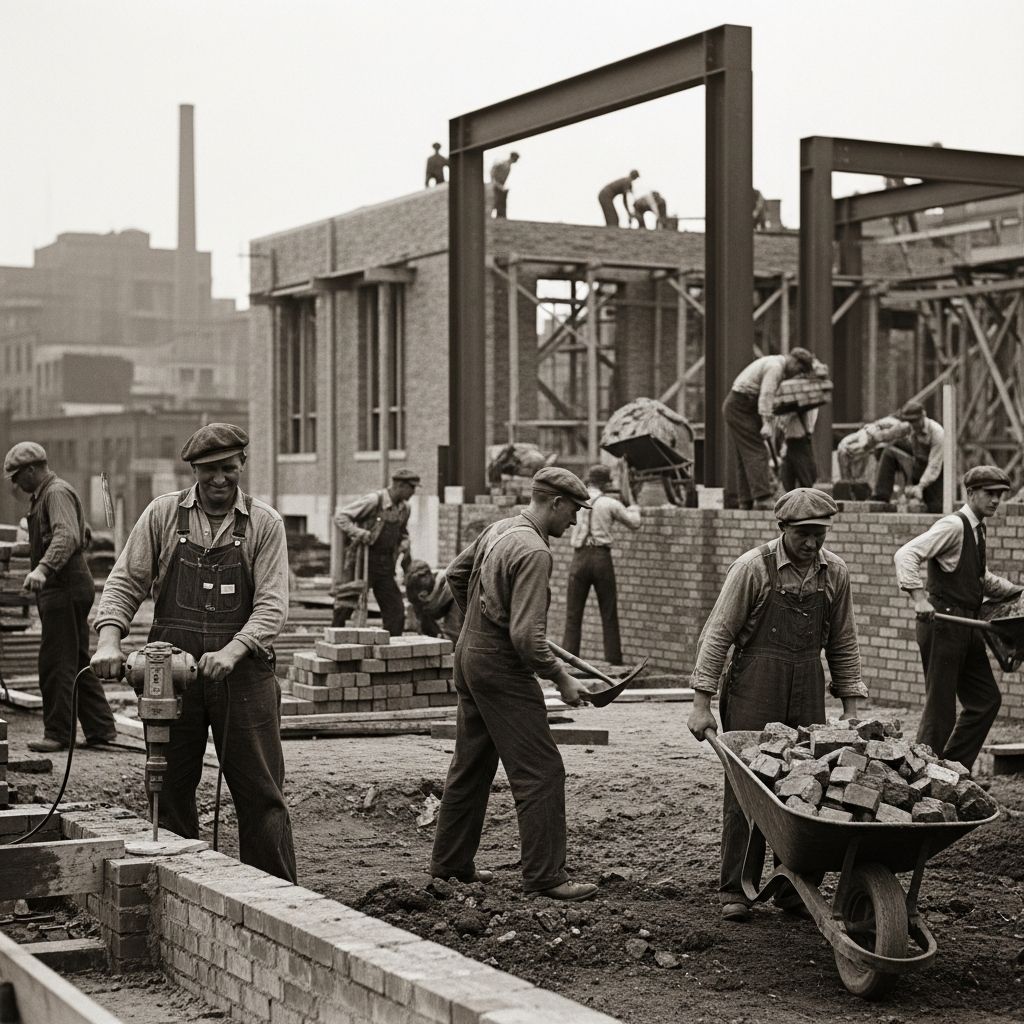
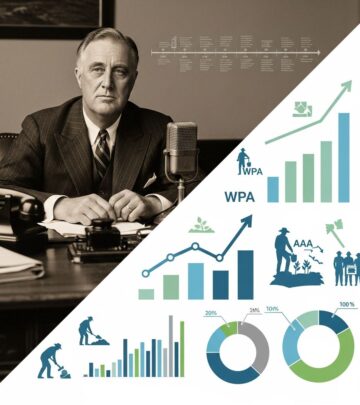
The Works Progress Administration, commonly referred to as the WPA, stands as one of the most significant federal programs implemented during American history. Established in 1935 as a cornerstone of President Franklin D. Roosevelt’s New Deal, the WPA represented an ambitious governmental response to the unprecedented economic crisis known as the Great Depression. This comprehensive work program fundamentally changed the relationship between the federal government and its citizens, introducing the concept of large-scale public employment as a mechanism for economic recovery and social welfare.
What Is the Works Progress Administration?
The Works Progress Administration was a federal work program designed to provide employment opportunities for millions of unemployed Americans during the Great Depression. Created on April 8, 1935, under President Franklin D. Roosevelt’s New Deal initiatives, the WPA aimed to address the severe unemployment crisis that had gripped the nation. Rather than providing direct relief or welfare payments, the program focused on offering dignified employment in public works projects that would benefit communities while preserving workers’ skills and self-respect.
The fundamental philosophy underlying the WPA was President Roosevelt’s concern that direct handouts would become, in his own words, a “narcotic.” Instead of simply distributing money to the unemployed, the government would employ them in meaningful work. This approach attempted to stimulate the economy through increased purchasing power while simultaneously completing infrastructure projects that would have lasting value for American communities.
Initially called the Works Progress Administration, the program was renamed the Works Projects Administration in 1939, though both names are used interchangeably when discussing the agency’s history. The program continued operating until 1943, when wartime economic expansion virtually eliminated unemployment, making the relief program unnecessary.
Historical Context and Creation
The creation of the WPA occurred during a critical moment in American history. By 1935, the Great Depression had persisted for nearly six years, and temporary relief measures implemented earlier were proving insufficient. President Roosevelt had ended or was about to end temporary federal aid programs, including the Federal Emergency Relief Administration (FERA) and the Civil Works Administration, yet unemployment remained devastatingly high.
Recognizing that the economic crisis was not abating as quickly as anticipated, Roosevelt and Congress took decisive action. In April 1935, Congress appropriated nearly $5 billion and established the Works Progress Administration as a federal agency to employ 3.5 million people nationally. This represented a dramatic shift in the federal government’s approach to unemployment relief, transforming it from a temporary, state-administered program into a comprehensive, federally-controlled employment initiative.
The WPA worked in tandem with other New Deal programs to provide comprehensive relief. Alongside the WPA, President Roosevelt signed the Social Security Act in August 1935, establishing a national program for old-age pensions, unemployment insurance, and aid to the disabled and dependent children. Additionally, the National Youth Administration was created in June 1935 as part of the Works Progress Administration to specifically address the employment needs of poor young people.
How the Works Progress Administration Operated
The operational structure of the WPA was complex and involved multiple levels of government. The federal government oversaw some projects directly, but in most cases, state and local governments conceived the projects and then applied to the federal government to supply workers. This federal-local partnership approach attempted to balance national oversight with community-specific needs.
Workers seeking employment through the WPA would apply to their local WPA office and receive their paychecks from that same community office. To obtain WPA funding, local governments were required to provide matching funds, typically between 10 and 30 percent of the total project cost. However, this matching formula varied from state to state and did not necessarily correspond to community need.
A significant criticism of this operational structure emerged: communities with the highest unemployment rates and most severe poverty were often bypassed because they lacked sufficient resources to raise matching funds. This structural flaw meant that the program’s benefits were not always distributed to those most in need of assistance.
Wages under the WPA program ranged from $15 to $90 per month, with initial unskilled rates set at approximately eighteen cents per hour. These wages were deliberately set below prevailing rates to encourage employers to provide private employment opportunities. While this strategy aimed to transition workers back into the private sector, organized labor protested that the lower WPA wages depressed all wage rates across the economy.
Scope and Scale of Employment
The Works Progress Administration achieved unprecedented scale in federal employment. Although the initial goal was to employ 3.5 million people, the program ultimately exceeded expectations. Over its eight-year existence from 1935 to 1943, the WPA employed a total of 8.5 million people at a cost to the federal government of approximately $10.5 to $11 billion.
Employment numbers fluctuated throughout the program’s duration based on economic conditions and political factors. In 1936, WPA employment rose to 2.3 million workers. During a short-lived economic recovery in 1937, employment declined to 1.5 million. However, when the nation experienced a recession from late 1937 to early 1938, Congress responded with additional appropriations, and by 1938 the WPA peaked with 3.3 million workers on its rolls.
The scale of this employment program becomes more impressive when considering that over 11 million Americans were unemployed in 1934, meaning the WPA provided work for a substantial portion of the nation’s unemployed population.
Projects and Accomplishments
The Works Progress Administration undertook an remarkably diverse array of projects that transformed American infrastructure and supported cultural development. The construction projects produced tangible, lasting results: more than 650,000 miles of roads, 125,000 public buildings, 75,000 bridges, 8,000 parks, and 800 airports. These infrastructure improvements served communities across the nation for decades.
Beyond major construction, WPA workers built or repaired water and sewer systems, schools, and other public buildings essential to community development. In North Carolina alone, from 1935 to 1940, the WPA employed 125,000 men and women and completed 3,984 projects, including the construction of schools, housing for teachers, armories, stadiums, swimming pools, gymnasiums, community halls, hospitals, sewers, and sanitary facilities.
The scope of WPA work extended far beyond construction. Workers were employed in diverse occupations reflecting community needs: sewing clothes for the needy, cooking lunches for schoolchildren, providing immunizations, teaching adult education classes, and compiling statistics on chronic diseases, housing, and unemployment. This broad approach ensured that WPA employment served multiple social purposes simultaneously.
Cultural and Artistic Programs
Among the WPA’s most celebrated initiatives were its cultural and artistic programs. The Federal Arts Project, Federal Writers’ Project, and Federal Theater Project operated under WPA aegis, employing thousands of artists, writers, and actors. These programs created art work for public buildings, documented local life, organized community theaters, and supported American museums that flourished during the Depression era.
The cultural programs of the WPA preserved American artistic and literary heritage while providing employment to creative professionals during economically difficult times. Artists, architects, construction workers, and educators found meaningful work in American museums and cultural institutions, creating a legacy of artistic documentation and cultural infrastructure that endured long after the program concluded.
Impact by State: The Example of Oklahoma
The impact of the Works Progress Administration varied across states, but its reach was nationwide. Oklahoma provides a notable example of the program’s regional significance. The WPA made a substantial impact on the state, with approximately 166,000 Oklahomans certified for WPA jobs. Between 1935 and 1937, roughly 119,000 were employed at some point, and when including those recruited into special drought-relief work programs, more than half the state’s work relief recipients were farmers.
In Oklahoma, as in other agricultural regions, the WPA adapted its programs to address regional economic challenges. The emphasis on agricultural workers reflected the program’s flexibility in responding to local economic conditions and unemployment patterns.
Decline and Termination
The Works Progress Administration’s influence began to wane in the late 1930s. In 1939, Congress renamed the agency the Works Projects Administration, reflecting changes in its focus and reduced emphasis. During this same year, charges of mismanagement and program abuse by workers led to reductions in appropriations. Construction workers even attempted unsuccessful strikes against wage cuts, indicating growing labor tensions within the program.
As international tensions escalated and World War II approached, President Roosevelt increasingly focused on foreign affairs and defense spending. By 1940, the WPA had begun its final decline as military buildup generated sufficient economic demand to reduce the need for relief employment. The demand generated by military preparedness and war production virtually eliminated unemployment, rendering the relief program obsolete.
The Works Progress Administration was officially terminated in 1943, with most WPA projects having shifted toward military preparedness initiatives by that time. The program had run its course, its existence directly tied to the severity of unemployment during peacetime.
Criticisms and Controversies
Despite its accomplishments, the WPA faced considerable criticism throughout its operation. Critics argued that the program was merely an extension of the dole or a device for creating a massive patronage army loyal to the Democratic Party. Questions about political favoritism in project selection and worker hiring plagued the program’s reputation.
Labor unions criticized the below-market wages paid to WPA workers, contending that the program depressed prevailing wage rates across all industries. This tension between providing affordable relief and protecting existing wage standards remained unresolved throughout the program’s history.
Additionally, structural inequities in the matching fund requirement meant that the poorest communities, which most desperately needed employment programs, were often unable to participate because they lacked resources for matching contributions. This unintended consequence undermined the program’s goal of reaching those most severely impacted by unemployment.
Legacy and Historical Significance
The Works Progress Administration left an enduring legacy on American infrastructure, culture, and society. The physical infrastructure created by WPA workers—roads, bridges, buildings, and parks—continued serving Americans for decades. The cultural programs preserved artistic works and documentation of local life that enriched American heritage.
More broadly, the WPA established precedent for large-scale federal employment programs as a legitimate governmental response to economic crises. While the program ultimately failed to permanently revive the economy as a whole, it provided immediate relief to millions of Americans and preserved their dignity during the darkest period of the Great Depression.
The program demonstrated both the potential and limitations of direct federal employment as an economic policy tool. Its successes in infrastructure development and cultural preservation contrast with its inability to sustain long-term economic recovery without the demand stimulus provided by World War II military production.
Frequently Asked Questions
Q: When was the Works Progress Administration created?
A: The Works Progress Administration was created on April 8, 1935, as part of President Franklin D. Roosevelt’s New Deal response to the Great Depression.
Q: How many people did the WPA employ?
A: Over its eight-year existence, the WPA employed a total of 8.5 million people, with peak employment reaching 3.3 million workers in 1938.
Q: What types of projects did the WPA undertake?
A: The WPA undertook diverse projects including construction of roads, bridges, schools, and public buildings; cultural programs through the Federal Arts Project, Writers’ Project, and Theater Project; and social services such as immunizations and adult education.
Q: How much did the WPA cost?
A: The WPA cost the federal government approximately $10.5 to $11 billion over its eight-year operation from 1935 to 1943.
Q: Why was the WPA terminated?
A: The WPA was terminated in 1943 because military buildup and World War II production had generated sufficient economic demand to virtually eliminate unemployment, making the relief program unnecessary.
Q: What was the difference between the WPA and other New Deal programs?
A: The WPA was primarily an employment program providing jobs in public works, while other New Deal programs like Social Security provided different forms of relief including unemployment insurance and old-age pensions.
References
- Works Progress Administration – The New Deal Era: Documents — Boston Public Library. Accessed November 2025. https://guides.bpl.org/NewDeal/WPA
- Works Progress Administration (WPA) | Definition & History — Encyclopædia Britannica. Last updated by Adam Augustyn. https://www.britannica.com/topic/Works-Progress-Administration
- Works Progress Administration | Research Starters – EBSCO — EBSCO Information Services. https://www.ebsco.com/research-starters/politics-and-government/works-progress-administration
- WORKS PROGRESS ADMINISTRATION — The Encyclopedia of Oklahoma History and Culture. https://www.okhistory.org/publications/enc/entry?entry=WO022
- Works Progress Administration (WPA): One Failure to End the Great Depression — North Carolina History. https://northcarolinahistory.org/commentary/works-progress-administration-wpa-one-failure-to-end-the-great-depression/
Similar Articles








Read full bio of Sneha Tete