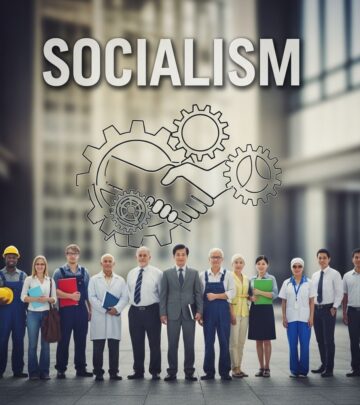
Working Class: Definition, Characteristics, and Examples
Understanding the working class: social hierarchy, definitions, and economic roles.

The working class represents a fundamental social and economic stratum in modern societies, comprising individuals who earn their livelihood through wage labor and employment. Unlike business owners or those who derive income from capital investments, members of the working class depend primarily on their ability to work and the wages they receive in exchange. Understanding the working class is essential for grasping economic inequalities, social dynamics, and the structure of contemporary labor markets.
Understanding the Working Class
The working class refers to a group of people in a social hierarchy, typically defined by earning wages or salaries through their ability to work. Members of the working class rely primarily upon earnings from wage labour to meet their basic needs and maintain their standard of living. In the United States, traditional definitions often limit working-class membership to workers who hold blue-collar and pink-collar jobs, or whose income remains insufficiently high to place them in the middle class. However, broader interpretations extend the definition to include all workers dependent on wage income to survive.
The term “working class” carries multiple meanings depending on the context and perspective. Sociologists, economists, and political theorists have developed varying definitions that reflect different ideological positions and analytical frameworks. What unites these perspectives is the recognition that working-class individuals do not control significant capital or means of production, and must therefore exchange their labor for compensation.
Key Definitions and Perspectives
Multiple definitions of the working class exist, each emphasizing different criteria and social characteristics:
Occupational Definition
In many contexts, the working class refers to a section of society dependent on physical labour, especially when compensated with an hourly wage. Working-class occupations can be categorized into four primary groups: unskilled labourers, artisans, outworkers, and factory workers. This occupational approach focuses on the type of work performed and the manner of compensation, distinguishing manual and menial labor from professional or managerial positions.
Income-Based Definition
Alternative definitions of the working class include definition by income level, whereby the working class is contrasted with a middle class on the basis of access to economic resources, education, cultural interests, and other goods and services. In this framework, individuals earning below a certain threshold or lacking access to higher education are classified as working class, regardless of their specific occupation.
Educational Attainment
Contemporary discussions often reference the “white working class” as loosely defined by major media outlets as comprising individuals without college degrees. This definition acknowledges the increasing importance of formal education in determining social and economic status, using educational credentials as a marker of class position.
Subjective Self-Identification
Researchers have proposed that working-class status should be defined subjectively as a self-identification with the working class group. This subjective approach allows individuals, rather than external researchers, to define their own “subjective” and “perceived” social class based on their personal experiences and circumstances.
The Marxist Perspective
Karl Marx provided one of the most influential theoretical frameworks for understanding the working class through his concept of the proletariat. Marx defined the working class or proletariat as those individuals who sell their labour power for wages and who do not own the means of production. According to Marx’s analysis, workers are responsible for creating the wealth of a society through their labor, asserting that the working class physically build bridges, craft furniture, grow food, and nurse children, but do not own the land or factories where these activities occur.
Within Marxist theory, the working class stands in direct opposition to the capitalist class or bourgeoisie, who own the means of production and profit from workers’ labor. This fundamental antagonism, Marx argued, would eventually lead to the displacement of capitalism by a workers’ revolution. In Marxist terms, wage labourers and those dependent on the welfare state are considered working class, while those who live on accumulated capital are not, creating a broad dichotomy that defines the class struggle.
The Lumpenproletariat
Marx identified a sub-section of the proletariat called the lumpenproletariat, or “rag-proletariat,” comprising the extremely poor and unemployed, such as day labourers and homeless people. Marx considered them to be devoid of class consciousness and therefore less likely to participate in revolutionary change.
Historical Development of the Working Class
The working class as a distinct social category emerged with the development of industrial capitalism. In feudal Europe, the working class as such did not exist in large numbers. Instead, most people were part of the labouring class, a group made up of different professions, trades and occupations. A lawyer, craftsman and peasant were all considered to be part of the same social unit, a third estate of people who were neither aristocrats nor church officials.
The rise of industrial manufacturing in the 18th and 19th centuries transformed labor relations and created the modern working class. Factory systems, wage labor, and the concentration of workers in urban centers established new patterns of social organization. Workers’ consciousness and labor movements developed in response to industrial working conditions, leading to the formation of trade unions, socialist parties, and various political movements advocating for workers’ rights.
The Informal Working Class
Modern urbanization and globalization have created new forms of working-class existence. The informal working class is a sociological term coined by Mike Davis for a class of over a billion predominantly young urban people who are in no way formally connected to the global economy and who try to survive primarily in slums. According to Davis, this class no longer corresponds to the socio-theoretical concepts of a class from Marx, Max Weber or the theory of modernization.
This class developed worldwide from the 1960s, especially in the southern hemisphere. In contrast to previous notions of a class of the lumpen proletariat or the notions of a “slum of hope” from the 1920s and 1930s, members of this class are given hardly any chances of attaining membership of the formal economic structures. The informal working class represents a growing segment of global labor, operating outside traditional employment relationships and formal economic institutions.
Characteristics of the Working Class
The working class possesses several defining characteristics that distinguish it from other social strata:
Wage Dependence
The primary characteristic of the working class is dependence on wages or salaries for survival. Without income from employment, working-class individuals cannot meet their basic needs. This creates a fundamental vulnerability and power imbalance with employers, who control access to employment and wages.
Limited Capital Ownership
Members of the working class typically own little or no capital and do not control the means of production. Their primary asset is their labor power, which they must sell to survive. This contrasts sharply with capitalists who own factories, land, and equipment.
Manual or Service Labor
Working-class jobs typically involve manual labor, service provision, or routine administrative tasks. These occupations often involve physical exertion, repetitive tasks, or direct service to customers or other workers.
Limited Educational Credentials
While not universal, many working-class individuals have not completed higher education. Access to post-secondary education has historically been limited for working-class families due to financial constraints and other barriers.
Common Working-Class Occupations
Working-class employment spans numerous industries and sectors, including:
Manufacturing and Construction
Factory workers, assembly line workers, electricians, plumbers, and construction laborers represent traditional working-class occupations in these sectors.
Service Industry
Retail workers, food service employees, hospitality workers, and cleaners comprise a significant portion of the contemporary working class.
Transportation and Logistics
Truck drivers, warehouse workers, delivery drivers, and public transportation operators are essential components of the working class in these industries.
Healthcare and Education Support
Nursing assistants, medical technicians, teacher aides, and school support staff represent working-class positions in these important sectors.
Challenges Facing the Working Class
Contemporary working-class individuals face numerous economic and social challenges. Wage stagnation, deindustrialization, and the shift toward service-sector employment have transformed working-class experiences. The decline of manufacturing employment in developed economies has eliminated many stable, well-paying jobs that previously provided pathways to middle-class status. Additionally, the rise of precarious employment, temporary contracts, and gig economy work has created new vulnerabilities for workers.
Access to benefits, job security, and opportunities for advancement remain significant concerns. Many working-class jobs offer limited benefits packages, no health insurance, and minimal paid leave. The rising cost of housing, healthcare, and education strains working-class budgets and limits economic mobility.
Global Variations
The working class exists globally but takes different forms across developed and developing economies. In industrialized nations, the traditional manufacturing working class has declined while service-sector employment has expanded. In developing economies, large informal working-class segments operate outside formal employment relationships, while manufacturing continues to provide significant employment. The experiences, challenges, and political organization of the working class vary considerably across countries and regions.
Frequently Asked Questions
Q: What is the primary definition of the working class?
A: The working class refers to individuals who earn their livelihood primarily through wage labor and do not own significant capital or the means of production. This includes blue-collar workers, pink-collar workers, and service industry employees whose income is insufficient to place them in the middle class.
Q: How did the working class emerge historically?
A: The modern working class emerged during the Industrial Revolution in the 18th and 19th centuries. Prior to industrialization, most people were part of the labouring class with various trades and occupations. Industrial manufacturing created distinct labor relations and wage work that defined the contemporary working class.
Q: What are the four categories of working-class occupations?
A: Working-class occupations are categorized into: unskilled labourers, artisans, outworkers, and factory workers. These categories reflect different types of manual and service labor across various industries.
Q: How does the Marxist definition differ from other definitions?
A: The Marxist definition emphasizes the fundamental relationship to the means of production, defining the working class as all who must sell their labor power for wages. This is broader than occupational or income-based definitions and includes all wage-dependent workers within Marx’s class struggle framework.
Q: What is the informal working class?
A: The informal working class comprises over a billion predominantly young urban people who are not formally connected to the global economy and survive primarily in slums. This class developed significantly from the 1960s onward, particularly in the southern hemisphere, representing a growing segment of global labor.
Q: Can individuals subjectively identify as working class?
A: Yes, some researchers propose that working-class status should be defined subjectively as a self-identification with the working class group. This approach allows individuals to define their own perceived social class based on personal experiences and circumstances rather than external objective criteria alone.
References
- Working Class — Wikimedia Foundation. 2025-11-01. https://en.wikipedia.org/wiki/Working_class
Similar Articles








Read full bio of medha deb