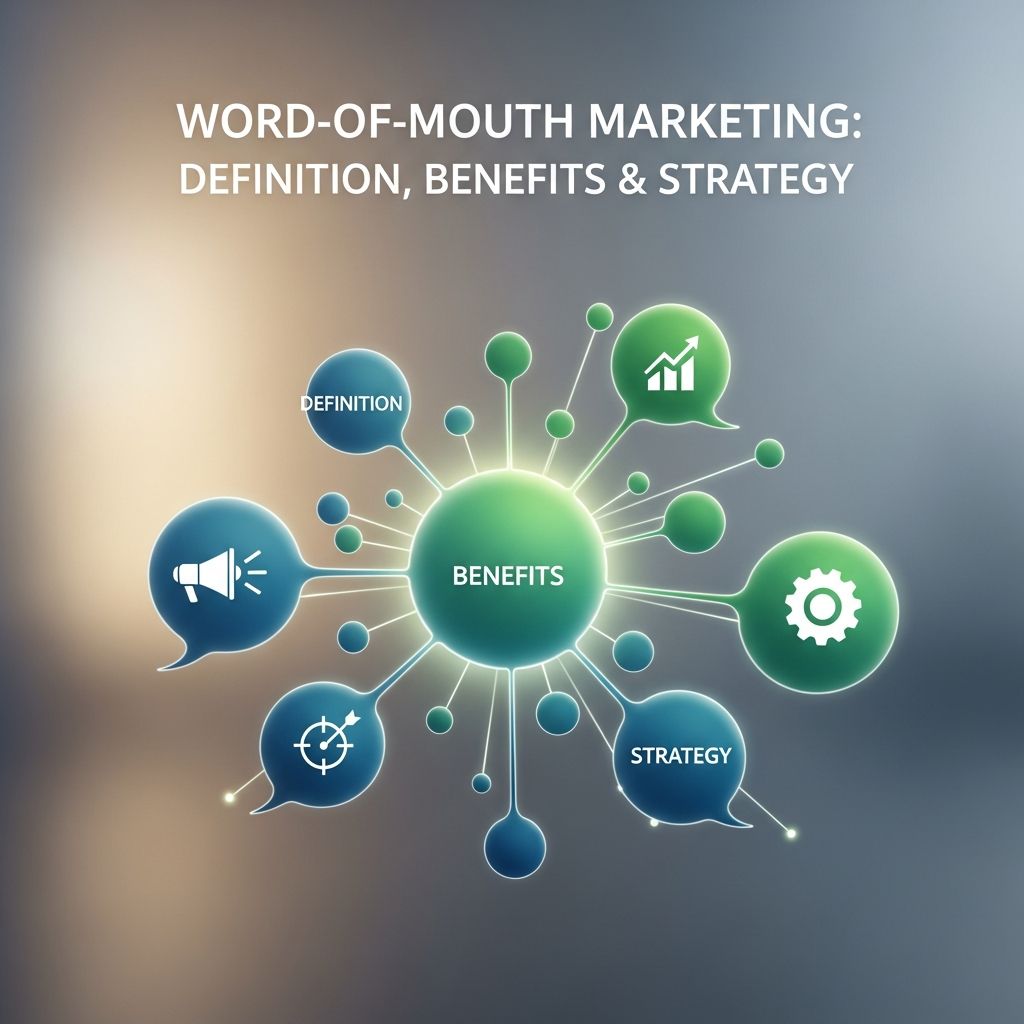
Word-of-Mouth Marketing: Definition, Benefits & Strategy
Harness the power of authentic customer advocacy to drive organic growth and brand loyalty.
What Is Word-of-Mouth Marketing?
Word-of-mouth marketing (WOMM) is a powerful promotional strategy where satisfied customers voluntarily share their positive experiences with a brand or product to their friends, family, and colleagues. Unlike traditional paid advertising, word-of-mouth marketing relies on authentic customer satisfaction and personal recommendations to drive brand awareness and sales growth. This marketing approach transforms happy customers into genuine brand advocates who naturally promote products and services through organic conversation both online and offline.
The essence of word-of-mouth marketing lies in its authenticity and trust factor. When potential customers hear recommendations from people they know and trust, they are far more likely to believe and act on those suggestions compared to traditional advertising messages. Word-of-mouth marketing can occur spontaneously as customers naturally discuss their positive experiences, or it can be structured through deliberate referral programs and incentive-based campaigns designed to encourage sharing and recommendations.
How Word-of-Mouth Marketing Differs from Traditional Advertising
Word-of-mouth marketing fundamentally differs from traditional advertising in several critical ways. Traditional advertising interrupts consumer attention through paid channels like television, radio, print, and online ads. These messages come directly from brands and are often viewed with skepticism by audiences who understand the commercial motivation behind them.
In contrast, word-of-mouth marketing is inherently personal and comes from trusted sources within a consumer’s social network. Because recommendations originate from real people who have genuine experience with products or services, they carry significantly more credibility and persuasive power. Additionally, word-of-mouth marketing is often free or low-cost, making it exceptionally cost-effective compared to paid advertising channels. The personal nature of WOMM also means that consumers are more likely to engage with the message and take action based on recommendations from people they trust.
The Power and Impact of Word-of-Mouth Marketing
Research demonstrates the extraordinary influence of word-of-mouth marketing on consumer behavior and purchasing decisions. According to Nielsen, 88% of consumers trust personal recommendations above all other advertising methods, making WOMM significantly more effective than paid advertising in driving purchase intent and brand loyalty.
The impact of word-of-mouth marketing extends beyond initial purchase decisions. Studies show that consumers discuss specific brands approximately 90 times per week in their everyday conversations, creating ongoing brand awareness and recall. Furthermore, around 71% of people trust consumer reviews and recommendations found online, indicating that word-of-mouth marketing has expanded into digital spaces where personal recommendations carry similar weight to face-to-face conversations. The Nielsen Company also reports that 83% of customers trust recommendations from family, friends, and peers when making purchasing decisions, underscoring the dominance of WOMM in influencing consumer choice.
Types of Word-of-Mouth Marketing
Word-of-mouth marketing manifests in various forms, each with distinct characteristics and implementation strategies:
Customer Referral Marketing
Customer referral marketing represents the most common form of word-of-mouth promotion. In this model, existing customers recommend products or services to people they personally know. Referrals typically occur through multiple channels including in-person conversations, social media sharing, text messages, and email recommendations. Referral programs often incentivize customers to share recommendations by offering rewards such as discounts, credits, or free products to both the referring customer and the new customer who completes a purchase.
Partner Programs
Partner programs involve collaborations between non-competing businesses that share similar customer bases. Through strategic partnerships, businesses refer customers to complementary services and products, leveraging partner channels such as websites, email communications, and in-person recommendations. These partnerships enable businesses to expand their reach to qualified audiences without competing directly with their partners.
Influencer Marketing
Influencer marketing utilizes individuals who have significant influence over potential buyers to promote brands and products. Influencers leverage their social media platforms, in-person appearances, and video content to introduce their engaged audiences to brands they authentically support. Micro-influencers with smaller but highly engaged followings often prove particularly effective in driving credible word-of-mouth marketing because their endorsements feel genuine rather than purely commercial.
Brand Ambassador Marketing
Brand ambassador programs involve hand-picked representatives who consistently promote a brand over an extended period. Brand ambassadors build meaningful relationships with their communities and authentically share their genuine experiences with the brand. Unlike one-time influencer collaborations, brand ambassadors maintain ongoing associations with brands, creating sustained word-of-mouth promotion through personal social networks and in-person interactions.
Affiliate Marketing
Affiliate marketing engages individuals with significant online followings who promote specific products and brands to their audiences. Affiliates typically earn commissions for sales generated through their unique referral links, creating financial incentives aligned with promotional success. This model leverages bloggers, social media personalities, and content creators who already have established audiences interested in relevant product categories.
Reviews and Testimonials
Reviews and testimonials come from customers who have firsthand experience with products or services. These individuals share detailed feedback on review platforms, social media networks, and dedicated review sites. Authentic customer reviews provide social proof that influences prospective customers’ purchasing decisions and build trust through transparent, unfiltered accounts of product quality and customer service experiences.
User-Generated Content
User-generated content involves customers who love a brand creating and sharing positive content featuring the brand on social media and sometimes on their personal blogs. This content may include unboxing videos, product reviews, styling inspiration, or creative demonstrations of product use. User-generated content serves as authentic endorsements that reach extended audiences and provides visual social proof of product quality and customer satisfaction.
Key Benefits of Word-of-Mouth Marketing
Building Trust and Credibility
Trust forms the foundation of effective word-of-mouth marketing. When potential customers hear recommendations from trusted friends or family members, they perceive the recommendation as honest and unbiased. This trust transfer significantly increases the likelihood of conversion compared to traditional advertising. Personal recommendations carry implicit credibility because they come from individuals with no commercial stake in the recommendation, making them appear more authentic and reliable than branded messaging.
Cost-Effectiveness
Word-of-mouth marketing represents one of the most cost-effective marketing strategies available. Many forms of WOMM require minimal financial investment beyond creating satisfying customer experiences. While referral incentive programs involve some expenditure, the cost-per-acquisition typically remains substantially lower than traditional advertising channels. In many cases, organic word-of-mouth promotion occurs entirely free, driven purely by customer satisfaction and authentic enthusiasm for products or services.
Building Brand Loyalty
Successful businesses recognize that loyal customers generate positive word-of-mouth about their products and services. By focusing on customer satisfaction and loyalty, businesses create a foundation for natural brand advocacy. Customers who receive exceptional experiences develop emotional connections to brands, making them more likely to voluntarily recommend products to others. This loyalty creates a sustainable cycle where satisfied customers continuously generate new business through authentic recommendations.
Enhanced Credibility and Social Proof
Word-of-mouth marketing provides powerful social proof that influences prospective customers’ perceptions and decisions. When multiple individuals recommend a product or service, potential customers perceive the brand as legitimate, popular, and worthy of trust. Seeing testimonials, user-generated content, and authentic customer reviews online creates compelling social proof that validates purchasing decisions and reduces perceived risk associated with trying new brands.
Sustainable Growth
Unlike paid advertising campaigns that stop generating results when spending ceases, word-of-mouth marketing creates sustainable growth momentum. Satisfied customers continuously generate new recommendations over extended periods, creating ongoing streams of qualified leads. This sustainable approach builds long-term brand awareness and customer acquisition without requiring constant advertising expenditure.
Real-World Examples of Word-of-Mouth Marketing Success
Coca-Cola’s “Share a Coke” Campaign
Coca-Cola launched an innovative word-of-mouth marketing campaign in Australia in 2011 by replacing traditional bottle wrappers with the words “Share a Coke with…” followed by popular names and later song lyrics. This campaign designed bottles as personalized gifts, encouraging customers to purchase bottles featuring names of friends and family members. The campaign generated massive word-of-mouth promotion as customers shared photos of personalized bottles on social media, spreading brand awareness organically. When Selena Gomez posted about the “Share a Coke and a Song” campaign variant in 2016, her post became the most-liked photo on Instagram at the time, demonstrating the extraordinary reach of authentic celebrity endorsement combined with shareable marketing concepts.
Chipotle’s Storytelling Approach
Chipotle differentiated itself in the crowded restaurant industry through compelling storytelling about locally sourced ingredients and food quality commitments. Creative campaigns like “The Scarecrow” created emotional connections with customers, encouraging organic sharing and discussion about the brand. This storytelling approach transformed product features into narratives that customers genuinely wanted to share with friends, generating sustained word-of-mouth promotion based on authentic brand values and customer passion.
In-N-Out’s “Secret Menu” Strategy
In-N-Out created a devoted following by building exclusivity around its iconic “secret menu,” offering unlisted menu items available only to customers who knew about them. This strategy made customers feel like insiders with special knowledge, motivating them to enthusiastically share menu tips with friends and family. The secret menu generated continuous conversations about the brand and provided a unique, shareable experience that drove organic promotion without heavy advertising expenditure.
Netflix’s “Netflix and Chill” Phenomenon
Netflix leveraged word-of-mouth marketing through the organic tagline “Netflix and chill,” which became embedded in casual conversation and social media dialogue. By promoting this relatable phrase on social media platforms, Netflix created a cultural conversation starter that customers naturally shared with friends. This approach transformed product usage into casual social discourse, generating enormous brand awareness and adoption through authentic cultural relevance.
Amazon’s Customer Experience Model
Amazon has built substantial word-of-mouth marketing momentum through consistently delivering exceptional customer experiences. Satisfied customers naturally recommend Amazon to friends and family when discussing online shopping, and one of the first questions new customers ask is “Where did you buy it?” This organic recommendation pattern stems from Amazon’s focus on customer satisfaction, fast shipping, and hassle-free returns, creating a foundation for continuous word-of-mouth promotion.
Strategies for Implementing Effective Word-of-Mouth Marketing
Create Shareable Experiences
Develop products, services, or brand experiences that customers genuinely want to discuss and share with others. Focus on creating moments of delight, surprise, or emotional connection that naturally prompt customers to tell their friends. Shareable experiences might include exceptional customer service, innovative product design, unique packaging, or memorable brand interactions that stand out from ordinary commercial transactions.
Design Referral Incentive Programs
Structure formal referral programs that motivate existing customers to recommend your brand to new prospects. Offer clear, attractive incentives such as discounts, credits, free products, or exclusive benefits to both referring customers and referred new customers. Ensure referral programs are simple to understand and easy to participate in, with clear tracking mechanisms that reward customers appropriately for successful referrals.
Leverage Social Media Platforms
Enable and encourage customers to share their experiences on social media platforms through branded hashtags, user-generated content campaigns, and engaging social media content. Create campaigns like 7-Eleven’s #7ElevenDay hashtag promotion that incentivize social sharing and turn customer posts into organic brand amplification. Monitor and amplify customer-created content, celebrating and showcasing the best examples to further encourage participation.
Engage Customers Authentically
Build genuine relationships with customers through responsive communication, personalized interactions, and authentic engagement. Respond to customer feedback, address concerns promptly, and demonstrate that your brand values customer input and satisfaction. Authentic engagement creates emotional investment in your brand, making customers more likely to voluntarily advocate for you.
Encourage Reviews and Testimonials
Actively request customer reviews and testimonials across relevant platforms including Google, industry-specific review sites, and social media. Make reviewing and providing feedback easy for customers through simplified processes and multiple submission options. Showcase authentic testimonials prominently in marketing materials, on your website, and across social channels to provide social proof that influences prospective customers.
Measuring Word-of-Mouth Marketing Success
Effective word-of-mouth marketing tracking involves monitoring multiple metrics that indicate campaign performance and customer advocacy levels. Key performance indicators include referral conversion rates, customer acquisition cost from referrals, customer lifetime value of referred customers, social media mention volume and sentiment, review ratings and review quantity, and customer Net Promoter Score (NPS). Advanced tracking systems like Trackier enable brands to capture referral data, attribute sales to specific word-of-mouth channels, and automate reward distribution to incentivize continued advocacy.
Frequently Asked Questions
Q: Why is word-of-mouth marketing more effective than traditional advertising?
A: Word-of-mouth marketing is more effective because it comes from trusted sources within a consumer’s social network, carries genuine credibility, and is perceived as honest rather than commercially motivated. Research shows 88% of consumers trust personal recommendations above other advertising methods, making WOMM significantly more persuasive in driving purchase decisions.
Q: How can businesses encourage word-of-mouth marketing?
A: Businesses encourage WOMM by delivering exceptional customer experiences, implementing referral incentive programs, creating shareable products or campaigns, engaging authentically with customers, and actively requesting reviews and testimonials. Making recommendations easy and rewarding naturally prompts satisfied customers to share their positive experiences.
Q: What is the difference between organic and structured word-of-mouth marketing?
A: Organic word-of-mouth occurs naturally when satisfied customers voluntarily recommend products without formal incentives or programs. Structured word-of-mouth involves deliberate referral programs, incentive systems, and coordinated campaigns designed to encourage and facilitate customer recommendations and brand advocacy.
Q: How can small businesses leverage word-of-mouth marketing with limited budgets?
A: Small businesses can leverage WOMM by focusing on delivering exceptional customer service, encouraging customer reviews and referrals, leveraging social media for free brand amplification, creating shareable customer experiences, and building authentic relationships with customers who become natural brand advocates. Many word-of-mouth tactics require minimal financial investment.
Q: What metrics should be tracked to measure word-of-mouth marketing effectiveness?
A: Key metrics include referral conversion rates, customer acquisition cost from referrals, customer lifetime value of referred customers, social media mention volume and sentiment, review ratings and quantity, customer Net Promoter Score (NPS), and revenue attributed to word-of-mouth channels. Advanced tracking systems help attribute sales to specific WOMM sources.
References
- Nielsen Global Trust in Advertising Report — Nielsen. 2023. https://www.nielsen.com/insights/
- Consumer Trust and Brand Recommendations Study — HubSpot. 2024. https://www.hubspot.com/research
- Word-of-Mouth Marketing: Proven Types and Implementation Strategies — Referral Rock. 2024. https://referralrock.com/blog/word-of-mouth-marketing-examples/
- Building Customer Loyalty Through Authentic Brand Advocacy — Yotpo. 2024. https://www.yotpo.com/resources/word-of-mouth-marketing/
- Word-of-Mouth Marketing Strategy and Real-World Examples — Trackier. 2024. https://trackier.com/word-of-mouth-marketing-examples/
- Consumer Discussion and Brand Engagement Patterns — CommerceGurus. 2024. https://www.commercegurus.com/word-mouth-marketing/
- Organic Word-of-Mouth Marketing and Customer Advocacy — WP Social Ninja. 2024. https://wpsocialninja.com/word-of-mouth-marketing-examples/
Similar Articles








Read full bio of Sneha Tete