Woodstock 1969: How Much Performers Got Paid
Discover what legendary Woodstock performers earned in 1969 and their worth today.
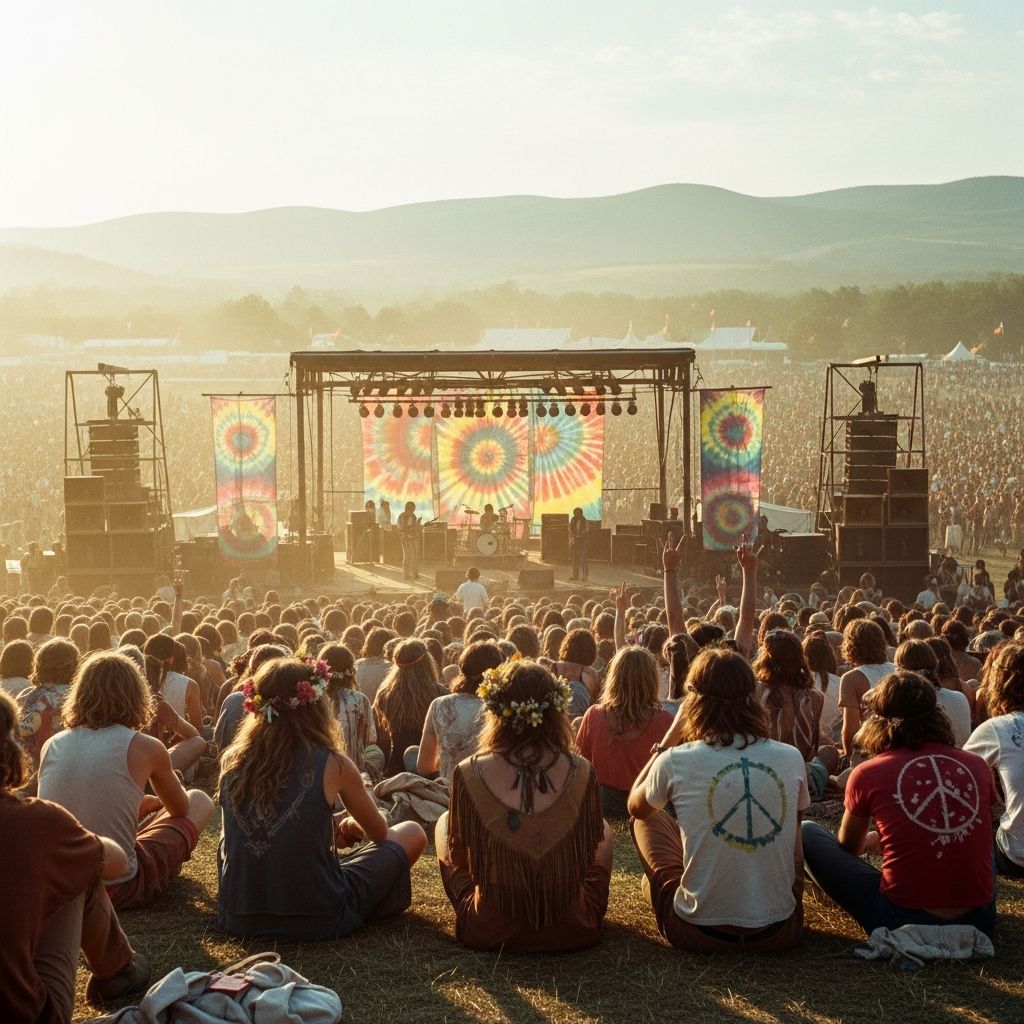
Woodstock 1969: How Much Performers Got Paid 50 Years Ago
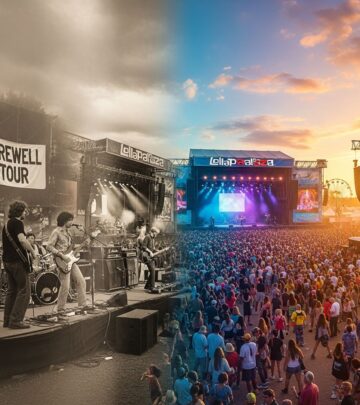
The Woodstock Music and Art Fair held in August 1969 remains one of the most iconic music festivals in history. While the three-day event is remembered for its defining performances, social significance, and cultural impact, the financial compensation offered to performers varied dramatically. From headliners who commanded substantial fees to emerging artists who received minimal payment, the payment structure at Woodstock revealed the music industry’s hierarchy at that pivotal moment in time. Understanding what artists were paid provides insight into the commercial dynamics of the late 1960s music scene and demonstrates how much those compensation packages would be worth in today’s dollars.
The Top Earners at Woodstock
The highest-paid performers at Woodstock commanded fees that reflected their commercial success and drawing power at the time. These artists were already established stars with proven track records of album sales and radio airplay.
Jimi Hendrix: $18,000
Jimi Hendrix was billed as the overall headliner at Woodstock 1969 and commanded the highest paycheck of all performers at the festival. Hendrix received $18,000 for his appearance, which equates to approximately $125,000 in today’s dollars when adjusted for inflation. His contract included a unique clause stipulating that no other performer could take the stage after him at the festival. Due to various delays and logistical issues that plagued Woodstock, Hendrix’s legendary performance didn’t occur until the morning of the final day. His iconic rendition of “The Star-Spangled Banner” featuring an unplanned solo guitar version became one of the defining moments not just of Woodstock, but of rock music history itself.
Blood, Sweat & Tears: $15,000
Blood, Sweat & Tears received the second-highest paycheck at Woodstock, commanding $15,000, or approximately $105,000 in today’s dollars. This substantial fee was justified by the band’s commercial momentum in the summer of 1969. The group had achieved significant chart success with their debut album, and their biggest hit “Spinning Wheel” was peaking during that exact period. The band’s fusion of rock, jazz, and orchestral elements had captured the public’s imagination and positioned them as one of the most important acts of the moment.
Major Festival Performers
Several other established acts received substantial compensation, though not quite at the level of the top tier. These performers represented some of the biggest names in rock and folk music.
Joan Baez and Creedence Clearwater Revival: $10,000 Each
Joan Baez and Creedence Clearwater Revival were among the highest-paid performers at Woodstock, each receiving $10,000, or about $70,000 in today’s dollars when adjusted for inflation. Joan Baez was a folk icon and established activist, while Creedence Clearwater Revival represented the new wave of rock music with their swamp rock sound. The payment disparity between their later lives tells an interesting story: according to Celebrity Net Worth, John Fogerty of Creedence Clearwater Revival has an estimated net worth of $70 million today, while Joan Baez’s net worth is roughly $11 million, demonstrating how career trajectories diverged significantly in the decades following Woodstock.
The Band, Janis Joplin, and Jefferson Airplane: $7,500 Each
Three additional major acts received $7,500 each for their performances. The Band, Janis Joplin, and Jefferson Airplane were all prominent figures in the rock and counterculture scenes. These payments reflected their status as significant touring and recording artists, though they fell short of the five-figure compensation given to the festival’s biggest names.
Mid-Tier Performers
A second tier of artists received compensation ranging from $6,000 to $7,000, representing important contributors to the festival’s overall success.
Richie Havens, Sly & the Family Stone, Canned Heat, and The Who: $6,000-$7,000
These four acts received reported payments in the $6,000 to $7,000 range, equivalent to $42,000 to $49,000 in today’s dollars. Among these performers, The Who was arguably the most famous internationally. According to Rolling Stone’s 1969 reporting, The Who’s manager collected $11,200 before the band’s performance, though this figure is believed to be an exaggeration. What is confirmed, however, is that The Who’s singer Roger Daltrey insisted on upfront payment before the band’s set, which took place at 5 a.m. after the band had waited backstage for approximately 14 hours.
Sly & the Family Stone, whose innovative blend of funk, soul, and rock would profoundly influence hip-hop decades later, received $7,000 for their performance. Band member Rose Stone later recalled in an NPR interview the surreal experience of performing at 5 a.m., noting: “The sun started to come up and all of a sudden all we could see was just a sea of people. I think it was like an apex of our group.” Their music would be sampled abundantly by rap artists like Dr. Dre, A Tribe Called Quest, and Arrested Development, ensuring their Woodstock appearance remained culturally significant long after the festival concluded.
Mid-Level Acts
A number of respected artists and emerging acts received compensation ranging from $2,500 to $5,000.
Arlo Guthrie and Crosby, Stills, Nash & Young: $5,000 Each
Both Arlo Guthrie and Crosby, Stills, Nash & Young were paid $5,000 each, approximately $35,000 in today’s dollars. Arlo Guthrie played a relatively short set, and by most accounts, it wasn’t particularly memorable. Notably, he did not perform his best-known song, the 18-minute antiestablishment epic “Alice’s Restaurant,” which had been released in 1967. Among the CSNY members, Neil Young has emerged as particularly successful in subsequent decades. Young parlayed his time with the supergroup into a hugely successful solo career and leadership of other bands, accumulating a net worth currently estimated at $65 million.
Ravi Shankar: $4,500
The legendary Indian sitar virtuoso Ravi Shankar received $4,500 for his appearance at Woodstock, introducing Western audiences to classical Indian music on an unprecedented scale for such a festival setting.
Emerging and Lower-Paid Acts
A substantial roster of performers received significantly lower compensation, though many would go on to substantial careers or became memorable for their specific performances at Woodstock.
The Grateful Dead: $2,500
Perhaps no band is more closely associated with the hippie movement and the counterculture crowd that Woodstock attracted than the Grateful Dead. Ironically, despite this cultural association, the Grateful Dead received only $2,500 for their appearance. Band members have openly acknowledged that their set at Woodstock was problematic. Playing while rain poured down, their performance consisted of only five songs and is generally considered a disaster by those involved.
Lower-Paid Performers
The bottom end of the payment scale at Woodstock included numerous acts who received between $375 and $2,000. Despite their minimal compensation, several of these performances became iconic moments:
Notable Low-Paid Performances:
– Joe Cocker: $1,375 (approximately $11,151 today)- Johnny Winter: $3,750- Ten Years After: $3,250- Country Joe and the Fish: $2,500- Mountain: $2,000- Tim Hardin: $2,000- The Incredible String Band: $2,250- John B. Sebastian: $1,000- Melanie: $750- Santana: $750- Sha Na Na: $700- Keef Hartley: $500- Quill: $375
Two performances in particular stand out for their memorability relative to their minimal compensation. Joe Cocker’s iconic rendering of the Beatles’ “With a Little Help From My Friends” closed his set and perfectly captured the collaborative spirit and vibe of Woodstock itself. His unique vocal interpretation and energetic performance made him a festival standout despite his $1,375 payment. Similarly, Ten Years After delivered one of the festival’s most riveting performances, with guitarist Alvin Lee executing some of the most intense guitar work of the entire event. Alvin Lee famously received a watermelon as a prize as he left the stage, a humorous acknowledgment of the festival’s chaotic nature.
Comparing 1969 Payments to Modern Value
| Artist | 1969 Payment | Approximate 2025 Value |
|---|---|---|
| Jimi Hendrix | $18,000 | $125,000 |
| Blood, Sweat & Tears | $15,000 | $105,000 |
| Joan Baez/CCR | $10,000 | $70,000 |
| The Who | $6,000-$7,000 | $42,000-$49,000 |
| The Grateful Dead | $2,500 | $17,500 |
| Joe Cocker | $1,375 | $9,625 |
| Santana | $750 | $5,250 |
The Financial Reality of Woodstock
The payment structure at Woodstock reflected the music industry standards of 1969 while also revealing the festival’s budgetary constraints. Organizers faced the challenge of booking dozens of acts while managing limited financial resources. The dramatic disparity between top earners like Jimi Hendrix and emerging acts like Santana demonstrates how the festival operated as a tiered event, with established superstars commanding premium fees while newer or less commercially proven artists accepted minimal compensation for the exposure and prestige of appearing at what would become rock music’s most legendary festival.
Interestingly, many of the lowest-paid performers went on to have successful careers that far exceeded those who earned more at Woodstock. Santana, paid a mere $750, became one of the most commercially successful rock bands of the 1970s and beyond. Similarly, Ten Years After’s electrifying performance helped establish them as major touring artists, despite their modest $3,250 payment.
Frequently Asked Questions
Q: Why was Jimi Hendrix paid significantly more than other performers?
A: Jimi Hendrix was the most commercially successful and internationally recognized artist at Woodstock in 1969. His recent album releases had topped charts, and his drawing power as a headliner justified the $18,000 fee. Additionally, his contract included the unique stipulation that no performer could follow him, reflecting his status as the festival’s main attraction.
Q: How much would a Woodstock performer’s payment be worth today?
A: Payments have been adjusted for inflation to reflect 2025 dollars. For example, Jimi Hendrix’s $18,000 equates to approximately $125,000 today, while Joe Cocker’s $1,375 payment would be worth about $9,625 in current dollars.
Q: Did all performers receive their payments as promised?
A: Payment arrangements varied. The Who famously demanded upfront payment before their 5 a.m. performance after waiting backstage for 14 hours. Other artists’ payment terms and whether all promised compensation was actually received remains unclear in some cases.
Q: Were any performances not included in the Woodstock film or soundtrack?
A: Yes, some performances were excluded. The Band did not allow their set to be used in the film or soundtrack because band members felt their performance wasn’t up to standard. Similarly, Jefferson Airplane’s performance was not included in the official release.
Q: Which lowest-paid performer became most successful after Woodstock?
A: Santana, paid only $750, became hugely successful, particularly after their self-titled 1971 album achieved massive commercial success. Their performance at Woodstock, while modestly compensated, provided valuable exposure that contributed to their rapid rise to stardom.
References
- Here’s How Much Woodstock Performers Got Paid 50 Years Ago — Money Magazine. 2019. https://money.com/woodstock-1969-bands-richest-how-much-paid/
Similar Articles








Read full bio of Sneha Tete