Wise Ways to Give Money Gifts to Kids
Discover effective strategies to transfer funds to children that promote financial responsibility and long-term wealth building.

Gifting money to children offers a unique opportunity to instill lifelong financial principles while providing tangible support for their future. Rather than handing over cash that might vanish quickly, thoughtful approaches can teach saving, investing, and budgeting. This guide outlines proven methods tailored to different ages, ensuring gifts contribute to both immediate joy and enduring security.
Building Foundations with Basic Savings Tools
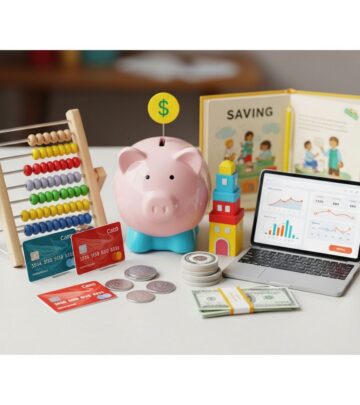
Start young by introducing simple, visual aids that demonstrate how money accumulates. For toddlers and preschoolers, transparent containers divided into sections for saving, spending, and giving make abstract concepts concrete. Children watch coins stack up, grasping the satisfaction of delayed gratification.
Progress to traditional piggy banks in fun designs, which encourage regular deposits from allowances or small gifts. These tools spark conversations about choices: buy a toy now or wait for a bigger purchase? Such habits form the bedrock of fiscal discipline.
- Use labeled jars: One for essentials, one for fun, one for charity.
- Match deposits: Add interest-like bonuses to mimic bank growth.
- Track progress visually to celebrate milestones.
Opening Doors to Real Banking Experiences
Transition to formal banking by establishing a child’s first savings account. Many credit unions and banks offer kid-friendly accounts with no fees and low minimums, often including debit cards for supervised use. This introduces interest earnings and digital tracking.
For preteens, pair the account with an allowance system tied to chores. Teach reconciliation by reviewing statements together, explaining deposits, withdrawals, and compounding. A “save and earn” challenge—matching every $5 saved with $1 extra—simulates real returns, making finance engaging.
| Age Group | Account Type | Key Benefit |
|---|---|---|
| 5-10 years | Basic Savings | Visual growth, no risk |
| 11-15 years | Kids Debit + Savings | Budgeting practice |
| 16+ years | Teen Checking | Full responsibility |
Fun Learning Through Games and Apps
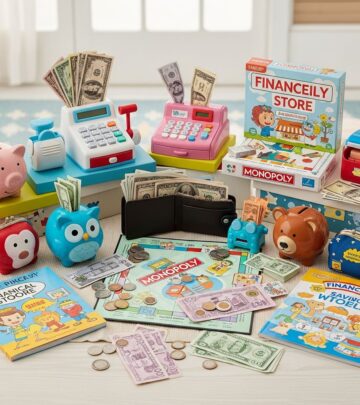
Board games transform money lessons into playtime. Classics like Monopoly illustrate property investment, rent, and cash flow, while The Game of Life covers budgeting, education costs, and retirement planning. PayDay introduces bills and debt management in an entertaining format.
Digital options abound: apps with virtual economies teach earning, spending, and investing. Subscription-based platforms deliver interactive modules on stocks, entrepreneurship, and credit. Gift a year’s access alongside a starter fund to apply virtual lessons to real money.
- Monopoly: Real estate and negotiation skills.
- The Allowance Game: Earning vs. spending trade-offs.
- Money Bags: Coin recognition and change-making.
Investing Early: Stocks and Custodial Accounts
For older kids, introduce markets via custodial accounts like UTMA or UGMA. Adults manage until the child reaches majority (18-21, state-dependent), allowing tax-advantaged growth at the child’s lower rate.
Gift fractional shares of favorite companies—Disney for animation fans or Apple for tech enthusiasts. Platforms simplify buying single shares or slices, sparking interest in dividends and appreciation. Discuss volatility to balance excitement with risk awareness.
Savings bonds, issued by the U.S. Treasury, offer safe, long-term growth. EE bonds double in 20 years, ideal for patient savers. I bonds adjust for inflation, protecting purchasing power.
Future-Focused Education Savings
Direct gifts toward college via 529 plans, state-sponsored accounts with tax-free growth for qualified education expenses. Contributions qualify for state deductions, and 2026 federal limits allow up to $18,000 annually per donor without gift tax (or $36,000 for couples via 5-year averaging).
Prepaid tuition plans lock in current rates, hedging against fee hikes. Even modest annual additions compound significantly; $1,000 yearly from birth could exceed $100,000 by college age at 6% return.
Prepaid Cards and Budgeting Aids
Reloadable prepaid debit cards teach spending limits without credit risk. Load with gift amounts, setting alerts for balances. Gift cards function similarly, prompting price comparisons and remainder calculations during shopping.
Budget journals or apps track income vs. outflows. Challenge kids to categorize expenses, revealing patterns like impulse buys. Pair with family “money moments”—monthly reviews of goals and progress.
Philanthropy and Broader Values
Encourage generosity with matching donations to charities they select. A certificate promising equivalent value to their chosen cause builds empathy and perspective. Discuss impact: how $50 aids a family in need versus personal gadgets.
For teens, a session with a financial planner demystifies taxes, IRAs, and careers. Custodial Roth IRAs allow earned-income contributions, introducing retirement savings early.
Navigating Tax Rules and Limits
The IRS 2026 annual exclusion is $19,000 per recipient ($38,000 for spouses), up from prior years. Exceed it? File Form 709 for lifetime exemption tracking (over $13 million).
Direct tuition payments bypass limits entirely. Consult professionals for complex scenarios like large estates or special needs trusts.
Age-Appropriate Strategies Overview
| Age | Gift Ideas | Lessons Learned |
|---|---|---|
| Toddlers | Jars, Piggy Banks | Saving basics |
| Elementary | Savings Accounts, Games | Budgeting, Interest |
| Teens | Stocks, 529s, Cards | Investing, Planning |
| Young Adults | IRAs, Planner Sessions | Long-term Wealth |
Frequently Asked Questions
What is the best first financial gift for a 5-year-old?
A set of clear jars or a piggy bank to visualize saving.
Can minors own stocks?
Yes, through custodial accounts managed by adults.
How much can I gift tax-free in 2026?
$19,000 per child per donor.
Are 529 plans only for college?
Primarily, but expandable to apprenticeships and student loans.
What if my gift exceeds exclusion limits?
Use 5-year averaging or direct payments; file IRS Form 709.
Turning Gifts into Lasting Lessons
Combine tools with guidance: discuss decisions, review outcomes, adjust goals. Family traditions like holiday financial check-ins reinforce habits. These gifts transcend material value, equipping kids for independence.
By prioritizing education alongside funds, givers empower the next generation. Start small, stay consistent, and watch financial savvy flourish.
References
- 5 Financial Literacy Themed Gifts for Kids and Teens — General Electric Credit Union. 2023-11-13. https://www.gecreditunion.org/learn/education/resources/money-minutes/november-2023/5-financial-literacy-themed-gifts-for-kids-and-teens
- Financial Education for All Ages: Giving Money-Smart Gifts — Peake Federal Credit Union. 2025-11-25. https://www.peakefederal.com/2025/11/25/financial-education-for-all-ages-giving-money-smart-gifts-that-teach-kids-to-save/
- 6 Holiday Gifts that Teach Children About Money — BankFive. 2024-11. https://www.bankfive.com/blogs/november-2024/6-holiday-gifts-that-teach-children-about-money
- 5 Gifts that Teach Kids About Finances and Investing — MassMutual. N/A. https://blog.massmutual.com/planning/financial-gifts-kids
- Financial Gifts to Consider Giving to Babies, Kids, & Adults — Western & Southern. N/A. https://www.westernsouthern.com/personal-finance/financial-gifts-to-consider-giving
- Turning Monetary Gifts into Learning Experiences for Children — Duncan Group. N/A. https://duncangrp.com/financial-experiences-for-children/
Similar Articles








Read full bio of medha deb