U.S. National Debt: What To Know In 2025
Exploring whether America's $38 trillion national debt can ever be fully repaid.

Will the U.S. Debt Ever Be Paid Off?
The United States national debt has reached unprecedented levels, surpassing $38 trillion as of October 2025. This staggering figure raises critical questions about the nation’s fiscal future and whether the government will ever eliminate this debt burden. Understanding the mechanics of the national debt, its causes, and potential solutions requires examining historical context, economic principles, and policy options that policymakers face.
The short answer is complicated: complete debt elimination is theoretically possible but practically unlikely under current circumstances. However, this doesn’t necessarily mean the nation faces inevitable economic catastrophe. The relationship between government debt, economic growth, and fiscal policy is far more nuanced than simple household budget analogies suggest.
Understanding the U.S. National Debt
The U.S. national debt represents the total amount of money the federal government owes to creditors, including individual investors, corporations, state and local governments, foreign nations, and Federal Reserve holdings. This debt accumulates when annual government spending exceeds revenue collected through taxes and other sources.
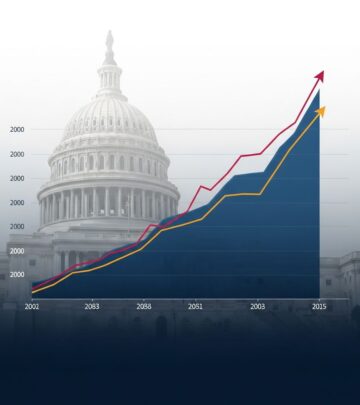
As of September 2025, the total federal debt stood at approximately $37.6 trillion, representing 119% of the nation’s Gross Domestic Product. This means the government owes nearly as much money as the entire U.S. economy produces in a single year. In October 2025, debt reached $38.04 trillion, with the debt-to-GDP ratio climbing to 124.3%.
To contextualize this amount, the per-person federal debt obligation exceeds $110,000 for every American citizen. The debt encompasses various instruments including Treasury bills (short-term), notes (intermediate-term), and bonds (long-term).
How the Debt Accumulates
Federal debt grows primarily through annual budget deficits. When the government spends more money than it collects in revenues, it must borrow to cover the shortfall. This borrowing adds to the national debt each year.
For fiscal year 2025, the federal deficit totaled approximately $1.8 trillion, representing a 4% decrease from the previous year after adjusting for timing effects. Despite efforts to control spending, the cumulative deficit continues climbing, with projections suggesting annual deficits will exceed $1 trillion consistently throughout the coming decades.
The Congressional Budget Office projects that federal spending will rise from 23.3% of GDP in 2025 to 26.6% in 2055, while revenues are expected to increase more slowly, from 17.1% to 19.3% of GDP. This structural imbalance means deficits will continue widening regardless of economic conditions.
Primary Drivers of Rising Debt
Several factors contribute to the explosive growth of the national debt:
Mandatory Spending Programs — Social Security, Medicare, and Medicaid represent the largest spending categories and grow automatically based on demographic and healthcare cost trends. These programs account for approximately 50% of federal spending and continue expanding as the population ages.
Defense Expenditures — Military spending remains substantial, consuming roughly 13% of the federal budget annually. Defense outlays have remained relatively stable but represent significant fixed obligations.
Interest Payments — As debt accumulates, interest payments on that debt become increasingly burdensome. The average interest rate on federal debt increased from 1.556% in January 2022 to 3.352% by July 2025, the highest level since the 2007-09 financial crisis. Interest payments comprised 13% of total government spending in fiscal year 2024 and continue rising.
Tax Revenue Fluctuations — Federal revenues depend heavily on economic growth, employment levels, and tax policy decisions. Changes in tax rates and bases directly affect government receipts and deficit calculations.
Economic Shocks — Crises like the COVID-19 pandemic dramatically increase both spending and reduce revenues simultaneously, accelerating debt accumulation. Federal debt increased 31% from 2019 to 2025, partly reflecting pandemic-related spending.
Economic Implications of High Debt Levels
Elevated national debt creates several economic challenges:
Crowding Out Private Investment — Government borrowing competes with private sector borrowing for available capital. Higher government debt can increase interest rates throughout the economy, making it more expensive for businesses and consumers to borrow for productive investments.
Rising Interest Costs — As debt grows and interest rates rise, the government devotes increasing resources to interest payments rather than productive investments in infrastructure, research, or education. This diverts funds from growth-promoting expenditures.
Fiscal Inflexibility — High debt service obligations reduce the government’s ability to respond to future crises or invest in priorities. During the next recession or emergency, policymakers will face constrained options.
Inflation Risk — Some economists worry that persistent deficits could eventually require monetary accommodation, potentially contributing to inflation if debt monetization becomes necessary.
Intergenerational Equity — Current deficit spending effectively transfers burdens to future taxpayers who must eventually service or reduce the debt through higher taxes or reduced benefits.
Could the Debt Be Paid Off?
Theoretically, several pathways exist for reducing or eliminating the national debt:
Significant Tax Increases — The government could increase revenue substantially through higher income tax rates, new taxes on wealth or consumption, or elimination of tax preferences. However, higher taxes could reduce economic growth, potentially offsetting revenue gains.
Spending Reductions — Cutting government spending across discretionary and mandatory programs would reduce annual deficits. However, mandatory programs would require legislative changes affecting millions of beneficiaries, making such reductions politically challenging.
Combination Approaches — Most economists suggest that meaningful deficit reduction requires both revenue increases and spending restraint. Pursuing either strategy exclusively would require politically and economically unrealistic magnitudes of change.
Economic Growth — Faster economic growth expands the tax base and increases revenues while reducing the need for certain benefits. However, economic growth alone cannot eliminate deficits without complementary policy changes.
The Congressional Budget Office projects that total federal debt will exceed $52 trillion by the end of fiscal 2035 without significant policy changes. The debt ceiling was raised by $5 trillion to $41.1 trillion, but even this substantial increase will eventually be reached if current trends continue.
Is Debt Elimination Necessary?
An important distinction exists between the desirability of eliminating debt entirely versus managing debt at sustainable levels. Most developed nations maintain substantial public debt throughout their histories. The United Kingdom has carried government debt for centuries, and Japan’s debt-to-GDP ratio exceeds 260% without experiencing immediate fiscal collapse.
Economists distinguish between the absolute debt level and the debt-to-GDP ratio. A growing economy can sustain higher absolute debt levels if economic growth outpaces debt growth. Conversely, stagnating economies face crisis even with modest debt levels.
The critical concern isn’t whether debt reaches zero but whether debt growth becomes unsustainable. When debt-to-GDP ratios climb too high, interest payments consume excessive portions of revenues, reducing fiscal flexibility and potentially triggering investor concerns about repayment capacity.
Historical Debt Levels and Precedents
U.S. debt-to-GDP ratios have varied substantially throughout history. During World War II, debt reached approximately 119% of GDP as the government borrowed heavily to finance military operations. Following the war, sustained economic growth and moderate fiscal discipline gradually reduced the ratio to approximately 31% by 1974.
The nation’s debt as a percentage of GDP first surpassed 100% again in the fourth quarter of 2012, remained relatively stable until early 2020, then peaked at 133% in the second quarter of 2020 during the pandemic. The current ratio of approximately 119% falls between these extremes but remains elevated by post-World War II standards.
Policy Options Moving Forward
Policymakers face several strategic choices regarding the national debt:
Status Quo Continuation — Allowing deficits to persist at current levels will eventually necessitate crisis-driven adjustments. This approach trades near-term political convenience for long-term instability.
Gradual Fiscal Consolidation — Implementing modest, sustained adjustments through tax increases and spending reforms could stabilize debt-to-GDP ratios over decades, avoiding sudden disruptions.
Structural Reforms — Addressing underlying drivers of deficit growth through healthcare cost reforms, Social Security adjustments, and tax system modernization could place finances on a sounder footing.
Growth-Focused Policies — Prioritizing policies that accelerate economic growth—including research investment, infrastructure development, and labor force expansion—could improve debt sustainability without politically difficult deficit measures.
Frequently Asked Questions
Q: What happens if the U.S. doesn’t pay off its debt?
A: Complete default is unlikely because the U.S. has multiple options for managing debt, including inflation adjustment, policy reforms, or economic growth. However, failure to address sustainability could eventually increase borrowing costs, reduce government flexibility, or require sudden, disruptive adjustments.
Q: Who owns U.S. government debt?
A: U.S. Treasury debt is owned by individuals, corporations, state and local governments, foreign governments (particularly China and Japan), and the Federal Reserve. Diverse ownership means debt elimination would require coordinating expectations among millions of creditors globally.
Q: Could the government just print money to pay off the debt?
A: While technically possible, printing money to pay debt would likely trigger inflation, eroding currency value and harming savers and creditors. This approach would be economically destructive and politically contentious.
Q: How does the national debt affect individual Americans?
A: High debt levels can lead to higher interest rates, affecting mortgage and loan costs. They may also necessitate future tax increases, reduced government benefits, or economic growth limitations. Each American bears an implicit share of approximately $110,000 in federal debt obligations.
Q: Is the current debt level unsustainable?
A: The current trajectory is unsustainable without policy adjustments. However, “unsustainable” doesn’t mean immediate crisis. With gradual reforms implemented over years or decades, the U.S. can stabilize debt at manageable levels before reaching true crisis points.
Q: What’s the difference between the national debt and the deficit?
A: The deficit is the annual shortfall between government spending and revenues. The national debt is the cumulative total of all past deficits. Each year’s deficit adds to the accumulated debt.
Q: Could bankruptcy force debt repayment?
A: National bankruptcy differs from personal or corporate bankruptcy. Sovereign nations cannot formally declare bankruptcy in the same way. However, severe fiscal stress could force debt restructuring, inflation, austerity, or other painful adjustments.
The Path Forward
Will the U.S. debt ever be paid off? Under current policy trajectories, complete elimination remains highly unlikely. However, this doesn’t doom the nation to fiscal catastrophe if policymakers implement gradual, sensible reforms addressing spending growth, revenue adequacy, and economic competitiveness.
The challenge isn’t purely mathematical but fundamentally political. The tools for fiscal adjustment exist—combinations of modest tax increases, spending restraint, and growth-promoting policies could stabilize debt sustainably. The question is whether elected officials possess sufficient political will to implement necessary changes before market pressures force sudden, disruptive action.
Nations thrive or falter not based on debt elimination but on debt management. The U.S. must transition from indefinite deficit spending toward policies ensuring debt-to-GDP ratios stabilize at sustainable levels, protecting future generations while maintaining current living standards and government capabilities.
References
- United States Government Debt — Trading Economics. 2025-10-31. https://tradingeconomics.com/united-states/government-debt
- How much debt does the US have? — USAFacts. 2025-09-30. https://usafacts.org/answers/how-much-debt-does-the-us-have/
- Our National Debt — Peterson Foundation. 2025-03-31. https://www.pgpf.org/our-national-debt/
- Key facts about the U.S. national debt — Pew Research Center. 2025-08-12. https://www.pewresearch.org/short-reads/2025/08/12/key-facts-about-the-us-national-debt/
- Deficit Tracker — Bipartisan Policy Center. 2025-09-30. https://bipartisanpolicy.org/report/deficit-tracker/
Similar Articles








Read full bio of Sneha Tete