WiFi Security: Essential but Not Enough
Discover why a secure WiFi connection protects your data but leaves gaps that cybercriminals exploit—learn layered defenses for 2026.
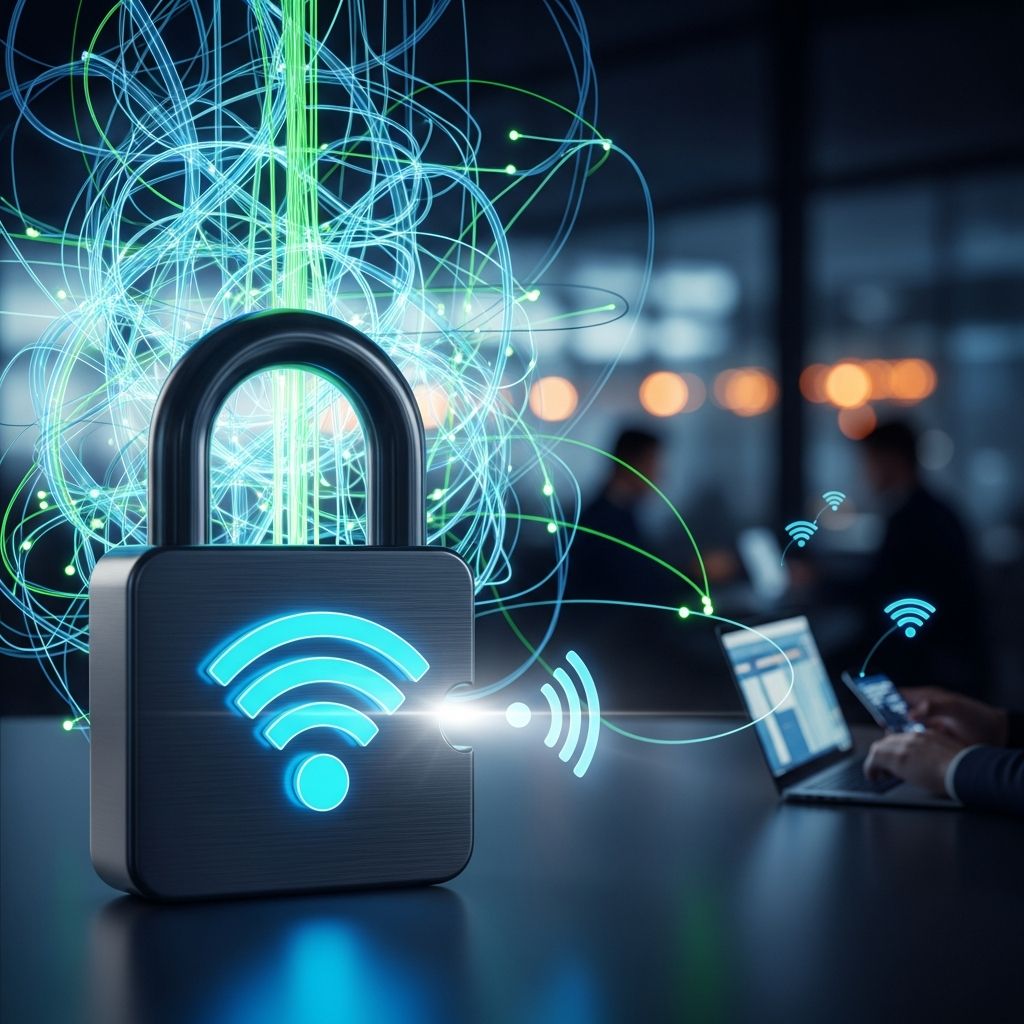
Secure WiFi networks form the foundation of online protection, encrypting data transmission and blocking basic eavesdroppers. However, relying solely on a locked-down router fails against sophisticated 2026 cyber threats like phishing and malware that bypass network safeguards.
The Reality of Modern WiFi Vulnerabilities
Even with WPA3 encryption—the gold standard for home networks—attackers target devices and user behaviors beyond the router. Public hotspots, outdated firmware, and insider errors create entry points that no WiFi lock can fully seal.
Consider endpoints: smartphones and laptops connected to secure WiFi remain prime targets. Without endpoint detection tools, malware silently exfiltrates data despite encrypted connections.
Layered Protection: Beyond the Network
Effective defense demands multiple barriers. Start with network basics, then fortify devices, accounts, and habits.
1. Fortify Your WiFi Foundation
- Switch to WPA3 encryption if supported; fallback to WPA2 otherwise, avoiding obsolete WEP.
- Replace default router admin passwords with strong, unique ones generated by a password manager.
- Disable WPS and UPnP features that expose ports to unauthorized access.
- Update router firmware quarterly to patch known exploits.
These steps secure the perimeter but ignore traffic already inside your network.
2. Implement Zero Trust Principles
Assume no connection is safe. Zero Trust enforces continuous verification via identity controls, micro-segmentation, and least-privilege access. Benefits include blocking lateral attacks in hybrid setups.
| Zero Trust Element | Implementation | Benefit |
|---|---|---|
| Identity Verification | MFA everywhere | Stops 99% of account takeovers |
| Network Segmentation | VLANs or ZTNA | Limits breach spread |
| Continuous Monitoring | EDR tools | Detects anomalies instantly |
3. Secure Every Endpoint Device
Endpoints drive most breaches. Deploy EDR software for real-time threat hunting, enforce full-disk encryption, and whitelist approved apps.
- Enable secure boot to prevent tampered firmware loads.
- Scan mobiles with MDM policies blocking sideloading.
- Avoid public WiFi sans VPN; force all traffic through encrypted tunnels.
Account Safeguards That Stop Hackers Cold
Master Password Hygiene
Weak credentials fuel 80% of incidents. Mandate 16+ character passphrases mixing cases, numbers, and symbols—never reuse across sites.
- Use managers like Bitwarden for autofill and breach alerts.
- Enforce rotation for privileged accounts quarterly.
Mandate Multi-Factor Authentication
MFA adds a hardware token or app verifier, thwarting stolen passwords. Prioritize phishing-resistant options like YubiKey over SMS.
Enable on email, banking, VPNs, and cloud services—verify weekly for drift.
Proactive Threat Hunting and Updates
Automate Patching Religiously
Unpatched flaws cause thousands of breaches yearly. Prioritize CISA’s Known Exploited Vulnerabilities (KEV) list for internet-facing assets.
- Patch OS, apps, firmware within 7 days of release.
- Automate via tools like WSUS for enterprises or native schedulers at home.
Encrypt All Sensitive Data
AES-256 secures files at rest; TLS 1.3 protects transit. Back up immutably to air-gapped storage, testing restores monthly.
Monitoring: Your 24/7 Sentinel
Threats lurk undetected for months. SIEM aggregates logs from endpoints, networks, and cloud for behavioral analytics.
- Alert on privilege escalations or unusual logins.
- Review top risks weekly in a security cadence meeting.
Remote and Mobile Defense Strategies
Hybrid work expands attack surfaces. BYOD policies require VPNs, device encryption, and app restrictions.
- Prohibit RDP over internet; use ZTNA gateways.
- MDM on mobiles blocks rogue WiFi and enforces PINs.
Incident Preparedness: Plan to Win
Breaches happen—response speed minimizes damage. Craft a plan covering detection, containment, eradication, and recovery.
- Identify: SIEM triggers.
- Contain: Isolate segments.
- Eradicate: Forensic sweep.
- Recover: Monitored restoration.
- Lessons: Post-mortem review.
Cloud and Email Fortifications
Cloud Security Posture
Misconfigs invite 60% of cloud breaches. Enable logging, IAM least-privilege, and CSPM scanning.
Email as the Frontline
Phishing evades WiFi checks. Train on spear-phishing via simulations; deploy DMARC and AI filters.
Emerging 2026 Risks: AI and Supply Chain
AI tools risk prompt injection; inventory usage and log inputs. Vet vendors with SOC2 evidence and breach clauses.
FAQs
Is WPA3 truly unbreakable?
WPA3 resists offline dictionary attacks better than WPA2 but requires strong router passwords and updates to hold against quantum threats long-term.
Do I need antivirus on a secure network?
Yes—network security doesn’t scan for ransomware or keyloggers already on devices.
How often should I change passwords?
Only on suspicion or rotation policy for admins; focus on uniqueness via managers.
What’s the biggest WiFi myth?
That HTTPS alone secures you—man-in-the-middle on rogue hotspots strips it without VPN.
Can smart home devices be secured?
Yes: Segment IoT VLAN, update firmware, disable cloud if possible.
Daily Habits for Lifelong Security
Incorporate hygiene: Verify links, shun suspicious downloads, review permissions monthly. Education trumps tech alone.
This multi-layered approach—WiFi as base, not pinnacle—equips you for 2026’s threatscape. Implement iteratively, measure efficacy.
References
- Top Cybersecurity Best Practices for 2026 (Complete Guide) — OpenEDR. 2026. https://www.openedr.com/blog/cybersecurity-best-practices/
- Latest Cybersecurity Best Practices 2026: A Practical Checklist — NMS Consulting. 2026. https://nmsconsulting.com/latest-cybersecurity-best-practices-2026/
- Cyber Security Best Practices for 2026 — SentinelOne. 2026. https://www.sentinelone.com/cybersecurity-101/cybersecurity/cyber-security-best-practices/
- Cybersecurity Tips 2026 — Convergence Networks. 2026. https://convergencenetworks.com/blog/cybersecurity-tips-2026/
- Your 2026 Cybersecurity Checklist — TPX Communications. 2026. https://www.tpx.com/blog/your-2026-cybersecurity-checklist/
Similar Articles








Read full bio of Sneha Tete