Why You Should Still Pay Attention to Bitcoin
Even after the hype fades, Bitcoin's revolutionary technology, growing adoption, and role as digital gold make it worth watching in 2026.
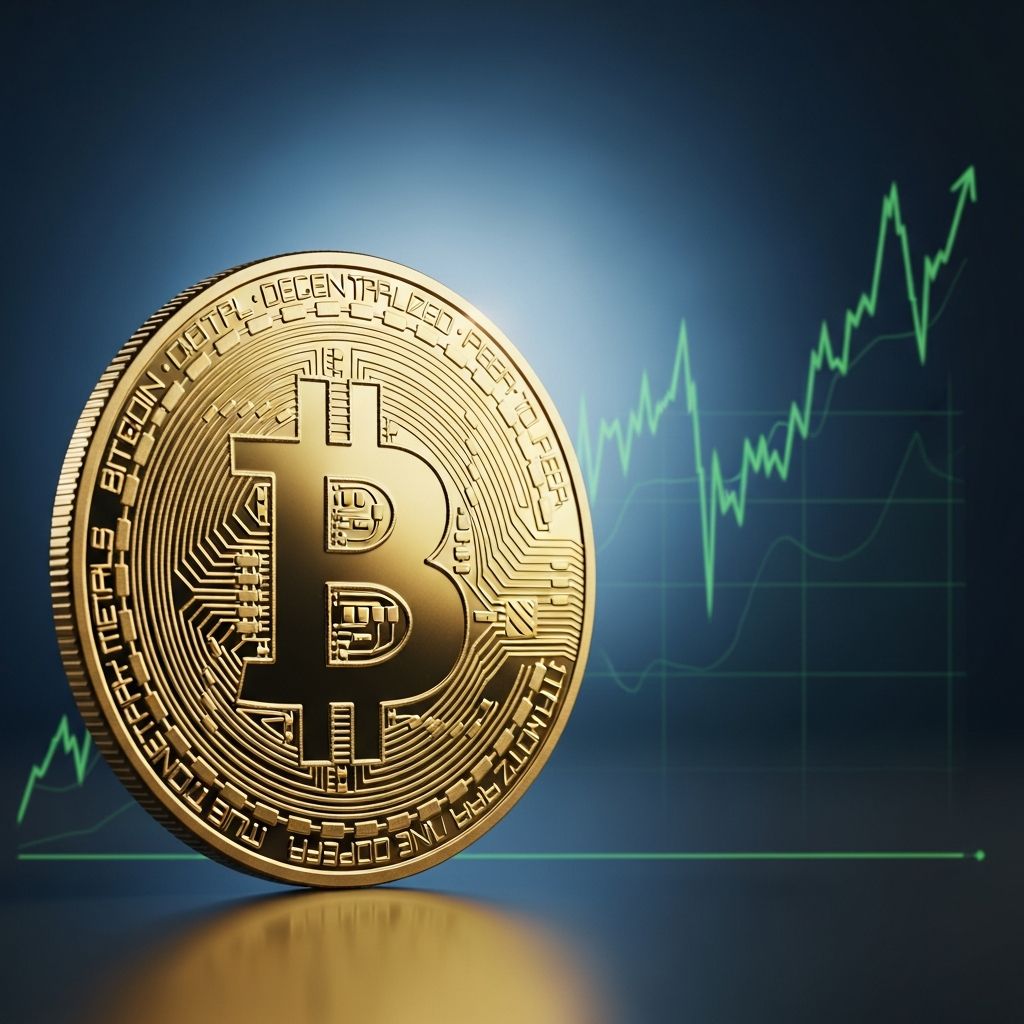
Bitcoin may no longer dominate headlines like it did in 2017, but its underlying technology and economic role continue to evolve, making it a critical asset to monitor for personal finance enthusiasts. Despite market volatility, Bitcoin’s fixed supply, decentralized network, and growing institutional interest position it as a potential hedge against inflation and traditional financial systems.
What Is Bitcoin, Anyway?
Bitcoin is the world’s first decentralized digital currency, created in 2009 by the pseudonymous Satoshi Nakamoto. It operates on blockchain technology—a distributed ledger that records transactions across a network of computers without needing a central authority like a bank. This innovation solves the double-spending problem inherent in digital assets, enabling peer-to-peer electronic cash.
Unlike fiat currencies controlled by governments, Bitcoin has a hard-capped supply of 21 million coins, with issuance halving roughly every four years. This scarcity mimics gold, earning it the nickname ‘digital gold.’ As of 2026, over 19.7 million Bitcoins have been mined, with the network processing millions of transactions daily through proof-of-work consensus, where miners compete to validate blocks using computational power.
The Technology Behind Bitcoin Is Revolutionary
Blockchain, Bitcoin’s backbone, is a tamper-proof chain of blocks containing transaction data. Each block links to the previous via cryptographic hashes, ensuring immutability. This technology has applications far beyond currency, including supply chain tracking, voting systems, and smart contracts.
- Decentralization: No single entity controls the network, reducing censorship risks.
- Transparency: All transactions are public, auditable via explorers like Blockchain.com.
- Security: Elliptic curve cryptography protects private keys, with SHA-256 hashing securing the chain.
Bitcoin’s proof-of-work (PoW) mechanism incentivizes honest behavior: miners solve complex puzzles to add blocks, earning new Bitcoins and fees. This has made the network the most secure computing system, with a hash rate exceeding 600 exahashes per second in 2026.
Bitcoin as Digital Gold
Bitcoin’s fixed supply and portability position it as ‘digital gold.’ Gold has served as a store of value for millennia due to scarcity and durability; Bitcoin replicates this digitally. Research shows Bitcoin exhibits commodity-like behavior, including a convenience yield—the non-monetary benefit of holding it, such as transaction utility and network effects.
During crises like COVID-19, gold’s convenience yield rose as a safe haven, while Bitcoin’s initially dipped but showed mean-reversion, supporting its commodity status. Unlike gold, Bitcoin is divisible to eight decimal places (satoshis), instantly transferable globally, and stored in digital wallets without physical vaults.
| Asset | Supply Cap | Portability | Divisibility | Storage Cost |
|---|---|---|---|---|
| Gold | No | Low | Medium | High |
| Bitcoin | 21M | High | High | Low |
Holders benefit from convenience yield, offsetting carrying costs like opportunity loss. Studies confirm an inverse relationship: higher user adoption (measured by unique active addresses) lowers convenience yield via increased transaction surplus from network effects.
Institutional Adoption Is Growing
Once dismissed as speculative, Bitcoin now attracts institutions. In 2021, Tesla bought $1.5B in Bitcoin; by 2026, ETFs like BlackRock’s iShares Bitcoin Trust hold billions. MicroStrategy owns over 250,000 BTC as a treasury reserve.
Countries like El Salvador adopted Bitcoin as legal tender in 2021, issuing Volcano Bonds. Pensions and sovereign funds allocate 1-5% to Bitcoin for diversification. CME Bitcoin futures, launched 2017, classify it as a commodity under CFTC, with open interest surpassing $30B.
- PayPal, Visa enable Bitcoin payments.
- Spot ETFs approved in multiple nations.
- Layer-2 solutions like Lightning Network scale transactions to millions per second.
Bitcoin Challenges the Traditional Financial System
Bitcoin disrupts fiat money creation via debt. Central banks print currency, fueling inflation—eroding purchasing power at 2-7% annually. Bitcoin’s halving events (next in 2028) ensure predictable issuance.
Documentaries like ‘Bitcoin: The End of Money as We Know It’ highlight how banks create money from thin air through fractional reserves, leading to crises. Bitcoin enables peer-to-peer finance without intermediaries, reducing fees from 3% (credit cards) to under 1 satoshi per transaction on Lightning.
Regulatory Clarity Is Emerging
Regulation evolves: U.S. SEC approves Bitcoin ETFs (2024), EU’s MiCA framework standardizes crypto (2024). This clarity attracts capital while addressing illicit use—Bitcoin transactions are traceable, with Chainalysis reporting <0.34% illicit volume in 2025.
Challenges remain, like energy use (comparable to small countries), but 50%+ mining now renewable. Quantum threats are mitigated by protocol upgrades.
Bitcoin’s Role in Your Portfolio
For investors, Bitcoin offers uncorrelated returns. Historical data: $100 in 2013 grew to $10,000+ by 2021 peaks. Allocate 1-5% for high-risk tolerance; use dollar-cost averaging to mitigate volatility.
- Hedge: Against inflation, as fiat debases.
- Diversification: Low correlation to stocks/bonds.
- Upside: Adoption could drive prices to $500K+ per models like Stock-to-Flow.
Risks: Volatility (50%+ drawdowns), hacks (use hardware wallets), regulation. Yet, resilience post-FTX (2022) crash shows maturity.
Frequently Asked Questions (FAQs)
Q: Is Bitcoin a good investment in 2026?
A: Bitcoin suits long-term holders seeking inflation protection and growth, backed by institutional flows and scarcity. Volatility persists, so invest what you can afford to lose.
Q: How does Bitcoin’s convenience yield work?
A: It measures holding benefits like transaction utility, mean-reverting like commodities. Higher adoption lowers it via network effects.
Q: Can Bitcoin replace the dollar?
A: Unlikely fully, but it challenges debt-based systems, enabling borderless value transfer.
Q: Is Bitcoin mining sustainable?
A: Increasing renewables (58% in 2025) and efficiency gains make it greener than gold mining.
Q: How to buy Bitcoin safely?
A: Use regulated exchanges (Coinbase, Binance.US), enable 2FA, store in cold wallets like Ledger.
Getting Started with Bitcoin
Download a wallet (Electrum for desktop, BlueWallet for mobile). Buy via exchanges, transfer to self-custody. Explore Lightning for cheap txns. Stay informed via CoinDesk, Bitcoin Magazine.
Bitcoin’s journey from cypherpunk experiment to $1T+ asset underscores its staying power. Network effects amplify value: more users, higher utility, lower convenience yield signaling maturity. As fiat falters amid debt ($300T global), Bitcoin offers sovereignty.
References
- What can we learn from the convenience yield of Bitcoin? Evidence from the COVID-19 crisis — International Review of Economics & Finance. 2023-06-23. https://pmc.ncbi.nlm.nih.gov/articles/PMC10289175/
- Bitcoin: The End of Money as We Know It (Documentary Synopsis) — The Crypto Vault (YouTube). 2025-12-22. https://www.youtube.com/watch?v=zNZccLi8Yok
- Bitcoin Futures and Commodities Regulation — CFTC Official Documentation (via CME). 2017 (ongoing). https://www.cftc.gov/PressRoom/PressReleases/7562-17
- Bitcoin Halving and Supply Schedule — Bitcoin Core Protocol Documentation. Ongoing. https://bitcoin.org/en/developer-reference#term
- Global Crypto Adoption Index — Chainalysis 2025 Report. 2025-01. https://www.chainalysis.com/blog/2025-crypto-adoption/
Similar Articles








Read full bio of Sneha Tete