Always Get It In Writing: 5 Simple Steps To Protect Yourself
Discover why written agreements protect your finances and relationships in everyday deals from rentals to loans.
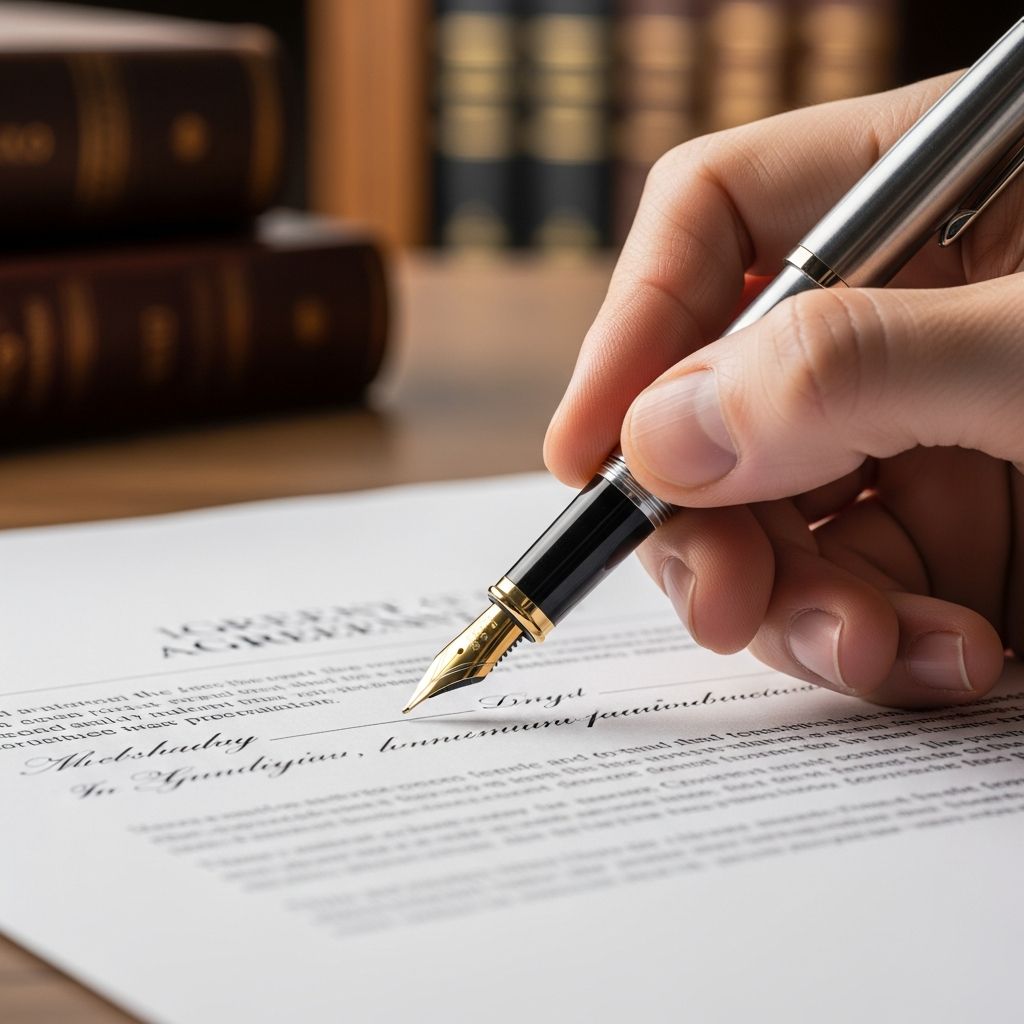
In today’s fast-paced world, it’s tempting to rely on verbal promises and handshakes for agreements, whether you’re renting an apartment, hiring a contractor, or lending money to a friend. However, this approach often leads to misunderstandings, disputes, and financial losses.
Getting everything in writing
is the single most effective way to protect yourself legally, financially, and emotionally. This article explores the pitfalls of verbal agreements, provides real-world examples of why written contracts are essential, and offers practical tips for creating enforceable documents.The Dangers of Verbal Agreements
Verbal agreements may feel binding in the moment, but they lack the enforceability and clarity of written contracts. Memories fade, interpretations differ, and without documentation, proving the terms becomes nearly impossible. According to the Statute of Frauds, certain agreements—like those for real estate, goods over $500, or contracts lasting more than a year—must be in writing to be legally enforceable in most U.S. states.
Common Pitfalls
- Misremembered Details: One party recalls a different price, timeline, or scope of work.
- Denial of Agreement: The other side claims the conversation never happened.
- Lack of Proof: No paper trail means courts side with the party having better evidence—or dismiss the case entirely.
- Emotional Strain: Disputes with friends or family can irreparably damage relationships.
Consider this: A simple handshake deal for home repairs can escalate into thousands in losses if the work is substandard and the contractor disappears. Written agreements eliminate these risks by setting clear expectations upfront.
Real-Life Examples: When Verbal Agreements Fail
Countless horror stories illustrate the consequences of skipping written contracts. Here are key scenarios where going verbal backfired spectacularly.
Rental Agreements Gone Wrong
You find the perfect apartment and verbally agree with the landlord on rent, pets, and maintenance. Months later, they demand a pet fee you never discussed or raise rent without notice. Without a lease, you’re at their mercy. A written lease outlines responsibilities, protecting tenants from arbitrary changes and landlords from non-payment.
| Scenario | Verbal Issue | Written Solution |
|---|---|---|
| Apartment Rental | Sudden rent hike | Lease specifies term and amount |
| Pet Policy | Unexpected fees | Clause details allowances |
| Repairs | Landlord ignores requests | Timeline for maintenance |
Contractor Nightmares
Hiring a contractor for a kitchen remodel? A verbal quote of $10,000 balloons to $20,000 with “unexpected” changes. No contract means no recourse. Written bids detail materials, labor, timelines, and change-order processes, preventing scope creep.
Loans to Friends and Family
Lending $5,000 to a relative with a promise to repay in six months sounds fine—until they “forget” or spend it on non-essentials. A simple promissory note specifies amount, interest (if any), repayment schedule, and consequences for default, preserving relationships.
Freelance and Service Deals
A graphic designer quotes $500 for a logo verbally, but delivers subpar work and demands more. Contracts define deliverables, revisions, payment milestones, and ownership rights.
These examples highlight a pattern: Verbal deals prioritize speed over security, often costing far more in the long run. As the Consumer Financial Protection Bureau (CFPB) notes, documented agreements empower consumers to resolve disputes effectively.
Benefits of Written Agreements
Beyond protection, written contracts offer tangible advantages that streamline transactions and build trust.
- Clarity: Everyone knows exactly what’s expected—no room for “I thought you meant…”
- Professionalism: Signals seriousness, deterring flaky counterparties.
- Tax and Record-Keeping: Essential for deductions, like home office improvements or business expenses.
- Dispute Resolution: Courts favor written evidence; mediation clauses speed resolutions.
- Peace of Mind: Reduces stress by formalizing commitments.
Financial Safeguards
Written agreements prevent losses averaging thousands per dispute. For instance, the Federal Trade Commission (FTC) reports that unclear home improvement contracts lead to over $1 billion in annual complaints. Solid documentation minimizes this exposure.
How to Create Effective Written Agreements
You don’t need a lawyer for most deals. Simple, clear documents suffice. Follow these steps:
- Identify Parties: Full names, addresses, contact info.
- Detail Terms: What, when, how much, payment method.
- Include Contingencies: What if delays occur? Cancellation policies?
- Signatures and Dates: Both parties sign; witnesses for high-value deals.
- Keep Copies: Digital and physical.
Free Templates and Tools
- Rocket Lawyer or LegalZoom for customizable forms.
- State bar association samples.
- Promissory note templates from Nolo Press.
For complex deals, consult an attorney—worth the $200–500 fee to avoid $10,000 headaches.
Specific Situations Requiring Written Contracts
Real Estate Transactions
Never buy/sell without a purchase agreement detailing price, inspections, closing date, and contingencies.
Employment and Independent Contractor Agreements
Specify salary, duties, non-compete clauses, termination terms.
Vehicle Sales
Bill of sale includes VIN, odometer, as-is condition, price.
Childcare or Elder Care
Outline hours, rates, emergencies, discipline policies.
| Transaction Type | Key Clauses | Why Essential |
|---|---|---|
| Home Repair | Scope, timeline, warranty | Prevents overruns |
| Personal Loan | Amount, interest, repayment | Avoids family feuds |
| Freelance Work | Deliverables, milestones | Ensures payment |
| Rental Lease | Rent, rules, duration | Legal protection |
Legal Considerations by State
Laws vary: California requires specific disclosures in leases; Texas mandates written mechanic’s liens. Check your state’s attorney general website for guidelines.
Frequently Asked Questions (FAQs)
Q: Is a text message or email considered ‘in writing’?
A: Yes, in most jurisdictions, electronic communications can form binding contracts if they include offer, acceptance, and terms. However, save screenshots and use read receipts for proof.
Q: What if the other party refuses to sign?
A: Walk away. No signature means no deal. Propose emailing terms for approval as an alternative.
Q: Do I need a notary for small agreements?
A: Not usually, but recommended for loans over $1,000 or real estate to add enforceability.
Q: Can friends/family skip written agreements?
A: Absolutely not—it’s precisely when relationships are at stake that documentation matters most.
Q: How do I enforce a written contract?
A: Send a demand letter first, then small claims court for disputes under $10,000 (no lawyer needed).
Final Thoughts: Make It a Habit
Always get it in writing. Email summaries post-discussion: “Confirming our agreement: $X for Y by Z date.” This simple habit safeguards your finances, time, and sanity. In an era of disputes rising 20% yearly per court data, proactive documentation is your best defense.
References
- Statute of Frauds Overview — U.S. Department of Justice. 2023-05-15. https://www.justice.gov/olc/file/1374621/download
- Consumer Sentinels Network Data Book — Federal Trade Commission (FTC). 2024-02-28. https://www.ftc.gov/system/files/ftc_gov/pdf/CSN-Data-Book-2023.pdf
- Model Written Consumer Product Warranty Provisions Act — Federal Trade Commission (FTC). 2022-11-10. https://www.ftc.gov/legal-library/browse/statutes/magnuson-moss-warranty-federal-trade-commission-improvements-act
- Uniform Commercial Code (UCC) Article 2 — Uniform Law Commission. 2023-08-01. https://www.uniformlaws.org/acts/ucc/article2
- Home Improvement Contracts Guide — Consumer Financial Protection Bureau (CFPB). 2024-06-12. https://www.consumerfinance.gov/compliance/compliance-resources/mortgage-servicing-rules/Home-Improvement-Contracts/
- Small Claims Court Manual — American Bar Association. 2025-01-05. https://www.americanbar.org/groups/legal_services/flh-home/flh-small-claims-court/
Similar Articles








Read full bio of Sneha Tete