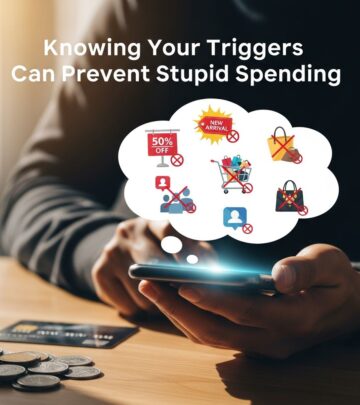
Why You Feel Guilty After Spending Money
Understand where money guilt comes from, how it shows up in your life, and practical ways to spend without constant anxiety or shame.
Feeling a knot in your stomach after buying something—even when you can afford it—is more common than you think. Many people experience spending guilt, especially when they spend on themselves or on anything that feels non-essential. Money guilt can come from your upbringing, your beliefs about what it means to be “responsible,” or simply from not having a clear plan for your finances.
Instead of ignoring those feelings or letting them control you, it helps to understand why you feel guilty and what you can do to create a healthier, more confident relationship with money.
Why Do I Feel Guilty Spending Money?
Spending guilt rarely appears out of nowhere. It usually has a clear emotional or practical trigger: a story you tell yourself about what money is for, what kind of person you are when you spend, or how safe your financial future feels.
Some guilt can be useful—like when it reminds you not to ignore a bill. But constant, overwhelming guilt, even when you are managing money responsibly, can hold you back from enjoying the results of your hard work.
You Have a Scarcity Mindset
A scarcity mindset is the belief that there will never be enough—enough money, time, or opportunities. When you grow up around financial instability, debt, or stress, your brain can become wired to see money as something that is always at risk of disappearing.
- You may feel anxious every time you swipe your card, even for basics.
- You might think, “If I spend today, I’ll regret it when an emergency comes.”
- Enjoyment can feel dangerous, like you are “tempting fate” by relaxing around money.
Research on financial scarcity shows that persistent money stress can narrow your focus, making you feel you must protect every dollar, even when your situation has improved. When you live in constant protection mode, spending on yourself—even modestly—can feel wrong or irresponsible.
You Feel Your Money Should Be Put to Better Use
Another common source of guilt is the belief that every extra dollar must go toward something “better”: paying off debt, saving for retirement, or helping family.
- You feel irresponsible buying something you enjoy when you still have student loans.
- You feel bad spending on a want when you could add more to savings.
- You compare your spending to other people’s financial milestones.
Here, the problem is not that your goals are bad—they are often healthy. The issue is that you may be treating any non-essential spending as a moral failure, instead of making room for both progress and enjoyment in a balanced plan.
You Lack a Clear Plan for Your Money
Sometimes guilt is simply a sign that you do not know where you stand. Without a plan, every purchase feels like a risk, because you are not sure whether you can truly afford it.
- You avoid looking at your accounts and rely on guesswork.
- You feel uneasy spending because you do not know what is coming up.
- After you buy something, you keep wondering if it will cause problems later.
Studies on financial well-being suggest that feeling in control and informed about your money is strongly linked to lower stress and higher satisfaction. When you do not have that sense of control, guilt fills the gap.
How to Not Feel Guilty About Spending Money
To spend without crushing guilt, you do not need to be perfect with money—you need clarity, boundaries, and a healthier story about what money is for. The goal is to enjoy what you earn while still honoring your values and responsibilities.
The following steps mirror the core ideas of the original article and add practical, research-informed strategies you can start using right away.
1. Take Care of Your Responsibilities First
It is much easier to enjoy spending when you know your essentials and long-term goals are covered. Think of this step as building a solid floor under your feet.
- List your non-negotiables: housing, utilities, food, transportation, insurance, minimum debt payments, and essential healthcare.
- Identify your key goals: emergency fund, debt payoff targets, retirement savings, or other priorities like education savings.
- Automate what you can so bills and savings transfers happen without constant decision fatigue.
Once you see that these pieces are consistently being handled, it becomes easier to believe, “I am allowed to spend this part of my money.” This sense of security is strongly tied to higher financial well-being and lower guilt.
2. Determine What Causes You to Feel Guilty After Spending
Not everyone feels guilty for the same reasons. To answer your personal question—”Why do I feel guilty after spending money?”—you need to identify your specific triggers.
Consider journaling or reflecting on these prompts:
- What did I learn about money growing up? Were people punished for spending? Was money always scarce or a source of conflict?
- When is my guilt strongest? When I buy for myself? For fun? For anything that is not on sale?
- Whose voice do I hear in my head? A parent, partner, community, or faith message about “good” and “bad” spending?
- Is this guilt about the purchase—or about fear of the future?
Psychological research shows that naming and labeling emotions makes them easier to manage. When you can say, “My guilt is coming from old scarcity lessons, not from real danger right now,” you create space to respond instead of react.
3. Make a Plan for Your Money
A realistic, values-based budget is one of the best tools for reducing spending guilt. Instead of asking “Can I spend this?” every time, you decide in advance how much is safe for different categories—and then you follow the plan.
| Step | Action | How It Reduces Guilt |
|---|---|---|
| 1. Track | Review 1–3 months of income and spending. | Replaces guessing with real data. |
| 2. Prioritize | Fund essentials and savings goals first. | Confirms you are taking care of responsibilities. |
| 3. Allocate | Set a clear monthly amount for wants and fun money. | Makes enjoyment intentional, not impulsive. |
| 4. Review | Check in monthly and adjust as life changes. | Builds confidence and a sense of control. |
Evidence shows that people who actively use a budget or spending plan feel more in control and are less likely to experience financial stress. That control is a powerful antidote to guilt.
4. Challenge Limiting Beliefs About Spending
Even with a solid plan, guilt can linger if you still believe that spending is “bad” and saving is “good” in all circumstances. These rigid beliefs create an impossible standard.
Common limiting beliefs include:
- “If I was truly responsible, I would save every extra dollar.”
- “I do not deserve nice things unless I have zero debt.”
- “Wanting more comfort or joy means I am greedy or shallow.”
Cognitive-behavioral approaches suggest replacing these all-or-nothing thoughts with more balanced ones.
Try reframing:
- “I can be responsible and still enjoy a portion of my income.”
- “I am allowed to experience comfort and joy while I work on my goals.”
- “Spending within my plan is not wasteful; it is part of my overall well-being.”
5. Build Guilt-Free Fun Money Into Your Budget
One of the most effective practical tools is to set aside a specific amount each month as guilt-free fun money—cash earmarked purely for wants.
- Decide an amount that fits your budget (even a small sum helps).
- Label it clearly in your budget or use a separate account or envelope.
- Commit that any spending within this limit is off-limits to guilt.
According to consumer research, allowing some discretionary spending increases the sustainability of long-term financial behavior; overly restrictive budgets are more likely to fail. Fun money helps you stay consistent with your plan because it acknowledges that you are human—not a machine.
6. Create Simple Rules and Boundaries for Purchases
If you tend to second-guess every purchase, clear rules can reduce mental friction and regret.
- Set personal spending thresholds: For example, “Under $20, I decide immediately; over $100, I wait 24 hours.”
- Use a wish list: Add wants to a list and review weekly instead of buying in the moment.
- Check against your values: Ask, “Does this support my health, relationships, learning, or joy?”
These small systems give you a way to say, “I followed my rules,” which reduces the space for guilt to creep in afterward.
7. Give Yourself Permission to Enjoy What You Earn
At some point, you must consciously decide that you are allowed to experience pleasure and comfort from your money. This does not mean ignoring your goals—it means recognizing that your well-being includes more than just your account balance.
Try creating a simple permission statement you repeat when guilt shows up:
- “I am on track with my responsibilities. This spending is within my plan. I am allowed to enjoy it.”
- “Caring for myself is a legitimate use of money.”
Self-compassion research indicates that people who treat themselves with kindness after mistakes are more likely to make sustainable changes, not fewer. The same applies to money: beating yourself up does not create better habits—supportive honesty does.
Frequently Asked Questions (FAQs)
Q: Is it ever a good thing to feel guilty after spending money?
A: Yes, sometimes guilt is a helpful signal. If you feel guilty because you spent rent money on a non-essential purchase, that emotion is alerting you to a real problem. In that case, use the guilt as information: adjust your behavior, reinforce your budget, and plan differently next time. Persistent guilt even when you are on track, however, is usually a sign of mindset or unclear planning—not a moral failing.
Q: How do I know if my spending guilt is from my past or my present situation?
A: Ask yourself: “Is my current financial reality truly unsafe, or am I reacting to old experiences?” If your bills are paid, you are saving something, and you still feel panic over small, planned purchases, that is often tied to past scarcity or family beliefs. If you are behind on essentials or do not know where your money is going, your guilt may be reflecting real current risks—so start with tracking and a simple budget.
Q: How much should I set aside for guilt-free fun money?
A: There is no universal percentage, but many people start with a modest amount—perhaps 5–10% of take-home pay—after covering essentials and basic savings. The key is that the amount fits your reality: it should not cause you to miss payments or delay important goals, but it should be enough that you can buy small wants without constant anxiety.
Q: What if my partner or family makes me feel guilty about spending?
A: External pressure can amplify your own doubts. Start by clarifying shared priorities and building a joint plan or budget, so everyone knows what is covered. Then agree on individual “no-questions-asked” spending amounts. If someone still criticizes every purchase within your agreed limits, that is less about the math and more about control, communication, or unresolved beliefs about money.
Q: Can therapy or counseling help with money guilt?
A: Yes. Because money guilt is often connected to deeper issues—like anxiety, past trauma, or family dynamics—working with a therapist, counselor, or accredited financial therapist can be valuable. Professional help is especially useful if your guilt is intense, constant, or tied to broader mental health concerns such as depression or chronic anxiety.
References
- Why Do I Feel Guilty After Spending Money? — Clever Girl Finance. 2022-01-13. https://www.clevergirlfinance.com/why-do-i-feel-guilty-after-spending-money/
- Do You Feel Guilty After Spending Money? — Clever Girl Finance (YouTube). 2022-01-13. https://www.youtube.com/watch?v=xLvmlnQiLas
- Why You Need Guilt-Free Fun Money in Your Budget — Clever Girl Finance. 2020-06-15. https://www.clevergirlfinance.com/why-you-need-fun-money/
- Scarcity and Cognitive Function Around Payday — Mani A., Mullainathan S., Shafir E., Zhao J. Journal of the Association for Consumer Research. 2020-01-01. https://doi.org/10.1086/705889
- Financial Well-Being in America 2022 — Consumer Financial Protection Bureau (CFPB). 2022-12-01. https://www.consumerfinance.gov/data-research/research-reports/financial-well-being-america-2022/
- Self-Compassion: An Alternative Conceptualization of a Healthy Attitude Toward Oneself — Neff K. Self and Identity. 2003-04-01. https://doi.org/10.1080/15298860309032
- Mental Accounting Matters — Thaler R. Journal of Behavioral Decision Making. 1999-09-01. https://doi.org/10.1002/(SICI)1099-0771(199909)12:3%3C183::AID-BDM318%3E3.0.CO;2-F
Similar Articles








Read full bio of medha deb