Why Warren Buffett Says You Should Invest in Index Funds
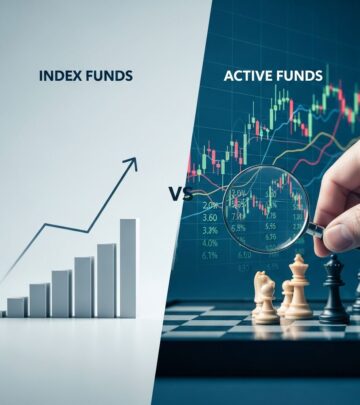
Discover Warren Buffett's timeless advice on why low-cost index funds outperform most active strategies for everyday investors.

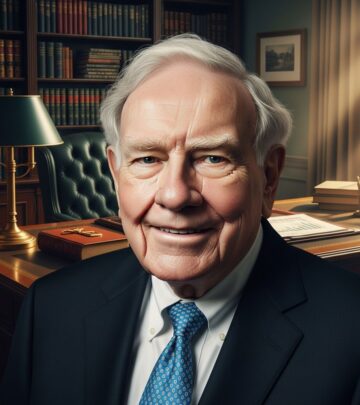
Warren Buffett, the legendary investor and CEO of Berkshire Hathaway, has long advocated for index funds as the best choice for most investors. Despite his own success in active stock picking, Buffett insists that ordinary investors achieve better results with simple, low-cost index funds that track broad market indices like the S&P 500. This approach minimizes fees, eliminates the need for stock-picking expertise, and harnesses the power of the entire market over time.
Buffett’s Famous Bet on Index Funds
In 2007, Warren Buffett made a high-stakes wager with a group of hedge fund managers: $1 million that a simple S&P 500 index fund would outperform a portfolio of five hand-picked hedge funds over the next decade. The bet, which concluded in 2017, was a resounding victory for passive investing. The Vanguard S&P 500 index fund returned 7.1% annually after fees, while the hedge funds averaged just 2.2%—less than half the index’s performance. This real-world experiment underscored Buffett’s core belief: most professional managers fail to beat the market consistently, especially after accounting for their hefty fees.
The bet highlighted the drag of high costs on returns. Hedge funds charged ‘2 and 20’—2% management fees plus 20% of profits—eroding gains significantly. In contrast, index funds like Vanguard’s charge as little as 0.04%, allowing nearly all market returns to flow to investors. Buffett has repeatedly emphasized this math in his Berkshire Hathaway shareholder letters, noting that fees compound over time, turning small differences into massive gaps after decades.
The Power of Low Fees
Fees are the silent killer of investment returns, and Buffett hammers this point home. A mere 1-2% annual fee might seem insignificant, but over 30-40 years, it can halve your portfolio’s value due to compounding. For example, on a $100,000 portfolio growing at 7% annually, a 0.04% fee leaves you with about $1.2 million after 40 years, while a 1% fee reduces that to $760,000—a loss of over $440,000.
- Index funds win on costs: Expense ratios under 0.1%, often near zero.
- Active funds lag: Average equity mutual funds charge 0.5-1.5%, with many underperforming their benchmarks.
- Math matters: Buffett says, ‘It’s just a matter of math’—lower fees mean higher net returns.
Buffett’s 2016 shareholder letter vividly illustrates this: ‘The math isn’t esoteric… If your annual fee is 1%, over 30 years, you’ll have given away about 25% of what would otherwise be your gains.’ He urges investors to prioritize low-cost vehicles, as they guarantee better outcomes regardless of market conditions.
Most Investors Aren’t Buffett
While Buffett beats the market through meticulous stock selection and a concentrated portfolio, he candidly admits most people lack the time, skill, or discipline to do the same. ‘Investors should remember that excitement and expenses are their enemies,’ he writes. Chasing hot stocks or timing the market leads to emotional decisions, buying high and selling low.
Professional managers fare no better. Studies show 80-90% of active funds underperform their indices over 10-15 years. Buffett cites his 1993 letter: ‘By periodically investing in an index fund, the know-nothing investor can actually outperform most investment professionals.’ Owning the market via an index sidesteps the need to identify winners, capturing average returns—which beat most attempts to exceed them.
Buffett’s 90/10 Portfolio for Your Heirs
In his will, Buffett directs his trustee to allocate his wife’s inheritance simply: 90% in a low-cost S&P 500 index fund and 10% in short-term government bonds. This strategy, detailed in his 2013 shareholder letter, prioritizes growth from U.S. equities while providing a small cash buffer for stability.
| Asset Allocation | Percentage | Rationale |
|---|---|---|
| S&P 500 Index Fund (e.g., Vanguard) | 90% | Captures long-term U.S. market growth; historically ~10% annual returns. |
| Short-Term Government Bonds | 10% | Liquidity and stability; low risk to cover short-term needs without selling stocks. |
This ‘set-it-and-forget-it’ portfolio has beaten most professional managers historically. Buffett predicts it will outperform high-fee alternatives for pension funds, institutions, and individuals alike. He specifically recommends Vanguard for its ultra-low costs and investor-friendly structure.
Why Actively Managed Funds Underperform
Active management promises to beat the market but rarely delivers. High fees aside, managers face immense challenges: predicting economic shifts, selecting superior stocks, and avoiding biases. Most trade frequently, incurring taxes and transaction costs that further erode returns.
- 85% of large-cap active funds underperformed the S&P 500 over 10 years (SPIVA report).
- Funds with high turnover (over 100% annually) lag due to costs.
- Survivorship bias hides failures—underperformers close, inflating averages.
Buffett warns against sales pitches for ‘superior’ funds: ‘People will try to sell you other things because there’s more money in it for them.’ Stick to passive indexing for math-backed superiority.
Overcome Emotional Pitfalls with Indexing
Investing success is 90% behavior, says Buffett. Index funds promote discipline by removing choices—no stock picking or market timing temptations. ‘The main danger is that the timid investor enters at peaks and exits at troughs,’ he notes. Dollar-cost averaging into an index—investing fixed amounts regularly—smooths volatility and enforces buying low.
Broad diversification across 500 companies reduces single-stock risk. During downturns, panic selling destroys wealth; holding through cycles captures recoveries. Buffett’s advice: View index funds as bets on America’s long-term prosperity, not short-term bets.
How to Get Started with Index Funds
Replicating Buffett is straightforward:
- Open a brokerage account: Vanguard, Fidelity, or Schwab offer commission-free index ETFs.
- Choose low-cost funds: VOO (Vanguard S&P 500 ETF, 0.03% expense ratio) or SPY.
- Implement 90/10: Allocate 90% equities, 10% bonds (e.g., Vanguard Total Bond ETF, BND).
- Dollar-cost average: Invest monthly, regardless of prices.
- Rebalance annually: Sell winners, buy laggards to maintain allocation.
ETFs mirror index funds but trade like stocks for intraday liquidity. Both are passive, low-cost, and tax-efficient in retirement accounts like 401(k)s or IRAs.
Historical Performance Proof
From 1926-2024, the S&P 500 delivered ~10% annualized returns, turning $1 into over $14,000. After inflation, real returns exceed 7%. Buffett’s strategy leverages this compounding: A $10,000 investment in 1980 would be worth $2.5 million today in an S&P 500 index fund.
Even in down decades like the 2000s (S&P flat), holding prevailed over active alternatives. Long-term, indexing wins by design.
Frequently Asked Questions (FAQs)
Q: Why does Buffett recommend index funds for most people but not himself?
A: Buffett has the rare skill, time, and temperament for stock picking. He believes 99% of investors don’t, making indexing the sensible default for superior average results.
Q: Are index funds safe during market crashes?
A: They drop with the market but recover historically. The 90/10 mix provides ballast; avoid selling in panic to capture rebounds.
Q: Can I use ETFs instead of mutual fund index funds?
A: Yes, Buffett endorses low-cost S&P 500 ETFs like Vanguard’s—they’re equally effective and more flexible.
Q: What if I’m risk-averse?
A: Adjust to 70/30 or 60/40 stocks/bonds, but Buffett favors 90/10 for growth over decades.
Q: How much should I invest initially?
A: Start small and consistent; time in the market beats timing. Dollar-cost average to mitigate entry risk.
Final Thoughts on Buffett’s Wisdom
Warren Buffett’s index fund advocacy boils down to simplicity, low costs, and behavioral guardrails. By owning the market, you sidestep pitfalls that doom most investors. As he advises in his 2020 shareholder meeting: ‘For most people, the best thing is to own the S&P 500 index fund.’ Implement this today for a prosperous financial future.
References
- Berkshire Hathaway 2016 Shareholder Letter — Warren Buffett, Berkshire Hathaway. 2016-02-27. https://www.berkshirehathaway.com/letters/2016ltr.pdf
- Berkshire Hathaway 1993 Shareholder Letter — Warren Buffett, Berkshire Hathaway. 1993-03-01. https://www.berkshirehathaway.com/letters/1993.html
- 7 Reasons Why Warren Buffett Thinks You Should Be an Index Investor — DIY Investor. 2020-05-15. https://www.diyinvestor.net/7-reasons-why-warren-buffett-thinks-you-should-be-an-index-investor/
- Trustees, Are You Heeding the Advice of Warren Buffett? — Index Fund Advisors. 2023-10-10. https://www.ifa.com/articles/trustees_you_heeding_advice_warren_buffett
- How to Invest Like Warren Buffett — Fortune. 2025-11-21. https://fortune.com/2025/11/21/how-to-invest-like-warren-buffett-berkshire-hathaway-investment-guide/
Similar Articles








Read full bio of Sneha Tete