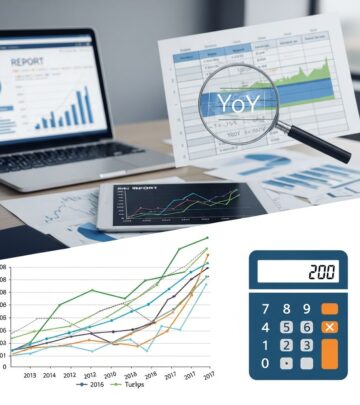
Why TTM is Critical in Finance and Investment Analysis
Understanding TTM: The essential metric for evaluating company performance and making informed investment decisions.

Understanding Trailing Twelve Months (TTM) in Finance
In the world of finance and investment analysis, having access to current and reliable financial data is paramount. One of the most critical metrics that financial professionals rely on is the Trailing Twelve Months, commonly abbreviated as TTM. This financial measurement has become an indispensable tool for investors, analysts, and business professionals who need to evaluate a company’s performance and make informed financial decisions. Whether you’re analyzing a potential investment opportunity, conducting due diligence on a business acquisition, or assessing the financial health of a public company, understanding TTM and its significance is essential to your success in the financial landscape.
What is Trailing Twelve Months?
Trailing Twelve Months, or TTM, is a financial measurement that represents a company’s operating performance across the most recent twelve-month period. This metric is calculated by summing the financial data from the company’s last four consecutive reporting quarters, creating a rolling measure of financial performance. TTM is also commonly referred to as Last Twelve Months (LTM), and these terms are often used interchangeably in financial analysis.
The fundamental concept behind TTM is straightforward: it provides a backward-looking metric that portrays the financial performance of a company as of its most recent four reporting quarters. By using the past twelve months of data rather than a single fiscal year, TTM offers a more current and dynamic view of a company’s financial trajectory and profitability. This approach ensures that the most recent reported data is always reflected in the analysis, making it an invaluable tool for anyone seeking to understand a company’s current financial position.
Key Differences: TTM vs. Other Financial Metrics
To appreciate the importance of TTM, it’s helpful to understand how it differs from other commonly used financial metrics. Unlike annual financial data from a company’s fiscal year-end report, which can be several months out of date, TTM provides a rolling, continuously updated measure. This distinction is crucial because financial markets move rapidly, and decisions based on outdated information can lead to poor outcomes.
TTM also differs significantly from Year-to-Date (YTD) measurements. While YTD represents the financial performance from the beginning of the current fiscal year to the present date, this period can be anywhere from one day to eleven months depending on when you’re measuring. TTM, by contrast, always represents exactly twelve months of consecutive financial data, regardless of when the measurement is taken. This consistency makes TTM a more standardized and comparable metric across different companies and time periods.
Common TTM Metrics Used in Financial Analysis
While TTM can be applied to virtually any financial metric, two metrics stand out as the most commonly used in financial analysis and investment decision-making:
TTM Revenue
TTM Revenue represents the total revenue a company has generated over the past twelve months. This is calculated by summing the reported revenue from the last four consecutive quarters. TTM revenue provides a comprehensive view of a company’s top-line growth and sales performance without the distortions that can result from seasonal variations or timing differences in revenue recognition. For investors evaluating growth potential, TTM revenue serves as a critical barometer of business momentum.
TTM EBITDA
TTM EBITDA measures a company’s Earnings Before Interest, Taxes, Depreciation, and Amortization over the trailing twelve months. By summing EBITDA from the past four quarters on a rolling basis, this metric provides insight into a company’s operational profitability and cash generation capabilities. TTM EBITDA is particularly valuable because it strips away the effects of financing decisions, tax strategies, and accounting treatments, offering a clearer picture of underlying operational performance.
The TTM Calculation Formula
Understanding how to calculate TTM is essential for any financial professional. The formula for calculating a financial metric on a trailing twelve-month basis is:
TTM Financial Metric = Latest Fiscal Year Data + Current Year-to-Date Data – Prior Year Year-to-Date Data
Breaking down each component:
- Latest Fiscal Year Data: The complete financial data reported in the company’s most recent completed fiscal year (typically found in the 10-K annual report)
- Current Year-to-Date Data: The financial data reported from the beginning of the current fiscal year through the most recent quarter (found in 10-Q quarterly reports)
- Prior Year Year-to-Date Data: The financial data from the same period in the previous fiscal year, reported year-to-date
Step-by-Step Guide to Calculating TTM
To properly calculate a company’s TTM, follow these three essential steps:
Step 1: Compile Required Financial Documents
Gather the company’s most recent 10-K annual report along with all relevant quarterly 10-Q filings. You will also need the corresponding filings from the prior fiscal year to ensure accurate calculations. These documents contain all the financial data necessary for TTM calculations and are typically available through the company’s investor relations website or the SEC’s EDGAR database.
Step 2: Add Year-to-Date Data to Fiscal Year Data
Begin by taking the most recent complete fiscal year’s financial metric and adding the current year-to-date data. This combined figure represents all available financial data through the current period. By adding these together, you’re essentially creating a full twelve-month picture that includes the complete prior fiscal year plus the portion of the current year that has been reported.
Step 3: Subtract Prior Year Year-to-Date Data
Finally, subtract the year-to-date data from the corresponding period in the prior fiscal year. This removes the overlap that occurs when combining fiscal year and year-to-date figures, leaving you with exactly twelve consecutive months of financial data. The result is your TTM figure, which accurately represents the company’s financial performance over the most recent rolling twelve-month period.
Why TTM Matters in Modern Finance
TTM has emerged as a critical metric in financial analysis for several compelling reasons that affect how investors, analysts, and lenders make decisions.
Currency and Timeliness
One of the primary advantages of TTM is that it always reflects the most current financial data available. Since financial reports are released quarterly, TTM is updated four times per year, ensuring that your analysis is never based on data older than three months. This is particularly important in fast-moving industries where business conditions can change dramatically over the course of a year. By using TTM, analysts ensure they’re making decisions based on the most recent evidence of company performance.
Eliminating Seasonal Distortions
Many businesses experience significant seasonal variations in their revenue and earnings. A retailer, for example, might generate substantially higher revenue in the fourth quarter due to holiday shopping. By using twelve-month rolling data, TTM smooths out these seasonal fluctuations and provides a clearer picture of underlying business performance. This is far superior to comparing a single quarter to another quarter from a different part of the year.
Facilitating Meaningful Comparisons
TTM allows for more accurate comparisons between companies, regardless of their fiscal year-end dates. Because each company’s TTM is calculated using the same methodology and always represents exactly twelve months, comparing TTM metrics between companies with different fiscal year-ends becomes much simpler and more meaningful. This standardization is invaluable in investment analysis and competitive assessments.
Supporting Valuation Analysis
TTM metrics are fundamental to most corporate valuation methodologies. Whether using price-to-earnings ratios, EV/EBITDA multiples, or other valuation approaches, analysts rely on TTM figures to ensure their valuations reflect current business performance rather than outdated annual data. This is especially critical when a company’s fiscal year ended several months ago, as relying solely on annual data could significantly misrepresent the company’s current value.
Practical Applications of TTM in Different Contexts
Investment Analysis and Decision-Making
For individual and institutional investors, TTM provides the foundation for evaluating whether a stock is fairly valued relative to its earnings growth and operational performance. By analyzing TTM revenue growth rates, margin trends, and profitability metrics, investors can identify companies with improving fundamentals or those showing signs of deterioration. TTM metrics also enable investors to compare valuations across peer companies and industries with greater confidence.
Business Acquisition and Due Diligence
When evaluating a potential business acquisition, TTM figures are essential for assessing the target company’s current earnings power. Acquisition prices are typically based on TTM EBITDA or TTM earnings multiples, making accurate TTM calculations crucial to determining a fair purchase price. TTM data also helps acquirers understand recent performance trends that might not be apparent from annual data alone.
Commercial Real Estate Analysis
In commercial real estate, TTM (also called T12) is used to evaluate the financial performance of multifamily and other investment properties. Lenders and investors rely on TTM income statements to assess a property’s cash flow generation and ability to service debt. This is particularly important for apartment buildings and multifamily properties where tenant turnover and lease structures create natural rolling twelve-month measurement periods.
Performance Benchmarking
Companies use TTM metrics internally to benchmark their performance against competitors and industry averages. By tracking TTM revenue growth, TTM EBITDA margins, and other key metrics, management can assess whether the company is outperforming or underperforming relative to peers. This analysis informs strategic decision-making and helps identify areas requiring operational improvement.
Advantages and Limitations of Using TTM
Advantages
- Current Data Representation: TTM always includes the most recent financial information available, ensuring analysis is never significantly outdated
- Seasonal Smoothing: Twelve months of data naturally eliminates seasonal distortions that might skew quarterly comparisons
- Standardized Comparability: TTM enables apples-to-apples comparisons between companies with different fiscal year-end dates
- Trend Identification: By comparing sequential TTM periods, analysts can identify emerging trends in company performance
- Valuation Accuracy: TTM figures produce more accurate valuations than annual data, particularly for fast-changing businesses
Limitations
- Backward-Looking Nature: TTM reflects historical performance and does not predict future results
- Sensitivity to Timing: Significant one-time events or acquisitions can distort TTM comparisons across periods
- Calculation Complexity: Accurately calculating TTM requires access to multiple financial reports and careful attention to detail
- Limited Visibility: TTM doesn’t capture pending changes or upcoming events that might affect future performance
TTM in the Context of Financial Reporting and Standards
While TTM is not an officially mandated accounting standard, it has become a widely accepted and expected metric in financial analysis and reporting. The financial community has embraced TTM because it addresses real limitations in traditional annual reporting. Financial data from annual reports can be three to fifteen months old by the time investors make decisions, whereas TTM ensures that the most recent quarterly information is always incorporated into analysis. This practical advantage has made TTM an industry standard across investment banks, hedge funds, private equity firms, and corporate finance departments worldwide.
Frequently Asked Questions About TTM
Q: How frequently is TTM updated?
A: TTM is updated whenever a company files a new quarterly report (10-Q) or annual report (10-K). For most public companies, this means TTM is updated four times per year, with each quarterly filing rolling the twelve-month period forward by one quarter.
Q: Can TTM be negative?
A: Yes, TTM can be negative for unprofitable companies. TTM revenue cannot be negative, but TTM EBITDA or TTM earnings can be negative if a company is operating at a loss.
Q: Is TTM the same as annualized quarterly data?
A: No. Annualized quarterly data takes a single quarter’s results and multiplies by four, which does not account for seasonal variations. TTM uses actual results from all twelve months, making it more accurate.
Q: When is TTM most useful?
A: TTM is most useful when a company’s fiscal year ended several months ago, when comparing companies with different fiscal year-end dates, or when analyzing seasonal businesses where annual snapshots don’t reflect current performance.
Q: How does TTM differ from forward-looking estimates?
A: TTM represents actual historical performance from the past twelve months, while forward-looking estimates (sometimes called NTM for Next Twelve Months) project expected future performance based on analyst predictions.
Conclusion: The Enduring Importance of TTM
Trailing Twelve Months has established itself as an indispensable tool in modern financial analysis because it solves fundamental problems inherent in traditional financial reporting. By providing continuously updated, seasonally smoothed, and comparably standardized financial metrics, TTM enables investors, analysts, and lenders to make better-informed decisions. Whether you’re evaluating an investment opportunity, assessing business value for an acquisition, or benchmarking company performance, understanding TTM and how to calculate it is essential to achieving superior financial outcomes. As financial markets continue to evolve and business cycles accelerate, the relevance of TTM as a critical financial metric will only increase, cementing its place as a cornerstone of modern finance.
References
- Trailing Twelve Months (TTM) | Formula + Calculator — Wall Street Prep. 2025. https://www.wallstreetprep.com/knowledge/ttm-trailing-twelve-months/
- Trailing 12 Months: Definition and How to Calculate It — NerdWallet. 2025. https://www.nerdwallet.com/business/software/learn/trailing-twelve-months
- Trailing Twelve Months (TTM): Definition, Calculation, and Examples — Corporate Finance Institute. 2025. https://corporatefinanceinstitute.com/resources/valuation/railing-twelve-months-ttm-definition/
- What Does TTM Mean? Definition — Xero US. November 2023. https://www.xero.com/us/glossary/ttm/
- Trailing Twelve Months Revenue (TTM) — Finmark. 2025. https://finmark.com/glossary/ttm-revenue/
- Here’s Why TTM Revenue is Critical When Buying a Business — Acquira. 2025. https://acquira.com/ttm-revenue/
Similar Articles








Read full bio of Sneha Tete