Why Some Economists Say You Should Give Cash Instead of Gifts
Economists argue cash gifts maximize value and efficiency over traditional presents—explore the data, deadweight loss, and when gifts still win.

Every holiday season, millions spend hours hunting for the “perfect” gift, only to discover it misses the mark. Economists like Joel Waldfogel argue that cash is often superior, delivering full value without the risk of unwanted items. This article explores the economic rationale, backed by research, while addressing sentimental counterarguments.
The Deadweight Loss of Christmas
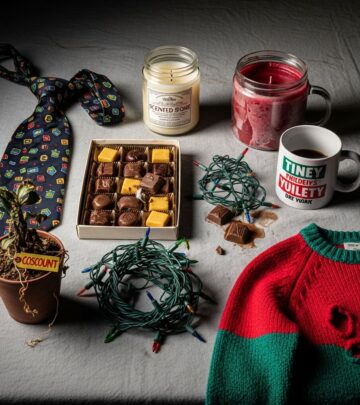
The concept of deadweight loss in gift-giving was popularized by economist Joel Waldfogel in his 1993 paper “The Deadweight Loss of Christmas,” published in the American Economic Review. Deadweight loss occurs when a gift’s cost to the giver exceeds its value to the recipient, creating inefficiency.
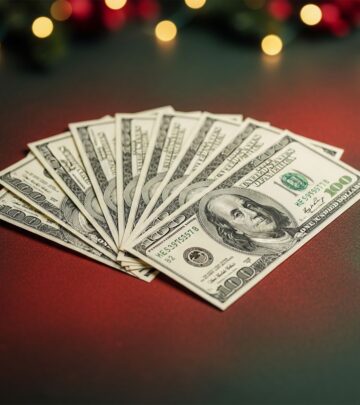
Waldfogel’s surveys of students revealed recipients valued gifts at 80-90% of their retail price on average. For a $100 gift, the recipient might assign only $80-90 in utility, destroying $10-20 in value. Cash eliminates this: a $100 bill retains full $100 value, as recipients spend it precisely on their preferences.
This loss compounds across holidays. In the U.S., holiday spending tops $1 trillion annually; even a 10-20% deadweight loss equates to $100-200 billion in destroyed value yearly. Grandparents, often less attuned to grandkids’ tastes, exacerbate this—explaining why they frequently give cash.
Economic Efficiency: Why Cash Maximizes Utility
Cash provides perfect information efficiency. Givers lack full knowledge of recipients’ preferences, leading to mismatches like wrong sizes or duplicate items. Recipients, knowing their needs, allocate funds optimally—whether for bills, savings, or experiences.
- No guesswork: 61% prefer cash over items, per recent surveys, avoiding returns (holiday rates 17% above average).
- Full value transfer: Givers pay $150 for cash; recipients get $150 utility.
- Flexibility: Covers essentials amid inflation, funds investments, or experiences like travel.
Economists note even skilled givers rarely outperform recipients’ self-selection. Waldfogel states the best case replicates the recipient’s choice; worse cases leave them poorer than a cash equivalent.
Cash vs. Gifts: A Comparative Analysis
| Aspect | Cash Gifts | Traditional Gifts |
|---|---|---|
| Utility to Recipient | 100% of value | 80-90% on average (deadweight loss) |
| Waste/Returns | Minimal | High (e.g., £1.2B unwanted in UK) |
| Economic Stimulus | High multiplier effect | Lower, concentrated in specific sectors |
| Sentimental Value | Lower perceived effort | High emotional impact |
| Environmental Impact | Low footprint | High from packaging/waste |
This table highlights cash’s edge in efficiency metrics.
The Economic Ripple: Stimulus and Multiplier Effects
Cash injects immediate funds, spurring spending with a multiplier effect—recipients’ expenditures boost local businesses, jobs, and markets. In-kind gifts risk sitting unused, muting impact.
For charities, cash outperforms goods: higher multipliers as funds circulate locally. An ECB report notes cash’s low environmental footprint versus gift production/packaging. Amid rising costs, cash aids essentials for students, young adults, or expats.
When Gifts Outperform Cash: The Sentimental Case
Not all economists endorse cash universally. Giver utility—joy from thoughtful selection—can offset deadweight loss if highly valued. Cash may feel impersonal, devaluing relationships.
A 2013 IGM Chicago Booth poll showed no consensus: 54% disagreed gifts are inefficient vs. cash, 17% agreed. Economist François Levêque calls pure economic reasoning “erroneous,” emphasizing joy and tradition. Cultural factors matter: cash symbolizes support in weddings/festivals.
- Close relationships: Thoughtful gifts signal effort.
- Children/kids: Toys spark unarticulated joy.
- **Surprises:** Unexpected delight beats known preferences.
Practical Strategies: Cash Done Right
To make cash feel special:
- Present in festive envelopes/cards with personal notes.
- Use digital transfers with e-cards/messages.
- Respect cultures: Avoid unlucky denominations.
- Combine: Cash + small symbolic item.
Younger generations (Millennials/Gen Z) embrace cash as practical amid inflation. Registries normalize contributions.
Frequently Asked Questions (FAQs)
Q: Is deadweight loss real in gift-giving?
A: Yes, Waldfogel’s research shows recipients value gifts at 80-90% of cost on average, creating 10-20% loss.
Q: Why do economists prefer cash?
A: Cash ensures 100% utility, eliminates mismatches, and stimulates economy via spending.
Q: Are cash gifts impersonal?
A: They can seem so, but personalization (notes, envelopes) adds warmth. 61% prefer cash practically.
Q: When should I give traditional gifts?
A: For close ties, kids, or surprises where sentiment trumps efficiency.
Q: What’s the environmental angle?
A: Cash has low footprint; gifts involve production/packaging waste.
Conclusion: Balance Economics and Heart
Cash excels in efficiency, but gifts nurture bonds. Consider recipient needs, relationship depth, and context. Hybrid approaches—cash with sentiment—often win. This holiday, give smarter: more value, less waste.
References
- Cash or Gifts for the Holidays? What Economists Say — Cash Essentials. 2023-12-01. https://cashessentials.org/cash-or-gifts-for-christmas-what-economists-say/
- Christmas gifts: Worthwhile tradition or inefficient waste of time and money? — The Hub. 2023-12-22. https://thehub.ca/2023/12/22/christmas-gifts-worthwhile-tradition-or-inefficient-waste-of-time-and-money/
- An Economic Guide to Giving the Perfect Gift — Federal Reserve Bank of St. Louis. 2023-01-01. https://www.federalreserveeducation.org/resources/readings/article–an-economic-guide-to-giving-the-perfect-gift-reading.pdf
- Money Gifts Are Back In Style: Why Cash Presents Are Great — Remitly. 2024-11-15. https://www.remitly.com/blog/lifestyle-culture/why-cash-gifts-are-great/
- The Psychology of Holiday Gift Giving: The Good, the Bad, the Irrational — Wharton School, University of Pennsylvania. 2018-12-10. https://knowledge.wharton.upenn.edu/article/the-psychology-of-holiday-gift-giving-the-good-the-bad-the-irrational/
- Did holiday gift giving just create a multi-billion-dollar loss? — American Economic Association. 2023-12-25. https://www.aeaweb.org/research/did-holiday-gift-giving-just-create-loss
Similar Articles








Read full bio of medha deb