Why Do We Sign Credit Card Receipts: What To Know
Understanding the history, purpose, and modern relevance of credit card receipt signatures.
Why Do We Sign Credit Card Receipts?
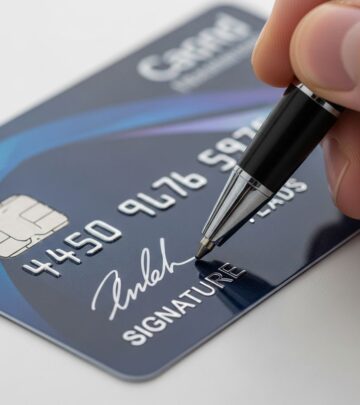
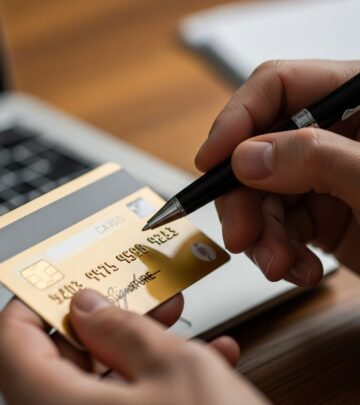
Every time you make a purchase with a credit card at a small business or local establishment, you might be asked to sign a receipt. This seemingly mundane task has deeper roots in payment history and fraud prevention, yet its relevance has dramatically shifted over the past decade. Understanding why merchants ask for signatures—and why this practice is becoming increasingly obsolete—provides insight into how payment security has evolved and continues to transform.
The Original Purpose: Creating a Transaction Record
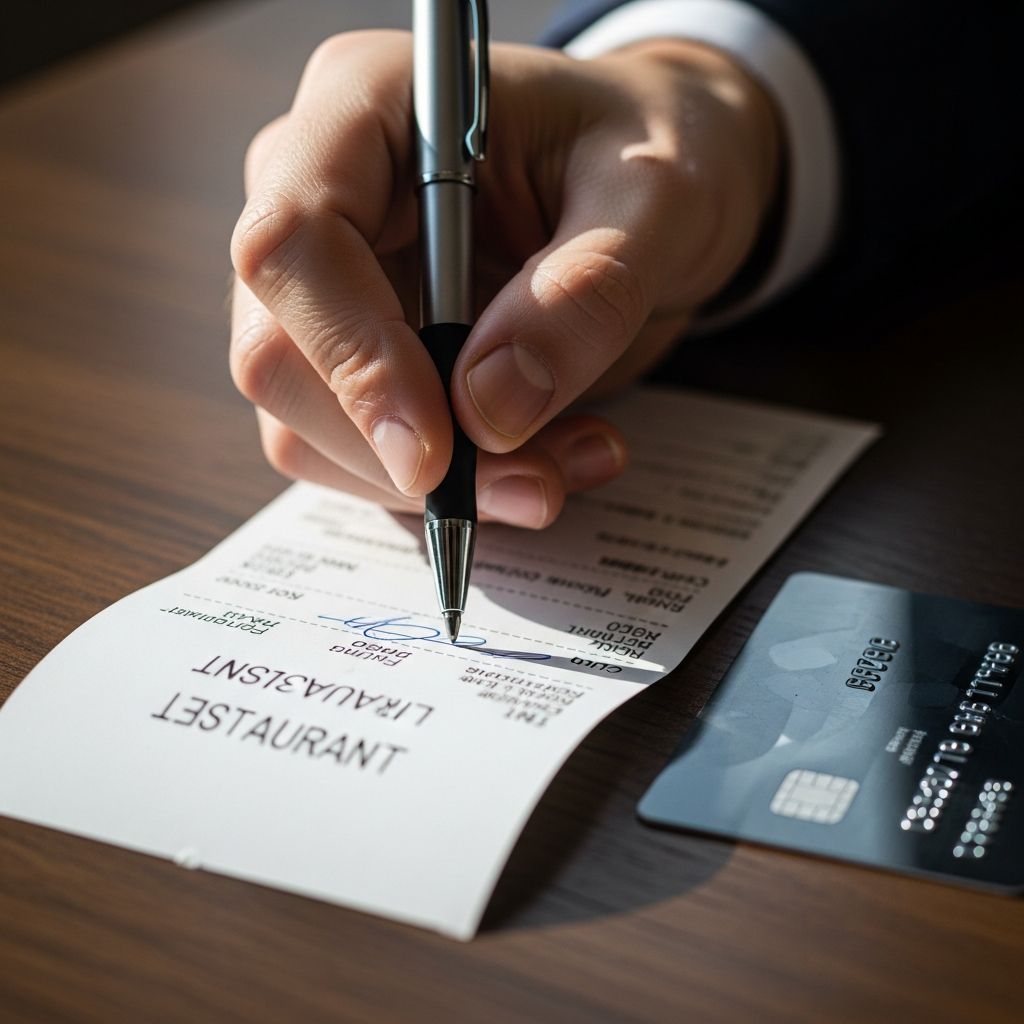
According to Karen Sylvester, senior director of compliance education at payments association EPCOR, merchants ask customers to sign receipts primarily to maintain a record of purchases. A signature on a receipt serves as proof that you authorized the transaction. This documentation was especially critical in the early days of credit card payments when disputes and chargebacks were more common and harder to resolve.
The signature requirement made logical sense from a merchant’s perspective. If a customer later disputed a charge, claiming they never authorized the purchase, the merchant could present the signed receipt as evidence. Card issuers appreciated having this documentation because they often bore the financial burden when customers demanded refunds for unauthorized or disputed transactions.
The Historical Context of Signature Verification
The practice of using signatures as proof of authorization is deeply rooted in legal tradition. Physical signatures have served as the primary method of legitimizing contracts for decades, and their use in credit card transactions reflects this broader legal principle. Interestingly, credit card signatures have historical roots in the Talmud, an ancient Jewish text, demonstrating how signature verification has been valued across cultures and centuries.
However, this method was never foolproof. Signature verification has always had significant limitations as a fraud prevention tool. Signatures can be forged relatively easily, and comparing handwriting on a receipt to a signature on file is subjective and time-consuming. Despite these inherent weaknesses, the practice persisted because it was the best available technology at the time.
The Limitations of Signature-Based Security
While signatures on receipts used to be considered an important security tool, the signature verification method has never been particularly effective at preventing fraud. Handwriting is highly variable—the same person might write their name differently depending on circumstances, fatigue, or the writing instrument used. Comparing signatures is cumbersome, especially when processed in bulk across thousands of transactions daily.
Merchants and payment networks recognized these limitations early on. For instance, decades ago, major fast-food chains like Wendy’s decided to eliminate signature requirements for orders under $25 to expedite transactions and improve customer experience. This precedent demonstrated that signature collection could be optional without catastrophic fraud consequences.
The Major Shift: 2018 and Beyond
The landscape of credit card payment security changed dramatically in 2018. All four major card issuers—American Express, Discover, Mastercard, and Visa—stopped requiring signatures for card transactions. This industry-wide change reflects a fundamental recognition that signatures are no longer useful as a primary security measure. Andrew Hopkins, senior vice president of global products and pricing at Discover, explicitly stated that while signatures on receipts used to be “an important security tool,” they have become “no longer useful.”
This transition wasn’t made lightly. Payment networks had been developing and implementing more advanced authentication methods that provide superior fraud protection without the friction of signature collection. Modern payment security relies on multiple layers of verification, including encryption, tokenization, chip technology, and real-time fraud detection algorithms—all of which are more effective than comparing handwriting.
Why Some Merchants Still Ask for Signatures
Despite the major payment networks eliminating signature requirements, some merchants—particularly smaller businesses—still ask customers to sign receipts. This discrepancy isn’t due to outdated security preferences but rather reflects the technical and financial realities of upgrading payment infrastructure.
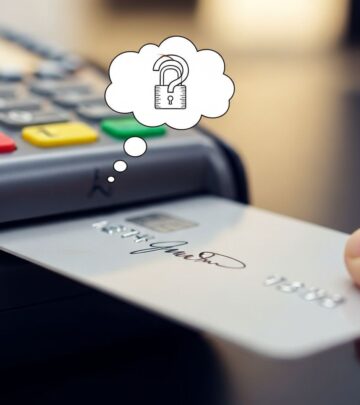
The reason centers on EMV technology, the global standard for credit card security that employs chip and PIN cards. Migrating to EMV systems requires merchants to update their point-of-sale (POS) terminals, the specialized machines that process card transactions. For large retailers like Target, this upgrade is a manageable business expense. However, for smaller establishments such as local gas stations, independent restaurants, or neighborhood shops, the cost of upgrading hardware can be prohibitive.
According to Jared Drieling, chief innovation officer at payments firm The Strawhecker Group, if a merchant hasn’t upgraded to an EMV-capable terminal, their alternative is to fall back on the older method of requesting a signature. The merchant then keeps the signed receipt in case the transaction is disputed or questioned later. However, because genuine transaction disputes and fraud chargebacks have become relatively rare due to improved security measures, the specific details of a signature rarely matter anymore.
The Evolution of Payment Security
Modern payment security has evolved far beyond signature verification. Contemporary systems employ multiple authentication methods that work simultaneously to protect both consumers and merchants. Chip cards with EMV technology generate unique codes for each transaction, making it nearly impossible to counterfeit or reuse card data. Many transactions now require PIN verification, adding an additional layer of personal authentication.
Additionally, payment networks employ sophisticated fraud detection algorithms that analyze transaction patterns in real-time. If a purchase seems unusual—such as buying expensive electronics at 3 a.m. in an unfamiliar location when your typical pattern is different—the system may flag or block the transaction. These automated systems are far more effective at preventing fraud than human verification of handwritten signatures.
Understanding the Shift in Consumer Expectations
Many consumers have adapted to the historical expectation of signing receipts, viewing it as a normal part of the payment process. However, fraud technology and commerce practices have been evolving away from this requirement for quite some time. Younger consumers, in particular, have grown accustomed to contactless payments, mobile wallets, and online transactions that never involved signatures at all.
This generational shift in payment methods reinforces the declining relevance of signature-based verification. As digital payment options proliferate—from Apple Pay to Google Wallet to contactless cards—the traditional signed receipt increasingly feels like an anachronism.
What Should You Do When Asked to Sign?
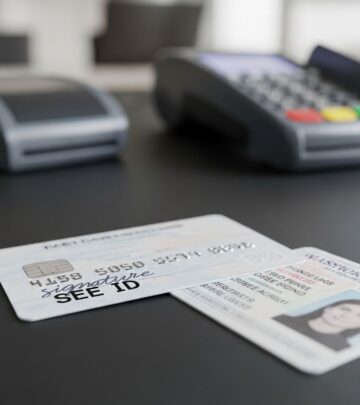
If you encounter a merchant who still requests your signature, it’s helpful to understand the context. You should go ahead and provide your signature to make the cashier’s life easier and maintain a smooth transaction. However, you don’t need to stress about the quality, legibility, or distinctive nature of your signature. Because fraud chargebacks are so rare in the modern payment environment, the specifics of what your signature looks like typically don’t matter.
In many cases, you might not even need to sign—you could ask if the terminal requires it or if it’s optional. Many newer systems prompt cardholders to either sign or enter a PIN, or some may simply require confirmation on a digital screen.
The Future of Payment Authentication
As payment technology continues to advance, signature requirements will likely disappear entirely from most retail environments. Biometric authentication, such as fingerprint or facial recognition integrated into payment terminals, represents the next frontier. These methods provide stronger identity verification than signatures while offering greater convenience to consumers.
The trajectory is clear: payment security is moving toward more sophisticated, automated, and frictionless methods. Signatures served their purpose during an era when physical documentation was the primary fraud deterrent. Today, that role has been assumed by encryption, tokenization, real-time monitoring, and multi-factor authentication.
Key Takeaways
Signature Purpose: Receipt signatures originally served as proof of transaction authorization and protection against chargebacks and fraud disputes.
Historical Necessity: For decades, signatures were the standard method of legitimizing contracts and verifying identity in payment transactions.
Effectiveness Limitations: Signature verification was never a particularly effective fraud prevention method, as signatures can be forged and comparing handwriting is subjective and time-consuming.
2018 Industry Change: All major card networks—American Express, Discover, Mastercard, and Visa—eliminated signature requirements in 2018, acknowledging that advanced authentication methods are superior.
Why Some Still Ask: Smaller merchants without updated EMV-capable terminals still request signatures as a legacy security measure and documentation practice.
Modern Security: Contemporary payment systems rely on chip technology, encryption, tokenization, and real-time fraud detection rather than signature verification.
Frequently Asked Questions
Q: Is my signature still important for fraud protection?
A: No, modern payment systems use much more effective fraud prevention methods than signature verification. Your signature on a receipt provides minimal actual security benefit today.
Q: Why do I still see signature lines on receipts?
A: Merchants who haven’t upgraded their point-of-sale terminals to EMV-capable systems still use signature collection as a legacy process, even though it’s no longer required by major card networks.
Q: Do I have to sign receipts?
A: No, signature requirements were eliminated by major card networks in 2018. If a merchant requests one, it’s optional, and you can decline or ask if it’s truly necessary.
Q: What replaced signature verification for fraud prevention?
A: Modern payment security uses chip technology (EMV), encryption, tokenization, PIN verification, and real-time fraud detection algorithms that are far more effective than handwriting comparison.
Q: Will signatures ever disappear completely from retail?
A: Yes, as merchants continue upgrading their payment infrastructure and biometric authentication becomes more common, signature requirements will eventually become obsolete.
Q: Does the signature on my receipt actually get verified?
A: In practice, modern signatures are rarely verified unless a dispute occurs, and even then, they’re not considered reliable evidence. Payment networks now rely on more sophisticated verification methods.
References
- Dollar Scholar Asks: Why Do We Sign Credit Card Receipts? — Money Magazine. 2024. https://money.com/dollar-scholar-credit-card-receipt-signatures/
Similar Articles








Read full bio of Sneha Tete