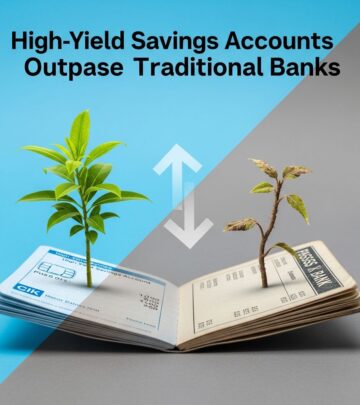
Why Savings Are Shifting from Big Banks in 2026
Discover the key drivers behind Americans transferring funds from traditional banks to higher-return options amid evolving economic pressures.

Across the United States, a noticeable trend has emerged in early 2026: savers are increasingly pulling their money from traditional large banks and redirecting it to alternatives offering superior returns and flexibility. This movement reflects a combination of dissatisfaction with paltry interest rates at brick-and-mortar institutions, the appeal of digital banking innovations, and broader economic realities like persistent inflation.
The Rise of Financial Awareness Among Savers
Financial literacy is at an all-time high, fueled by widespread access to online tools and educational resources. A recent survey reveals that 84% of Americans have set specific financial goals for 2026, with the top priorities being the creation of emergency funds and placement of short-term savings into high-yield accounts. This shift marks a departure from previous years, where nearly 75% failed to meet similar objectives, indicating renewed optimism and proactive behavior.
Younger demographics, particularly those under 40, lead this charge. They are more tech-savvy and willing to explore options beyond their primary banks. Affluent individuals and those in stable financial positions are also active, recognizing that leaving money in low-interest accounts equates to gradual erosion of purchasing power.
Low Yields at Traditional Banks Fuel the Exodus
Major banks continue to offer savings account rates hovering around 0.4%, far below the inflation rate of approximately 3%. This disparity means that money parked in these accounts loses real value over time. For instance, everyday expenses like groceries and housing costs continue to climb, making it essential for savers to seek accounts that at least match or exceed inflation.
High-income households have been particularly aggressive, with real balances in checking and savings declining by about 2% as of late 2025, adjusted for inflation. Rather than a sign of distress, this represents a calculated strategy to optimize returns. Data from millions of bank customers underscores that total cash holdings are growing, but primarily in higher-performing vehicles.
Emerging Alternatives Drawing in Deposits
- High-Yield Savings Accounts: Offered mainly by online banks, these provide rates up to 5% APY, with easy access similar to traditional accounts. They have become a primary destination for relocated funds.
- Certificates of Deposit (CDs): For those comfortable locking away money, CDs deliver fixed rates that remain competitive even as the Federal Reserve adjusts policies.
- Brokerage and Retirement Accounts: Wealthier savers are funneling cash into investment vehicles like 401(k)s and IRAs, benefiting from market growth and tax efficiencies.
- Home Equity Lines of Credit (HELOCs): Homeowners leverage property value for flexible borrowing at rates often lower than other debts, though with inherent risks.
These options not only preserve but can grow wealth, appealing to a broad spectrum of savers seeking stability and growth.
Customer Mobility Hits New Highs
Recent surveys show 20% of retail banking customers shifted money from their main bank in the past three months, up from 17% the prior year. On average, individuals now hold three deposit accounts across institutions, diversifying to capture the best features from each.
Satisfaction with banks remains stable at 657 out of 1,000, but frustrations with service channels—phone, branch, online, and automated systems—have intensified. Younger and wealthier customers, along with those in strong financial health, are most prone to switching, prioritizing performance over loyalty.
| Demographic | Switching Rate (Past 3 Months) | Key Motivation |
|---|---|---|
| Under 40 | 23% | Higher yields, digital ease |
| Affluent/Mass Affluent | 25% | Return optimization |
| Financially Healthy | 24% | Diversification |
| All Customers | 20% | Service improvements |
This table highlights the varying drivers behind the trend, with data pointing to a market ripe for competition.
Economic Pressures Amplifying the Shift
Inflation remains a persistent concern, eroding savings value and prompting action. Coupled with rising U.S. debt levels—projected to exceed 120% of GDP—many are wary of over-reliance on traditional dollar-denominated accounts. While not abandoning the dollar entirely, prudent diversification into higher-yield, low-risk options is gaining traction.
Consumer sentiment reflects anxiety over living costs outpacing wage growth, pushing more toward emergency fund builds and debt reduction strategies. Opening dedicated high-yield accounts and exploring 0% balance transfer cards for debt management are common recommendations.
Benefits and Risks of Making the Switch
Advantages:
- Higher earnings potential without sacrificing liquidity in many cases.
- Enhanced FDIC insurance up to $250,000 per account, encouraging multi-bank strategies.
- Improved financial discipline through goal-oriented accounts.
Potential Drawbacks:
- Learning curve for new platforms.
- Variable rates that could decline with Fed cuts.
- Risks in investment-linked options, including market volatility.
Weighing these factors helps ensure informed decisions aligned with personal risk tolerance.
Step-by-Step Guide to Relocating Your Savings
- Assess Current Holdings: Review balances, rates, and fees at your existing bank.
- Research Options: Compare APYs on aggregator sites, focusing on FDIC-insured providers.
- Verify Features: Ensure mobile apps, customer support, and withdrawal policies meet your needs.
- Transfer Funds: Use ACH transfers to move money securely, often fee-free.
- Monitor and Adjust: Track performance quarterly and rebalance as rates change.
Long-Term Implications for Banking and Savers
This mass migration pressures big banks to innovate, potentially leading to better rates and services industry-wide. For savers, it democratizes access to competitive financial products, fostering greater wealth accumulation. As 2026 progresses, expect continued evolution, with fintechs and online-only banks capturing larger market shares.
Frequently Asked Questions (FAQs)
What is a high-yield savings account?
A high-yield savings account offers significantly higher interest rates than traditional ones, often 10-20 times the national average, provided by online institutions.
Is my money safe when switching banks?
Yes, as long as the new bank is FDIC-insured, deposits up to $250,000 per depositor, per account category, are protected.
How long does it take to transfer savings?
ACH transfers typically take 1-3 business days, with many banks offering instant options for linked accounts.
Will rates stay high in 2026?
Rates may fluctuate with Federal Reserve actions, but competitive online accounts often adjust favorably.
Should I close my old account after switching?
Not necessarily; maintain it for direct deposits or as a backup, but minimize idle balances to avoid low yields.
References
- Americans are Poised for a “Financial Resolution Rebound” in 2026 — Vanguard. 2025-10-29. https://corporate.vanguard.com/content/corporatesite/us/en/corp/who-we-are/pressroom/press-release-americans-are-poised-for-a-financial-resolution-rebound-in-2026-according-to-vanguard-survey-102925.html
- The wealthiest Americans are quietly withdrawing money from their checking accounts — Ecoticias. 2025 (approx.). https://www.ecoticias.com/en/the-wealthiest-americans-are-quietly-withdrawing-money-from-their-checking-accounts-and-its-not-out-of-fear-something-is-happening-with-the-money/24876/
- Survey: More customers moving money to different bank — American Bankers Association. 2026-03. https://bankingjournal.aba.com/2026/03/survey-more-customers-moving-money-to-different-bank/
- Why More Americans Are Ditching the Dollar in 2026 — WHVP. 2026 (approx.). https://whvp.ch/blog/why-more-americans-are-ditching-the-dollar-in-2026
- Americans worried about personal finances in 2026 — ABC15 Arizona (YouTube). 2026 (approx.). https://www.youtube.com/watch?v=DBZ2LPjhV9o
Similar Articles








Read full bio of Sneha Tete