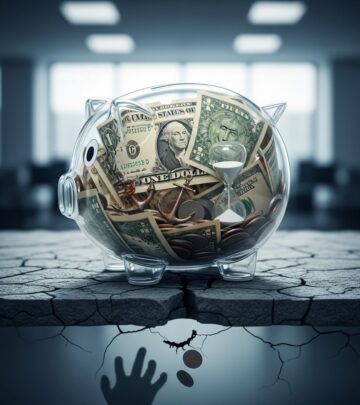
Why Savings Accounts Fall Short for Smart Money Growth
Discover compelling reasons to move beyond traditional savings accounts and unlock better opportunities for your hard-earned cash in today's economy.

Traditional savings accounts have long been promoted as safe havens for money, but in the current economic landscape, they often fail to deliver meaningful growth. With interest rates fluctuating and inflation persisting, parking funds in these accounts can lead to stagnant wealth. This article delves into the key drawbacks of relying solely on savings accounts and highlights practical alternatives to help you make informed decisions for your financial future.
The Erosion of Purchasing Power by Inflation
One primary concern with savings accounts is their inability to keep pace with inflation. Even high-yield variants struggle to match rising costs over time. Inflation reduces the real value of money, meaning that what you save today buys less tomorrow. For instance, if inflation hovers around 3% annually and your savings account yields only 0.48% on average, your money loses value each year.
High-yield savings accounts offer better rates, sometimes up to 4.09%, but these are variable and subject to change with Federal Reserve policies. Forecasts indicate top yields dropping to 3.70% by the end of 2026, still potentially trailing inflation in prolonged high-cost environments. This gap highlights why savers must consider options that preserve purchasing power more effectively.
Opportunity Costs of Low Long-Term Returns
Savings accounts prioritize safety over growth, resulting in lower returns compared to other vehicles. While they provide liquidity and FDIC insurance, their yields pale against stocks, bonds, or even money market accounts. For long-term goals like retirement or home purchases, this translates to significant opportunity costs.
Consider a comparison: a $5,000 deposit in a high-yield savings account at 4.09% earns about $50 after three months, versus $49 in a money market account at 4.00%. Over nine months, the difference grows to $3.34, but both lag far behind diversified investments. Savings accounts limit wealth accumulation, making them unsuitable for anything beyond short-term needs.
Rate Volatility and Declining Yields Ahead
Interest rates on savings accounts are not fixed; they fluctuate with market conditions. Recent Federal Reserve cuts have already lowered averages, with national forecasts for 2026 at 0.48% APY, down from prior years. High-yield options may start strong but decline, leaving savers with diminishing returns.
Variable rates mean planning becomes challenging. A competitive 4.09% today could drop sharply, as seen in broader trends where top rates fell over 1 percentage point from 2025 levels. This unpredictability discourages reliance on savings for sustained growth.
Transaction Limits and Reduced Flexibility
Many savings accounts, including high-yield ones, impose restrictions on withdrawals and transfers. Federal regulations limit certain transactions to six per month, with fees or account downgrades for excess activity. This reduces accessibility, turning a liquid asset into something less practical for everyday use.
While money market accounts offer similar yields with check-writing privileges, traditional savings often fall short in flexibility, making them less ideal for active financial management.
Better Alternatives: High-Yield Savings and Money Market Accounts
For short-term savings, upgrade to high-yield savings or money market accounts. These provide APYs exponentially higher than standard accounts—4.09% versus 0.45%-0.51% averages in 2026 forecasts.
| Account Type | 3-Month Earnings on $5,000 | 9-Month Earnings on $5,000 | Key Features |
|---|---|---|---|
| High-Yield Savings (4.09%) | $50.36 | $152.60 | Online access, FDIC insured, variable rates |
| Money Market (4.00%) | $49.27 | $149.26 | Check writing, debit card, higher minimums |
| Traditional Savings (0.48% avg) | $6.00 | $18.00 | Low yields, branch access |
This table illustrates the clear advantage of competitive accounts for parking cash temporarily.
Stepping Up to Certificates of Deposit (CDs)
For funds you won’t need soon, CDs lock in rates for terms from months to years, shielding against rate drops. Current high rates make them attractive, though early withdrawal penalties apply. They offer higher guaranteed returns than savings for predictable horizons.
Investment Options for Long-Term Wealth Building
Beyond banking products, consider low-risk investments like index funds, bonds, or ETFs. Historically, stock market returns average 7-10% annually after inflation, dwarfing savings yields. Start with a brokerage account for diversified portfolios, balancing risk with growth potential.
- Diversified ETFs: Low fees, broad market exposure.
- Bonds: Fixed income with moderate yields.
- Index Funds: Track market performance reliably.
These outperform savings for horizons over five years, despite volatility.
Building an Emergency Fund Wisely
Keep 3-6 months’ expenses in liquid, high-yield accounts for emergencies. Beyond that, invest to combat inflation. Automate transfers to build habits without temptation to spend.
Tax-Advantaged Accounts to Maximize Efficiency
IRAs and 401(k)s offer tax benefits alongside investment growth. Roth options provide tax-free withdrawals, ideal for long-term savings. Contribute maximally to leverage compound interest.
Navigating 2026 Economic Trends
With expected rate cuts, act now to secure higher yields. Monitor Fed announcements and diversify across account types. Inflation may ease, but proactive strategies ensure resilience.
Frequently Asked Questions (FAQs)
What is the average savings account rate in 2026?
National averages are forecasted at 0.48% APY, with top high-yield options up to 3.70%.
Are high-yield savings accounts safe?
Yes, FDIC-insured up to $250,000 per depositor, offering principal protection.
How does inflation affect my savings?
It erodes purchasing power if yields fall below inflation rates, common in traditional accounts.
Should I switch to a money market account?
If you need check-writing, yes; yields are comparable to high-yield savings with added features.
When should I invest instead of save?
For goals over 5 years, investments provide superior growth despite risks.
Key Takeaways for Financial Optimization
Reassess your savings strategy regularly. Combine high-yield accounts for liquidity with investments for growth. This balanced approach combats inflation, leverages rates, and builds lasting wealth.
References
- Pros and Cons of High-Yield Savings Accounts — TPFCU. 2026 (accessed). https://tpfcu.com/blog/pros-and-cons-of-high-yield-savings-accounts/
- Disadvantages of an HSA in 2026 — LYFE Accounting (YouTube). 2026. https://www.youtube.com/watch?v=j5IgHO0SEMI
- $5000 high-yield savings account vs. $5000 money market account — CBS News. 2026-03. https://www.cbsnews.com/news/5000-high-yield-savings-account-vs-5000-money-market-account-which-more-profitable-2026/
- Savings and money market account rates forecast for 2026 — Bankrate. 2026. https://www.bankrate.com/banking/savings/savings-money-market-account-rate-forecast/
Similar Articles








Read full bio of Sneha Tete