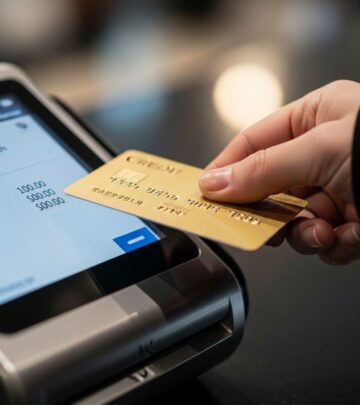
Why the Rich Use Credit Cards and Keep Their Cash in the Bank
Discover why affluent individuals prefer credit cards over cash for convenience, tracking, rewards, and superior security benefits.

Contrary to common assumptions, affluent individuals frequently rely on credit cards rather than dipping into their substantial cash reserves. With debit cards offering similar accessibility, why opt for credit? The answer lies in strategic financial advantages that streamline daily life and maximize benefits. Certified financial planner Mark VandeVelde, a wealth partner at Hefty Wealth Partners in Auburn, Indiana, exemplifies this: “My wife and I have credit cards and use them all the time.” For the wealthy, credit cards serve as powerful tools for efficiency, not necessity.
This approach allows them to earn rewards, simplify tracking, reduce hassles, and bolster security—all while parking cash in high-yield savings accounts. Data from the Federal Reserve indicates that high-income households spend more on credit cards, amplifying these perks through swipe fees that fund rewards programs. Below, we delve into the four primary reasons, supported by insights from financial experts and real-world examples.
1. Fewer Hassles
For high-net-worth couples or families managing joint finances, credit cards eliminate the friction of constant coordination and reconciliation. VandeVelde notes, “It’s really easy. I don’t have to worry about what my wife has spent. We don’t have to coordinate.” A single monthly statement consolidates all expenditures, which they pay in full, bypassing the need to log individual debits or balance a checking account register daily.
This simplicity scales with wealth. Busy professionals, entrepreneurs, and executives avoid the administrative burden of tracking multiple transactions across cash, debit, or checks. Instead, one bill arrives, reviewed, and settled—often automatically. Even for the rich, budgeting remains essential, but credit cards reduce the tedium. The Consumer Financial Protection Bureau (CFPB) emphasizes that streamlined payment methods like credit cards help maintain financial oversight without daily micromanagement.
Consider a household with shared expenses on travel, dining, and shopping. Debit pulls could trigger overdraft risks or timing issues, while cash requires physical handling. Credit cards centralize everything, freeing mental bandwidth for wealth-building activities. This hassle-free system is particularly valuable for those with high transaction volumes, where manual tracking becomes impractical.
Find the Best Savings Account Rates
While using credit cards for spending, the wealthy keep cash in high-interest savings accounts to earn passive income. Our search tool makes finding top rates effortless—compare FDIC-insured options yielding up to 5% APY today for optimal cash parking.
2. Streamlined Tracking
Credit cards excel in providing clear visibility into spending patterns, a boon for affluent users who value data-driven decisions. Stacey Glaesmann, from near Houston with a household income nearing $500,000, shares: “The main reason we use credit cards instead of cash is because it’s easier to keep track of what we have purchased. It’s just more convenient than keeping a bunch of receipts.” Monthly statements and digital apps categorize expenses automatically, revealing trends in categories like travel, groceries, or entertainment.
Advanced issuers offer annual spending reports that group transactions intelligently, aiding tax preparation. Actor and comedian Jim Dailakis, with credits on NBC and VH1, highlights this: “It’s so much easier when it comes to filing taxes… I can see every single purchase, and the fact that they categorize everything saves headaches for my accountant and me.” The IRS recommends such detailed records for deductions on business expenses, charitable contributions, or home offices.
- Monthly Statements: Itemized lists with merchant details and dates.
- App Integration: Real-time dashboards with graphs and alerts.
- Annual Summaries: Categorized overviews for year-end reviews.
- Export Tools: CSV downloads for accounting software like QuickBooks.
This tracking precision helps high earners optimize budgets, identify leaks, and justify large purchases to advisors. Unlike cash, which evaporates without a trace, or debit scattered across accounts, credit centralizes data for effortless analysis.
3. Rewards
Lucrative rewards programs are a magnet for wealthy spenders, turning everyday purchases into “free money.” Dailakis recounts receiving a $875 cash-back check, impossible with cash. VandeVelde adds, “We get some pretty significant rewards from our card each year. It’s free money for spending my own.” Premium cards offer 2-5% back on travel, dining, and groceries, scaling with spending volume.
Research from the Federal Reserve Bank of San Francisco shows that card issuers profit primarily from merchant swipe fees (2-5%), not interest from balances. Affluent users, who pay in full, capture these via rewards—AmEx alone spent $10 billion on perks in 2018. Tax policy treats rewards as nontaxable rebates, effectively boosting returns. A family charging $250,000 annually at 2.5% cash back nets $6,250—equivalent to over $10,000 pre-tax income.
| Card Type | Avg. Rewards Rate | Example Annual Benefit ($100K Spend) |
|---|---|---|
| Premium Travel | 3-5% | $3,000-$5,000 |
| Cash Back | 1.5-3% | $1,500-$3,000 |
| Basic | 1% | $1,000 |
High spenders qualify for elite tiers with lounge access, travel credits, and concierge services. This system rewards the rich disproportionately, as Brookings notes, widening inequality gaps.
4. Security
Security trumps cash for many wealthy individuals wary of theft or loss. Glaesmann explains, “I feel nervous carrying around a lot of cash because if I lose it, there’s no getting it back. Plus, it can make a person a target for a robbery.” Credit cards mitigate this: zero liability for fraud under federal law (Regulation Z), with issuers investigating disputes swiftly.
Debit offers similar protections post-2010 reforms, but funds deplete immediately during probes, risking overdrafts. Credit shields bank balances entirely. The FDIC reports credit card fraud losses averaged under $500 per incident in 2024, with issuers absorbing most costs. Additional perks include purchase protection, extended warranties, and travel insurance.
- Fraud Liability: $0 for unauthorized charges if reported promptly.
- Purchase Protection: Coverage for damaged/theft up to 90 days.
- EMV Chips & Tokens: Reduces skimming risks.
- Virtual Cards: One-time numbers for online buys.
For jet-setters and philanthropists flashing cash, cards project discretion while safeguarding assets.
But What About Credit Card Interest?
The rich sidestep the Achilles’ heel: interest. Glaesmann pays balances monthly; VandeVelde hasn’t carried one in 10 years. Rates exceeding 20% APR erode rewards quickly. “There is no point in getting rewards if you are going to pay 12 percent interest,” VandeVelde warns. Full payment preserves grace periods (21-25 days interest-free).
CFPB data confirms: only 40% of cardholders revolve balances, mostly lower-income. Wealthy users treat cards as debit equivalents, earning perks sans debt.
Frequently Asked Questions (FAQs)
Q: Do all wealthy people use credit cards daily?
A: Many do for perks, but usage varies. Affluent planners like VandeVelde prioritize rewards and convenience over cash.
Q: Are premium credit cards worth it for high earners?
Q: Yes, if annual fees ($95-$550) are offset by rewards exceeding spend. A $250K spender could net $5K+ net gain.
Q: How do rewards get funded?
A: Primarily merchant swipe fees (2-5%), not user interest. Banks share profits with payers.
Q: Is credit card use risky for millionaires?
A: No, when paid fully. Security and tracking enhance safety vs. cash/debit.
Q: Can average people adopt rich strategies?
A: Absolutely—pay balances, choose rewards cards, track spending for similar benefits.
For savvy managers, credit cards simplify tracking, protect funds, and yield rewards irrespective of wealth. Pair with high-yield savings for optimal strategy.
References
- Why the Rich Use Credit Cards and Keep Their Cash in the Bank — MoneyRates (Jennifer Doss). 2024-01-01. https://www.moneyrates.com/personal-finance/why-rich-use-credit-cards.htm
- How credit card companies reward the rich and punish the rest of us — Brookings Institution. 2019-12-20. https://www.brookings.edu/articles/how-credit-card-companies-reward-the-rich-and-punish-the-rest-of-us/
- Consumer Financial Protection Bureau: Credit Card Accountability Responsibility and Disclosure Act of 2009 — CFPB.gov. 2024-06-15. https://www.consumerfinance.gov/rules-policy/regulations/1026/
- Federal Reserve Bank of San Francisco: Payments Research — San Francisco Fed. 2023-11-01. https://www.frbsf.org/research-and-insights/payments-research/
- FDIC National Deposit Insurance Corporation: Consumer Compliance — FDIC.gov. 2025-01-10. https://www.fdic.gov/resources/consumers/consumer-news/
Similar Articles








Read full bio of Sneha Tete