Why Investment Bags Aren’t Real Investments
Understand the truth about “investment bags” so you can enjoy luxury handbags without sabotaging your long-term financial goals.
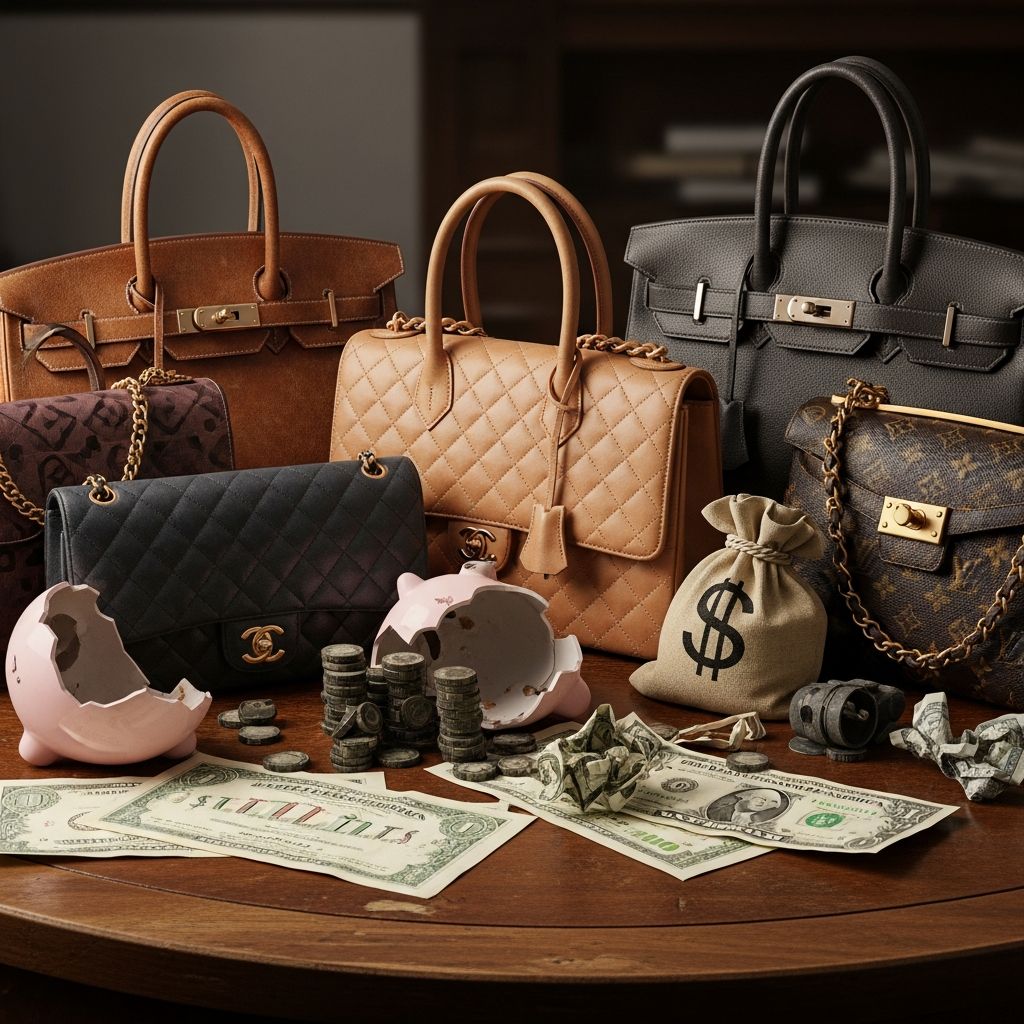
Designer handbags are often marketed or discussed as “investment bags”, but in most cases they are not sound financial investments. They can absolutely be great wardrobe investments and a source of joy, yet they should not replace real wealth-building strategies like investing in diversified portfolios or paying down debt.
This article breaks down what an investment bag really is, how it differs from a financial investment, why most luxury handbags fail as money-growing assets, and how to enjoy them responsibly without derailing your financial goals.
Wardrobe Investment vs Financial Investment
The phrase investment bag often causes confusion because it mixes two very different ideas: wardrobe value and financial returns.
What is an investment bag?
In fashion terms, an investment handbag usually has these characteristics:
- High quality construction – durable materials, strong stitching, and craftsmanship that hold up over years of use.
- High desirability – a brand or style that many people want, which may help it retain some resale value.
- Long-term use – a design you will reach for repeatedly, bringing down your cost per wear over time.
- Classic styling – neutral colors and timeless silhouettes that do not depend heavily on current trends.
With this definition, you “invest” in a bag because you expect to use it often, for a long period, and avoid constantly replacing cheaper, lower-quality bags.
What is a financial investment?
A financial investment is very different. In finance, you invest when you put money into assets that are expected to generate income or appreciate in value over time, such as:
- Stocks or stock funds
- Bonds or bond funds
- Real estate
- Businesses and other productive assets
These assets can produce dividends, interest, rental income, or capital gains, and their returns can compound over time. Handbags do not generate ongoing income, and their price behavior does not follow the same economic logic as diversified financial markets.
| Feature | Wardrobe Investment Bag | Financial Investment |
|---|---|---|
| Primary purpose | Use, style, durability | Grow wealth, generate income |
| Produces cash flow? | No | Often yes (dividends, interest, rent) |
| Expected return | Subjective (cost per wear) | Positive over the long term, on average |
| Market behavior | Driven by trends and taste | Driven by corporate profits, interest rates, economic growth |
| Liquidity & transparency | Informal, fragmented resale market | Highly regulated markets with public pricing |
4 Reasons Investment Handbags Are Not Great Financial Investments
Even if you love luxury pieces, it is important to be realistic about their financial performance. Here are four key reasons they usually fail as investments in the financial sense.
1. Designer handbags go in and out of fashion
Fashion is cyclical. A bag that is “it” today can quickly become yesterday’s news.
- Trends change: Colors, shapes, logos, and hardware details come in and out of style, affecting demand.
- Seasonal releases: Many luxury houses release new variations each season, which can make older designs feel less current.
- Hype is temporary: Media attention or celebrity use can briefly boost visibility but rarely sustains long-term resale value.
Because of this, the odds that your handbag will hold or exceed its original retail price are low, especially for seasonal or highly trend-driven pieces.
2. Condition matters more than you think
To command top dollar on the resale market, a handbag generally has to be in near-pristine condition.
- Visible wear—corner scuffs, softened structure, stains, odors, ink marks—can dramatically reduce resale value.
- Missing pieces such as dust bags, authenticity cards, and original receipts can also lower the price.
- Storage practices (stuffing the bag, keeping it out of direct sunlight, avoiding humidity) are critical if you care about long-term resale.
If you actually use and enjoy your bag regularly, it will naturally show wear over time, which makes it very hard to resell at a profit. The irony is that to maximize potential financial return, you would need to barely use the bag at all.
3. The resale price is usually a fraction of what you paid
Even when a bag holds some value, the resale price is often only a portion of the original retail cost.
- Most resale platforms and consignment stores price bags based on brand, model, condition, and current demand, which rarely equals full retail.
- Fees and commissions paid to resellers further reduce what you receive.
- Only exceptional cases—highly limited, iconic, or extremely scarce pieces—have a realistic chance of appreciating, and even then, the outcome is uncertain.
By contrast, diversified financial assets such as broad stock index funds have historically offered positive real returns over long horizons, despite short-term volatility.
4. Costs of ownership eat into any potential return
Luxury handbags come with ongoing costs that are easy to overlook:
- Insurance: If you treat a bag like an investment, you may feel compelled to insure it against theft, fire, or loss, which can significantly add to annual costs.
- Maintenance and repair: Professional cleaning, hardware repair, or leather conditioning can be expensive.
- Opportunity cost: Every dollar spent on a bag is a dollar not invested in assets that could compound over time.
Once you factor in these costs, even a strong resale price may not beat what your money could have earned in a diversified investment portfolio.
Key Things to Keep in Mind When Buying Investment Handbags
You can still enjoy luxury bags—just view them with the right expectations and a solid financial foundation.
They can be great wardrobe investments
From a wardrobe perspective, a high-quality designer bag can be a smart purchase:
- You buy better, less often, reducing the need to replace cheaper bags frequently.
- A well-chosen neutral or classic design can work with many outfits, increasing its cost per wear value.
- If maintained well, it may retain some resale value, providing a partial cash-back option if you decide to sell later.
In this sense, the bag “pays off” not by making you money directly, but by serving you well over many years and simplifying your wardrobe.
Don’t expect to sell them for a profit
Some marketing and media stories highlight rare cases where specific bags, such as certain Hermès styles, have increased in value or outperformed certain benchmarks in narrow time periods. However:
- These stories often focus on select models and ideal conditions, not the average handbag.
- They may ignore transaction costs, insurance, storage, and risks.
- They are not a reliable blueprint for the typical buyer.
For most people, it is safer to assume that if you sell your bag in the future, you will receive only a fraction of what you paid. If you happen to earn more, consider it a bonus—not the plan.
Buying pre-owned can be a smarter way to save
If you decide to purchase a designer bag, buying pre-owned can significantly reduce the financial hit:
- You avoid the steepest part of the initial depreciation.
- Trusted resale platforms and consignment stores often authenticate items.
- You can access discontinued or limited styles at prices that may be lower than current retail.
This approach aligns the fashion desire with a more budget-conscious strategy, though it still should not be confused with traditional investing.
Purchasing luxury bags should be based on disposable income
One of the most important principles is that luxury bags should be bought with disposable income—money left after your essential expenses, minimum debt payments, and savings goals are covered.
- No high-interest debt: Buying a bag with credit card debt at high interest rates can quickly erase any potential resale upside and strain your finances.
- Clear priorities: Contributions to retirement accounts, emergency savings, and necessary insurance coverage should come before luxury purchases.
- Cash over credit: Saving up and paying in full with cash (or paying your card off immediately) protects you from costly interest charges.
If you are still working toward financial stability or paying off expensive debt, it may be wiser to delay the luxury purchase until your financial foundation is stronger.
There Are Better Ways to Invest
Instead of viewing handbags as financial assets, consider directing your surplus cash toward traditional investment vehicles with a proven track record of building wealth over time.
Examples of real financial investments
- Broad stock index funds: Low-cost funds that track diversified stock indexes have historically delivered positive real returns over the long term, despite volatility.
- Bonds and bond funds: These can provide income and help balance risk, especially as part of a diversified portfolio.
- Retirement accounts: Tax-advantaged accounts such as 401(k)s or IRAs let your investments compound with important tax benefits.
- Real estate: Property may generate rental income and long-term appreciation, though it also requires careful management.
- Education and skills: Investing in your own skills and education can raise your earning potential over your lifetime.
These options benefit from compound returns, professional oversight, and regulated markets, unlike fashion items whose value depends heavily on taste and trends.
Invest for success before you splurge
A practical framework is to build wealth first and buy luxury later:
- Establish an emergency fund that covers several months of expenses.
- Consistently contribute to retirement and investment accounts.
- Pay down high-interest debt as quickly as reasonably possible.
- Then, use a portion of your true discretionary income for luxury items you love.
Once your money is working for you in real investments, you can enjoy handbags purely as lifestyle choices, without pressuring them to perform as your nest egg.
Practical Tips to Enjoy Investment Bags Responsibly
If you decide that a designer bag fits your budget and values, these tips can help you balance style with financial sense:
- Set a luxury budget: Decide in advance what percentage of your take-home pay can go toward luxury purchases each year, without sacrificing savings goals.
- Save first, then buy: Automate transfers to savings and investment accounts, and only use leftover funds for the bag.
- Choose timeless over trendy: Opt for neutral colors, practical sizes, and classic shapes to maximize cost per wear.
- Care for your bag: Store it properly, avoid overloading it, and clean it per material guidelines to preserve both function and potential resale value.
- Re-sell strategically: If your style changes, consider selling pieces you no longer use to offset the cost of future purchases.
Frequently Asked Questions (FAQs)
Q: Are investment bags ever good financial investments?
A: In rare cases, specific models in pristine condition with strong long-term demand may hold or exceed their retail price, but this is the exception, not the rule. For most buyers and most bags, returns do not reliably beat diversified financial investments once costs and risks are considered.
Q: How should I decide if I can afford a designer bag?
A: Start by confirming that you are meeting key financial milestones: paying bills on time, contributing to emergency savings, investing for retirement, and managing debt. Only then should you allocate a portion of your discretionary income—money left after essentials and savings—toward luxury purchases.
Q: Is buying pre-owned luxury better than buying new?
A: Financially, pre-owned purchases often make more sense because you avoid the steepest initial depreciation and may pay significantly less than current retail for the same style. However, you still should not expect consistent investment-like returns, and you must be careful about authenticity and condition.
Q: Should I ever use a credit card to buy a luxury handbag?
A: Using a credit card for rewards or buyer protection can be reasonable if you pay the balance in full immediately. Carrying a balance and paying high interest on a discretionary purchase is generally harmful to your finances and can quickly cost more than any potential resale value the bag might have.
Q: What should I focus on instead of treating handbags as investments?
A: Focus on building a diversified investment portfolio through retirement accounts and taxable investment accounts, paying off high-interest debt, and investing in your skills and earning power. These strategies have stronger evidence for long-term wealth building than speculative purchases of luxury goods.
References
- Why Investment Bags Are Not Great Financial Investments — Clever Girl Finance. 2023-06-01. https://www.clevergirlfinance.com/investment-bags/
- Is The Hermès Birkin Bag A Good Investment? — Clever Girl Finance. 2022-04-15. https://www.clevergirlfinance.com/is-the-hermes-birkin-a-good-investment/
- How To Afford Luxury Items — Clever Girl Finance (YouTube). 2020-07-10. https://www.youtube.com/watch?v=6eo3HeAEGzE
- Investing 101: A Beginner’s Guide — U.S. Securities and Exchange Commission (SEC). 2023-09-12. https://www.investor.gov/introduction-investing/investing-basics
- Stocks, Bonds, Bills, and Inflation (SBBI) Yearbook — Morningstar / Ibbotson. 2023-01-01. https://www.morningstar.com/products/sbbi
- Building Financial Security Over a Lifetime — Consumer Financial Protection Bureau (CFPB). 2022-06-30. https://www.consumerfinance.gov/consumer-tools/managing-money/
Similar Articles








Read full bio of Sneha Tete