Why Did My Credit Score Drop? 11 Causes And How To Fix It
Learn 11 common reasons your credit score can suddenly drop and practical, step-by-step strategies to rebuild it over time.
If you have ever checked your credit report and wondered, “Why did my credit score drop?” you are not alone. Because your score is calculated from many moving parts, even a small change in your finances can cause it to go up or down. Understanding what triggers a decline is the first step to protecting your score and rebuilding it when it falls.
This guide walks through 11 of the most common reasons your credit score may have dropped and specific, practical steps you can take to help it recover.
How Credit Scores Work (And Why They Change)
Your credit score is a three-digit number that summarizes information in your credit reports from major credit bureaus such as Equifax, Experian, and TransUnion. It helps lenders estimate how likely you are to repay borrowed money on time, and it is influenced by several major factors:
- Payment history – Whether you pay bills on time.
- Amounts owed / credit utilization – How much of your available credit you are using.
- Length of credit history – How long your accounts have been open.
- New credit – Recent applications for credit and new accounts.
- Credit mix – The types of credit accounts you have (credit cards, auto loans, mortgages, etc.).
When one of these elements changes, your score can change too—sometimes by just a few points, other times by a lot.
Why Did My Credit Score Drop? 11 Common Reasons
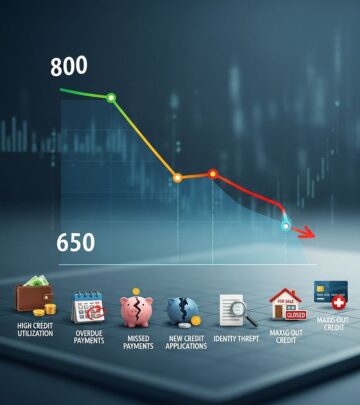
Below are 11 frequent causes of a dropping credit score. Several of them can occur at the same time, which can magnify the decline.
1. Too Many Hard Credit Inquiries
When you apply for a new loan or credit card, the lender usually performs a hard inquiry (or hard pull) on your credit report. This indicates that you are seeking new credit and can temporarily lower your credit score by a few points per inquiry.
- Multiple inquiries in a short period for things like credit cards may signal higher risk.
- Rate shopping for auto, student, or mortgage loans within a short window is often treated as one inquiry in many scoring models, but that is not always the case.
What to do: Only apply for credit when you truly need it, and group rate shopping for major loans into a tight time frame.
2. Late or Missed Payments
Payment history is typically the single most important factor in common credit scoring models, often making up about 35% of a FICO® Score. Even one payment that is 30 days late or more can cause a noticeable drop in your score.
- Consistently late payments can damage your score more severely.
- Delinquencies can remain on your report for up to seven years, though their impact often decreases over time if you resume on-time payments.
What to do: Catch up on past-due accounts as quickly as possible and set up automatic payments or reminders so you never miss another due date.
3. Higher Credit Card Balances (Rising Utilization)
Your credit utilization ratio is the percentage of your available revolving credit that you are currently using. Experts often recommend keeping utilization under 30%, and lower is usually better for your score.
- If your balances jump from one month to the next, your utilization spikes.
- Even if you pay your card in full, a high reported balance on the statement date can still temporarily lower your score.
What to do: Aim to pay down existing balances and, when possible, make extra payments before your billing cycle closes to reduce the amount reported to the credit bureaus.
4. Closing a Credit Card Account
Closing a credit card—especially one with a long history or a high limit—can cause your credit score to decline for two reasons:
- It can reduce your total available credit, increasing your utilization.
- Over time, it may also shorten your average account age, which can negatively affect your score.
What to do: Consider keeping long-standing, no-annual-fee cards open and using them lightly a few times a year so they stay active.
5. A New Account Appeared on Your Report
Opening a new credit card, personal loan, or other account can also lead to a short-term score drop because:
- There is a hard inquiry from the application process.
- Your overall profile now reflects a shorter average age of accounts and a new, unproven trade line.
Over time, if you manage the new account responsibly, it can help your score, but the initial impact is often slightly negative.
What to do: Avoid opening several new accounts at once and give your score time to stabilize after each new account.
6. An Account Went to Collections
When a debt is severely past due, creditors may send it to a collection agency. Collections accounts are serious negative marks and can significantly hurt your credit score.
- Collections can stem from credit cards, personal loans, utilities, medical bills, and more.
- They can remain on your report for up to seven years from the original delinquency date.
What to do: If a bill is at risk of going to collections, contact the creditor immediately to work out a payment plan. For existing collections, confirm the debt is accurate and explore repayment options that may allow the account to be updated appropriately after payment.
7. High Utilization on a Single Card
Even if your overall utilization looks reasonable, using a large percentage of the limit on just one card can still hurt your score. Some scoring models look not only at total utilization but also at utilization on individual accounts.
- Maxing out or nearly maxing out a single card is a red flag to lenders.
- This can cause a drop even if other cards have low balances.
What to do: Try to keep each card’s balance well below its limit. When possible, spread purchases across accounts or pay off large charges quickly.
8. A Credit Limit Was Reduced
Issuers can lower your credit limit for reasons such as inactivity, changes in your credit profile, or economic conditions. A lower limit may cause your utilization ratio to increase overnight, even if your spending stays the same.
- For example, a card with a $5,000 limit and a $1,000 balance has 20% utilization. If the limit drops to $2,000, utilization jumps to 50% without any new spending.
What to do: Call the issuer to understand the reason for the change and ask if the limit can be reconsidered. Meanwhile, focus on paying down the balance to bring utilization back to a healthy range.
9. You Paid Off a Loan
Paying off a car loan, student loan, or mortgage is a milestone worth celebrating. However, you may notice a small, temporary dip in your score after the final payment.
- Your credit mix might shift if you close out one type of account.
- Your total number of active installment accounts decreases, which can slightly affect your profile.
The long-term benefit of being debt-free generally outweighs this short-term score movement.
What to do: Accept that a minor fluctuation is normal and continue building positive history on your remaining accounts.
10. Negative Information Was Newly Reported
Your score may fall if a lender reports new negative information, such as:
- A 60-day or 90-day late payment.
- A charge-off (a debt that the lender writes off as a loss).
- A bankruptcy, foreclosure, or repossession.
Some of these events have a larger impact than others, and they can remain in your history for several years, though their effect diminishes as time passes and you rebuild positive history.
What to do: Confirm the accuracy of any negative entry. If you find an error, dispute it with the credit bureau. If it is accurate, create a plan to avoid repeat issues and focus on consistent, on-time payments.
11. Identity Theft or Reporting Errors
If your score drops suddenly and you cannot link it to any recent financial activity, it may be due to identity theft or a reporting mistake.
- Accounts you did not open, unfamiliar addresses, or mystery balances can signal fraud.
- Clerical errors or mixed files (where someone else’s data appears on your report) can also affect your score.
What to do: Review your credit reports from all major bureaus, place a fraud alert or credit freeze if necessary, and dispute inaccurate information promptly.
Quick Comparison: Common Causes of Score Drops
| Cause | Typical Short-Term Impact | How Long It Can Matter |
|---|---|---|
| Hard inquiries | Small drop (a few points) | Often up to 12 months in scoring, visible up to 2 years |
| 30+ day late payment | Moderate to large drop | Up to 7 years from delinquency |
| High utilization | Moderate drop | Improves as balances are paid down |
| Collections/charge-offs | Large drop | Up to 7 years |
| New accounts | Small to moderate drop | Impact decreases over 6–12 months of on-time payments |
How To Rebuild Your Credit Score After a Drop
The same behaviors that cause your credit score to fall can be reversed or improved over time. Rebuilding is less about quick tricks and more about consistent, positive habits.
1. Pay Down Revolving Debt Balances
Because utilization is such an important input, lowering your revolving balances (like credit cards and lines of credit) is often one of the fastest ways to help your score recover.
- Create a simple repayment plan using strategies like the debt snowball (paying off the smallest balances first) or the debt avalanche (tackling highest-interest balances first).
- Make more than the minimum payment whenever possible.
- Consider a lower-rate personal loan or balance transfer, if it aligns with your overall financial plan and you can avoid new debt.
2. Bring All Accounts Current and Pay On Time
Once accounts are current, the most powerful step you can take is to build a perfect on-time payment streak. Over time, this can outweigh past mistakes in most scoring models.
- Contact lenders if you are struggling to pay; many offer hardship plans or modified repayment options.
- Automate payments for at least the minimum due to avoid forgotten bills.
- Use calendar reminders to review statements before due dates.
3. Keep Your Utilization Low Going Forward
After you pay down balances, aim to keep your usage low on an ongoing basis:
- Try to stay below 30% utilization overall, and even lower if you can.
- Spread large purchases across multiple billing cycles or accounts, and pay off big charges promptly.
- If your income or situation has improved, you may request a higher credit limit (without increasing your spending) to help reduce utilization.
4. Be Strategic About New Credit
New accounts and hard inquiries can be useful when they support a clear financial goal, but they are best used carefully.
- Avoid opening several cards just for sign-up bonuses while rebuilding.
- When rate shopping for big loans, keep applications within a focused time window so they are more likely to count as one inquiry in certain scoring models.
- If your credit is damaged, look into secured credit cards or credit-builder loans as tools to re-establish positive history.
5. Monitor Your Credit Reports Regularly
Monitoring your credit helps you catch errors, detect fraud early, and measure progress. In some countries, you can access reports from each major bureau at least once per year at no cost.
- Check that all personal information is correct.
- Verify account balances and payment histories.
- Dispute any inaccurate or suspicious items in writing with supporting documentation.
How Long Will It Take My Credit Score To Recover?
There is no single timeline, because the recovery speed depends on how serious the negative event was and what your credit looked like before it happened. However, general patterns include:
- Minor events (like a small utilization spike or one hard inquiry) may correct in a few months if you maintain good habits.
- More serious delinquencies or collections can take longer to overcome, but their impact usually fades over time as new positive information is added to your reports.
- Major derogatory marks, such as bankruptcy, may stay on your report for up to 7–10 years, but even then, responsible use of credit can still lead to gradual improvement.
The key is consistency. Each on-time payment and each dollar of reduced revolving debt contributes to rebuilding your score.
Frequently Asked Questions (FAQs)
Q: Why did my credit score drop when I paid off my credit card?
Paying off a card usually helps in the long run, but if you also closed the account or that card was a major part of your available credit, your utilization and credit mix may have changed. This can cause a short-term dip that typically improves as you continue using remaining accounts responsibly.
Q: How often do credit scores update?
Credit scores can update as frequently as every time new information is reported by lenders—often monthly, but timing varies by creditor. Some accounts report closer to the statement date, so changes in balances or payments may not appear immediately.
Q: Can checking my own credit score make it drop?
No. Checking your own credit through a lender or directly with a credit bureau is considered a soft inquiry, which does not affect your score. Only hard inquiries tied to credit applications can cause small, temporary decreases.
Q: How big of a drop can one late payment cause?
The impact depends on your prior credit history and how late the payment is. Someone with an excellent score may see a larger decline from a first late payment than someone whose score is already lower, but any 30-day-plus late mark is considered serious and should be avoided whenever possible.
Q: Is it possible to rebuild good credit after serious damage?
Yes. While serious derogatory marks like collections or bankruptcy have lasting effects, many people are able to rebuild strong credit over time by paying all bills on time, reducing debts, limiting new applications, and monitoring their reports regularly.
It Is Possible To Rebuild Your Credit
A lower credit score today does not define your financial future. By understanding what caused the drop—whether it is high utilization, late payments, new accounts, or errors—you can take deliberate steps to reverse the damage.
Focus on what you can control: pay on time every month, reduce revolving balances, use new credit cautiously, and keep a close eye on your credit reports. With steady effort, your score can improve, opening the door to better loan terms, lower interest rates, and more flexibility with your financial goals.
References
- Credit Reports and Scores — Consumer Financial Protection Bureau. 2023-10-01. https://www.consumerfinance.gov/consumer-tools/credit-reports-and-scores/
- What’s in my FICO® Scores? — FICO. 2023-06-15. https://www.fico.com/education/fico-scores/what-affects-your-credit-scores
- Credit Utilization: How It Works — Experian. 2024-02-05. https://www.experian.com/blogs/ask-experian/credit-utilization-rate/
- Rebuilding Credit — Federal Trade Commission. 2022-09-12. https://www.consumer.ftc.gov/articles/how-rebuild-your-credit
- Your Credit History — USA.gov. 2023-05-10. https://www.usa.gov/credit-reports
Similar Articles








Read full bio of medha deb