Why Did My Credit Score Drop: 6 Common Reasons
Discover the six most common reasons your credit score may have dropped and learn how to rebuild it.
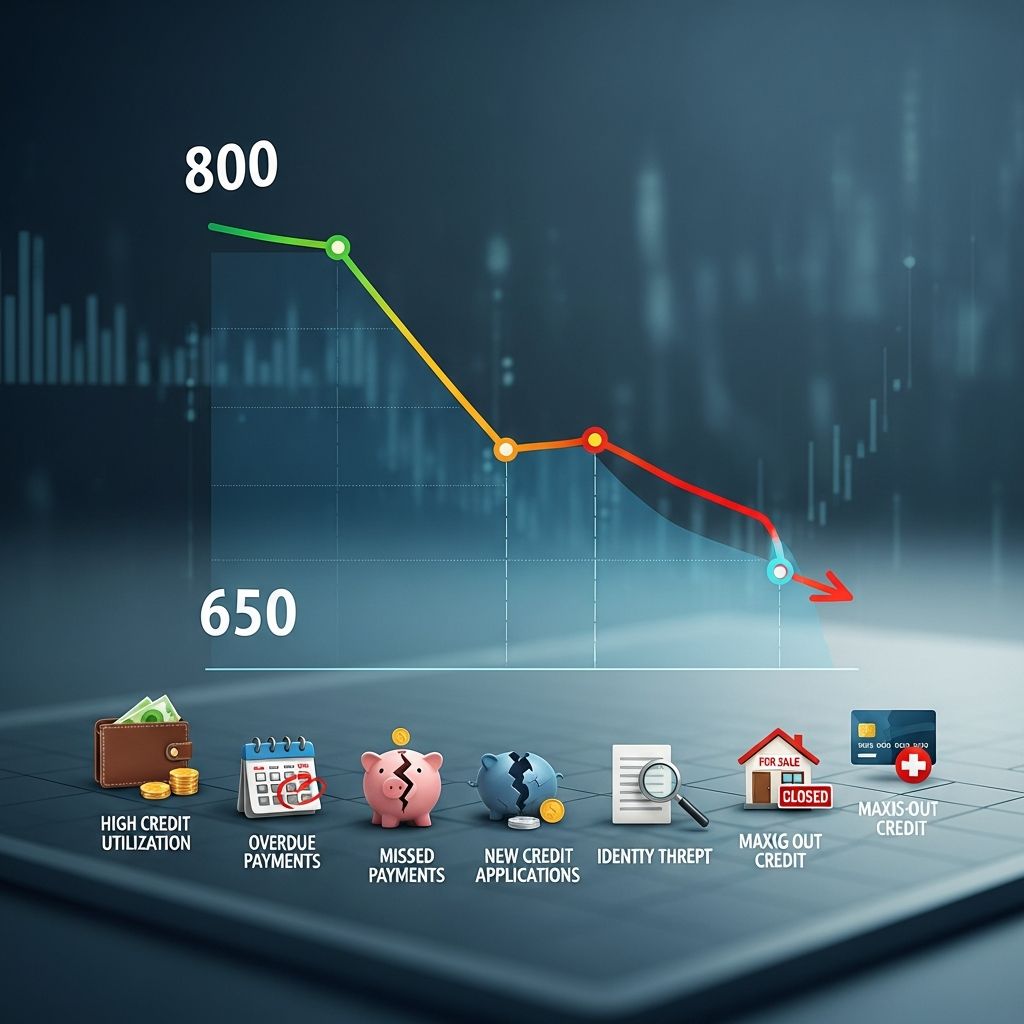
If you’ve recently noticed a decline in your credit score, you’re not alone. Credit scores fluctuate regularly based on various financial behaviors and life circumstances. Understanding the reasons behind a credit score drop is the first step toward recovery and building a stronger financial profile. A credit score serves as a numerical representation of your creditworthiness, influencing everything from loan approvals to interest rates you’ll receive. When your score drops unexpectedly, it’s important to identify the root cause so you can take corrective action.
1. Late or Missed Payments
Payment history is one of the most influential factors in your credit profile, accounting for up to 35% of your FICO score. This means that your ability to pay bills on time carries substantial weight in how lenders and credit bureaus evaluate your creditworthiness.
Missing even a single payment can have significant consequences for your credit score. According to FICO data, a person who has otherwise never missed a payment could lose around 100 points after missing a payment for over 30 days. The damage compounds further, with an additional 50 points or so lost after 90 days of non-payment. This steep penalty reflects the severity with which credit bureaus and lenders view delinquencies.
The timeline of reporting is critical to understand:
– 30 days late: Your payment is reported as delinquent, and you may lose approximately 100 points- 60 days late: Additional damage accumulates as your account remains in default- 90 days late: The delinquency mark becomes more severe, resulting in an additional 50-point penalty- 120+ days late: Your account may be charged off or sent to collections, causing further damage
To protect your credit score, prioritize making at least the minimum payment by the due date. Even if you can’t pay the full balance, meeting the minimum payment requirement keeps your account in good standing and prevents the delinquency from being reported to credit bureaus.
2. High Credit Card Balances
Your credit utilization rate is another crucial component of your credit score, accounting for anywhere between 20% and 30% of your FICO score. Credit utilization refers to the ratio between how much credit you’re currently using versus how much you have available across all your accounts.
Most experts and lenders recommend keeping your credit utilization ratio below 30%. This benchmark demonstrates to creditors that you have good control over your debt and aren’t overly reliant on credit to fund your lifestyle. For example, if you have a total of $10,000 in available credit across all accounts, you should ideally keep your balances below $3,000.
You might have an excellent track record of making payments on time, but if you’ve recently maxed out a credit card or two, your score will still suffer. This decline occurs because high balances suggest increased financial stress and a higher risk of default.
If high credit card balances are dragging down your score, start paying down your credit card debt by making significantly more than the minimum payment. This strategy accomplishes two important objectives:
– Increases available credit: By reducing your balance, you lower your utilization ratio- Helps your score recover: A lower utilization ratio directly improves your credit score
3. A New Credit Account
You might have seen a slight drop in your credit score if you’ve recently applied for any new credit account, whether it’s a loan, line of credit, or credit card. This dip can be concerning, but understanding why it happens can ease your worries.
When you apply for new credit, the lender performs a hard inquiry into your credit report. Each hard inquiry can temporarily lower your score by a few points. Additionally, opening a new account reduces your average account age, which affects the credit age factor of your score (this accounts for 15% of your FICO score).
Why would new credit hurt your score? Creditors tend to see multiple hard inquiries as a sign of risk, especially if you have high overall debt. They may interpret frequent credit applications as a sign that you’re desperate for credit or overextending yourself financially.
The good news is that if your credit score has dipped after being approved for a new loan, it will likely rebound or even grow as you build a longer credit history with on-time payments. Hard inquiries typically fall off your credit report after two years, and their impact on your score diminishes over time. The temporary decline is often worth it if the new credit helps you consolidate debt or finance an important purchase.
4. Paying Off Old Accounts
This reason for a credit score drop might seem counterintuitive. Paying off older accounts completely—such as student loans and auto loans—could temporarily make your score drop. This occurs because paying off these accounts can affect both your credit age and your credit mix, which together account for 15% of your score.
When you close an account entirely, your average account age decreases, which lowers the history component of your credit profile. Additionally, your credit mix—the variety of credit types you maintain—changes when you eliminate an account type entirely.
While it’s definitely advisable to pay off those loans if you’re in a position to do so, be advised that it’s common to see your score drop right after. This temporary decline typically reverses as you maintain good payment history on your remaining accounts.
Similarly, if you close down credit card accounts, you reduce your amount of available credit, which could negatively impact your score. Even if you’re not using a credit card, keeping it open with a zero balance can actually help your credit profile by maintaining your available credit and credit mix.
5. Looking at a Different Credit Score Than Usual
Not all credit score providers offer the same type of score, and this discrepancy can lead to confusion when you notice a drop. If it seems your credit score has taken a hit, you’ll want to make sure that you’re looking at the same score as usual.
The two major consumer credit scoring companies are FICO and VantageScore, each using different algorithms and weighting factors to calculate credit scores. Many of the websites that provide free credit scores usually offer the VantageScore, which tends to be slightly more generous in its scoring. However, most lending institutions use FICO scoring models (FICO actually has several different models and versions for different purposes).
A drop in your VantageScore might not be reflected in your FICO score, and vice versa. This distinction is important because lenders are primarily concerned with your FICO score when making lending decisions. If you’ve been monitoring a free credit score platform and notice a drop, it might simply reflect a difference in scoring methodology rather than an actual change in your creditworthiness.
To avoid confusion, try to consistently check the same type of score. Many banks and credit card issuers now offer free FICO scores to their customers, which can provide more accurate insight into how lenders view your credit profile.
Understanding Credit Score Components
To better understand why your score might drop, it’s helpful to know the breakdown of what comprises your FICO score:
| Factor | Weight | Description |
|---|---|---|
| Payment History | 35% | Your track record of making on-time payments |
| Credit Utilization | 20-30% | The ratio of used credit to available credit |
| Credit Age | 15% | The average age of your credit accounts |
| Credit Mix | 10% | The variety of credit types you maintain |
| New Credit Inquiries | 10% | Recent hard inquiries and new account openings |
Steps to Rebuild Your Credit Score
Once you’ve identified why your credit score dropped, here are actionable steps to rebuild it:
– Make all payments on time: Set up automatic payments or calendar reminders to ensure you never miss a due date- Pay down high balances: Focus on reducing credit card balances to below 30% utilization- Don’t close old accounts: Keep older credit card accounts open, even if you’re not using them- Limit new credit applications: Space out credit applications to minimize hard inquiries- Check your credit report: Review your credit report for errors and dispute any inaccuracies- Consider a credit builder loan: If you have limited credit history, this tool can help establish positive payment history
Frequently Asked Questions (FAQs)
Q: How long does it take for my credit score to recover after a drop?
A: Recovery time depends on the reason for the drop. Late payments may take 7-10 years to stop affecting your score significantly, while hard inquiries typically fall off after two years. With consistent on-time payments and lower utilization, you can see improvements within 3-6 months.
Q: Can I improve my credit score by paying off collections accounts?
A: Yes, paying off a collections account can help improve your score, though the impact may be limited since the delinquency will still appear on your report. Newer scoring models like VantageScore 3.0 may give you more credit for paying off collections.
Q: Will checking my own credit score hurt it?
A: No. When you check your own credit score, it’s considered a soft inquiry and does not affect your score. Only hard inquiries from lenders checking your credit for new credit applications impact your score.
Q: How often do credit scores update?
A: Credit scores can update as frequently as daily, though most lenders report information to credit bureaus monthly. Changes in your credit report typically take 30-45 days to be reflected in your score.
Q: Is a credit score of 715 considered good?
A: Yes, a score of 715 is considered good. FICO scores range from 300 to 850, with scores of 670-739 typically classified as good. However, for the best interest rates, aim for a score of 740 or higher.
Q: What should I do if I see an error on my credit report?
A: You have the right to dispute inaccuracies on your credit report. Contact the credit bureau reporting the error in writing and provide documentation supporting your dispute. They must investigate within 30 days.
References
- Credit Scores Fall at Fastest Pace Since the Great Recession — FICO/Money Magazine. 2024-10. https://money.com/biggest-credit-score-drop-since-great-recession/
- Why Did My Credit Score Just Drop? 6 Common Reasons — Money Magazine. 2024. https://money.com/why-did-my-credit-score-drop/
- The Average Credit Score Just Dropped for the First Time Since 2009 — FICO/Money Magazine. 2023. https://money.com/average-credit-score-drops-fico/
- What Can Hurt Your Credit Score? — Money Magazine. 2024. https://money.com/what-can-hurt-your-credit-score/
- How to Improve Your Credit Score to Buy a House — Money Magazine. 2024. https://money.com/how-to-improve-your-credit-score-to-buy-a-house/
- Understanding FICO Credit Score Components — Experian Official Resources. 2024. https://www.experian.com/blogs/ask-experian/credit-score-factors/
- Consumer Rights and Credit Report Disputes — Federal Trade Commission (FTC). 2024. https://consumer.ftc.gov/articles/how-dispute-credit-report-errors
Similar Articles








Read full bio of Sneha Tete