Why Credit Card Companies Need Your Income Info
Discover the real reasons behind income questions on credit card applications and how this data shapes your approval odds and spending power.

Credit card providers routinely request your income when you apply for a new account or seek a limit increase. This detail helps them evaluate your capacity to handle debt responsibly while meeting legal obligations.
The Core Purpose of Income Disclosure in Applications
Financial institutions gather income data primarily to gauge an applicant’s repayment potential. By combining this with credit history and scores, issuers predict default risks and tailor approvals accordingly. This practice ensures sustainable lending practices across the industry.
Income figures influence several key decisions. For instance, they help establish initial credit limits that align with your financial profile. Higher reported earnings often correlate with larger limits, enabling more substantial purchases without overextension. Additionally, issuers factor in housing costs, existing loans, and recurring bills to compute your overall affordability.
Legal Mandates Driving Income Requests
Federal regulations compel lenders to verify borrowers’ ability to repay before issuing credit. This stems from laws like the Truth in Lending Act and related guidelines, which prohibit extending lines of credit without reasonable repayment assurance. Non-compliance risks penalties, so issuers prioritize thorough assessments.
Under these rules, applications must capture total annual or monthly earnings, employment status, and major expenses. Lenders then derive metrics such as the debt-to-income (DTI) ratio, which divides monthly debt obligations by gross income. A DTI below 36% typically signals strong financial health, boosting approval prospects.
Breaking Down What Qualifies as Reportable Income
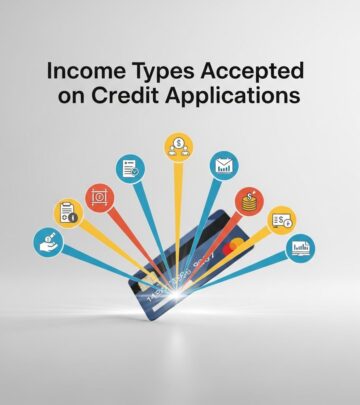
Not all earnings count equally on applications. Lenders consider a broad spectrum, including wages, salaries, bonuses, commissions, rental income, investments, alimony, and even certain government benefits if they provide steady cash flow. Self-employed individuals should tally net business profits after deductions.
Students or dependents often puzzle over this field. Acceptable entries include part-time job pay, scholarships, grants, or contributions from parents/guardians, provided they support ongoing expenses. Always opt for pre-tax gross figures for consistency with issuer calculations.
| Income Type | Examples | Typically Included? |
|---|---|---|
| Wages/Salary | Full-time job paycheck | Yes |
| Investment Returns | Dividends, interest | Yes, if regular |
| Government Aid | Social Security, unemployment | Yes, for stable benefits |
| One-Time Bonuses | Year-end bonus | Sometimes, if annualized |
| Gifts | Family money transfers | No, unless documented as ongoing |
How Issuers Initially Process Your Stated Income
Upon submission, your income feeds into automated underwriting systems. These algorithms cross-reference it against credit bureau data, estimating capacity via income modeling—predictive tools that infer earnings from spending patterns and debt levels. Low-limit cards often skip deep dives, relying on this for efficiency.
However, suspicious patterns trigger manual reviews. Rapid applications, sudden spending spikes, or income jumps inconsistent with credit files raise flags. Technology advancements, including AI-driven analytics, enhance detection of discrepancies.
Verification Processes: When and How They Happen
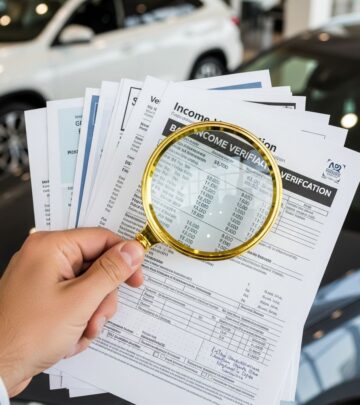
Issuers rarely verify income upfront for standard applications, especially smaller limits. Instead, they may audit later—months or years post-approval—via requests for pay stubs, tax forms (W-2s, 1099s), bank statements, or employer letters. Open banking tools now streamline this by linking accounts for real-time transaction analysis, revealing deposits over 24 months.
- Common Triggers: Limit increase requests, account reviews, or flagged inconsistencies.
- Proof Options: Recent paystubs (showing YTD earnings), tax returns, or profit/loss statements for freelancers.
- Tech Aids: Finicity-like services categorize income with AI confidence scores.
Significant mismatches, like application income far exceeding tax filings, prompt scrutiny. Minor variances might slide, but accuracy remains crucial amid evolving detection tech.
Impact of Income on Credit Limits and Approvals
Your reported earnings directly shape credit availability. Issuers aim for limits supporting 30% utilization on average balances, scaling with income to minimize risk. Premium cards may impose unpublished minimums, rejecting lower earners outright.
Post-approval updates can unlock benefits. Higher current income shared voluntarily often yields limit boosts, enhancing scores via lower utilization. Conversely, declines warrant caution—updating lower figures risks reductions.
Navigating Income Updates from Existing Issuers
Many providers periodically solicit refreshes, especially for limit hikes. Responding proves optional, but cooperation aids goals like expansions. Weigh pros (potential upgrades) against cons (verification exposure if inflated).
Best practices include retaining documentation: Save two years of tax docs, stub copies, and statements. For rises, highlight verifiable growth like promotions.
Risks of Inaccurate or Inflated Reporting
Falsifying income invites severe fallout. Discovery during audits can lead to account closure, reported delinquencies scarring scores, or legal action for fraud. Even unintentional errors, amplified by sophisticated underwriting, heighten flags.
Ethical reporting builds trust. Consistent figures across applications, taxes, and loans foster smoother future interactions.
Tips for Maximizing Application Success
To optimize outcomes:
- Calculate total household income if applicable, including spouse’s (with joint filing intent).
- List all steady sources; annualize irregular ones conservatively.
- Review credit reports pre-application to align narratives.
- Target cards matching your profile—research via issuer sites.
- Update proactively for positive changes to leverage growth.
Future Trends in Income Assessment
Digital shifts promise efficiency. Open finance platforms enable seamless account connections, delivering categorized income streams sans paperwork. AI refines models, predicting stability from transaction histories.
Regulatory evolution may standardize verifications, balancing speed with security. Borrowers benefit from faster decisions, though privacy safeguards remain paramount.
Frequently Asked Questions
Do all credit card applications require income?
Most do, though secured or student cards may emphasize other factors. Federal rules necessitate ability-to-repay checks.
What if I’m unemployed or a student?
Report any income sources like benefits, part-time work, or support. Students can include aid or family contributions.
Will updating lower income hurt my account?
Potentially—it might prompt limit adjustments. Voluntary updates suit increases best.
How often do issuers verify income?
Rarely upfront; more common for hikes or audits. Keep records handy.
Can household income include a partner’s?
Yes, if jointly accessible and reported consistently.
References
- How Credit Card Applicant Verification Works — Vouched ID. 2023. https://www.vouched.id/learn/blog/credit-card-applicant-verification
- Do Credit Card Companies Verify Income? — Chase Bank. 2024-05-15. https://www.chase.com/personal/credit-cards/education/basics/do-credit-card-companies-verify-income
- Open finance unlocks income verification data for lending — Mastercard. 2025-01-10. https://www.mastercard.com/us/en/news-and-trends/Insights/2025/Open-banking-unlocks-income-verification-data-for-lending.html
- Should You Give Income Updates To Your Credit Card Issuers? — Bankrate. 2024-08-20. https://www.bankrate.com/credit-cards/advice/income-updates-to-your-credit-card-issuer/
- Annual Income For Credit Card Applications: What To Know — Quicken Loans. 2023-11-05. https://www.quickenloans.com/learn/annual-income-for-credit-card-applications
- Income Verification — U.S. Department of the Treasury. 2023. https://home.treasury.gov/policy-issues/coronavirus/assistance-for-state-local-and-tribal-governments/homeowner-assistance-fund/program-service-design/income-verification
- Why Do Credit Card Issuers Ask Your Income? — Experian. 2024-03-12. https://www.experian.com/blogs/ask-experian/why-do-credit-card-issuers-ask-your-income/
Similar Articles








Read full bio of Sneha Tete