Why Bank of America’s Savings Falls Short
Discover the hidden fees and low rates making Bank of America's savings accounts a poor choice for growing your money in 2026.

Bank of America’s savings accounts, while convenient for existing customers, often disappoint due to low interest rates and burdensome fees. In 2026, with high-yield options offering over 4% APY elsewhere, traditional big-bank savings lag far behind.
The Pitfalls of Traditional Bank Savings
Large banks like Bank of America prioritize branch networks and integrated services over competitive returns on deposits. Their Advantage Savings account, for instance, yields just 0.01% APY on balances under certain thresholds, a rate that barely keeps pace with inflation. Even Preferred Rewards members, who must maintain at least $20,000 in combined balances, see boosts only up to 0.04%—still negligible compared to market leaders.
Monthly maintenance fees exacerbate the issue. The standard $8 charge applies unless waived by maintaining a $500 daily balance, linking a checking account, joining Preferred Rewards, or being under 25. These conditions create barriers for average savers, turning a simple savings vehicle into a potential cost center.
Fee Breakdown: What You’ll Really Pay
Beyond the monthly fee, Bank of America imposes charges for excess withdrawals ($10 after six per cycle), overdrafts ($35), and non-network ATMs ($2.50). A table illustrates the full fee landscape:
| Fee Type | Amount |
|---|---|
| Monthly Maintenance | $8 |
| Excess Withdrawal | $10 |
| Overdraft Item | $35 |
| Returned Item (NSF) | $35 |
| Overdraft Protection Transfer | $12 |
| Non-BofA ATM | $2.50 |
These costs can erode principal quickly, especially for those dipping into savings occasionally.
Options for Young Savers and Families
Bank of America caters to minors with fee-free accounts under certain setups. The Minor Savings Account skips the monthly fee for kids under 18, requiring just a $25 minimum deposit. It converts to a standard Rewards account at 18, with joint ownership allowing parental oversight. Automatic transfers from parent accounts aid habit-building.
However, the UTMA custodial version mirrors adult fees ($8 monthly), making it less appealing unless balances qualify for waivers. While accessible, these don’t offset the low yields.
Perks That Don’t Compensate
Features like Keep the Change—rounding up purchases and transferring spares to savings—or overdraft protection add minor conveniences. Access to 3,800 branches and robust apps suits in-person banking fans, but digital tools from online banks match or exceed them without fees.
High-Yield Alternatives Crushing the Competition
Online banks dominate with no-fee, high-APY accounts. As of early 2026, top rates reach 5.00%. Compare via this table:
| Bank | APY | Min Deposit | Monthly Fees |
|---|---|---|---|
| Varo Money | Up to 5.00% | $0 | $0 |
| Axos Bank | 4.21% | $0 | $0 |
| Newtek Bank | 4.20% | $0 | $0 |
| Capital One | ~3.30% | $0 | $0 |
| Ally Bank | ~3.30% | $0 | $0 |
| Bank of America | 0.01%-0.04% | $100 | $8 |
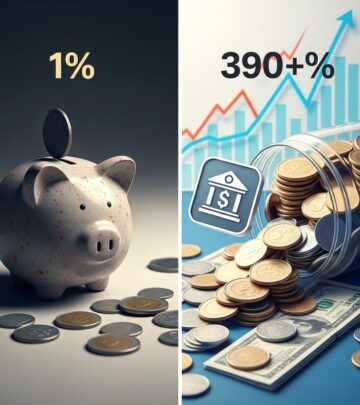
On a $10,000 balance, a 4.21% APY earns $421 annually versus $1-$4 at Bank of America. Institutions like SoFi (up to 4.00% with direct deposit) and Marcus by Goldman Sachs (3.65%) require no minimums or fees.
Calculating the True Cost of Sticking with Big Banks
Consider a $5,000 balance: Bank of America’s fee (if unwaived) costs $96 yearly, negating interest entirely. High-yield peers like Discover or Ally yield ~$165 at 3.30%, fee-free. Over five years, the gap widens to thousands, compounding the disadvantage.
FDIC insurance covers all listed options up to $250,000, ensuring safety parity. Branch access trades off against superior digital platforms with tools like savings buckets and auto-boosts.
Strategies to Maximize Your Savings in 2026
- Shop rates monthly: APYs fluctuate; tools from Bankrate or Fortune track leaders.
- Layer accounts: Use high-yield for bulk savings, checking for daily needs.
- Leverage bonuses: Many online banks offer sign-up incentives.
- Automate transfers: Mimic Keep the Change with apps from Ally or Capital One.
- Build emergency funds: Aim for 3-6 months’ expenses in high-yield to combat inflation.
When Bank of America Might Still Work
If you’re deeply integrated—multiple accounts, frequent cash needs—convenience justifies trade-offs. Preferred Rewards can waive fees across products with high balances. Official rates vary by location; check Bank of America’s tool for your ZIP.
Shifting to Smarter Savings Habits
Migrating funds is straightforward: ACH transfers take days, no cost from most banks. Start small to test service, then scale. In 2026’s high-rate environment, inertia costs real money—act to reclaim hundreds annually.
Frequently Asked Questions
What is the current APY for Bank of America savings?
Typically 0.01%, up to 0.04% for Preferred members.
Are there no-fee savings accounts with high rates?
Yes, online banks like Ally, Capital One, and Varo offer 3.30%-5.00% APY with $0 fees and minimums.
How do I avoid Bank of America savings fees?
Maintain $500 balance, link checking, join Preferred Rewards, or be under 25.
Is my money safe in online savings accounts?
Fully FDIC-insured up to $250,000 per depositor.
What’s the best high-yield savings for beginners?
Capital One or Discover: no minimums, intuitive apps, competitive ~3.30% APY.
Transitioning from low-yield traps unlocks growth. Prioritize APY, fees, and access for your goals.
References
- Bank of America Savings Account 2026 Review — MyBankTracker. 2026. https://www.mybanktracker.com/savings/reviews/bank-of-america-savings-account-review-262418
- Bank of America Review 2026: Checking, Savings and CDs — NerdWallet. 2026. https://www.nerdwallet.com/banking/reviews/bank-of-america
- Best High-Yield Savings Accounts 2026: Top 10 Rates, Perks — GreenFi. 2026-01. https://www.greenfi.com/resources/best-high-yield-savings-accounts-2026
- The top high-yield savings rates: Up to 5.00% on March 6, 2026 — Fortune. 2026-03-06. https://fortune.com/article/best-savings-account-rates-3-6-2026/
- Account Rates for Savings, Checking, CDs & IRAs — Bank of America. 2026. https://www.bankofamerica.com/deposits/bank-account-interest-rates/
Similar Articles








Read full bio of medha deb