Ticket Service Fees: Why They Are So High And How To Save
Understand the hidden costs behind concert tickets and discover proven strategies to minimize service fees.
Why Are Ticket Service Fees So High?
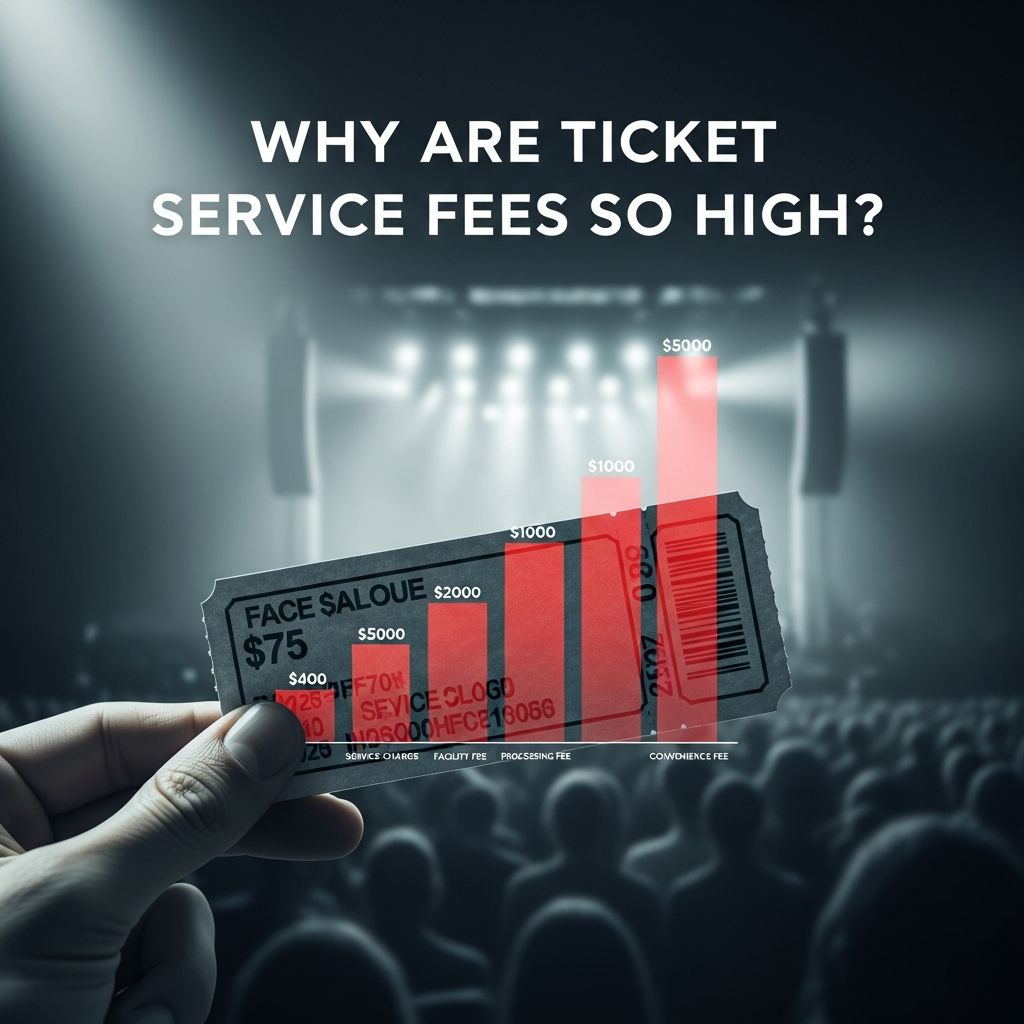
When you’re trying to purchase tickets to your favorite concert or sporting event, you’ve likely encountered an unwelcome surprise at checkout: service fees. These fees, sometimes called convenience fees, can add 25% or more to the original ticket price, leaving many consumers frustrated and confused. Companies like Ticketmaster, StubHub, AXS, and SeatGeek have become notorious for tacking on these extra charges, but the reasons behind them are more complex than many realize.
Understanding ticket service fees requires examining the infrastructure, business models, and competitive landscape of the ticketing industry. While it’s easy to blame ticket companies for greed, the reality involves a combination of operational costs, venue agreements, and market dynamics that have accumulated over decades.
Understanding Ticket Service Fees Explained
Service fees, also known as convenience fees, are charges added to ticket purchases beyond the base ticket price. According to a 2018 report from the Government Accountability Office, primary ticket providers charged an average of 27% of a ticket’s price in fees alone. These fees apply to tickets purchased online through official ticketing platforms and secondary resale marketplaces.
Ticketmaster, AXS, and SeatGeek operate as primary sellers—they have direct relationships with venues and are the official ticket sellers. In contrast, StubHub and Vivid Seats function as secondary marketplaces where resellers can list tickets for sale. Each model generates fees differently, but all rely on service charges as a primary revenue source.
The distinction between primary and secondary sellers is crucial for understanding how fees are structured. Primary sellers negotiate exclusive contracts with venues, while secondary sellers operate as middlemen facilitating transactions between individual sellers and buyers.
The Historical Evolution of Ticket Fees
The origin of ticket service fees traces back to the transition from in-person ticket purchasing to online sales. Before the internet, consumers had to visit physical box offices staffed by clerks to buy tickets. When ticketing moved online, companies had to invest in digital infrastructure, computers, and customer service staff to handle phone inquiries and technical issues. The service fee was born to cover these new operational expenses.
David Goldberg, a longtime ticketing executive and investor, explains this evolution clearly: “I think people have this misconception that it’s easy and cheap to sell a ticket on the internet. While you don’t have to pay a phone operator or a clerk, that doesn’t mean that it’s free.”
Decades have passed since those early internet days, yet the infrastructure costs remain substantial. The ticketing industry continues to require significant investment in servers, payment processing systems, customer support teams, fraud prevention, and cybersecurity measures. These costs don’t disappear simply because technology has become more efficient.
Breaking Down Where Your Fees Actually Go
Many consumers assume that ticket service fees go directly into the pockets of companies like Ticketmaster or StubHub. In reality, the fee structure is far more nuanced. According to Ticketmaster’s official website, a significant portion of service fees goes to venues and event promoters rather than the ticketing company itself. In fact, “in most cases, a significant portion or a majority of those service fees get paid to the venue or the promoter of the event you’re buying the ticket for.”
Think of it like purchasing a beer at a concert venue. A beer costs $15 at the concession stand but only $5 at a local convenience store. The difference reflects the premium you pay for accessing the venue. Similarly, when companies bid to become exclusive ticket providers for venues, they must negotiate deals that include sharing fee revenue with the venue and promoter.
Ticketmaster explains that it shares these fees “in exchange for the rights to sell their tickets,” with some going toward software, equipment, services, and administrative support. The remainder, combined with other revenue streams, represents the company’s profit margin.
For secondary marketplaces like Vivid Seats, fees serve different purposes. According to Christine Yeo, marketing manager for Vivid Seats, their service fees cover operating costs, customer service, technology infrastructure, and delivery services for sending tickets via email and mail.
Primary vs. Secondary Ticket Sellers: Fee Structures Compared
| Factor | Primary Sellers | Secondary Sellers |
|---|---|---|
| Examples | Ticketmaster, AXS, SeatGeek | StubHub, Vivid Seats |
| Business Model | Official exclusive venue partners | Resale marketplaces |
| Fee Distribution | Shared with venues and promoters | Retained for platform operations |
| Average Fee Percentage | Approximately 27% of ticket price | Variable, typically 10-20% |
| Main Cost Components | Infrastructure, venue splits, administration | Customer service, technology, delivery |
Why Websites Charge These Fees
Service fees don’t appear randomly; they’re explicitly outlined in contracts between ticketing companies and venues. While this contractual basis doesn’t make the fees any cheaper or less frustrating, it reveals that fees are intentional, calculated business decisions rather than arbitrary charges.
The primary reason for high fees is the cost of infrastructure and operations. Running a ticketing platform requires servers that handle millions of transactions simultaneously, payment processing systems that securely handle credit card information, customer service teams available 24/7, and fraud detection systems that prevent unauthorized access and ticket scalping. These systems represent significant ongoing expenses.
Additionally, competition for exclusive venue contracts drives fee structures. To win contracts with Madison Square Garden, Arenas, or major concert venues, ticketing companies must offer attractive revenue-sharing arrangements. This means offering venues a substantial cut of the fees collected, which incentivizes higher fees to maintain profitability.
The Government Accountability Office investigation revealed another concern: “some ticket websites GAO reviewed did not clearly display fees or disclosed them only after users entered payment information,” creating consumer protection issues. Many platforms strategically reveal fees late in the purchasing process when consumers are already committed emotionally and psychologically to completing the transaction.
Practical Strategies to Avoid or Reduce Ticket Service Fees
While you cannot completely eliminate service fees when using major ticketing platforms, several strategies can help you save money on your ticket purchases.
Purchase Directly from Physical Box Offices
The most reliable way to avoid service fees entirely is going old-school: buy tickets in person at venue box offices. Most venues maintain physical locations where you can purchase tickets without paying online convenience fees. This approach requires more effort and time but can result in significant savings on expensive events.
Use No-Fee Ticket Websites
Alternative ticket platforms like TickPick specifically market themselves as fee-free services. These platforms don’t charge service fees, though ticket availability may be more limited than on major competitors.
Leverage Credit Card Rewards Programs
Strategic use of rewards credit cards can offset some fee costs. Capital One’s Savor Rewards card, for example, provides 4% cash back on entertainment purchases, including ticket transactions. Over time, these rewards accumulate and effectively reduce your net ticket costs.
Join Loyalty and Rewards Programs
Secondary marketplaces like Vivid Seats offer rewards programs where you earn cash back on purchases. You can redeem accumulated rewards for discounts on future ticket purchases, effectively reducing the impact of service fees.
Compare Fees Across Platforms
Before completing your purchase, check multiple platforms to understand total costs. As David Goldberg warns, some sites add charges progressively as you select tickets, add them to your cart, and proceed to checkout. A seemingly cheap ticket becomes expensive once all fees are included. Shopping around helps you identify truly competitive prices.
Government Regulation and Consumer Protection
Recognizing the frustration consumers face, some states are taking action. New York recently passed legislation mandating that ticket sellers display fees upfront rather than revealing them during final checkout steps. This transparency requirement makes it easier for consumers to comparison shop and understand total costs before committing to purchases.
The new law also requires resellers to disclose the original ticket price, preventing scalpers from artificially inflating perceived value. These regulations represent significant wins for consumer protection, and other states may follow New York’s lead in establishing similar transparency requirements.
The Broader Monopoly Problem
Beyond service fees themselves, the ticketing industry faces structural challenges related to market concentration. The Department of Justice has pursued antitrust litigation against Live Nation, which owns Ticketmaster and controls approximately 80% of major concert venues’ primary ticketing through exclusive contracts.
These exclusive contracts create monopolistic conditions that limit consumer choice and competition, potentially contributing to higher fees overall. The DOJ alleges that Live Nation’s market dominance allows it to maintain high fees without meaningful competitive pressure to reduce prices.
Frequently Asked Questions
Q: What percentage of ticket fees go to the venue versus the ticketing company?
A: In most cases, a significant portion or majority of service fees get paid to the venue or event promoter. The exact split varies by contract, but venues often receive 50% or more of collected fees in exchange for granting exclusive ticketing rights.
Q: Are service fees mandatory on all ticket purchases?
A: Service fees apply to most online ticket purchases through primary sellers like Ticketmaster. However, you can avoid them by purchasing in person at venue box offices or through alternative platforms that don’t charge fees.
Q: How can I find the total ticket cost before checkout?
A: New York’s transparency law requires upfront fee disclosure. On other platforms, carefully review all costs before completing your purchase. Compare multiple sites to find the best total price.
Q: Do secondary marketplace fees differ significantly from primary seller fees?
A: Yes, secondary marketplaces typically charge lower percentage fees than primary sellers, though the fee structure differs. Primary sellers share revenue with venues, while secondary sellers retain fees to cover platform operations.
Q: What is the best way to minimize ticket costs?
A: Combine multiple strategies: purchase from box offices when possible, use rewards credit cards, join loyalty programs, and compare prices across platforms before committing to a purchase.
References
- Why Are Ticket Service Fees so High? — Money Magazine. 2024. https://money.com/why-are-ticket-service-fees-so-high/
- DOJ Live Nation Lawsuit Aims to Bust Concert Ticket Monopoly — Money Magazine. 2024. https://money.com/ticketmaster-live-nation-lawsuit-ticket-prices/
- Government Accountability Office Report on Ticket Pricing Practices — U.S. Government Accountability Office (GAO). 2018. https://www.gao.gov/
- 5 Tricks for Getting Cheap Concert Tickets This Summer — Money Magazine. 2024. https://money.com/find-cheap-concert-tickets/
Similar Articles








Read full bio of medha deb