Why The 80/20 Rule Could Be Better For Your Budget
Discover how the simple 80/20 budgeting rule can help you save consistently, reduce stress, and reach money goals faster.
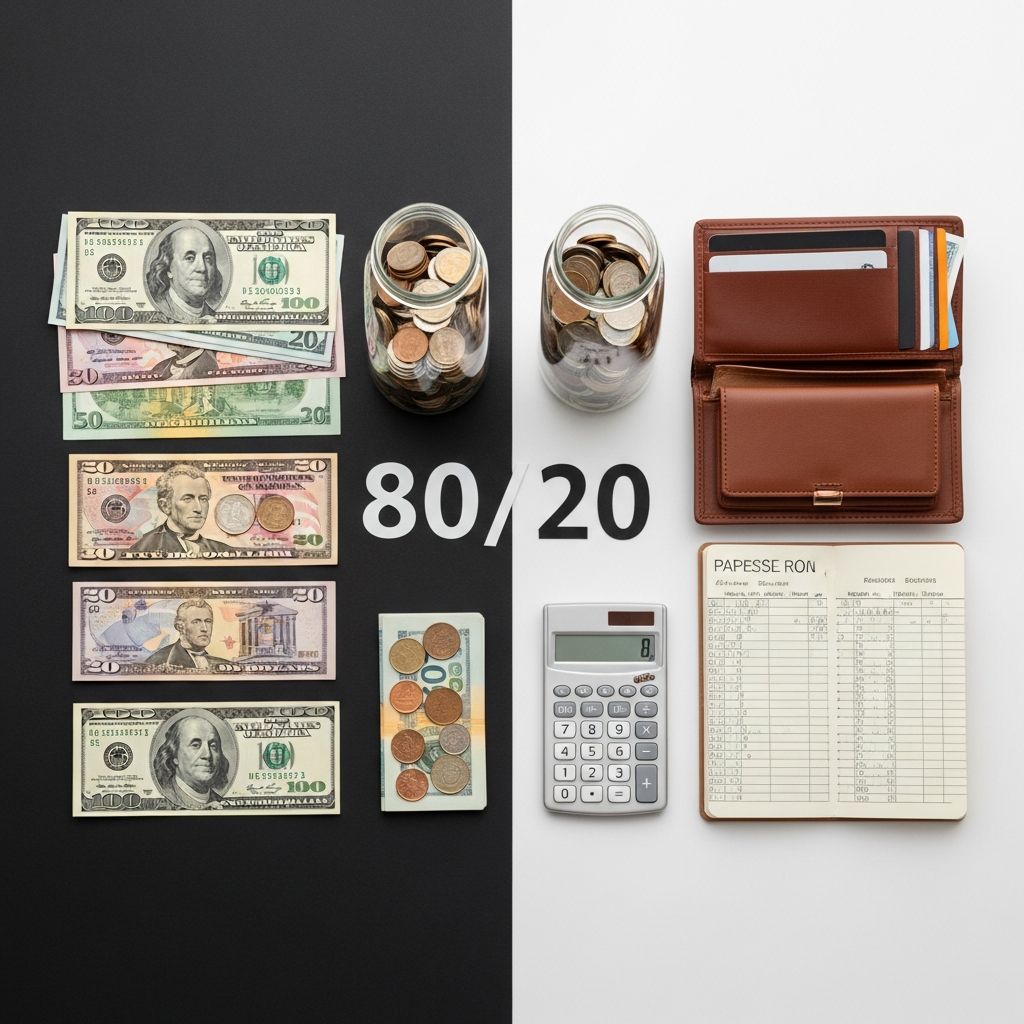
The 80/20 budgeting rule is a simple, flexible way to manage your money: you dedicate 20% of your income to savings and use the remaining 80% for bills, essentials, and wants. It removes the need for complicated categories while still keeping savings a top priority.
Many people struggle with budgets that require tracking every purchase or distinguishing carefully between needs and wants. The 80/20 method offers a streamlined alternative that can still support long-term goals like building an emergency fund, paying off debt, and investing for the future.
What is the 80/20 Rule for Budgeting?
In personal finance, the 80/20 rule means you pay yourself first by sending 20% of your take-home pay into savings or investments and then live on the remaining 80%. This approach is sometimes called a “pay yourself first” budget in financial literacy resources because savings are treated as a non-negotiable expense.
Here is the basic breakdown:
- 20% of income: savings and wealth-building (emergency fund, retirement contributions, additional debt payments, investments)
- 80% of income: housing, utilities, food, transportation, minimum debt payments, insurance, and discretionary spending
Unlike more detailed methods, the 80/20 rule does not require you to separate needs from wants inside the 80%. Instead, you simply make sure all bills, essentials, and lifestyle spending fit inside that portion of your income.
80/20 Budget vs. the 50/30/20 Budget
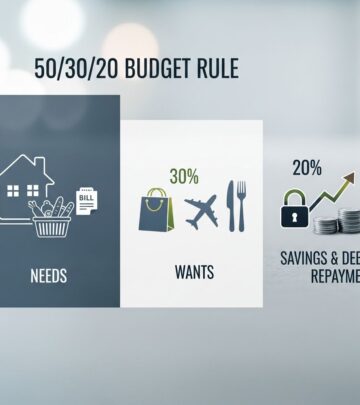
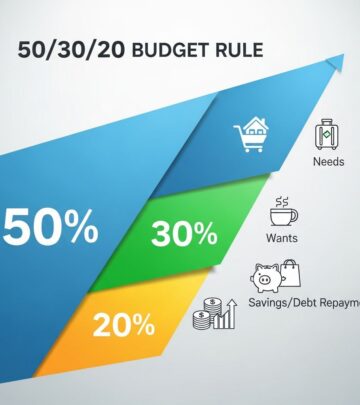
The 80/20 budget shares similarities with the popular 50/30/20 rule, which divides after-tax income into 50% needs, 30% wants, and 20% savings. Both methods reserve 20% for savings, but they organize the remaining 80% in different ways.
| Budgeting Method | Categories | Allocation | Complexity |
|---|---|---|---|
| 80/20 Budget | 1) Savings 2) Everything else (needs + wants) | 20% savings, 80% spending | Very simple |
| 50/30/20 Budget | 1) Needs 2) Wants 3) Savings | 50% needs, 30% wants, 20% savings | More detailed |
With the 50/30/20 budget, you must classify every expense carefully as a need or a want. That can be helpful for awareness but time-consuming for beginners or for people with very busy schedules. The 80/20 budget eliminates this step: everything that is not savings is simply handled within the 80%.
Why the 80/20 Rule Can Be Better for Your Budget
The 80/20 method can be especially effective if traditional, highly detailed budgets feel overwhelming. Here are key reasons it can work better for many people:
You Pay Yourself First
One of the strongest advantages of the 80/20 budget is that it forces you to save first and spend later. Research in behavioral economics shows that making savings automatic and treating it as a fixed obligation significantly increases long-term saving rates.
- You decide on your 20% savings target before planning any other spending.
- That 20% is aimed at your future self: emergency fund, retirement, investments, and debt reduction beyond minimum payments.
- Because savings are taken out first, you are less likely to “save whatever is left”—which often ends up being nothing.
It’s Less Time-Consuming
For many households, the biggest barrier to budgeting is the time it takes to categorize every transaction. The 80/20 budget simplifies that process:
- You only work with two main numbers: the savings amount (20%) and the spending amount (80%).
- There is no need to label each purchase as a need or a want.
- You can manage your budget with a simple spreadsheet or notebook instead of detailed software.
This simplicity makes it easier to maintain the habit month after month, which is crucial because consistent budgeting and tracking are more predictive of success than the particular method used.
It Makes Automation Easier
Because the 80/20 method uses fixed percentages, it works very well with automated transfers:
- On payday, you can set a direct deposit split so that 20% goes straight to savings or investment accounts and 80% goes to your checking account.
- You can also automate transfers on a schedule (such as monthly or biweekly) to match your pay cycle.
- Automation removes the need for willpower and makes it more likely that you consistently hit your savings goal.
Many banks, employers, and retirement plans highlight automatic saving and automatic payroll deductions as best practices for building financial security over time.
How to Create an 80/20 Budget Step by Step
Even though the 80/20 rule is straightforward, you still need to know your income and expenses to make it work. Here is a simple step-by-step process.
1. List Your Accounts, Bills, and Goals
Start by writing down where your money needs to go each month:
- Checking accounts and savings accounts
- Debt accounts (credit cards, student loans, car loans, mortgages)
- Essential bills (rent or mortgage, utilities, insurance, transportation, groceries)
- Recurring subscriptions and memberships
- Short-term and long-term financial goals (emergency fund, travel, home purchase, retirement)
This gives you a clear picture of your financial obligations and priorities before you apply the 80/20 split.
2. Add Up Your Monthly Income
Next, calculate your total net income—the amount you receive after taxes and mandatory deductions.
- Include paychecks from employment, freelance work, benefits, or any reliable side income.
- If your income varies, consider using an average of the last 6–12 months, or base your budget on a conservative estimate.
Example:
If your average monthly net income is $2,500:
- 20% savings = $500
- 80% for expenses and wants = $2,000
3. Allocate the 20% to Savings and Debt Reduction
Decide how you want to use the 20% savings portion. Common priorities include:
- Emergency fund (often 3–6 months of essential expenses, as commonly recommended by financial educators and consumer agencies)
- Retirement contributions (workplace plans or individual retirement accounts)
- Additional debt payments above the minimum on high-interest debts
- Other long-term goals such as buying a home or starting a business
You can split the 20% across multiple goals or focus on one at a time (for example, building an emergency fund before investing more aggressively).
4. Fit Your Life Into the Remaining 80%
All of your ongoing spending and bills must fit within the 80% portion. That includes:
- Rent or mortgage
- Utilities (power, water, internet, phone)
- Groceries and basic household items
- Transportation (fuel, public transit, car payments, insurance)
- Minimum debt payments
- Insurance premiums
- Discretionary spending: dining out, entertainment, clothing beyond basics, travel, and hobbies
If you find that your essential bills alone exceed the 80% amount, you may need to make adjustments such as trimming non-essential expenses, negotiating bills, or working toward increasing income over time.
5. Create a Budget Calendar
A helpful way to stay on top of your budget is to use a budget calendar. This is simply a calendar view that shows when money comes in and when bills are due.
- Mark paydays and expected income dates.
- Note the due dates for rent/mortgage, utilities, loan payments, subscriptions, and other recurring bills.
- Schedule your automatic transfers for savings shortly after paydays so the 20% is moved before you spend.
Using a visual calendar can help you avoid late fees, reduce stress, and plan for irregular expenses like annual insurance premiums or tax payments.
Adapting the 80/20 Rule When 20% Is Too High
For some people—especially those with high fixed costs or very low income—saving a full 20% may not be realistic right away. In that case, you can adapt the rule temporarily.
- Consider starting with a 90/10 budget: 10% savings and 90% for expenses.
- Once you pay down some debt or reduce major bills, gradually increase your savings rate toward 20%.
- Even small savings rates matter; evidence from savings programs shows that regular contributions, even at low amounts, can meaningfully improve financial resilience over time.
The key is to maintain the habit of paying yourself first, even if the exact percentage changes while you stabilize your finances.
Who Is the 80/20 Budget Best For?
The 80/20 budgeting method can work for many types of people, but it is especially useful if you:
- Feel overwhelmed by detailed expense tracking and categories
- Want a minimalist budget that still prioritizes saving
- Have irregular income and need a flexible yet clear rule of thumb
- Are just starting to budget and want a simple way to build the habit
- Value automation and prefer to “set it and forget it” for your savings
If you enjoy detailed tracking and want to fine-tune every category, you may still prefer a more granular framework like zero-based budgeting or the 50/30/20 method. However, many people find that starting with 80/20 builds a strong foundation that they can later refine.
Tips for Making the 80/20 Rule Work
- Be realistic about your numbers: Use accurate income and expense data so your 80% can genuinely cover your lifestyle.
- Adjust slowly: If 20% is too high, start lower and increase by 1–2 percentage points every few months.
- Review monthly: Check whether you stayed within your 80% spending and whether the 20% reached your savings accounts.
- Protect your savings: Keep your 20% in separate accounts so you are less tempted to spend it.
- Combine with debt strategies: Use part of the 20% for extra payments on high-interest debt to reduce interest costs faster.
Frequently Asked Questions (FAQs)
Q: What exactly counts as “savings” in the 80/20 budget?
A: In the 80/20 budget, “savings” includes money set aside for an emergency fund, retirement accounts, investment accounts, and extra payments toward debt beyond the minimum required. Anything that improves your net worth or strengthens your financial security can be counted within the 20%.
Q: Does the 80/20 rule use gross income or net income?
A: Most people apply the 80/20 rule to net income, meaning the amount of money you take home after taxes and mandatory deductions. Using net income helps ensure that the percentages reflect the funds you actually have available to save and spend.
Q: What if my fixed bills are already more than 80% of my income?
A: If your essential bills exceed 80%, you have a few options: temporarily lower your savings percentage (for example, to 10–15%), reduce expenses where possible, look for ways to increase your income, or restructure major obligations like housing or transportation. The goal is to move toward a sustainable setup where at least some portion can consistently go to savings.
Q: Can I use the 80/20 rule if my income changes every month?
A: Yes. For variable income, you can base your 80/20 split on a conservative average or on your lowest typical income month. You then save 20% of whatever you actually earn each month, so your savings amount rises and falls with your income while the percentage stays the same.
Q: How is the 80/20 rule different from zero-based budgeting?
A: Zero-based budgeting assigns a specific job to every single dollar and often involves detailed categories and tracking for each expense. The 80/20 rule, in contrast, only separates money into two large buckets—savings and everything else—making it faster and simpler, though less detailed.
Q: Is the 80/20 rule enough to reach long-term goals like retirement?
A: A 20% savings rate can be a solid starting point, especially if you begin early and invest consistently. However, whether it is “enough” depends on your age, income, lifestyle expectations, and current savings. Many financial planners recommend reviewing retirement projections periodically to decide if you should increase your savings rate over time.
References
- How America Saves 2023 — Vanguard. 2023-06-20. https://institutional.vanguard.com/content/site/iig/en/literature/how-america-saves.html
- Why The 80/20 Rule Could Be Better For Your Budget — Clever Girl Finance (video transcript). 2022-12-04. https://www.youtube.com/watch?v=ZwAKJfSpvpA
- The 4 Best Budgeting Methods To Try — Clever Girl Finance. 2023-02-01. https://www.clevergirlfinance.com/how-to-budget/
- Consumer Financial Literacy Survey — National Foundation for Credit Counseling. 2023-03-30. https://www.nfcc.org/financial-literacy-survey/
- Financial Literacy 101: How to Practice Good Financial Habits — The Salvation Army / Peer Magazine. 2021-04-01. https://peermag.org/articles/financial-decisions/
Similar Articles








Read full bio of Sneha Tete