Who Qualifies for Student Loans?
Discover eligibility rules for federal and private student loans, including citizenship, enrollment status, and upcoming 2026 changes that impact borrowing limits.

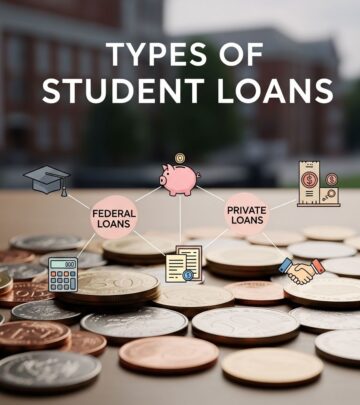
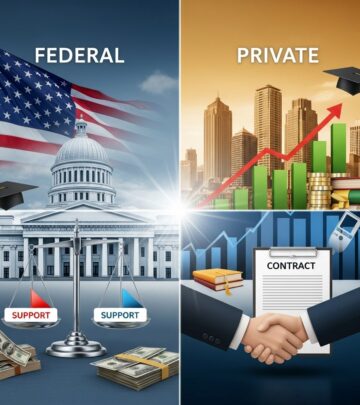
Federal student loans are available to U.S. citizens or eligible non-citizens enrolled at least half-time in eligible programs at participating schools, provided they meet financial aid requirements via the FAFSA and are not in default on prior loans. Private loans have broader access but often require creditworthiness or a cosigner.
Core Eligibility Criteria for Federal Aid
To access federal student aid, including loans, applicants must satisfy several foundational requirements. These ensure funds support legitimate educational pursuits without exceeding costs or benefiting those with unresolved past debts.
- Citizenship Status: U.S. citizens, nationals, or permanent residents qualify; eligible non-citizens like refugees may also apply.
- Enrollment Intensity: At least half-time enrollment in a degree or certificate program at an accredited institution.
- Academic Progress: Maintain satisfactory progress toward degree completion, as defined by the school.
- Financial Application: Submit the Free Application for Federal Student Aid (FAFSA) annually.
- Debt Status: No default on prior federal loans or overpayments on grants.
- Cost Limits: Total aid cannot surpass the school’s cost of attendance, covering tuition, fees, housing, and other verified expenses.
These criteria apply broadly to Direct Subsidized, Unsubsidized, and PLUS loans, forming the gateway to federal support.
Federal Loan Types and Specific Rules
Federal loans divide into categories with tailored eligibility. Subsidized loans target need-based aid for undergrads, while unsubsidized options serve broader groups.
| Loan Type | Target Borrowers | Key Eligibility Notes |
|---|---|---|
| Direct Subsidized | Undergrads with need | FAFSA-demonstrated need; government pays interest while in school. |
| Direct Unsubsidized | Undergrads, grads | No need requirement; interest accrues immediately. |
| Parent PLUS | Parents of dependent undergrads | Credit check; not adverse credit history. |
| Grad PLUS | Graduate/professional students | Credit check; changing post-2026. |
PLUS loans demand a clean credit record, though endorsers can help qualify. Annual and lifetime limits also apply, varying by dependency and program level.
Private Student Loan Accessibility
Unlike federal options, private loans from banks or lenders like Citizens Bank extend to nearly anyone with sufficient credit or a cosigner, regardless of citizenship or FAFSA status. Undergrads, grads, parents, and internationals often qualify, but terms hinge on income, debt-to-income ratio, and credit score.
- International students need a U.S. cosigner with strong credit.
- No enrollment minimums or academic progress mandates.
- Higher interest rates and variable terms compared to federal fixed rates.
Private funding fills gaps when federal aid falls short, but lacks forgiveness or income-driven plans.
Major Reforms Starting July 1, 2026
The One Big Beautiful Bill Act, enacted July 4, 2025, introduces sweeping federal loan changes effective July 1, 2026, capping borrowing and eliminating some programs for new entrants. Current borrowers remain grandfathered if they act before deadlines.
New Borrowing Caps Overview
| Borrower Group | Annual Limit | Lifetime Limit | Notes |
|---|---|---|---|
| Undergrad Direct Loans | Mostly unchanged | Included in $257,500 total | Part-time proration applies. |
| Parent PLUS | $20,000 per student | $65,000 per student | New borrowers only. |
| Graduate Direct Unsubsidized | $20,500 | $100,000 aggregate | Includes undergrad loans. |
| Professional Degrees | $50,000 | $200,000 aggregate | Law, medicine, etc.. |
Grad PLUS loans end for new borrowers post-July 1, 2026, forcing reliance on capped Direct loans. Lifetime caps now aggregate undergrad and grad borrowing at $257,500.
Grandfathering Protections
Students borrowing Direct loans before July 1, 2026, retain prior limits through program completion or up to three years. Parents and grads must disburse 2025-26 funds by spring 2026 to lock in access.
Application Process Demystified
Securing loans starts with the FAFSA at studentaid.gov, processed within days to generate an aid offer from your school. Accept loan portions via school portals, complete entrance counseling, and sign a master promissory note.
- Complete FAFSA with prior-year tax data.
- Review school award letter.
- Accept specific loan amounts.
- Finish online requirements at studentaid.gov.
- For PLUS, undergo credit review.
Private applications involve lender sites, uploading income proofs and cosigner details.
Credit’s Role in Qualification
Federal Direct Subsidized and Unsubsidized loans ignore credit entirely. PLUS variants check for adverse history like recent bankruptcies or defaults; simple credit issues allow qualification with an endorser. Private loans scrutinize full credit profiles, favoring scores above 680.
Strategies for Non-Traditional Borrowers
Undocumented students or those without SSN face barriers to federal aid but may access state or private funds. DACA recipients qualify if meeting other criteria. Part-time enrollees post-2026 get prorated federal limits.
Repayment Shifts in 2026
New borrowers choose between a revised standard plan or Repayment Assistance Plan (RAP), replacing multiple income-driven options. Existing borrowers must switch by June 30, 2028, to retain forgiveness paths. Unemployment deferments end for new loans.
Frequently Asked Questions
Can non-U.S. citizens get federal loans?
Only eligible non-citizens with proper documentation; undocumented individuals cannot.
What if I’m in default on old loans?
Resolve via rehabilitation or consolidation before new aid.
Do graduate students need FAFSA?
Yes, for all federal loans.
How do 2026 changes affect current students?
Grandfathered if borrowing pre-July 2026.
Are private loans easier to get?
Yes, with cosigner, but costlier long-term.
Planning Ahead for Borrowing Success
Prospective students should file FAFSA early, explore scholarships to minimize debt, and consider 2026 timelines for grad programs. Compare total costs against post-grad earnings potential. Tools like federal loan simulators aid decision-making.
Parents: Evaluate PLUS caps if funding undergrads starting 2026. Grads: Enroll and borrow soon to preserve PLUS access.
References
- Federal Student Loan Amounts and Terms for Loans Issued in 2025 — The Institute for College Access & Success (TICAS). 2025. https://ticas.org/federal-student-loan-amounts-and-terms-for-loans/
- Eligibility Requirements | Federal Student Aid — U.S. Department of Education. Accessed 2026. https://studentaid.gov/understand-aid/eligibility/requirements
- Changes to 2026-2027 Federal Student Loans — Columbia University School of Professional Studies. 2026. https://sfs.columbia.edu/content/changes-2026-2027-federal-student-loans
- 2026-2027 Federal Financial Aid Updates — UCLA Financial Aid. 2026. https://financialaid.ucla.edu/2026-2027-federal-financial-aid-updates
- Important Federal Loan Changes Coming In 2026 — Pepperdine University GSEP. 2026. https://gsep.pepperdine.edu/admission/financial-aid/federal-loan-update/
- Financial Aid Changes in 2026-27 — George Washington University Financial Aid. 2026. https://financialaid.gwu.edu/recent-changes
- Update on Federal Loan Changes Beginning in 2026 — The College of New Jersey Financial Aid. 2026. https://financialaid.tcnj.edu/update-on-federal-loan-changes-beginning-in-2026/
Similar Articles








Read full bio of Sneha Tete