Who Owns The Federal Reserve: A Clear Guide
Understand the ownership structure and governance of the Federal Reserve System.

Who Owns the Federal Reserve?
The Federal Reserve System is not “owned” by any individual or private entity in the traditional sense. Instead, it operates as a unique hybrid institution created in 1913 by the Federal Reserve Act to serve as the nation’s central bank. This distinctive ownership and governance structure often confuses the public, leading to misconceptions about Federal Reserve control and autonomy. Understanding the true nature of Federal Reserve ownership requires examining the roles of member banks, the Board of Governors, and the broader federal government.
The Structure of Federal Reserve Ownership
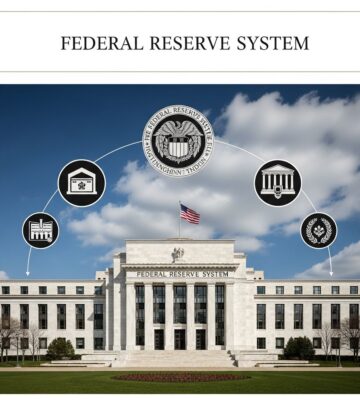
The Federal Reserve System comprises three critical components: the Board of Governors in Washington, D.C., twelve regional Federal Reserve Banks distributed across the country, and the Federal Open Market Committee. While these elements work together to implement monetary policy and regulate banking, they each play distinct roles in the system’s governance. The board represents the public sector, while the regional banks have characteristics that resemble private corporations, though they function quite differently.
Member Bank Stock Ownership
One source of confusion regarding Federal Reserve ownership stems from the fact that member banks hold stock in their regional Federal Reserve Banks. However, this ownership arrangement differs fundamentally from traditional corporate stock ownership. Member banks are required by law to invest 3 percent of their capital as stock in the Reserve Banks of their district. All nationally chartered banks and state-chartered banks that choose to become members of the Federal Reserve System must purchase this stock as a condition of membership.
Stock Requirements and Dividends
Member banks must buy stock in the Federal Reserve Bank equal to 6 percent of the bank’s capital, with 3 percent paid in and the remaining 3 percent callable by the bank in certain circumstances. Each share has a fixed par value of $100 and pays a cumulative dividend of 6 percent each year, determined by statute rather than by the Federal Reserve’s profitability. This fixed dividend rate was established in the original 1913 Federal Reserve Act to provide a rate of return comparable to other investments at that time.
Restrictions on Stock Trading and Control
The stock that member banks own cannot be sold, traded, or used as collateral for a loan. This critical restriction distinguishes Federal Reserve stock from typical corporate stock and ensures that ownership cannot be concentrated or leveraged for control purposes. The restriction prevents member banks from treating their Federal Reserve stock as a tradable asset or using it for financial speculation. This design ensures that stock ownership remains tied to membership in the system rather than becoming a commodity.
Member banks numbering approximately 38 percent of the nation’s more than 8,000 banks are members of the system and thus own the Reserve Banks. Despite holding this stock, member banks do not enjoy the typical control that common stockholders exercise in private corporations. Unlike traditional corporations where one share equals one vote, the Federal Reserve employs class voting whereby each member bank receives equal representation regardless of how many shares it holds.
The Role of the Board of Governors
The Board of Governors operates as an independent agency of the federal government and reports directly to Congress. The board consists of seven members appointed by the President and confirmed by the Senate. This governmental structure ensures that while the Federal Reserve maintains operational independence necessary for effective monetary policy, it remains accountable to elected representatives and the public.
The Board of Governors provides general guidance for the Federal Reserve System and oversees the twelve Reserve Banks. Unlike many other public agencies, however, the Board is not funded by congressional appropriations. Instead, it derives funding from the operations of the Federal Reserve Banks and is required by law to transfer net earnings to the U.S. Treasury after covering operational expenses, legally required dividend payments to member banks, and maintaining limited surplus funds.
The Dual Nature of the Federal Reserve System
The Federal Reserve represents a deliberate compromise proposal from President Woodrow Wilson designed to create a central bank with combined public and private characteristics. This public-private hybrid structure addresses concerns about concentrated financial power while providing the regional representation necessary in a geographically diverse nation. The Board of Governors represents the public interest, while the regional Reserve Banks provide decentralized operating structure with input from member banks.
The twelve regional Federal Reserve Banks are organized similarly to private corporations, which has led some observers to mistakenly consider the Federal Reserve a private entity. Each Reserve Bank operates within its own geographic district, is separately incorporated, and maintains its own board of directors. However, despite these corporate characteristics, the Reserve Banks operate fundamentally differently from profit-seeking private corporations.
How Reserve Banks Differ from Private Corporations
The Reserve Banks are not operated for profit. They do not distribute earnings to stockholders as private companies do. Instead, Reserve Banks are required by law to transfer net earnings to the U.S. Treasury after covering all necessary expenses and legally required dividend payments. This critical distinction means that while member banks receive a fixed dividend on their stock, they do not benefit from the Reserve Banks’ accumulated wealth or operational success in the way private shareholders would.
Member banks’ inability to profit from Reserve Bank success reflects the system’s design to serve public purposes rather than private interests. The fixed 6 percent dividend, established over a century ago, remains unchanged regardless of the Federal Reserve’s profitability or asset growth. This arrangement removes the profit motive that could otherwise distort monetary policy decisions.
Member Bank Governance Rights
While member banks cannot control the Federal Reserve through their stock ownership, they do retain certain governance rights. Member banks elect Class A and B directors to each Reserve Bank’s board of directors. Specifically, member banks elect six of the nine members of each Reserve Bank’s board. The remaining three directors are appointed by the Board of Governors.
This governance structure ensures that member banks have representation in Reserve Bank operations while preventing them from gaining control. The class voting system means that large and small banks have equal voting power, regardless of the amount of stock they hold. This democratic approach to Reserve Bank governance contrasts sharply with private corporations, where voting power typically correlates with share ownership.
Federal Reserve Accountability and Oversight
Despite its operational independence, the Federal Reserve remains subject to significant government oversight and accountability measures. The Chair and other Federal Reserve officials testify regularly before Congress, and the Board submits extensive reports to Congress detailing its activities and policy decisions. Congress retains the authority to amend the Federal Reserve Act and modify the system’s structure if deemed necessary.
The Federal Reserve’s independence exists not to remove it from public accountability but rather to insulate monetary policy decisions from short-term political pressures that might prove detrimental to long-term economic stability. This independence allows Federal Reserve policymakers to pursue inflation control and employment objectives without being influenced by political considerations in election cycles.
Common Misconceptions About Federal Reserve Ownership
Several persistent misconceptions about Federal Reserve ownership require clarification. Some people believe the Federal Reserve is a privately owned institution controlled by member banks or wealthy elites. Others think it operates independently of government control. In reality, the Federal Reserve combines public and private elements in a carefully balanced structure designed to serve the national interest.
The Federal Reserve’s corporate organization does not make it a private entity. Similarly, the fact that member banks hold stock and participate in governance does not mean they control the system. The Board of Governors’ governmental structure, combined with restrictions on member bank stock ownership and governance power, ensures that the Federal Reserve remains accountable to the public through Congress.
The Historical Evolution of Federal Reserve Structure
The Federal Reserve’s creation in 1913 represented a deliberate effort to establish a central banking system that avoided the pitfalls of earlier national banks. The nation’s first two central banks operated under structures where private investors held eighty percent ownership while the government held the remaining twenty percent. This arrangement created problematic profit incentives that could conflict with sound monetary policy.
The Federal Reserve Act adopted a different approach, creating a system with private ownership over the Reserve Banks but without the profit motivation that can distort policy. By requiring member banks to hold stock without allowing them to profit from Reserve Bank earnings beyond the fixed dividend, the system achieves private sector participation in banking regulation without creating inappropriate incentives.
The Federal Open Market Committee
The Federal Open Market Committee consists of twelve voting members: the seven governors of the Board of Governors, the president of the Federal Reserve Bank of New York, and four of the remaining eleven Reserve Bank presidents who serve on a rotating basis. This committee makes decisions regarding open market operations that influence interest rates and the money supply.
The FOMC’s composition ensures that both the governmental Board of Governors and the regional Reserve Banks participate in critical monetary policy decisions. The rotating membership of Reserve Bank presidents means that all twelve Reserve Banks have an opportunity to influence policy directly, promoting geographic diversity in perspective.
Frequently Asked Questions
Q: Is the Federal Reserve a private company?
A: No. While the Federal Reserve Banks are organized similarly to private corporations, the Federal Reserve System is not a private company. The Board of Governors is an agency of the federal government, and the system operates to serve public purposes rather than generate private profit.
Q: Do member banks control the Federal Reserve?
A: No. Although member banks hold stock in their regional Reserve Banks and elect six of nine directors to each Reserve Bank’s board, they do not control the Federal Reserve. The Board of Governors, appointed by the President and confirmed by the Senate, maintains ultimate authority over the system.
Q: Can individuals own Federal Reserve stock?
A: No. Only member banks can hold Federal Reserve stock. Individuals cannot purchase shares in the Federal Reserve, and member bank stock cannot be sold to anyone other than the Federal Reserve itself.
Q: What happens to Federal Reserve profits?
A: After covering operational expenses and paying the fixed 6 percent dividend to member banks, the Federal Reserve transfers net earnings to the U.S. Treasury. This ensures that profits ultimately benefit the public rather than private shareholders.
Q: Who is ultimately responsible for Federal Reserve policy?
A: Congress is ultimately responsible for Federal Reserve policy. Congress created the Federal Reserve through the Federal Reserve Act, and the Federal Reserve Board reports directly to Congress and is accountable to it.
References
- Who Owns The Federal Reserve Banks? — County Office. 2025-01-25. https://www.youtube.com/watch?v=zMlnPvcMvlw
- Just the (Fed) Facts — Federal Reserve Bank of Atlanta. https://www.atlantafed.org/about/federal-reserve-system/just-the-fed-facts
- Structure, Governance, Representation: Federal Reserve Member Banks — Federal Reserve Bank of Kansas City. https://www.kansascityfed.org/documents/7449/structure-governance-representation.pdf
- Who owns the Federal Reserve? — Federal Reserve Board. https://www.federalreserve.gov/faqs/about_14986.htm
- Who Owners the Federal Reserve Banks | In Plain English — Federal Reserve Bank of St. Louis. https://www.stlouisfed.org/in-plain-english/who-owns-the-federal-reserve-banks
- The Fed Explained — Federal Reserve Board. https://www.federalreserve.gov/aboutthefed/the-fed-explained.htm
- Understanding the Federal Reserve’s Structure — Federal Reserve Bank of Cleveland. https://www.clevelandfed.org/about-us/understanding-the-federal-reserve
- The Fed Explained – Who We Are — Federal Reserve Board. https://www.federalreserve.gov/aboutthefed/fedexplained/who-we-are.htm
Similar Articles








Read full bio of medha deb