Who Owns the Playboy Mansion: History, Sale & Current Owner
Discover the fascinating ownership history of the iconic Playboy Mansion and its current owner.
Who Owns the Playboy Mansion: A Complete History of Ownership and Sale
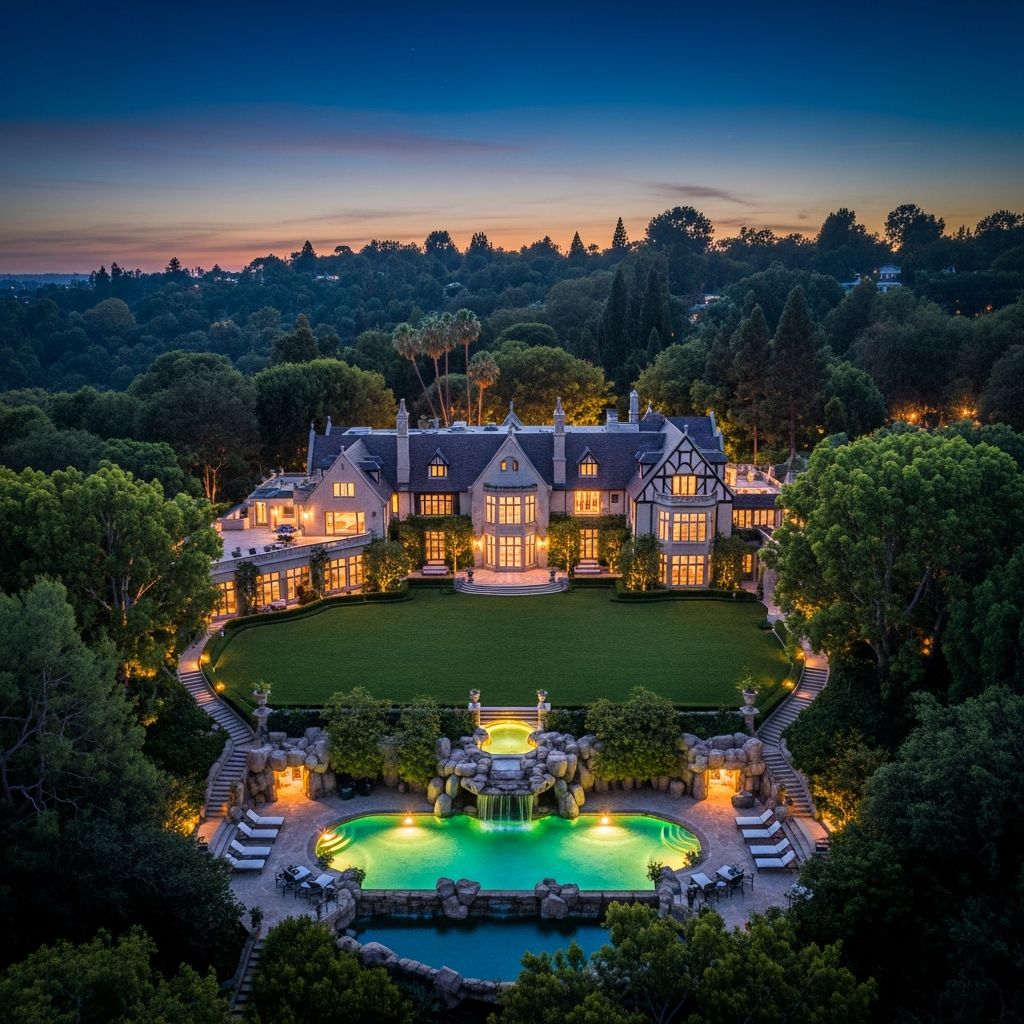
The Playboy Mansion stands as one of the most iconic and legendary properties in Los Angeles, California. This 21,987-square-foot estate has been synonymous with Hugh Hefner and the Playboy brand for decades, serving as the backdrop for countless lavish parties and cultural moments. However, the mansion’s ownership story extends far beyond Hefner’s tenure, encompassing a fascinating history of architects, developers, and entrepreneurs. Today, the property is owned by Daren Metropoulos, a prominent businessman and investor who acquired it for $100 million in 2016. Understanding the complete ownership timeline and the details surrounding this landmark sale provides insight into one of America’s most famous residential properties.
The Early History of the Playboy Mansion Property
Before it became synonymous with Hugh Hefner and Playboy culture, the Playboy Mansion had a distinct architectural and residential heritage. The property was originally designed and constructed in 1927 by renowned architect Arthur Kelly, who created the mansion under the name “Holmby House” for Arthur Letts Jr., a prominent Los Angeles businessman and developer. Letts Jr. inherited the land from his father, British-born Arthur Letts, who had purchased the acreage in 1919 and named the development “Holmby Hills.” The younger Letts was instrumental in transforming this vision into reality, commissioning the construction of a striking 14th-century Gothic-style mansion that would later capture the imagination of Hugh Hefner.
The mansion remained in the Letts family until 1959, when Louis D. Statham, an engineer, acquired the property. Statham’s ownership was relatively brief, as the property would soon undergo one of the most significant transformations in its history when Hugh Hefner recognized its potential as the headquarters for his growing Playboy empire.
Hugh Hefner’s Acquisition and Transformation
In 1971, Hugh Hefner and Playboy Enterprises, Inc. purchased the mansion for $1.1 million, making it the largest residential real estate transaction in Los Angeles history at that time. Hefner, who had founded Playboy magazine in Chicago in 1953, relocated to California to expand his multimedia empire. According to Playboy lore, Hefner’s then-girlfriend Barbi Benton discovered the 5.7-acre estate and convinced him to purchase it. Hefner himself later reflected on this decision, telling CBS News in 2008 that “this was Playboy’s best investment.”
Upon acquisition, Hefner began an extensive transformation of the property, converting it into the legendary party destination that would define popular culture for generations. The mansion featured a grotto with an underground swimming pool complete with a glass wall and attached bar, game rooms, a living room with a built-in pipe organ that served as a screening room, and numerous other luxury amenities designed to host Hollywood’s elite. The property became the physical embodiment of the Playboy lifestyle, hosting lavish parties that attracted celebrities, dignitaries, and socialites throughout the 1970s, 1980s, and beyond.
Ownership Structure and Legal Arrangements
An interesting aspect of Hefner’s relationship with the Playboy Mansion was his unique legal arrangement with Playboy Enterprises, Inc. Rather than directly owning the mansion outright, Hefner leased the property from the company for just $100 annually. The property’s title deed remained in the name of Playboy Enterprises, Inc., which designated the mansion as both a residential facility and a promotional asset for the brand. This arrangement created a formal structure that separated personal residence from corporate asset, though Hefner maintained complete operational control over the property and its use throughout his decades of residence.
This corporate ownership structure would have significant implications during the eventual sale process, as Playboy Enterprises maintained the legal right to market and sell the property, though with the condition that Hefner be allowed to continue residing there for life.
The Chicago Playboy Mansion and Hefner’s Relocation
Before establishing the California mansion, Hefner operated from the original Playboy Mansion in Chicago. In 1959, Playboy purchased a brick and limestone residence located at 1340 N State Parkway in Chicago’s prestigious Gold Coast neighborhood. This 70-room, 3,000-square-foot mansion became the headquarters for Playboy magazine and Hefner’s residence. The Chicago mansion featured its own legendary basement grotto with a swimming pool that became the stuff of Playboy legend.
However, following Hefner’s permanent relocation to California in 1975, the company’s connection to the Chicago property evolved. Eventually, Playboy Enterprises leased the mansion for a nominal rent to the School of the Art Institute of Chicago and later donated it to the school outright, ensuring the historic property’s preservation and public accessibility.
The Historic Sale to Daren Metropoulos
In January 2016, Playboy Enterprises, Inc. officially listed the Playboy Mansion for sale with an ambitious asking price of $200 million. However, the listing came with a significant condition: any buyer would be required to allow Hugh Hefner to continue leasing and living in the mansion for the remainder of his life. This provision substantially limited the potential buyer pool, as most investors would be hesitant to purchase a $200 million property without immediate full possession and control.
After months of negotiations, the property found its buyer in Daren Metropoulos, a prominent businessman and real estate investor who lived next door to the mansion. Metropoulos, the son of billionaire investor Dean Metropoulos and a principal at Metropoulos & Company based in Greenwich, Connecticut, agreed to purchase the Playboy Mansion for $100 million in August 2016. This price represented a significant discount from the initial asking price, reflecting both the lifetime occupancy agreement with Hefner and current market conditions. The deal also included specific provisions allowing Hefner to remain in residence for life and to lease out portions of the property for corporate and entertainment purposes.
Who is Daren Metropoulos?
Daren Metropoulos is an accomplished entrepreneur and investor with extensive experience in brand acquisition and property management. As the principal at Metropoulos & Company, which was founded in 1993, he has been involved in numerous high-profile business ventures. Metropoulos is perhaps best known as the former co-owner and co-CEO of Pabst Brewing Company and a co-owner of Hostess Brands, positions that demonstrated his ability to manage iconic American brands and substantial assets.
Prior to acquiring the Playboy Mansion, Metropoulos had already invested significantly in Los Angeles real estate. In 2009, he purchased the mansion immediately adjacent to the Playboy estate for $18 million from Hugh Hefner and his ex-wife Kimberly Conrad. This property, which features a layout that mirrors the Playboy Mansion but on a smaller scale, positioned Metropoulos as a committed long-term investor in the Holmby Hills neighborhood. Additionally, Metropoulos acquired a five-bedroom oceanfront home in Miami for $18 million in 2021, further demonstrating his interest in premium residential properties.
Current Ownership and Future Plans
Following Hugh Hefner’s death in September 2017 at the age of 91, Daren Metropoulos assumed full ownership and control of the Playboy Mansion. Rather than immediately liquidating the property or dramatically altering its character, Metropoulos invested substantially in its restoration and modernization. In 2020, he committed $10 million toward comprehensive renovations and upgrades designed to maintain the mansion’s historic character while updating its systems and amenities for contemporary use.
Metropoulos has expressed intentions to eventually join the Playboy Mansion with the adjacent property he owns into a combined 7.3-acre compound, creating one of the most significant residential developments in the Holmby Hills area. This vision represents a long-term strategic investment rather than a quick flip or demolition.
Additionally, in 2018, Metropoulos entered into a preservation agreement with the City of Los Angeles that permanently protects the mansion from demolition. This agreement ensures that the iconic structure, with its distinctive 14th-century Gothic-style architecture, will be preserved as a historical landmark regardless of future ownership changes. The protection reflects the property’s cultural significance and its importance to Los Angeles’s architectural heritage.
The Playboy Mansion’s Cultural Legacy
Throughout its tenure as Hefner’s residence and the headquarters of the Playboy brand, the mansion hosted countless cultural moments and celebrity gatherings. The property served as the location for major television productions, including an episode of “The Apprentice” shot by Donald Trump in 2006. Magazine photography sessions, charitable events, corporate functions, and civic events have all been held at the mansion, contributing to its status as one of America’s most recognizable residential properties.
The mansion’s influence on popular culture extends beyond the parties held within its walls. It became a symbol of a particular era in American history and a representation of the Playboy brand’s cultural impact. From the 1970s onward, the mansion was synonymous with celebrity, excess, and the pursuit of a distinctive lifestyle that Hefner cultivated.
Property Specifications and Features
The Playboy Mansion encompasses 21,987 square feet of living space situated on a 5.7-acre estate in the prestigious Holmby Hills neighborhood of Los Angeles, California. The property’s architectural features include the iconic 14th-century Gothic-style design that dates to its original 1927 construction. Key amenities include the legendary grotto with its underground swimming pool featuring a glass wall and attached bar, multiple game rooms, a screening room with projection facilities and a built-in pipe organ, extensive media collections and storage areas, and numerous other luxury features designed to support the mansion’s role as a celebrity destination.
Frequently Asked Questions
Q: Who currently owns the Playboy Mansion?
A: Daren Metropoulos, the son of billionaire investor Dean Metropoulos, has owned the Playboy Mansion since August 2016, when he purchased it for $100 million. He assumed full control following Hugh Hefner’s death in September 2017.
Q: How much did Hugh Hefner pay for the Playboy Mansion?
A: Hugh Hefner and Playboy Enterprises, Inc. purchased the mansion in 1971 for $1.1 million, which was the largest residential real estate transaction in Los Angeles history at that time.
Q: What was the original asking price for the Playboy Mansion?
A: When Playboy Enterprises listed the mansion for sale in January 2016, the asking price was $200 million. However, it ultimately sold for $100 million after negotiations, with the buyer agreeing to allow Hefner to remain in residence for life.
Q: What is Daren Metropoulos planning to do with the Playboy Mansion?
A: Metropoulos plans to renovate and restore the mansion to its original form and eventually combine it with the adjacent property he owns into a combined 7.3-acre compound. He has already invested $10 million in restoration efforts as of 2020.
Q: Is the Playboy Mansion protected from demolition?
A: Yes, Metropoulos entered into an agreement with the City of Los Angeles in 2018 that permanently protects the mansion from demolition, ensuring its preservation as a historical landmark.
Q: Did Hugh Hefner directly own the Playboy Mansion?
A: No, Hugh Hefner leased the mansion from Playboy Enterprises, Inc. for $100 per year. The property’s title deed remained in the company’s name, though Hefner maintained complete operational control.
Q: What happened to the original Playboy Mansion in Chicago?
A: After Hefner relocated to California in 1975, the original Chicago mansion was eventually leased to and then donated to the School of the Art Institute of Chicago, where it is preserved and used for educational purposes.
References
- Playboy Mansion – Wikipedia — Wikimedia Foundation. 2024. https://en.wikipedia.org/wiki/Playboy_Mansion
- Who Owns The Playboy Mansion? — Business Strategy Hub. 2024. https://bstrategyhub.com/who-owns-the-playboy-mansion/
- A look inside the Playboy Mansion — CBS News. 2016. https://www.cbsnews.com/pictures/a-look-inside-the-playboy-mansion/
- The Playboy Mansion – Karen Arbutine — Get Orlando Real Estate. 2024. https://www.getorlandorealestate.com/blog/playboy-mansion
- A brief history of the Playboy Mansion — YouTube. 2017. https://www.youtube.com/watch?v=N0DXer-niV8
Similar Articles








Read full bio of Sneha Tete