When You Should Get a Business Credit Card Over a Consumer Card
Discover the key scenarios and benefits of choosing a business credit card instead of a personal one for your entrepreneurial needs.
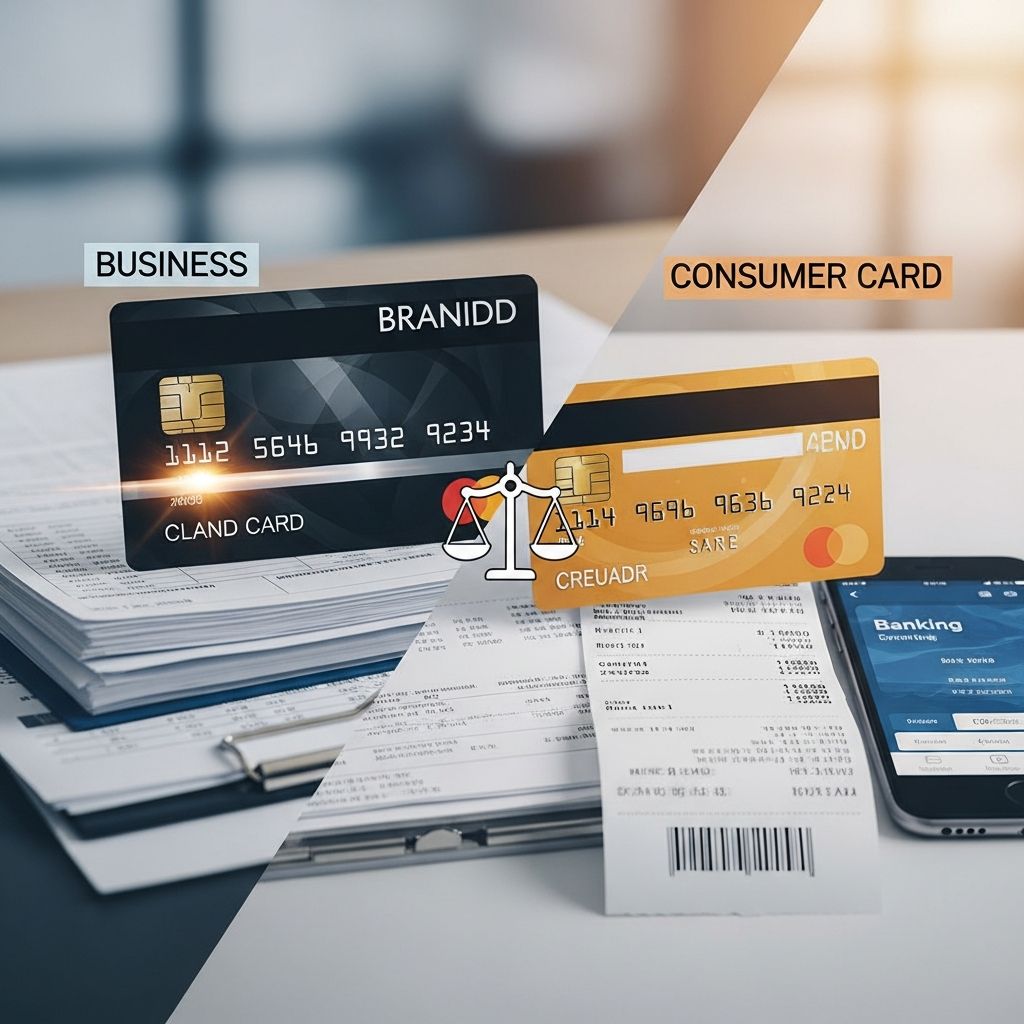
Choosing between a business credit card and a consumer (personal) credit card can significantly impact your financial management, especially as your business activities grow. While personal cards suit everyday individual spending, business cards offer tailored advantages like higher spending limits, specialized rewards, and advanced tools for expense tracking. This article outlines the key situations where opting for a business credit card provides clear benefits over sticking with a consumer card.
1. You Have Regular Business Expenses
The primary purpose of a business credit card is to handle company-related expenditures, such as office supplies, software subscriptions, client dinners, and team travel. Personal cards are designed for individual use like groceries or entertainment, lacking the features businesses need.
Business cards enable clear separation of personal and business finances, simplifying bookkeeping and tax preparation. For instance, they often integrate directly with accounting software like QuickBooks, generating detailed reports automatically. Using a personal card for business spending mixes transactions, complicating audits and increasing error risks during tax season.
- Office supplies and advertising earn higher rewards on business cards.
- Employee cards with spending limits allow controlled team spending without personal oversight.
- Detailed statements categorize expenses for easier IRS compliance.
If your monthly business outlays exceed $1,000–$2,000, a business card prevents personal credit utilization spikes, which can harm your individual score since utilization affects 30% of FICO scores.
2. You Need Higher Credit Limits
Business credit cards typically provide substantially higher credit limits than personal cards. Personal limits base solely on individual income and credit, often capping at $10,000–$25,000. Business cards factor in company revenue, EIN, and sometimes owner’s credit, enabling limits from $50,000 to over $100,000.
| Feature | Personal Credit Card | Business Credit Card |
|---|---|---|
| Approval Basis | Personal income and credit | Business revenue, EIN, owner’s credit |
| Credit Limits | Lower (e.g., $10k–$25k) | Higher (e.g., $50k+) |
| Best For | Individual spending | Bulk inventory, seasonal peaks |
This extra capacity supports large purchases like inventory restocks or equipment without maxing personal lines. Even low-spend businesses benefit from flexibility for unexpected costs. Business cards often have higher rewards caps, e.g., 3% on first $50,000 in office supplies vs. $10,000 on personal cards.
3. You Want Business-Specific Rewards
Business cards feature rewards optimized for company spending: higher cashback on office supplies, advertising, shipping, and travel. Personal cards prioritize groceries, dining, and gas.
For example, cards like the Ink Business Cash offer 5% back on first $25,000 at office supply stores and internet services annually—caps far exceeding personal equivalents. Both types reward travel/dining similarly, but business versions suit higher volumes with elevated quarterly limits.
- Targeted Categories: Advertising (Google/Facebook ads), telecom, rideshares for client meetings.
- Higher Caps: Accommodate $100k+ annual business spend without reward dilution.
- No Foreign Fees: Common on business travel cards for international vendors.
If 30%+ of your spending is business-oriented, these perks yield 2–5x more value than consumer rewards.
4. You Manage a Team or Employees
Business cards excel in multi-user scenarios with sub-cards for employees, each with customizable limits and categories (e.g., $500/month on gas, no travel). Personal cards lack this, forcing shared access or reimbursements.
Integrated expense management tracks real-time spending, flags anomalies, and auto-generates reports. This visibility prevents overspending and simplifies reimbursements via accounting syncs.
Personal cards offer manual tracking at best, prone to disputes and delays. For teams of 2+, business cards reduce admin time by 50%+ through automation.
5. You’re Building Business Credit
Personal cards report only to consumer bureaus (Equifax, Experian, TransUnion), impacting your individual score. Business cards build a separate profile via Dun & Bradstreet, Experian Business, Equifax Business—crucial for future loans.
Established business credit unlocks vendor terms, higher limits sans personal risk, and better rates. Personal use for business spikes utilization, dropping scores; business cards isolate this. Note: Most require personal guarantees initially, but consistent payments shift liability.
6. Legal and Liability Protections Matter
Consumer cards provide strong protections (e.g., rate caps, clear disclosures). Business cards offer fewer, but excel in company-specific safeguards: enhanced fraud monitoring for employee cards, robust B2B dispute resolution.
Key advantage: Clear separation shields personal assets in lawsuits/bankruptcy. Mixing via personal cards blurs lines, risking personal liability. Tax-wise, business cards ease deductions with categorized statements.
7. Tax Season Approaches
Business cards categorize spends automatically (e.g., ‘Travel’, ‘Supplies’), exporting to TurboTax/QuickBooks. Personal cards require manual tagging, error-prone for high volumes.
IRS prefers separated records; business cards prove legitimacy vs. ‘hobby’ claims, preserving deductions.
Business vs. Personal: Quick Comparison Table
| Aspect | Personal Card | Business Card |
|---|---|---|
| Credit Reporting | Consumer bureaus | Business bureaus |
| Rewards Focus | Groceries, dining | Office, ads, travel |
| Tools | Basic | Expense mgmt, team cards |
| Protections | Consumer laws | Business fraud/liability |
| Best Use | Personal expenses | Company growth |
Frequently Asked Questions (FAQs)
Q: Can I get a business card with no personal credit check?
A: Rare; most require it initially, but revenue-based cards like Brex exist for established firms.
Q: Do business cards affect my personal credit?
A: Applications do (hard inquiry); ongoing use usually doesn’t unless delinquent.
Q: What’s the minimum business size for a business card?
A: Side hustles qualify; even freelancers with EIN/sole prop can apply.
Q: Are business card rewards taxable?
A: No, like personal rewards; they’re purchase rebates.
Q: How to transition from personal to business card?
A: Apply with EIN/revenue docs; pay off personal business balances first.
When to Stick with Personal Cards
For minimal/incidental business spend (<$500/month) or poor business credit, personal cards suffice initially. Switch once scaling.
In summary, get a business card if expenses are regular, team-managed, or growth-focused. It protects credit, boosts rewards, streamlines ops—essential for sustainability.
References
- Should I apply for a business or personal credit card? — Mercury. 2024-05-15. https://mercury.com/blog/business-vs-personal-credit-card
- Business Credit Card vs. Personal: 9 Key Differences — Ramp. 2024-08-22. https://ramp.com/blog/business-credit-card-vs-personal
- Personal vs. Business Credit Card: What’s the Difference [Infographic] — Arizona Central Credit Union. 2023-11-10. https://www.azcentralcu.org/blog/business-vs-personal-credit-card-infographic/
- Business credit card vs personal: 8 key differences to know — Brex. 2024-07-30. https://www.brex.com/spend-trends/corporate-credit-cards/business-credit-card-vs-personal-credit-card
- Business vs. Personal Credit Cards: 6 Differences — NerdWallet. 2025-03-18. https://www.nerdwallet.com/business/credit-cards/learn/major-differences-business-credit-cards-personal-credit-cards
- Business Credit Card Vs. Personal: Which Should SMBs Choose — BILL. 2024-09-05. https://www.bill.com/learning/business-credit-card-vs-personal
Similar Articles








Read full bio of Sneha Tete