When Will Home Prices Fall? 2025 Market Outlook
Explore when home prices might decline and what factors influence housing market trends in 2025.
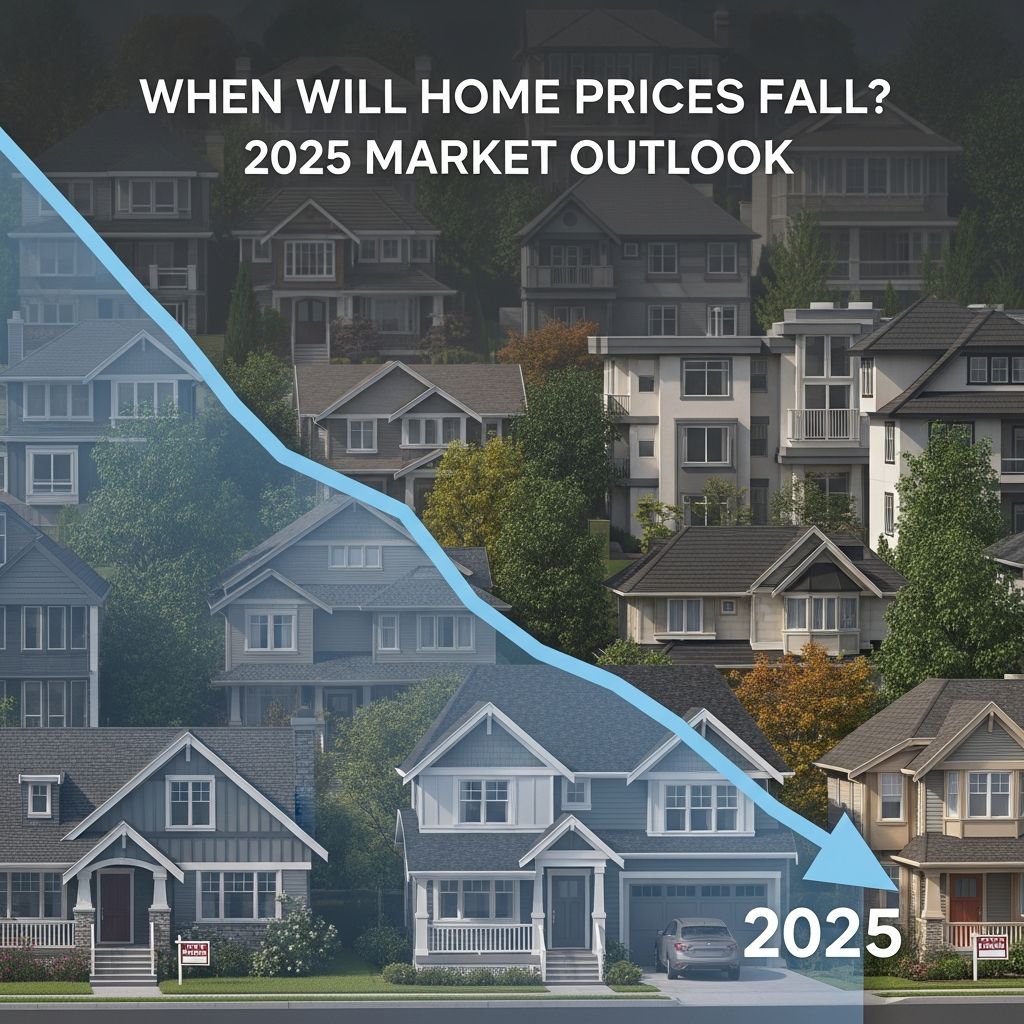
The question of when home prices will fall has become increasingly important for prospective buyers and investors watching the housing market navigate uncertain economic conditions. With home prices reaching record highs in recent months and inventory levels gradually improving, understanding the trajectory of housing prices requires examining multiple factors including mortgage rates, regional market dynamics, and economic conditions shaping the real estate landscape.
Current State of Home Prices
Home prices have demonstrated remarkable resilience despite economic headwinds and elevated mortgage rates. The median home-sale price in the U.S. reached a record high of $426,900 in June 2024, according to the National Association of Realtors (NAR). By May 2025, the median home-sale price stood at $422,800, marking a record for that specific month and continuing a remarkable streak of 23 consecutive months of year-over-year home-price increases. In January 2025, the median existing-home sale price was $396,900, representing a 4.8 percent increase over the previous year and setting a record high for that month.
Despite seasonal fluctuations and temporary dips, home prices have remained stubbornly elevated, reflecting the persistent imbalance between limited supply and continued demand in many markets across the country. This sustained price growth has made housing affordability a critical concern for buyers entering the market, particularly in regions where inventory remains constrained.
The Case For Continued Price Growth
Contrary to predictions of imminent price declines, multiple experts forecast continued home price appreciation throughout 2025, albeit at a slower pace than experienced in 2024. Greg McBride, Chief Financial Analyst at Bankrate, notes that “the median home sale price nationally will be largely flat, but the limited inventory in many areas of the Northeast and Midwest will sustain prices in those parts of the country.”
Several factors support the continuation of price growth:
- Continued economic growth and employment additions to the labor force maintaining buyer demand
- Limited housing supply in many desirable markets, particularly in the Northeast and West regions
- Population growth and demographic shifts favoring certain geographic areas
- Investor activity in markets with rental income potential
- Geographic variation in inventory levels, creating price resilience in supply-constrained areas
Economists increasingly recognize that the national narrative of home prices obscures important regional variations. While some markets may experience price stagnation or modest declines, others continue to see steady appreciation as limited inventory supports price stability.
Where Home Prices Might Actually Fall
The most compelling evidence for home price declines appears in specific market segments rather than as a broad national trend. Experts identify several categories of markets susceptible to price reductions in coming months.
Markets with Rising Inventory
Natassia Evangelou, chief economist at CoreLogic, observes that “we may see annual appreciation of around 2 percent nationally, with some regional variation. In markets where housing inventory is rising, small price declines are also possible.” Markets experiencing elevated inventory levels relative to their historical norms shift from seller’s markets to buyer’s markets, creating downward pressure on prices as sellers compete for buyer attention.
The nation’s housing inventory has improved significantly, reaching a 4.6-month supply as of NAR’s May 2025 data, up from 3.8 months one year earlier. By late September 2024, inventory had climbed to 4.3 months, representing substantial improvement from the critically tight 2.9-month supply observed in February 2024. While still below the 5 to 6-month supply typically required for a balanced market, this improvement grants buyers meaningful flexibility and creates conditions for price pressures in certain markets.
Formerly Hot Real Estate Markets
McBride highlights that “rising inventory has some formerly hot real estate markets shifting from a seller’s market to a buyer’s market, and will be susceptible to price declines.” Markets that experienced explosive price appreciation during the low-interest-rate environment of 2021-2022 now face pressure as higher mortgage rates reduce buyer purchasing power and attract sellers hoping to capitalize on elevated prices.
These markets—often concentrated in Sun Belt regions that experienced unprecedented migration and price growth—now show signs of normalization. As new listings accumulate and sales activity moderates, prices in these markets face meaningful headwinds that could produce year-over-year declines or sustained stagnation.
Regional Price Variations to Watch
Understanding where home prices are heading requires attention to regional differences that often contradict national trends. Expert analysis reveals divergent trajectories across major U.S. regions:
| Region | Price Outlook | Key Factor |
|---|---|---|
| Northeast | Price Stability/Growth | Limited inventory sustaining prices |
| Midwest | Price Stability/Growth | Constrained new construction supporting values |
| West | Mixed (Steady Growth) | Popular regions with limited new inventory |
| Sun Belt | Slower Growth/Declines Possible | Rising inventory from recent migration slowdown |
McBride specifically notes the North and Midwest contrast with other regions: “The limited inventory in many areas of the Northeast and Midwest will sustain prices in those parts of the country,” while formerly hot markets see meaningful correction pressure. This regional divergence means that blanket statements about national home price trends often mislead buyers and investors focused on specific geographic markets.
Mortgage Rates and Their Impact on Home Prices
Mortgage rate movements fundamentally influence home price trajectories by affecting buyer purchasing power and market dynamics. After dipping to 6.2 percent in September 2024, average 30-year mortgage rates rose back above 7 percent in early 2025. As of early July 2025, the average rate for a 30-year fixed mortgage remained just below 7 percent at 6.78 percent.
Expert forecasts project that mortgage rates will moderate but not decline substantially. Rick Sharga, founder and CEO of CJ Patrick Company, predicts that rates “will probably range from 6.75 to 7 percent for the 30-year loan and 6 to 6.5 percent for the 15-year mortgage” over the coming quarter. The Mortgage Bankers Association forecasts 30-year loan rates averaging 6.8 percent in Q3 2025.
Higher mortgage rates reduce the purchasing power of potential buyers, limiting demand and creating conditions where sellers must accept lower prices to facilitate transactions. Greg McBride explains that “continued economic growth and worries about inflation and government debt will keep mortgage rates elevated,” preventing the return to the 3-5 percent rates that characterized 2020-2021.
Home Price Appreciation Slowdown
While absolute price declines remain unlikely on a national basis, the pace of home price appreciation is expected to slow significantly. CoreLogic predicts that home-price appreciation will decelerate to an average growth of 2 percent for 2025, compared to 4.5 percent growth in 2024. This represents a substantial deceleration that reflects the transition from the exceptional appreciation observed during the pandemic era to more normalized market conditions.
Home-price growth increased in April 2025 by 2.7 percent according to the latest Case-Shiller Index, demonstrating continued but moderating appreciation. This trend of slower but positive growth will likely characterize most of 2025, with particular variation based on regional inventory levels and local economic conditions.
Inventory’s Critical Role in Price Dynamics
Housing inventory represents perhaps the single most important factor determining whether home prices fall in specific markets. The gradual but consistent improvement in inventory levels has shifted market dynamics in favor of buyers by reducing scarcity and providing greater selection.
NAR Chief Economist Lawrence Yun noted in an October statement that “home sales have been essentially stuck at around a four-million-unit pace for the past 12 months, but factors usually associated with higher home sales are developing. There are more inventory choices for consumers, lower mortgage rates than a year ago and continued job additions to the economy.”
The growing inventory has particular significance in formerly tight markets where sellers could command premium prices. As buyer choice expands, the negotiating position of sellers weakens, creating conditions where modest price reductions become necessary to attract qualified buyers. This dynamic appears most pronounced in markets that experienced rapid population inflows and price appreciation during 2021-2023.
The Impact of New Construction and Tariffs
Construction activity and regulatory policy represent additional factors influencing the home price trajectory. President Trump’s proposed tariffs are expected to push new home prices upward by approximately 4-6 percent by year-end 2025, as import duties increase costs for lumber, drywall, steel, and appliances. CoreLogic and John Burns Research & Consulting both forecast similar increases in new construction prices due to tariff-driven material cost increases.
This dynamic creates an interesting bifurcation in the market, where existing home prices may soften while new construction prices increase. Prospective buyers considering new homes may benefit from purchasing before tariff-driven price increases fully materialize, while the existing home market faces different pressures from inventory normalization and affordability constraints.
Affordability Concerns Shaping 2025
Despite the possibility of slower price growth or regional price declines, overall affordability remains challenged by the combination of elevated home prices and stubbornly high mortgage rates. The median home-sale price of $422,800 in May 2025, combined with 6.78 percent mortgage rates, creates substantial monthly payment obligations for typical buyers.
Lisa Sturtevant, chief economist at Bright MLS, observes that “as rates remain stubbornly stuck close to 7 percent, prospective homebuyers remain hesitant.” This hesitation limits the buyer demand that could absorb available inventory at current price levels, creating conditions where sellers in inventory-rich markets must accept lower prices to generate sales activity.
Timeline for Price Declines and Market Shifts
Based on expert consensus and current market dynamics, the timeline for meaningful home price declines appears to follow this trajectory:
- Q3-Q4 2025: Regional price declines in inventory-rich former hot markets; national median prices largely flat to slightly declining
- 2026: Broader price moderation if inventory continues improving and mortgage rates remain elevated
- 2027+: Greater price normalization potential if supply-demand imbalances resolve and economic conditions stabilize
The timeline reflects the lag between inventory improvement, buyer market psychology shifts, and actual price adjustments. Markets with rapidly accumulating inventory will experience price pressures sooner, while supply-constrained regions may sustain prices for extended periods.
Frequently Asked Questions
Q: Will home prices drop nationally in 2025?
A: National home prices are unlikely to drop significantly in 2025, but will likely grow at a much slower pace (approximately 2 percent) compared to 2024 (4.5 percent). However, specific regional markets with rising inventory may experience modest price declines.
Q: Which regions are most likely to see home price declines?
A: Sun Belt markets that experienced rapid appreciation during 2021-2023 and now face rising inventory are most susceptible to price declines. Markets with growing inventory in formerly hot areas shifting from seller’s to buyer’s markets present the highest likelihood of price reductions.
Q: How will mortgage rates affect home prices in 2025?
A: Mortgage rates hovering near 7 percent will limit buyer purchasing power and demand, creating downward pressure on prices in markets with excess inventory. If rates moderate to 6.5 percent or lower, affordability may improve and support prices.
Q: Should I wait for home prices to fall before buying?
A: The answer depends on your specific market and circumstances. In inventory-rich regions anticipating price declines, waiting may prove advantageous. However, in supply-constrained markets supporting steady prices, waiting risks missing opportunities while prices remain stable or rates potentially increase.
Q: How does inventory level affect home price trajectories?
A: Rising inventory strengthens the buyer’s negotiating position, creating conditions for price reductions or slower appreciation. The current 4.6-month supply, up from 3.8 months a year earlier, provides buyers more choices and less pressure to overpay, particularly in markets with accelerating inventory growth.
Q: Will new construction prices increase or decrease in 2025?
A: New construction prices are expected to increase 4-6 percent by year-end 2025 due to tariff-driven increases in material costs. This differs from existing home price trends, making existing homes potentially more competitive on price basis.
References
- Housing Market Trends For Third Quarter 2025 — Bankrate. 2025. https://www.bankrate.com/real-estate/housing-trends/
- Housing Market Predictions For The Rest Of 2025 — Bankrate. 2025. https://www.bankrate.com/real-estate/housing-market-2025/
- Housing Market Predictions For 2025 — National Association of Realtors via Bankrate. 2024. https://www.nar.realtor/newsroom/in-the-news/housing-market-predictions-for-2025-bankrate
- Is 2025 the Year to Buy a Home? — Bankrate. 2025. https://www.bankrate.com/real-estate/is-2025-the-year-to-buy-a-home/
- Housing market predictions: The forecast for the next 5 years — Bankrate. 2025. https://www.bankrate.com/real-estate/housing-market-5-year-forecast/
Similar Articles








Read full bio of medha deb