Auto Loan Rates 2025: Why They Won’t Drop And 5 Ways To Save
Explore 2025 auto loan rate forecasts and discover strategies to secure better financing.
When Will Auto Loan Rates Drop in 2025?
The auto lending market has been a significant concern for prospective car buyers throughout 2024 and into 2025. With interest rates remaining elevated and vehicle prices reaching all-time highs, many consumers are wondering when relief will arrive. The short answer is that auto loan rates are not expected to decrease measurably during 2025, despite Federal Reserve rate cuts aimed at combating inflation. Understanding the factors behind this trend and learning how to navigate the current lending environment can help you make more informed decisions about your vehicle purchase.
Current State of Auto Loan Rates
As of the second quarter of 2025, the average auto loan interest rate for new cars stands at 6.80 percent, while used car loans average 11.54 percent. These rates remain substantially higher than pre-pandemic levels, reflecting the broader economic conditions and lending practices that have emerged over the past five years. The Federal Reserve has made targeted cuts to its benchmark rate, with two reductions implemented by October 2025, bringing the federal funds rate to 3.75-4 percent. However, these cuts have not translated into meaningful reductions for auto loan borrowers.
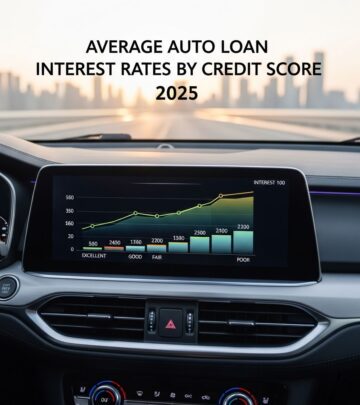
Current auto loan rates vary significantly based on creditworthiness. Borrowers with superprime credit scores (781-850) enjoy rates around 5.27 percent on new car loans, while those with prime credit (661-780) face approximately 6.78 percent. The disparity widens considerably for borrowers with lower credit scores, with near-prime borrowers (601-660) seeing rates near 9.97 percent, and subprime borrowers (501-600) facing rates exceeding 13 percent. For used car loans, the spread is even more dramatic, ranging from 7.15 percent for superprime borrowers to over 18 percent for those with deep subprime credit.
Why Auto Loan Rates Aren’t Dropping
Several interconnected factors explain why auto loan rates remain stubbornly elevated despite Federal Reserve intervention. First, the Federal Reserve doesn’t directly set auto loan rates—it influences them indirectly through the federal funds rate. While the Fed has signaled more measured rate cuts going forward, with projections suggesting only three additional cuts in 2025, these reductions alone won’t substantially lower auto loan rates. The broader economic environment, including persistent inflation concerns, continues to keep lending rates elevated across all consumer credit products.
Industry experts note that the Federal Reserve’s primary focus remains combating inflation. With the inflation rate climbing to 3 percent as of late 2025, up from 2.4 percent in June, monetary policymakers remain cautious about aggressive rate reductions. This hesitation translates directly to the auto lending market, where lenders maintain higher rates to compensate for perceived risk and to protect profit margins in an uncertain economic environment.
The Vehicle Price Problem
While interest rates grab headlines, vehicle prices represent an equally—if not more—significant challenge for today’s car buyers. The average price of a new car reached $50,080 in September 2025, representing an all-time high and the first time new vehicle prices crossed the $50,000 threshold. This represents approximately a 20 percent increase since the pandemic-induced recession began in February 2020. Used vehicle prices have climbed roughly 25 percent over the same period, creating a double financial burden for consumers.
Average loan amounts reflect these escalating prices. New vehicle loan amounts increased slightly from $41,720 in the first quarter of 2025 to $41,983 in the second quarter, while used vehicle loan amounts rose to $26,795 during the same period. When you combine elevated interest rates with these record-high vehicle prices, the total financing burden on consumers becomes particularly acute. For many buyers, high prices have become a greater obstacle than interest rates alone.
Future Rate Forecasts for 2025
According to Bankrate’s 2025 Interest Rate Forecast from Chief Financial Analyst Greg McBride, auto loan rates are projected to experience only modest improvements. Five-year new car loan rates are expected to decline 0.53 percentage points from their year-end 2024 level of 7.53 percent, settling around 7 percent by the end of 2025. For used car loans, the forecast shows a 0.46 percentage point decrease from the 8.21 percent year-end 2024 level, with rates projected to fall to approximately 7.75 percent.
While these projections represent slight relief, they underscore the reality that dramatic rate reductions are unlikely in the near term. Borrowers with strong credit are more likely to see meaningful decreases, while those with weaker credit profiles may see little to no improvement. For deep subprime and subprime borrowers, rates could remain well into double-digit territory throughout 2025 and potentially beyond.
Tariffs and Supply Chain Impacts
An emerging threat to vehicle affordability comes from tariff policies. Industry experts widely agree that tariffs will increase prices for consumers on both new and used vehicles. With existing inventory declining and new imports subject to tariff assessments, vehicle price pressures are expected to intensify rather than ease. As new vehicle prices climb in response to tariff impacts, used vehicle prices typically follow suit, further escalating the total cost burden on consumers regardless of financing rates.
Expert Recommendations for Car Buyers
Given the challenging environment for auto financing in 2025, financial experts recommend several strategies to minimize your borrowing costs:
- Shop Around for Financing: Don’t rely solely on dealership financing. Compare offers from banks, credit unions, and online lenders. Different institutions offer varying rates based on their risk assessments and pricing strategies.
- Improve Your Credit Score: Even modest improvements to your credit profile can result in meaningfully lower interest rates. Review your credit report for errors and work to reduce outstanding balances before applying for an auto loan.
- Secure Pre-Approval: Arrive at the dealership with pre-approved financing in hand. This strengthens your negotiating position and demonstrates to dealers that you have alternative options.
- Consider Larger Down Payments: Increasing your down payment reduces the amount you need to finance and improves your loan-to-value ratio, potentially qualifying you for better rates.
- Evaluate Loan Terms Carefully: While extending loan terms lowers monthly payments, it increases total interest costs. Balance affordability with long-term expense considerations.
The Impact of Auto Loan Delinquencies
One factor keeping lenders cautious is elevated auto loan delinquency rates. With consumers already stretched thin by high vehicle prices and elevated rates, many borrowers struggle to maintain payment schedules. Lenders respond to this elevated default risk by maintaining higher interest rates and stricter credit requirements. This creates a challenging feedback loop where those with weaker credit face the highest rates, making default risk even more likely.
Comparing Auto Loan Rates by Credit Profile
The following table illustrates the significant rate variations based on creditworthiness:
| Credit Score Range | Category | New Car Loans | Used Car Loans |
|---|---|---|---|
| 781-850 | Superprime | 5.27% | 7.15% |
| 661-780 | Prime | 6.78% | 9.39% |
| 601-660 | Near Prime | 9.97% | 13.95% |
| 501-600 | Subprime | 13.38% | 18.90% |
| 300-500 | Deep Subprime | 15.97% | 21.58% |
This table demonstrates why credit score improvement should be a priority before applying for auto financing. The difference between prime and near-prime rates on a new car loan amounts to 3.19 percentage points—a substantial difference that compounds significantly over a multi-year loan term.
What This Means for Your Monthly Payments
To illustrate the practical impact of current rates, consider a $40,000 new car purchase with a 60-month loan term. At the prime rate of 6.78 percent, monthly payments would total approximately $758. At the near-prime rate of 9.97 percent, the same loan would require approximately $848 in monthly payments—nearly $90 more per month or over $5,400 additional cost over the loan’s life. For buyers with subprime credit, payments would exceed $900 monthly on the same vehicle purchase.
Federal Reserve Rate Cut Projections
Looking ahead at Federal Reserve policy, expectations call for approximately three additional rate cuts in 2025, bringing the fed funds rate to a range of 3.5-3.75 percent by year-end. However, this target range represents the highest level since 2008, meaning borrowing costs will remain elevated even after these cuts materialize. The Fed’s December projections suggest interest rates will hold elevated indefinitely, providing little indication of aggressive future reductions that might significantly improve auto loan affordability.
The Bottom Line for Car Buyers
While Federal Reserve rate cuts may provide some modest relief to auto loan rates in 2025, borrowers shouldn’t expect dramatic improvements. The combination of persistent inflation concerns, elevated vehicle prices driven partly by tariff policies, and high delinquency rates creates headwinds for rate reductions. Instead of waiting for rates to drop substantially, prospective buyers should focus on factors within their control: improving credit scores, shopping around aggressively, securing pre-approval, and carefully evaluating whether now is the right time to purchase given total financing costs.
Frequently Asked Questions
Q: Will auto loan rates drop significantly in 2025?
A: No, auto loan rates are not expected to decrease measurably during 2025. While modest improvements of approximately 0.5 percentage points are projected, dramatic reductions are unlikely due to persistent inflation concerns and the Federal Reserve’s cautious approach to rate cuts.
Q: How much will new car loan rates decrease by end of 2025?
A: Five-year new car loan rates are projected to fall from 7.53 percent to approximately 7 percent by year-end 2025, representing a 0.53 percentage point decrease.
Q: What’s the current average auto loan rate?
A: As of the second quarter of 2025, the average auto loan rate for new cars is 6.80 percent, while used car loans average 11.54 percent. However, rates vary significantly based on credit score.
Q: How much does credit score affect auto loan rates?
A: Credit score dramatically impacts rates. Superprime borrowers (781-850) receive rates around 5.27 percent on new cars, while deep subprime borrowers (300-500) face rates exceeding 15.97 percent—a difference of over 10 percentage points.
Q: What should I do to get a better auto loan rate?
A: Focus on improving your credit score, shop around with multiple lenders, secure pre-approval before visiting dealerships, consider larger down payments, and compare loan terms carefully before committing.
Q: Why are vehicle prices so high?
A: New vehicle prices have increased approximately 20 percent since February 2020, driven by supply chain disruptions, semiconductor shortages, and now tariff concerns. The average new car price reached an all-time high of $50,080 in September 2025.
Q: Will tariffs affect auto prices?
A: Yes, industry experts expect tariffs to increase vehicle prices for consumers. Existing inventory is declining, and new imports will be subject to tariff assessments, likely pushing both new and used vehicle prices higher.
References
- Bankrate’s Interest Rate Forecast For 2025 — Bankrate. 2025. https://www.bankrate.com/personal-finance/interest-rates-forecast/
- When Will Car Interest Rates Start Dropping? — Bankrate. 2025. https://www.bankrate.com/loans/auto-loans/when-will-auto-loan-rates-drop/
- Average Auto Loan Interest Rates by Credit Score in 2025 — Bankrate. 2025. https://www.bankrate.com/loans/auto-loans/average-car-loan-interest-rates-by-credit-score/
- How Inflation Affects Car Loan Rates — Bankrate. 2025. https://www.bankrate.com/loans/auto-loans/how-inflation-affects-auto-loan-rates/
- Why Your Card and Car Loan Rates Might Not Drop Despite the Fed’s Rate Cuts — Los Angeles Times. October 30, 2025. https://www.latimes.com/business/story/2025-10-30/what-a-federal-reserve-rate-cut-means-for-your-finances
Similar Articles








Read full bio of medha deb