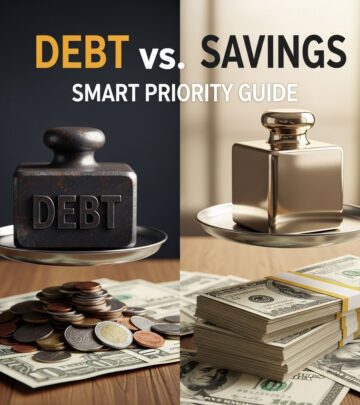
When To Use Savings To Pay Off Debt: 6-Step Decision Framework
Discover the strategic moments to dip into savings for debt payoff and when to hold back for financial security.
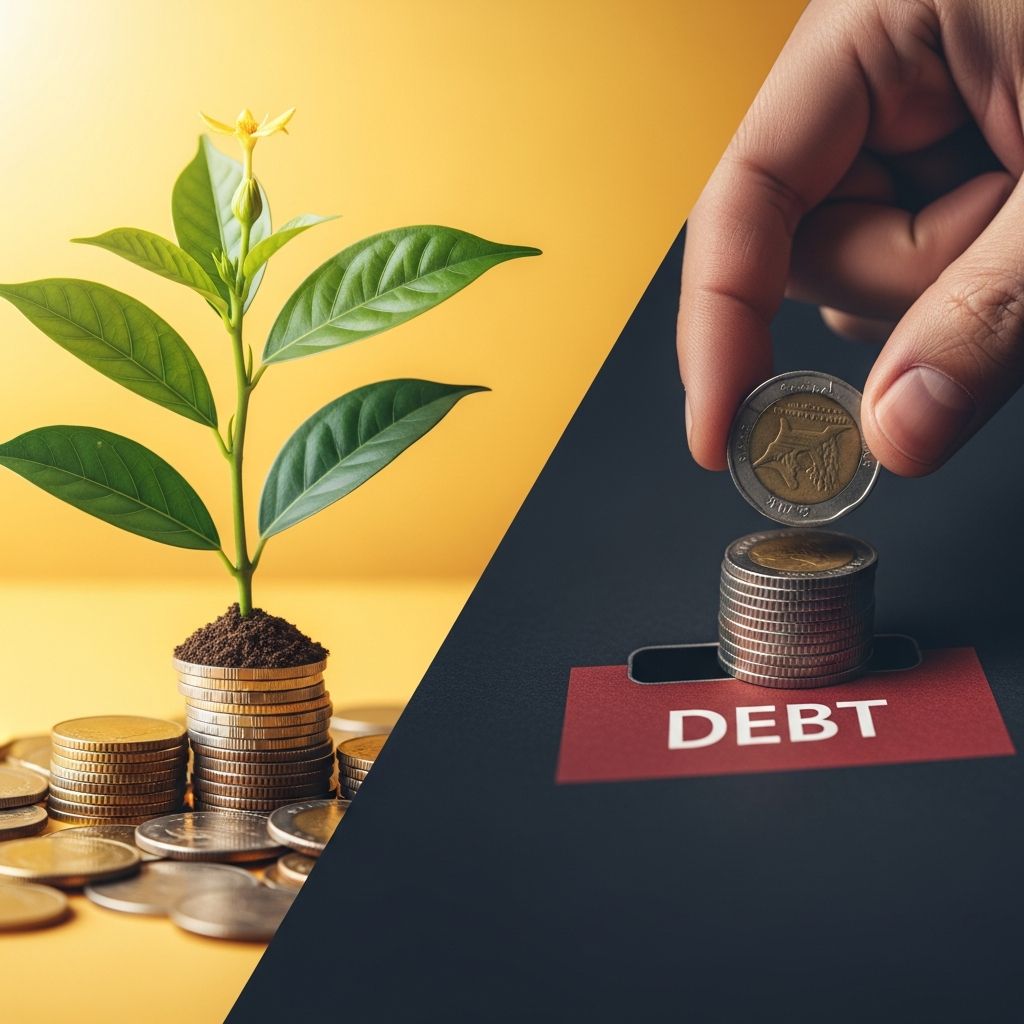
The dilemma of whether to use your hard-earned savings to pay off debt is a common one in personal finance. On one hand, eliminating debt frees up monthly cash flow and stops interest from accruing. On the other, depleting savings leaves you vulnerable to emergencies. This article explores the key factors to consider, providing clear guidelines on when it’s wise to tap into savings and when it’s better to preserve them. By understanding interest rate comparisons, emergency fund priorities, and debt types, you can make informed decisions that align with your financial goals.
Understand Your Debt Interest Rate vs. Savings Return
The foundational decision hinges on comparing the interest rate you’re paying on your debt to the return you earn on your savings. If your debt carries a high interest rate—say, 18% on a credit card—while your savings account yields only 1-5%, mathematically, it’s advantageous to pay off the debt first. The savings in interest often far outweigh the modest growth from low-yield accounts.
For instance, consider a $10,000 credit card balance at 20% APR. Monthly interest alone could exceed $160, eroding your finances rapidly. Redirecting savings to this debt halts that cost immediately. Conversely, high-yield savings accounts or CDs might offer 4-5% APY in 2026, but this pales against typical unsecured debt rates of 15-25%.
- High-interest debt (over 8-10%): Prioritize payoff with savings.
- Low-interest debt (under 4-5%): Keep savings invested if returns match or exceed.
Always calculate the effective after-tax rates. Tax-advantaged savings like Roth IRAs may tip the scales differently, but for standard debts, high-interest consumer debt usually wins.
Protect Your Emergency Fund First
Before touching any savings, ensure you have a robust emergency fund covering 3-6 months of essential expenses. This buffer—typically $10,000-$30,000 depending on your lifestyle—protects against job loss, medical bills, or repairs. Using it for debt risks a debt spiral if an emergency arises, forcing high-interest borrowing.
Financial experts recommend maintaining this fund in a liquid, accessible account. Only after securing it should you consider using excess savings for debt. For example, if your emergency fund is solid at $15,000 but you have an additional $5,000 in a secondary savings, deploy the latter strategically.
| Household Size | Monthly Expenses | Recommended Emergency Fund |
|---|---|---|
| Single | $3,000 | $9,000-$18,000 |
| Couple | $5,000 | $15,000-$30,000 |
| Family of 4 | $7,000 | $21,000-$42,000 |
This table illustrates baseline needs; adjust for variables like job stability or health risks.
High-Interest Credit Card Debt: Pay It Off Now
Credit card debt is the prime candidate for savings deployment. With average APRs hovering around 20-25% in recent years, it compounds quickly. Paying off a $5,000 balance at 22% APR saves over $1,100 in first-year interest alone. Use savings here without hesitation, especially if minimum payments strain your budget.
Strategies like the debt avalanche—targeting highest rates first—amplify savings. Roll payments from paid-off cards to accelerate progress. Real-world example: A $10,000 debt at 18% paid with $500 monthly (including savings) clears in 25 months, saving $1,811 in interest versus minimum payments.
Low-Interest Debt Like Mortgages or Student Loans: Often Better to Invest
Not all debt warrants immediate payoff. Mortgages at 3-6% or federal student loans at 4-7% often have rates below inflation or market returns. If your savings or investments yield 7-10% historically (e.g., stock market averages), letting debt ride while investing excess can build wealth faster.
Tax deductions further sweeten low-rate debt. Mortgage interest is deductible for many, effectively lowering the rate to 2-4% after taxes. Prepay only if you’re risk-averse or rates exceed 6-7%. Pros of holding: Liquidity and compounding growth. Cons: Psychological burden of debt.
Calculate the True Cost of Waiting
Delaying payoff on high-interest debt is costly. Use online calculators to project scenarios. For $20,000 at 15% APR:
- Minimum payments: 10+ years, $15,000+ interest.
- Lump sum from savings: Immediate freedom, zero future interest.
Factor opportunity cost: Money in savings earns little; in debt reduction, it ‘earns’ your interest rate as guaranteed return.
Tax Implications and Penalties to Watch
Dipping into retirement savings like 401(k)s or IRAs incurs penalties—10% plus taxes for early withdrawal before 59½. Reserve these for dire needs, not routine debt. Stick to taxable savings or brokerage accounts to avoid hits.
Student loan forgiveness programs may penalize large prepayments; check terms. Credit score impacts: Paying off boosts scores, but closing accounts can temporarily ding utilization.
Psychological and Lifestyle Factors
Debt stress affects health and decisions. If high balances cause anxiety, paying off—even suboptimally—may justify using savings for peace of mind. Balance with future security: Post-payoff, redirect payments to savings for momentum.
Alternatives to Using Savings
Before raiding savings:
- Balance transfers: 0% intro APR cards save thousands.
- Debt consolidation loans: Lower rates via personal loans.
- Side hustles: Boost income without sacrificing liquidity.
- Negotiate: Creditors may settle for lump sums.
Bi-weekly payments add an extra payment yearly, hastening payoff.
Step-by-Step Decision Framework
- List all debts with balances, rates, minimums.
- Calculate emergency fund status.
- Compare debt rates to savings/investment returns.
- Project payoff timelines and interest savings.
- Assess tax/penalty risks.
- Prioritize: High-interest unsecured first.
This framework ensures data-driven choices.
Frequently Asked Questions (FAQs)
Q: Should I pay off 20% credit card debt if my savings earn 4%?
A: Yes, the 16% spread makes debt payoff a superior ‘return’.
Q: What’s the minimum emergency fund before using savings for debt?
A: 3-6 months of expenses, fully funded and liquid.
Q: Is it better to invest or pay off 5% auto loan?
A: Invest if returns exceed 5% after taxes; otherwise, pay off.
Q: How does paying debt affect credit score?
A: Improves utilization and payment history; closing cards may cause short-term dip.
Q: Can I use 401(k) for debt?
A: Avoid due to penalties; exhaust other options first.
Build Sustainable Habits Post-Decision
After payoff, automate savings to rebuild reserves. Adopt budgeting to prevent re-accumulation. Track net worth quarterly for progress. Debt freedom enables wealth-building: Max retirement, invest aggressively.
Ultimately, the right choice blends math, security, and psychology. High-interest debt? Deploy savings aggressively. Low-rate? Invest. Always safeguard emergencies. This balanced approach fosters long-term financial health.
References
- Paying Off Debt Early: Pros and Cons — Nevada State Bank. 2022-11-01. https://www.nsbank.com/personal/community/two-cents-blog/2022-11-01-paying-off-debt-early/
- 5-Day Debt Reduction Plan: Pay It Off — Wise Bread. N/A. https://www.wisebread.com/5-day-debt-reduction-plan-pay-it-off
- 7 Strategies for Paying Off Debt When Living on a Variable Income — Wise Bread. N/A. https://www.wisebread.com/7-strategies-for-paying-off-debt-when-living-on-a-variable-income
- Paying down debt is saving — Voya. N/A. https://www.voya.com/page/on-demand/paying-down-debt-saving
- Get Out of Debt First, Then Focus on Saving — Wise Bread. N/A. https://www.wisebread.com/get-out-of-debt-first-then-focus-on-saving
Similar Articles








Read full bio of medha deb