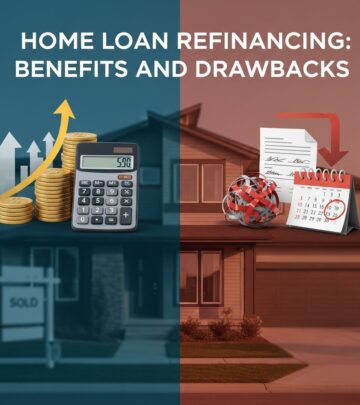
When to Refinance Your Mortgage: Complete Guide
Learn the right time to refinance your mortgage and maximize your savings potential.

When Should You Refinance Your Mortgage?
Refinancing your mortgage is a significant financial decision that can potentially save you thousands of dollars over the life of your loan. However, knowing when to refinance requires careful consideration of multiple factors, including interest rates, closing costs, your financial situation, and your plans for staying in your home. This comprehensive guide will help you understand the key considerations and determine whether refinancing makes sense for your circumstances.
Understanding the Basics of Mortgage Refinancing
Refinancing replaces your current mortgage with a new loan, allowing you to adjust the interest rate, loan term, or both. When you refinance, you’re essentially paying off your existing mortgage and taking out a new one. This process involves paying closing costs, which typically range from 2 to 6 percent of the loan amount. To determine if refinancing will benefit you financially, you need to calculate your break-even point—the time it takes for your monthly savings to offset the closing costs you’ll pay.
Key Factors to Consider Before Refinancing
Several critical factors should influence your refinancing decision. Understanding these elements will help you make an informed choice that aligns with your financial goals.
Interest Rate Savings
One of the primary reasons homeowners refinance is to secure a lower interest rate. Generally, it makes sense to refinance your mortgage if you can reduce your interest rate by one-half to three-quarters of a percentage point or more. However, the actual benefit depends on your specific situation, including how long you plan to stay in your home and the closing costs involved in the refinance process.
Time in Your Home
Your timeline for staying in your home significantly impacts the refinancing decision. If you plan to sell or move within a few years, the monthly savings from a lower rate may not be enough to offset the closing costs. Conversely, if you plan to remain in your home for many years, even modest interest rate savings can result in substantial long-term financial benefits.
Closing Costs
Refinancing involves closing costs that you must pay upfront. These costs can include loan origination fees, appraisal fees, title insurance, and various other charges. Before refinancing, obtain a Loan Estimate from your lender that details all closing costs. Understanding these expenses is essential for calculating whether the refinance will ultimately save you money.
After-Tax Monthly Savings
When calculating your potential savings, consider the after-tax impact of your monthly payment reduction. If you itemize deductions on your tax return, the mortgage interest deduction reduces the actual tax benefit of your lower payment. This after-tax figure should be used when determining your break-even point and evaluating the refinance opportunity.
Calculating Your Break-Even Point
To determine whether refinancing makes financial sense, calculate your break-even point by dividing your total closing costs by your monthly savings. For example, if your closing costs total $4,000 and your monthly payment decreases by $200, your break-even point would be 20 months. If you plan to stay in your home for significantly longer than your break-even point, refinancing is likely a sound financial decision.
| Scenario | Closing Costs | Monthly Savings | Break-Even Point | Recommendation |
|---|---|---|---|---|
| Staying 5+ years | $3,000 | $150 | 20 months | Refinance |
| Staying 2-3 years | $4,000 | $100 | 40 months | Reconsider |
| Staying under 2 years | $5,000 | $150 | 33 months | Typically not worth it |
When Refinancing Makes Financial Sense
Refinancing can benefit you in several specific situations. Understanding these scenarios will help you identify opportunities to improve your financial position.
Lower Interest Rates Available
If current market interest rates are significantly lower than your existing mortgage rate, refinancing to a lower rate will reduce your monthly payment and total interest paid over the loan term. Even a reduction of half a percentage point can result in substantial savings over 15 or 30 years.
Converting from Adjustable-Rate to Fixed-Rate Mortgage
If you have an adjustable-rate mortgage (ARM) that is approaching its rate adjustment period or has recently reset to a higher rate, refinancing to a fixed-rate mortgage can provide payment predictability and protection against future rate increases. This stability is valuable for budgeting purposes and protects you from potential payment shocks.
Changing Loan Terms
Refinancing allows you to change your loan term to better match your financial goals. If your financial situation has improved and you can afford higher monthly payments, refinancing from a 30-year to a 15-year mortgage can save you substantial interest over the life of the loan. Alternatively, if you need lower monthly payments, refinancing to a longer term might be appropriate.
Improving Your Financial Situation
If your credit score has improved since you obtained your original mortgage, you may now qualify for a better interest rate than you received previously. A higher credit score provides leverage in negotiations with lenders and can result in more favorable refinance terms.
Refinancing Options Available to You
Different types of refinancing serve different purposes. Understanding your options will help you select the most appropriate refinance type for your needs.
Rate-and-Term Refinance
A rate-and-term refinance replaces your current mortgage with a new loan featuring a different interest rate, repayment term, or both. This is the most common type of refinance and is ideal if your primary goal is to lower your monthly payment or pay off your loan faster.
Cash-Out Refinance
With a cash-out refinance, you take out a new loan for more than you currently owe on your mortgage and receive the difference in cash. This option allows you to tap your home equity for funds that can be used for any purpose, such as home improvements, debt consolidation, or major expenses. However, this increases your loan balance and extends your repayment timeline.
Streamline Refinance
Some mortgage types offer streamline refinancing options that require minimal underwriting and no appraisal. These programs are designed to make refinancing faster and more affordable by reducing documentation requirements and processing time.
Requirements for Qualifying to Refinance
To qualify for a mortgage refinance, lenders typically require several criteria to be met:
Credit Score Requirements
Most lenders require a minimum credit score of 620 for conventional refinances, though higher scores result in better interest rates. Your credit score demonstrates your history of managing debt responsibly and significantly influences the rates lenders are willing to offer.
Debt-to-Income Ratio
Lenders typically prefer to see a debt-to-income ratio of 43 percent or less of your gross monthly income. This ratio includes all your debt obligations, including your mortgage, car loans, credit cards, and other liabilities. A lower ratio indicates you have sufficient income to manage debt payments comfortably.
Payment History
Lenders review your payment history to assess your reliability. Recent missed or late mortgage payments can make refinancing difficult or result in higher interest rates. Maintaining a solid payment history strengthens your refinance application.
Loan-to-Value Ratio
Most lenders want you to own at least 20 percent of your home’s value to qualify for refinancing. This means your loan balance should not exceed 80 percent of your home’s current market value. If you have less equity, you may still qualify through specialized programs, but terms may be less favorable.
Steps to Refinance Your Mortgage
If you’ve determined that refinancing is right for you, follow these steps to navigate the process successfully.
Step 1: Set Clear Financial Goals
Before beginning the refinancing process, clearly define what you want to achieve. Are you seeking to lower your monthly payment, pay off your mortgage faster, access cash for other needs, or convert from a variable rate to a fixed rate? Your specific goals will guide your refinancing decisions.
Step 2: Check Your Credit Score and History
Review your credit report for errors and take steps to improve your credit score if necessary before applying for a refinance. A higher credit score will qualify you for better interest rates and improve your chances of approval.
Step 3: Compare Refinance Offers
Obtain refinance quotes from at least three to five different lenders. When comparing offers, look at both the advertised interest rate and the annual percentage rate (APR), which includes fees and provides a more accurate picture of the true cost. Small differences in rates can result in thousands of dollars in savings or additional costs over the life of the loan.
Step 4: Calculate Your Break-Even Point
Using the closing costs from your quotes and your expected monthly savings, calculate your break-even point. Ensure this break-even point aligns with your timeline for staying in the home.
Step 5: Organize Your Documentation
Lenders will request various documents to process your refinance application, including recent tax returns, pay stubs, bank statements, and documentation of assets and liabilities. Having these documents organized and ready expedites the application process.
Step 6: Lock Your Rate
Once you’ve selected a lender, lock your interest rate to protect yourself from rate fluctuations during the application and underwriting process. Rate locks typically last 30 to 60 days.
Strategies to Secure the Best Refinance Rate
Several strategies can help you obtain the most favorable refinance rates possible.
Improve Your Credit Score
Before applying, pay down existing debt and ensure all bills are paid on time. Even modest credit score improvements can result in better refinance rates.
Compare Multiple Offers
Never accept the first refinance offer you receive. Comparing offers from multiple lenders ensures you find the most competitive rate and terms available to you.
Consider Buying Discount Points
Mortgage points allow you to pay the lender upfront in exchange for a lower interest rate. One point equals 1 percent of the loan amount. Buying points makes sense if you can spare the cash and plan to stay in the home long enough to recoup your upfront investment through monthly savings.
Choose the Right Loan Term
Select a loan term that aligns with your financial situation and goals. Shorter terms result in lower total interest but higher monthly payments, while longer terms offer lower monthly payments but higher total interest.
Negotiate with Lenders
Don’t hesitate to negotiate your refinance terms. Lenders often have flexibility with rates and fees, and presenting competitive offers from other lenders strengthens your negotiating position.
Understanding Current Refinance Rates
Refinance rates fluctuate daily based on economic conditions, inflation, Federal Reserve policy, and other market factors. Interest rates for different loan products vary significantly. Thirty-year fixed rates are typically lower than shorter-term fixed rates, while adjustable-rate mortgages may offer initial rates lower than fixed-rate options. Monitoring current rates helps you identify favorable opportunities and time your refinance strategically.
Frequently Asked Questions
Q: What is the minimum rate reduction needed to make refinancing worthwhile?
A: Generally, you should consider refinancing if you can reduce your interest rate by one-half to three-quarters of a percentage point or more. However, the actual benefit depends on your specific situation, including closing costs and how long you plan to stay in your home.
Q: How long does the refinancing process typically take?
A: The refinancing process typically takes 30 to 45 days from application to closing. However, timelines can vary based on lender efficiency, documentation completeness, and market conditions.
Q: Can I refinance if I have a low credit score?
A: While most conventional refinances require a credit score of at least 620, you may still qualify with a lower score through specialized programs or with a co-signer. However, a lower credit score typically results in higher interest rates.
Q: Should I pay closing costs upfront or roll them into the loan?
A: This depends on your financial situation. Paying closing costs upfront reduces your loan balance and total interest paid over time. Rolling costs into the loan preserves cash but increases your monthly payment and total interest expense.
Q: What documents do I need to apply for a refinance?
A: Typical documentation includes recent tax returns (usually two years), recent pay stubs, bank statements, documentation of assets, details about existing debts, and information about your current mortgage.
Q: Can I refinance if I owe more than my home is worth?
A: Refinancing when you’re underwater on your mortgage is challenging but not impossible. You may qualify for special programs like streamline refinances or through government-backed options, but options are limited and terms may be less favorable.
References
- How to get the best refinance rate on your mortgage — Bankrate. 2025. https://www.bankrate.com/mortgages/get-the-best-refinance-rate/
- Types of mortgage refinance: How to choose — Bankrate. 2025. https://www.bankrate.com/mortgages/choose-the-right-kind-of-refinance/
- Mortgage Refinancing: What Is It And How Does It Work? — Bankrate. 2025. https://www.bankrate.com/mortgages/how-does-refinancing-a-mortgage-work/
- Mortgage refinance calculator — Bankrate. 2025. https://www.bankrate.com/mortgages/refinance-calculator/
- Current Refinance Rates – Compare Rates Today — Bankrate. 2025. https://www.bankrate.com/mortgages/refinance-rates/
- How to get a low-cost mortgage refinance — Bankrate. 2025. https://www.bankrate.com/mortgages/low-cost-refinance/
Similar Articles








Read full bio of medha deb