When To Keep Your Money In One Bank: 5 Key Advantages
Discover the pros and cons of consolidating your finances at one bank versus spreading them across multiple institutions for optimal financial management.

Deciding whether to consolidate your finances at a single bank or diversify across multiple institutions is a pivotal personal finance choice. Keeping all accounts at one bank offers simplicity and relationship benefits, while spreading funds maximizes interest earnings and insurance coverage. This article examines the key scenarios for each approach, drawing on FDIC guidelines and banking practices to help you optimize your strategy.
Advantages of Keeping Your Money at One Bank
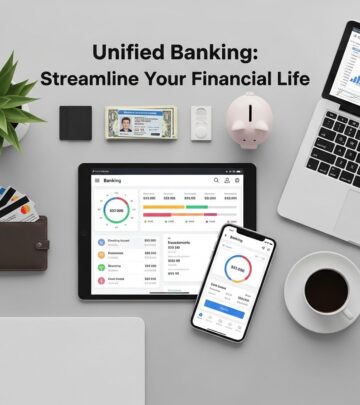
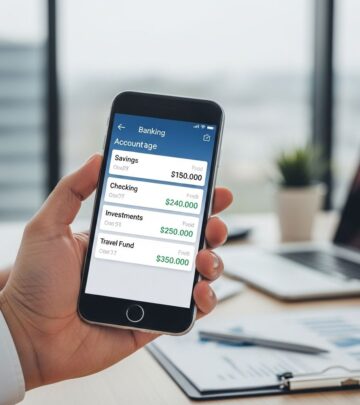
Consolidating accounts simplifies daily banking. You access everything through one login, avoiding the hassle of multiple passwords and apps. Name changes, such as after marriage, require updates at only one place. Internal transfers between checking and savings are instant, unlike inter-bank wires that take days.
Banks incentivize loyalty with perks like waived fees or priority service. A comprehensive view of your net worth in one dashboard aids budgeting. For families, shared access is easier at one institution.
- **Single login and app:** View balances, pay bills, and transfer funds without switching platforms.
- **Streamlined updates:** Change address or personal details once.
- **Instant transfers:** Move money between accounts immediately.
- **Relationship perks:** Potential for better rates or fee waivers as a high-value customer.
- **Holistic overview:** Track checking, savings, and loans in one place.
Reasons to Consider Multiple Banks
Despite convenience, single-bank strategies have drawbacks. Online banks offer superior high-yield savings rates due to lower overhead, often exceeding 4-5% APY versus 0.01% at traditional banks. Shopping rates can add hundreds annually on larger balances.
1. Maximize Interest Rates
Many banks use tiered rates, capping top yields at $100,000 or less. Exceeding tiers drops your effective rate. For example, a 4.75% rate on $100,000 earns $4,750 yearly, versus $4,000 at 4.0%—a $750 gap. Diversify to capture peak rates everywhere.
Consistent high-rate banks like online institutions maintain competitive yields. Avoid teaser promotions; focus on standard schedules.
| Balance Tier | APY Example | Annual Earnings on $100k |
|---|---|---|
| $0-$10k | 4.0% | $4,000 |
| $10k-$100k | 4.75% | $4,750 |
| $100k+ | 3.5% | $3,500 |
Table illustrates tiered impact; always verify current rates.
2. Enforce Savings Discipline
Easy internal transfers tempt impulse spending. Separate banks impose 3-5 day delays for wires or ACH, creating a ‘cooling off’ period. This friction preserves emergency funds, aligning with expert advice to prioritize 3-6 months’ expenses in accessible savings.
3. Stay Within FDIC Insurance Limits
FDIC insures $250,000 per depositor per bank ($500,000 joint). Exceeding risks loss in failures, though rare post-2008. High-net-worth individuals split funds: e.g., $250k savings at Bank A, $250k at Bank B. Use FDIC’s Electronic Deposit Insurance Estimator for complexes.
FDIC Insurance: Protecting Your Deposits
The FDIC, established 1933, safeguards deposits at insured banks. Coverage applies per ownership category: single, joint, IRA, etc. Multiple accounts at one bank in the same category count together toward $250k.
For example:
- Individual checking + savings: $250k total.
- Joint account: $500k ($250k each).
- IRA at same bank: Separate $250k.
Verify insurance via bank websites or FDIC.gov. Credit unions use NCUA with identical limits.
High-Yield Savings: Where to Park Funds
Post-2022 rate hikes, high-yield accounts (HYSA) yield 4%+, outpacing inflation. Online banks dominate; traditional lag. For emergency funds (3-6 months expenses), HYSA balance liquidity and growth. Mid-term goals suit CDs; long-term, retirement accounts.
Experts recommend 15-20% income to savings/debt. 50/30/20 rule: 20% to savings.
How Many Accounts Should You Have?
Most need 3-5: checking, emergency HYSA, goal-specific savings, retirement. More than $250k? Multiple banks. Track via apps like Mint.
Choosing the Right Bank
Compare fees, rates, ATM access, mobile apps. Online excels for yields; branches for cash. Loyalty programs reward consolidation, but rate-shop annually.
Frequently Asked Questions (FAQs)
What is the maximum FDIC-insured amount per bank?
$250,000 per depositor, per ownership category; $500,000 for joint accounts.
Do online banks offer better rates?
Yes, often 10-20x traditional due to no branches.
Should I keep checking and savings at different banks?
Ideal for discipline, as transfers take days.
How much should I save monthly?
15-20% of gross income, starting with 3-6 months emergency fund.
Are rate tiers common?
Yes, capping top APYs; diversify to maximize.
Strategies for Effective Banking
Hybrid approach: Primary bank for checking/transactions; HYSAs elsewhere for savings. Automate transfers. Review quarterly.
Inflation erodes low-yield cash; act now.
References
- Should I Keep My Money With One Bank or Many? — Northwestern Mutual. 2023. https://www.northwesternmutual.com/life-and-money/one-bank-or-many-where-should-i-keep-your-accounts/
- How Much Should I Save Each Month? — Bankrate. 2025-01-10. https://www.bankrate.com/banking/savings/how-much-money-should-i-save-each-month/
- How Much Money Should I Keep in a Savings Account? — MoneyRates. 2024. https://www.moneyrates.com/savings/maximum-amount-in-savings.htm
- One Bank or Multiple Banks: Which Is Better? — MoneyRates. 2024. https://www.moneyrates.com/personal-finance/when-to-keep-your-money-in-one-bank.htm
- How Many Bank Accounts Should I Have? — MoneyRates. 2024. https://www.moneyrates.com/banks/how-many-bank-accounts-should-i-have.htm
Similar Articles








Read full bio of Sneha Tete