When to Avoid CDs Even at 4% Rates
Discover key indicators that CDs might not be your best savings choice, even with attractive 4% yields in a shifting rate environment.

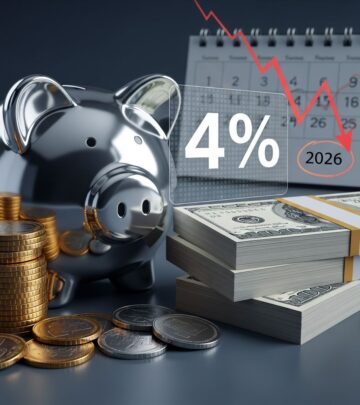
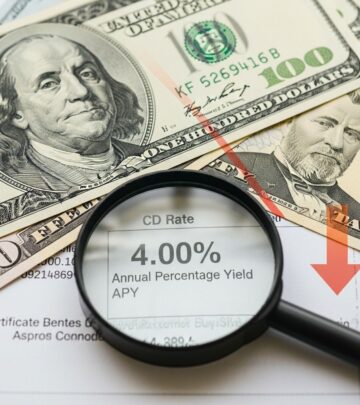
Certificates of Deposit (CDs) promise fixed returns that seem appealing at around 4%, but they come with significant trade-offs that can make them a poor fit for many savers. In a landscape of declining rates forecasted for 2026, understanding when to skip CDs ensures your money works harder without unnecessary risks.
Understanding CDs in Today’s Rate Environment
CDs lock your funds for a set period at a guaranteed rate, offering stability amid market fluctuations. However, with Federal Reserve rate cuts since 2024, top CD yields have trended downward, and experts predict further drops in 2026 as the federal funds rate influences savings products. While 4% might outpace traditional savings accounts, this allure fades when liquidity needs, inflation pressures, or rising opportunities arise.
For instance, CD rates mirror broader monetary policy shifts. After cuts in September and October 2025, yields on new CDs have softened, making long-term commitments riskier if rates rebound unexpectedly. Savers must weigh the guaranteed principal against potential real-world losses in flexibility and purchasing power.
Sign 1: You Need Quick Access to Your Money
The hallmark drawback of CDs is their rigidity—funds are tied up until maturity, with early withdrawals triggering penalties that can wipe out months of interest. Approximately 65% of depositors face these fees, averaging three months’ worth, turning a safe haven into a costly trap.
Imagine depositing $10,000 in a 1-year CD at 4%. If an emergency arises after six months, a typical penalty might deduct 3-6 months’ interest (around $100-$200), reducing your effective yield dramatically. This illiquidity suits only those with robust emergency funds covering 6-12 months of expenses elsewhere.
Experts recommend assessing cash flow first: tally monthly bills, potential surprises, and lifestyle costs before committing. Whatever remains after building liquidity buffers is CD-eligible. Without this, CDs hinder agility, especially in volatile economic times.
- Penalty Examples: Short-term CDs (3-6 months): 1-3 months’ interest; Longer terms (2-5 years): 6-12 months’ interest.
- Alternatives: High-yield savings accounts (HYSA) offer similar rates with full liquidity and no penalties.
Sign 2: Inflation is Outpacing Your Returns
Even at 4%, CDs lose ground if inflation exceeds that threshold, eroding real purchasing power. Historical data shows periods where inflation hit 2.5% while CD yields lagged at 1.5%, netting a 1% annual loss; over three years, this compounds to over 3% diminished value.
In 2026, with ongoing rate cuts, persistent inflation in essentials like food and energy could amplify this. A $20,000 CD earning 4% nominally might buy 2-3% less after inflation adjustments, particularly if CPI trends above yields. This ‘inflation risk’ makes CDs suboptimal for long-term wealth preservation when real returns turn negative.
| Scenario | CD Yield | Inflation Rate | Real Return |
|---|---|---|---|
| Low Inflation | 4% | 2% | +2% |
| Moderate Inflation | 4% | 3.5% | +0.5% |
| High Inflation | 4% | 5% | -1% |
This table illustrates how slim the margin for positive real gains becomes, urging savers to monitor CPI forecasts from official sources like the Bureau of Labor Statistics.
Sign 3: Better Yields Are Available Elsewhere
CDs shine in high-rate eras, but opportunity costs mount when alternatives outperform. High-yield savings, money market accounts, or short-term Treasuries often match or exceed 4% with superior liquidity. For example, some HYSAs currently hover near CD rates without lock-ins, allowing rate shopping as markets shift.
Locking into a CD means forgoing these if rates rise post-purchase. Research shows 40% of CD holders regret this when new offerings yield more, as funds stay trapped at subpar rates. In a falling-rate 2026 environment, this risk flips: early CDs might secure higher yields before further declines, but only if you tolerate illiquidity.
Comparison of Options:
- CDs: Fixed 4%, penalized access.
- HYSA: Variable ~4%, instant withdrawals.
- U.S. Treasuries: Competitive yields, government-backed, sellable.
- Money Markets: Check-writing flexibility, yields akin to CDs.
Sign 4: High Minimum Deposits Strain Your Budget
Many CDs demand $1,000-$10,000 upfront, excluding those building savings from scratch. This barrier creates opportunity costs—funds unavailable for debt payoff or emergencies—while low-income households miss yields altogether. Traditional savings often start at $25-$100, democratizing access.
Consider a family with $2,500 spare: a $1,000 minimum CD leaves little buffer, amplifying risk. Broader participation requires laddering smaller amounts, but administrative hassles deter many, with 45% finding multi-CD tracking burdensome.
Navigating Rate Changes: CD Strategies for 2026
With Fed cuts signaling lower yields ahead, timing matters. Avoid long-term CDs if expecting rebounds; opt for short terms or ladders—staggered maturities providing periodic access. Steps include comparing rates across banks/credit unions, selecting terms matching needs, and understanding penalties.
Laddering reduces risk: e.g., split $15,000 into five $3,000 CDs maturing quarterly. This balances yields with liquidity, though it demands diligence on renewals to dodge auto-rollovers at worse rates. Shop decisively—delays mean lost earnings.
Who Should Still Consider CDs?
CDs fit risk-averse savers with excess liquidity, short-term goals (e.g., home down payment in 1-2 years), or those parking funds amid stock volatility. FDIC insurance up to $250,000 per depositor adds safety. Pair with HYSA for emergencies.
Alternatives to Maximize Savings in 2026
High-Yield Savings Accounts: Fluid access, competitive APYs.
CD Ladders: Hybrid liquidity and fixed returns.
I-Bonds or TIPS: Inflation-protected government securities.
Short-Term Bonds: Higher potential yields with moderate liquidity.
Monitor via tools like Bankrate or FDIC rate tables for real-time comparisons.
Frequently Asked Questions (FAQs)
Are CD rates dropping in 2026?
Yes, following Fed cuts, with further declines expected as federal funds rates fall.
What’s a typical CD early withdrawal penalty?
1-12 months’ interest based on term length; always review terms.
Can I lose money in a CD?
No principal loss if held to maturity (FDIC-insured), but penalties and inflation can reduce effective gains.
Is laddering CDs worth the effort?
Yes for balancing access and yields, especially in uncertain rate environments.
How do I find the best CD rates?
Compare online banks/credit unions, focusing on APY, terms, and minimums.
Final Thoughts on Smart Saving
At 4% rates, CDs tempt but falter under liquidity crunches, inflation beats, superior options, or deposit hurdles. Prioritize flexibility and real returns by diversifying into liquid, high-yield vehicles tailored to 2026’s outlook. Assess personal finances holistically—your strategy should evolve with economic signals.
References
- 20 Pros & Cons of a Certificate of Deposit (CD) [2026] — DigitalDefynd. 2026. https://digitaldefynd.com/IQ/pros-cons-of-a-certificate-of-deposit-cd/
- Planning to open a CD before 2026? Experts say to avoid these costly mistakes — CBS News. 2025. https://www.cbsnews.com/news/planning-to-open-cd-before-2026-experts-say-to-avoid-these-costly-mistakes/
- Should You Open a CD Now? Impact of Rising Interest Rates in 2026 — SBICAL Bank. 2026-03-05. https://www.sbical.bank/education-center/should-you-open-a-cd-now-what-rising-interest-rates-mean-in-2025
- CD Rates Forecast for 2026: Are CD Rates Going Down? — Experian. 2025. https://www.experian.com/blogs/ask-experian/cd-rates-forecast/
- CD Rate Forecast: Are CD Rates Going Up in 2026? — NerdWallet. 2026. https://www.nerdwallet.com/banking/news/cd-rates-forecast
Similar Articles








Read full bio of Sneha Tete