When Credit Card Fees Outweigh the Rewards
Discover key indicators that your premium credit card's annual fee is draining your wallet instead of building value through its perks.
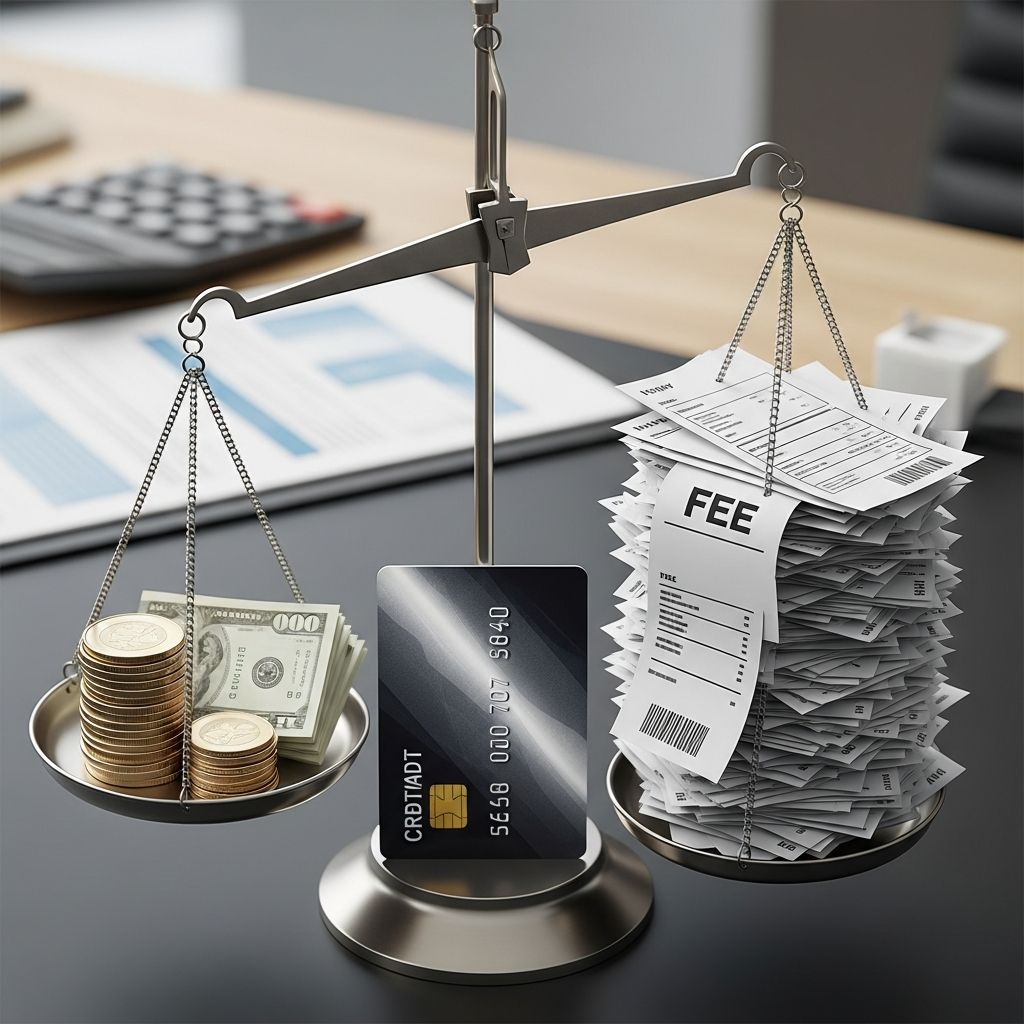
Premium credit cards promise lavish perks like travel credits, lounge access, and exclusive experiences, but their steep annual fees can turn into a financial burden if not carefully evaluated. Many cardholders pay hundreds annually without realizing the perks fail to deliver equivalent value. This guide explores critical indicators that signal it’s time to reconsider your card, offering tools to compute real worth and optimize your wallet.
Understanding Annual Fees in the Rewards Landscape
Annual fees on credit cards compensate issuers for generous rewards programs, averaging around $105 for fee-charging general-purpose cards as of recent Consumer Financial Protection Bureau data. While no-fee cards exist, premium options with fees from $95 to over $500 often provide superior earning rates and benefits like statement credits or free checked bags. The key question: do these extras exceed the fee cost?
Travel-focused cards, for instance, frequently carry high fees—such as $895 for certain platinum-level products—but justify them through perks like Equinox credits or airline privileges if they align with your spending. However, misalignment leads to wasted money. Before diving into red flags, grasp that effective value hinges on personal usage patterns, not advertised boasts.
First Red Flag: Perks Don’t Match Your Lifestyle
The most glaring sign your card’s fee isn’t worthwhile is when benefits cater to habits you don’t have. Cards brim with niche rewards, but forcing yourself to use them defeats the purpose.
- Travel Perks for Homebodies: Lounge access or hotel elite status shines for frequent flyers, yet offers zero value if you rarely travel. A cobranded airline card saving $100+ per checked bag trip is useless for carry-on loyalists.
- Gym or Streaming Credits Ignored: A $300 fitness credit requires enrollment and usage; without it, you’re out the fee without savings. Similarly, streaming rebates only help if you subscribe via the card.
- Shopping or Dining Misfits: High cash back at supermarkets or gas stations loses appeal for urban dwellers relying on delivery or public transit.
Evaluate by listing perks against your monthly expenses. If fewer than half apply, the card likely underperforms. Tools like rewards calculators help quantify this mismatch early.
Second Red Flag: Statement Credits Fall Short
Statement credits promise direct fee offsets, yet many go unused due to enrollment hurdles, limited merchants, or expiration rules. They’re the simplest value metric—subtract usable credits from the fee for your ‘effective cost’.
For example, a card with $325 in annual credits (e.g., dining, Uber) effectively drops a $325 fee to zero if fully utilized. But partial use leaves you paying net. Common pitfalls:
| Perk Type | Potential Value | Common Issue |
|---|---|---|
| Digital Entertainment | $300/year | Subscription changes remove eligibility (e.g., Audible no longer covered) |
| Fitness Membership | $300/year | Requires new signup; cheaper alternatives exist |
| Streaming Bundles | $120/year ($10/mo) | Auto-renewal and specific sites only |
| Travel/Shopping | Varies | Merchant restrictions limit usability |
Track credits via app statements. If under 70% redeemed yearly, this signals fee imbalance. Pro tip: Set calendar reminders for enrollment to maximize automatic rebates.
Third Red Flag: Portfolio Overload and Diminishing Returns
Individual cards might seem justifiable, but across a wallet of three or more premium cards, fees compound—potentially $1,000+ annually. Review your full lineup for redundancies and changes.
Recent devaluations hit hard: Priority Pass dining vanished from some cards, and entertainment credits shifted. Ask:
- Has the card’s value eroded since signup?
- Do overlapping perks from other cards make this one obsolete?
- Are welcome bonuses inflating perceived worth? (E.g., 10k-20k points worth $200-400 offsetting a $550 fee initially)
Calculate portfolio effective fee: Sum all fees, subtract total credits/perks value. Aim for net positive; otherwise, downgrade to no-fee siblings.
Strategies to Assess True Card Value
Beyond warnings, employ systematic evaluation for smarter decisions.
Break-Even Spending Analysis
Compute minimum spend to offset fees via rewards rates. For a $95 fee card earning 6% on $6,000 supermarkets ($360 value), break-even occurs quickly. Formula: Effective Fee / Rewards Rate = Break-Even Spend. Ignore subjective perks for objectivity.
Portfolio Audit Checklist
- Inventory all cards and fees.
- Log 3 months’ statements for actual usage.
- Value perks conservatively (e.g., miles at 2 cents/point per valuations).
- Compare no-fee alternatives (e.g., VentureOne at 1.25x vs. Venture at 2x for $95).
- Test downgrade options before canceling to retain credit history.
Bonus Value Consideration
Sign-up incentives like 60,000+ miles can dwarf first-year fees, but long-term focus matters. A $95 fee card with $600 bonus nets positive even sans ongoing perks.
Alternatives to High-Fee Cards
Not ready for fees? No-fee counterparts deliver solid rewards:
- Cash Back: 6% groceries/streaming up to caps, no fee intro year.
- Travel: 1.25x-2x miles unlimited, sans premium extras.
- Build Debt-Free First: Prioritize payoff over rewards if balances linger.
Mid-tier fees ($95-$150) often balance value best for moderate spenders, avoiding ultra-premium excess.
FAQs: Credit Card Fees and Perks
Is a $95 annual fee ever worth it?
Yes, if rewards exceed $95 yearly—e.g., 2x miles vs. 1.25x no-fee boosts value by 60%.
How do I cancel without hurting credit?
Downgrade to no-fee version from issuer; product change preserves history.
Are fees negotiable?
Sometimes—call retention upon renewal, citing competitors.
What if perks change?
Reevaluate annually; issuers notify, but act if value drops.
Best for beginners?
Stick no-fee until spending habits solidify.
Final Thoughts on Fee Optimization
Annual fees fund elite rewards, but only thrive when tailored to you. Spot lifestyle mismatches, unused credits, and portfolio bloat to trim fat. Regular audits ensure every dollar spent elevates your finances. Switch, downgrade, or skip—your wallet will thank you.
References
- Credit card annual fees: How to decide if it’s worth it — The Points Guy. 2025-06. https://thepointsguy.com/credit-cards/annual-fee-worth-it/
- Is It Worth Paying an Annual Fee for a Credit Card? — NerdWallet. 2022. https://www.nerdwallet.com/credit-cards/learn/credit-card-annual-fee-free
- The Ultimate Guide to Offsetting Credit Card Annual Fees — Upgraded Points. N/A. https://upgradedpoints.com/credit-cards/credit-card-annual-fee-break-even-spending-guide/
- Is paying an annual fee worth it? — Bankrate. N/A. https://www.bankrate.com/credit-cards/advice/cards-worth-annual-fee/
- Consumer Financial Protection Bureau Credit Card Data — CFPB (via NerdWallet). 2022. https://www.consumerfinance.gov/data-research/credit-card-data/
Similar Articles








Read full bio of medha deb