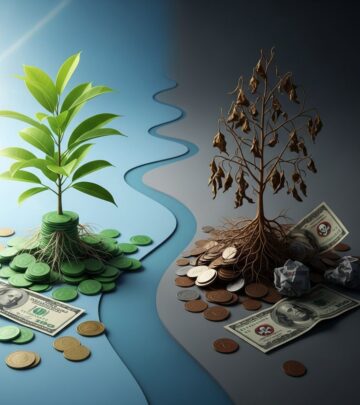
When Credit Card Debt Becomes Excessive
Discover practical benchmarks, warning signs, and proven strategies to determine if your credit card debt is out of control and how to regain financial stability.

Credit card debt crosses into excessive territory when it hinders your ability to meet essential expenses, damages your credit profile, or spirals due to high interest compounding. Financial experts define this threshold using metrics like debt-to-income ratio under 36% and credit utilization below 30%, but personal circumstances vary widely.
Key Indicators of Problematic Credit Card Debt
Recognizing excessive debt starts with objective measures rather than vague feelings of unease. Several benchmarks help quantify the issue.
- Debt-to-Income Ratio (DTI): Calculate by dividing monthly debt payments by gross monthly income. A DTI exceeding 36% signals strain, as lenders view it as risky for new borrowing.
- Credit Utilization Ratio: This is total credit card balances divided by total limits. Staying under 30% preserves credit scores; over 50% often triggers penalties and higher rates.
- Minimum Payments Dominating Budget: If minimums consume more than 20% of take-home pay (excluding housing), daily living becomes precarious.
These ratios provide a snapshot. For instance, someone earning $5,000 monthly with $2,000 in debts has a 40% DTI, entering high-risk zone per Consumer Financial Protection Bureau guidelines.
Warning Signs Your Debt Load Is Unsustainable
Beyond numbers, behavioral and emotional cues reveal deepening trouble. Persistent stress over bills, reliance on new cards to pay old ones, or maxed-out limits are common red flags.
| Sign | Implication | Action Trigger |
|---|---|---|
| Only paying minimums | Interest accrues rapidly, extending payoff timeline | Review statements for interest charges >10% |
| Declining credit score | Utilization or delinquencies harming FICO | Score drop >50 points signals urgency |
| Cash flow shortages | Skipping essentials for payments | Borrowing for groceries or utilities |
| Multiple maxed cards | Over-reliance on credit | Utilization >90% on 2+ cards |
These indicators compound quickly. High-interest rates, averaging 20-25% in 2026, turn manageable balances into mountains.
Assessing Your Personal Debt Threshold
No universal dollar amount defines ‘too much’—it depends on income, assets, and goals. A $10,000 balance might burden a low earner but be trivial for high-income households.
- Low-Income Households (<$50K/year): Over $5,000 often problematic.
- Middle-Income ($50K-$100K): $10,000-$15,000 raises flags.
- High-Income (>$100K): Even $20,000+ can be okay if DTI stays low.
Use this formula for personalized insight: Multiply monthly income by 36%, subtract other debts—remainder should cover card minimums comfortably.
Proven Strategies to Tackle Excessive Debt
Once identified, action restores control. Structured approaches outperform random payments.
Debt Snowball: Momentum Through Quick Wins
List debts smallest to largest. Pay minimums on all, extra toward tiniest balance. Roll payments to next upon payoff. Ideal for motivation.
- Psychological boost from closures fuels persistence.
- Example: $500, $2,000, $5,000 cards. Clear $500 first, add its payment to $2,000.
Debt Avalanche: Interest-First Efficiency
Target highest APR first while minimuming others. Saves most money long-term.
- Best for high-rate debts (>18%).
- Example: 25% APR card paid aggressively before 15% one.
| Method | Pros | Cons | Best For |
|---|---|---|---|
| Snowball | Motivational wins | Potentially higher interest cost | Multiple small debts |
| Avalanche | Minimizes interest | Slower visible progress | High APR focus |
Boost Payments Beyond Minimums
Even $50 extra monthly slashes timelines. Direct to principal via autopay.
Balance Transfers and Consolidation
Shift to 0% intro APR cards or personal loans at lower rates. Watch fees and terms.
- 0-18 month promo periods common.
- Personal loans convert revolving debt to fixed, aiding scores.
Negotiating with Creditors Directly
Contact issuers early. Request lower rates, waived fees, or hardship plans. Success rates high for good-faith efforts.
- Script: “I’m committed but facing temporary hardship—can we adjust terms?”
- COVID-era precedents show flexibility persists.
Professional Debt Management Plans (DMPs)
Non-profits negotiate reduced rates (often 5-10%), consolidate into one payment. Counselors handle distribution.
- Pros: Lower interest, simplified tracking.
- Cons: Closed accounts, 3-5 year commitment.
- Find via NFCC.org certified agencies.
Credit Counseling: Guidance Without Surrender
Free/low-cost advice on budgets, plans. Avoid for-profit debt settlement scams.
Lifestyle Adjustments for Faster Freedom
Debt reduction demands cuts: Track spending, cancel unused cards, side hustle.
- Budget 50/30/20: 50% needs, 30% wants, 20% savings/debt.
- Freeze cards physically to curb impulse buys.
Long-Term Prevention After Payoff
Maintain emergency fund (3-6 months expenses), pay balances monthly, monitor utilization quarterly.
Frequently Asked Questions
What debt-to-income ratio is too high for credit cards?
Above 36% total DTI, or card payments over 20% of income.
Is $10,000 credit card debt a lot?
Depends: High for low earners, manageable for others if payments fit budget.
How long to pay off $20,000 at 20% APR with $500/month?
About 6 years, costing $18,000+ interest. Extra payments halve time.
Does debt consolidation hurt credit?
Temporary dip from inquiries, but on-time payments boost scores.
When to consider bankruptcy over DMP?
If insolvent and DMP unaffordable—last resort.
References
- An Older Adult’s Guide to Paying Off Credit Card Debt — National Council on Aging. 2023-05-15. https://www.ncoa.org/article/getting-help-with-credit-card-debt-5-things-older-adults-should-know/
- How to get a handle on debt — Consumer Financial Protection Bureau. 2024-02-10. https://www.consumerfinance.gov/about-us/blog/how-get-handle-debt/
- 5 Strategies for Paying Off Credit Card Debt — Baird Wealth. 2022-08-01. https://www.bairdwealth.com/insights/wealth-management-perspectives/2022/08/5-strategies-for-paying-off-credit-card-debt/
- Assistance with Managing Credit Card Debt — Bank of America. 2025-01-20. https://www.bankofamerica.com/banking-information/assistance/credit-cards/managing-credit-card-debt/
- 5 Debt Repayment Strategies That Could Change Your Life — Navy Federal Credit Union. 2024-11-12. https://www.navyfederal.org/makingcents/credit-debt/debt-repayment-strategies.html
- What’s a Debt Management Plan? — Discover. 2025-03-05. https://www.discover.com/credit-cards/card-smarts/debt-management-plan/
- How To Get Out of Debt — Federal Trade Commission. 2024-07-18. https://consumer.ftc.gov/articles/how-get-out-debt
Similar Articles








Read full bio of medha deb